
Alfaria piei
- Bilimsel Adı
- Alfaria piei
- Oymak (Tribe)
- Ectatommini
- Alt Familya
- Ectatomminae
- Yazar (Tanımlayan)
- Dias & Lattke, 2019
- Dağılım
- 0 ülkede bulundu
Giriş
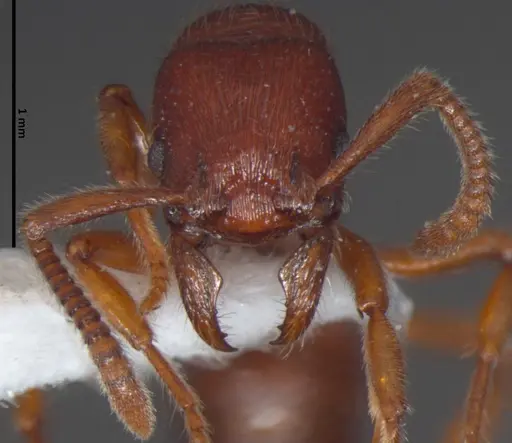
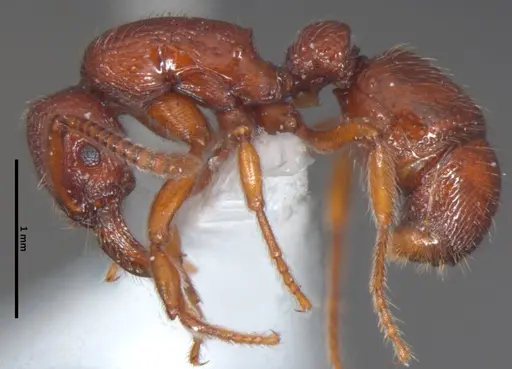
Alfaria piei is a tiny rust-colored ant that lives in the leaf litter of Brazil's high-altitude Atlantic Forest. Workers measure approximately 3-4mm total length, with orange legs and a reddish-brown body covered in fine white hairs . This species was originally described as Gnamptogenys piei but has since been transferred to the genus Alfaria. They come from the Mantiqueira mountains in Itatiaia National Park, where they were collected nearly 2000 meters above sea level in cool, humid forests . What makes this species particularly challenging for antkeepers is that almost nothing is known about their colony life. Scientists have only found and described workers - no queens or males have been documented, and their nesting behavior, diet, and colony size remain mysteries . They belong to the minuta-group, a collection of small leaf-litter specialists within the Alfaria genus that likely prey on tiny soil arthropods.
Quick Summary
- Difficulty: Expert
- Origin & Habitat: Montane Atlantic Forest in the Mantiqueira mountains, Rio de Janeiro State, Brazil, at 1991m elevation. Collected from humid leaf litter with high organic matter content in Alto-Montana forest formation [1][2].
- Colony Type: Unknown, no queens have been described [1]
- Size & Growth:
- Queen: Unknown, no queens documented [1]
- Worker: Approximately 3-4mm total length, inferred from comparison with related species [1][2]
- Colony: Unknown, likely small given leaf litter habit, but unconfirmed [1]
- Growth: Unknown, likely slow given small size and cool native climate
- Development: Unknown, estimated 8-12 weeks based on similar small ants at 20°C, but unconfirmed for this species (Development time is speculative. Cool high-altitude conditions may slow development significantly.)
- Antkeeping:
- Temperature: Cool, aim for 15-20°C. Based on climate data from the collection site showing subtropical highland conditions with hottest month averages below 22°C and coldest months between -3°C and 18°C [1]. Avoid temperatures above 25°C.
- Humidity: High, keep nest material consistently damp to mimic the humid soil with accumulated organic matter found at the collection site [1]. Provide ventilation to prevent mold.
- Diapause: Unknown, possibly yes given the seasonal highland climate with cold months, but unconfirmed [1].
- Nesting: Naturalistic setup with leaf litter, humid soil, and decaying organic matter. Small chambers required given tiny worker size [1].
- Behavior: Unknown, likely cryptic and secretive based on leaf litter habitat. Probably predatory on small arthropods based on typical Alfaria (formerly Gnamptogenys) patterns, but specific behaviors unstudied [1]. Tiny size means escape prevention must be excellent. This species has a functional sting typical of the Ectatomminae subfamily.
- Common Issues: tiny size means escapes are likely without fine mesh barriers or perfect sealing., high altitude origin suggests they may die if kept too warm, avoid standard room temperature if above 22°C., unknown dietary requirements may lead to starvation in captivity, acceptance of standard ant foods is unconfirmed., no captive breeding reports exist, care protocols are entirely experimental., humid nest conditions can promote mold growth without adequate ventilation.
Natural History and Habitat
Alfaria piei comes from one specific location in Itatiaia National Park, collected at 1991 meters above sea level in the Mantiqueira mountains [1]. This is high-altitude Atlantic Forest, specifically the Alto-Montana formation where trees grow smaller than at lower elevations and the soil stays humid with large amounts of accumulated organic matter [1].
The climate at this location is classified as subtropical highland (Cwb), meaning the coldest months drop between -3°C and 18°C, while the hottest month averages stay below 22°C [1]. This is significantly cooler than typical tropical ant habitats. The ants were collected from leaf litter using a Winkler extractor, indicating they live in the upper layers of soil and decaying plant matter [1][2].
This species represents the upper altitudinal limit for the minuta-group within Alfaria, suggesting they have adapted to cooler conditions than their close relatives [1].
Temperature and Humidity Requirements
Because Alfaria piei comes from a cool mountain climate, you should keep them at lower temperatures than most tropical ants. Aim for 15-20°C and avoid letting temperatures exceed 22-25°C [1]. If your room runs warmer, you will need a cooling solution rather than standard heating.
Humidity should remain high to match the humid soil conditions of their native forest floor. Keep the nest material damp but not waterlogged, it should feel like a wrung-out sponge [1]. However, you must balance this with adequate ventilation to prevent mold growth in the organic matter they prefer.
Whether they need a winter rest period (diapause) is unknown, but given the seasonal climate at their collection site with distinct cold months, they may slow down or require cooler conditions during part of the year [1].
Housing and Nest Setup
Given their tiny size and leaf litter habitat, Alfaria piei needs a naturalistic setup rather than a standard formicarium. Use a container with humid soil, leaf litter, and pieces of decaying wood to mimic the accumulated organic matter of their natural habitat [1].
Chambers and tunnels must be extremely small, these ants are only about 3-4mm long with narrow bodies [1][2]. Standard acrylic nests with large chambers will stress them. Instead, provide small spaces under flat stones or within compressed leaf litter.
Escape prevention is critical. With workers measuring just 3-4mm and likely able to squeeze through very small gaps, you need tight-fitting lids, fine mesh ventilation, and barrier applications like Fluon or talcum powder on all container walls [1].
Feeding and Diet
The diet of Alfaria piei has not been studied, but based on typical patterns for the genus Alfaria (formerly Gnamptogenys), they are likely specialized predators of small arthropods such as springtails, mites, and other tiny soil organisms [1].
Do not assume they will accept standard ant foods like honey water or fruit. While you can offer small amounts of sugar water to test acceptance, their primary food will probably need to be live micro-prey. Springtails are the most likely candidate given their size and habitat.
Feed small quantities frequently rather than large amounts rarely, as their tiny colony size (whatever it may be) will not handle large prey items. Remove uneaten food promptly to prevent mold in the humid nest environment [1].
Colony Founding
Founding behavior is completely unconfirmed for Alfaria piei. No queens have ever been collected or described, so whether queens seal themselves in (claustral founding) or must hunt during founding (semi-claustral) remains unknown [1].
Based on related predatory ants, they may be semi-claustral, requiring the queen to forage while raising her first workers. However, this is speculation. Without confirmed founding behavior, attempting to start a colony from a queen would be experimental.
Currently, the only way to obtain a colony would be to collect workers from the wild and hope to find brood or a queen, though this carries risks of parasites and unknown colony age [1].
Frequently Asked Questions
Can I keep Alfaria piei in a test tube?
Standard test tubes are not ideal because these ants need humid soil with leaf litter and organic matter to feel secure [1]. If using a test tube temporarily, include soil and keep it very cool, but plan to move them to a naturalistic setup.
What temperature do Alfaria piei need?
Keep them cool, around 15-20°C. They come from high-altitude mountains where the hottest month averages below 22°C, so they likely cannot tolerate standard room temperature if it exceeds 25°C [1].
Do Alfaria piei need hibernation?
It is unknown whether they need a winter rest period. Their native habitat has cold months between -3°C and 18°C, so they may slow down seasonally, but this has not been confirmed in captivity [1].
What do Alfaria piei eat?
Their diet is unstudied, but based on related species they likely prey on tiny arthropods like springtails and soil mites. Do not rely on sugar sources, offer live micro-prey and observe what they accept [1].
How big do Alfaria piei colonies get?
Colony size is unknown. As a leaf litter specialist only 3-4mm long, they probably maintain small colonies of under a few hundred workers, but this is speculation [1].
Are Alfaria piei good for beginners?
No. They are extremely difficult due to their tiny size, specific cool temperature requirements, unknown diet, and lack of any captive breeding information. Only expert antkeepers with experience in cool-humid species should attempt keeping them [1].
How long until Alfaria piei get their first workers?
The egg to worker timeline is unknown. Based on their small size, development might take 8-12 weeks at 20°C, but this is an estimate from similar ants, no one has documented their actual development time [1].
Do Alfaria piei ants sting?
They likely have a functional sting typical of the Ectatomminae subfamily. However, they are so small that any sting would likely be ineffective against human skin. Handle with care regardless, as they may bite or use chemical defenses.
Report an Issue
The current care sheet is based fully on literature. See inconsistencies, or something that's incorrect? Please , it will be resolved after review from an admin. Contributing to the blogs tab also helps providing information, to make us be able to further improve the caresheets. Thank you for your support!
References

Bu bakım rehberi şu lisans altındadır: CC BY-SA 4.0 .
Topluluk Blogları
DZUP548816
AntWeb'de Görüntüle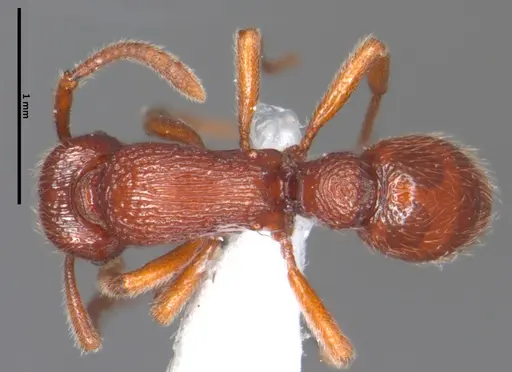
Literatür
Dağılım haritası yükleniyor...Ürünler yükleniyor...