
Aenictus sundalandensis
- Bilimsel Adı
- Aenictus sundalandensis
- Alt Familya
- Dorylinae
- Yazar (Tanımlayan)
- Jaitrong & Yamane, 2013
- Dağılım
- 0 ülkede bulundu
Giriş
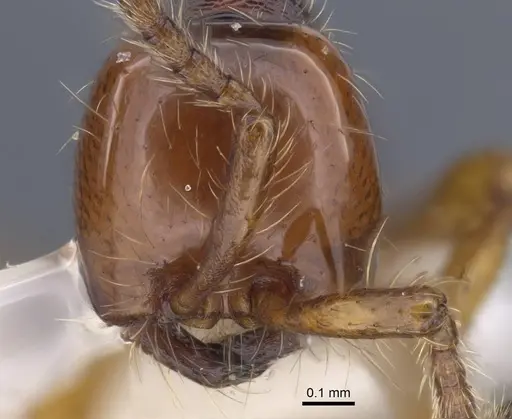
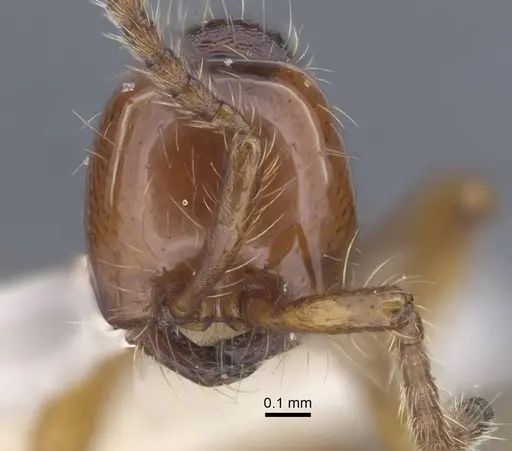
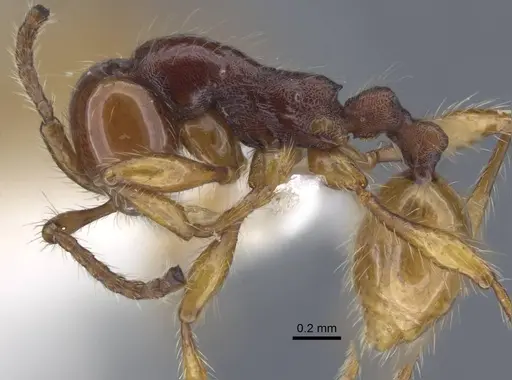
Aenictus sundalandensis is a tiny army ant from the highlands of Southeast Asia. Workers measure 3.0-3.3 mm total length and have a reddish-brown head with a darker mesosoma and yellowish-brown gaster . They belong to the Aenictus ceylonicus group, characterized by their cylindrical petiole and rounded heads . These ants are found in primary and disturbed forests across Sumatra, Borneo (Sabah and East Kalimantan), and Java, typically at elevations around 1300 meters . Like all army ants, they are nomadic predators that hunt in coordinated groups and do not maintain permanent nests . This species is known only from the worker caste - queens have not been described .
Quick Summary
- Difficulty: Expert
- Origin & Habitat: Sundaland region: Sumatra, Borneo (Sabah and East Kalimantan), and Java [1]. Found in highland forests around 1300m elevation, in both primary and disturbed forests, often at forest edges [1][2].
- Colony Type: Army ant structure, colonies likely contain multiple queens (typical for Aenictus), but queens have not been described for this species [2].
- Size & Growth:
- Antkeeping:
- Temperature: Unconfirmed. Based on highland collection at 1300m elevation, likely prefers cooler conditions than lowland tropical ants, estimated 20-24°C [1].
- Humidity: Unconfirmed. Forest habitat suggests moderate to high humidity [1].
- Diapause: No, tropical species from Indonesia and Malaysia that remains active year-round [2].
- Nesting: Cannot be housed in standard formicaria. Army ants require massive enclosures with continuous foraging space and constant food supply [2].
- Behavior: Nomadic army ant that forages in groups. Type series collected at night, suggesting nocturnal activity [1]. Highly mobile with frequent nest relocation. Workers are small (3mm) and can escape through tiny gaps [1].
- Common Issues: army ants cannot be kept in standard test tubes or formicaria due to nomadic behavior and massive colony size., require constant supply of live prey (other ants, termites) which is difficult to maintain in captivity., queens have not been described for this species, colony establishment from founding is not possible for hobbyists., tiny size (3mm) means escape prevention is nearly impossible with standard equipment.
Army Ant Biology and Why Standard Care Does Not Apply
Aenictus sundalandensis is a true army ant (subfamily Dorylinae), which means its biology makes it extremely difficult to keep in standard ant farms [2]. These ants do not have a permanent nest. Instead, they are nomadic, moving their entire colony every few days or weeks to follow prey [2]. Unlike many ant species that have described queens, this species is known only from the worker caste, the queen caste has not been described or observed [2]. This means colony establishment through traditional founding is not possible. Army ant colonies typically reproduce by fission (splitting), with each half taking some of the many queens, but we have no specific data on how this species reproduces [2]. The colony sizes for Aenictus typically reach thousands or even millions of workers, far beyond what any standard enclosure can house [2].
Natural History and Habitat
These ants come from the Sundaland region of Southeast Asia, specifically the highlands of Sumatra, Borneo, and Java [1]. The type series was collected at night in an open site at a forest edge at approximately 1300 meters elevation, while other colonies were found in both primary and disturbed forests [1]. They have also been found on Macaranga triloba trees, though researchers predict they are visitors rather than permanent residents of these trees [3]. The highland collection site suggests they prefer cooler conditions than lowland tropical ants, but specific temperature requirements are unconfirmed [1].
Housing Requirements
Standard antkeeping equipment will not work for Aenictus sundalandensis. Test tubes, plaster nests, and acrylic formicaria are designed for ants that stay in one place, not nomadic army ants [2]. To house these ants, you would need a massive, specialized bioactive enclosure with extensive foraging areas, constant humidity control, and the ability to provide live prey continuously [2]. Even if you could build such an enclosure, the colony size would quickly outgrow any reasonable home setup. Additionally, at just 3mm long, workers can squeeze through the tiniest gaps in mesh or around lids, making escape prevention nearly impossible with standard equipment [1].
Feeding and Diet
Aenictus sundalandensis are specialized predators that hunt live prey. They primarily raid other ant nests and termite colonies [2]. Unlike many ants that will accept sugar water, honey, or dead insects, army ants need living prey to trigger their hunting instincts [2]. In captivity, this would require a constant supply of other ant colonies or termites, which is impractical for most keepers. They cannot survive on standard antkeeping foods like honey water or mealworms alone [2].
Frequently Asked Questions
Can I keep Aenictus sundalandensis in a test tube?
No. These are army ants that do not have the typical colony founding behavior of standard ants. They require massive colonies and constant foraging space, making test tubes completely unsuitable [2].
How long until Aenictus sundalandensis gets their first workers?
This question does not apply to army ants. Queens have not been described for this species, so traditional founding is not possible. Colonies likely reproduce by splitting when they grow large enough, but specific data is unavailable [2].
What do Aenictus sundalandensis eat?
They are specialized predators that hunt live prey, primarily other ants and termites. They cannot survive on sugar water or dead insects [2].
Are Aenictus sundalandensis good for beginners?
No. These are expert-only ants that are effectively impossible to maintain in standard captivity due to their army ant biology and massive colony requirements [2].
How big do Aenictus sundalandensis colonies get?
Unknown for this specific species, but related Aenictus army ants maintain colonies of thousands to millions of workers [2].
Do Aenictus sundalandensis need hibernation?
No. They are tropical ants from Indonesia and Malaysia and remain active year-round [2].
Can I start a colony with one Aenictus sundalandensis queen?
No. Queens have not been described for this species, only workers are known [2]. Even if queens were found, army ant colonies do not start with single queens founding independently. They reproduce by colony fission [2].
Report an Issue
The current care sheet is based fully on literature. See inconsistencies, or something that's incorrect? Please , it will be resolved after review from an admin. Contributing to the blogs tab also helps providing information, to make us be able to further improve the caresheets. Thank you for your support!
References

Bu bakım rehberi şu lisans altındadır: CC BY-SA 4.0 .
Topluluk Blogları
CASENT0917243
AntWeb'de Görüntüle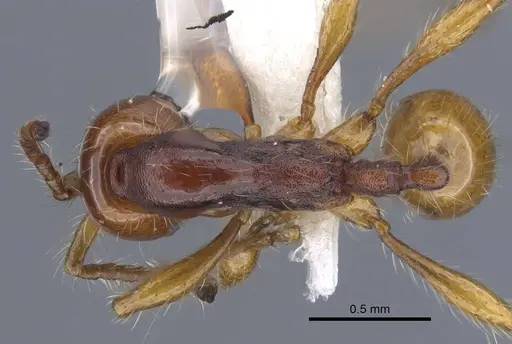
Literatür
Dağılım haritası yükleniyor...Ürünler yükleniyor...