
Aenictus rhodiensis
- Bilimsel Adı
- Aenictus rhodiensis
- Alt Familya
- Dorylinae
- Yazar (Tanımlayan)
- Menozzi, 1936
- Dağılım
- 0 ülkede bulundu
Giriş
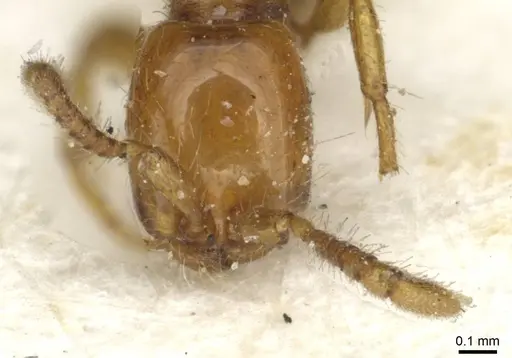
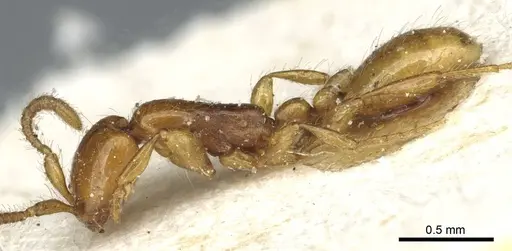
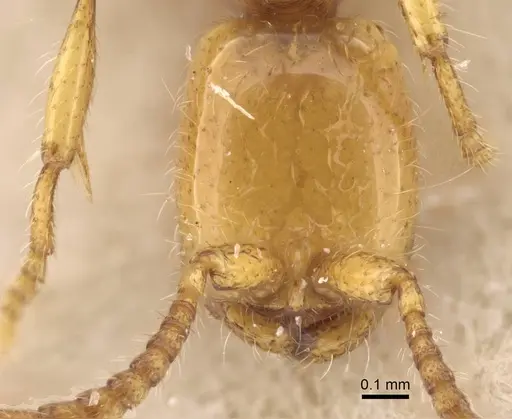
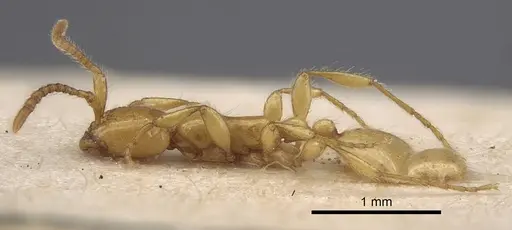
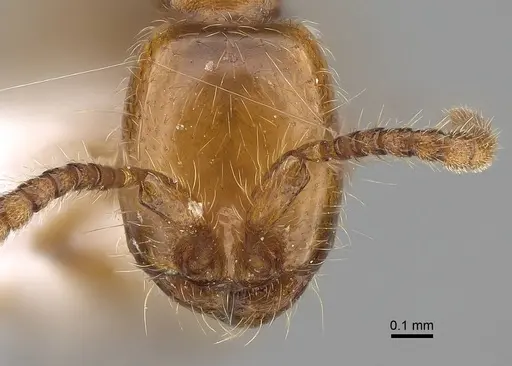
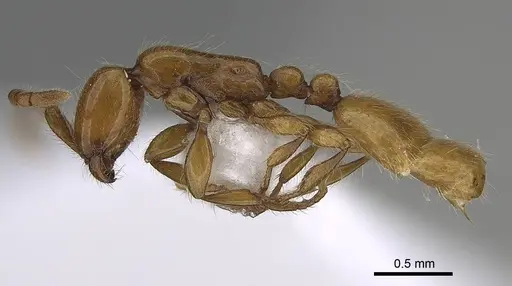
Aenictus rhodiensis is a tiny yellow army ant and the only European member of the true army ants (subfamily Dorylinae). Workers are uniformly yellow to orange-yellow, with the gaster slightly lighter than the head and mesosoma. They have 10-segmented antennae with short, widened scapes, reduced eyes, and elongated legs . This species is known only from the worker caste - no queens or males have ever been collected . They inhabit pine and cedar forests in the eastern Mediterranean, found in Greece (Dodecanese islands, Samos), Turkey, Israel, and Iran, where they form temporary bivouacs under stones . When disturbed, workers form a column and relocate the entire colony to leaf litter .
Quick Summary
- Difficulty: Expert (effectively impossible)
- Origin & Habitat: Eastern Mediterranean pine and cedar forests. Found under stones in Greece (Dodecanese islands including Rhodes and Samos), western Turkey, Israel, and northern Iran [3][4][5].
- Colony Type: Unknown, only worker caste has been documented. Queens and males remain unknown [2]. Army ant colonies typically reproduce by fission rather than single-queen founding.
- Size & Growth:
- Queen: Unknown, no queens have ever been collected [2]
- Worker: Size data unavailable, the context provides head width (HW) measurements of 0.82-1.06 mm but not total body length. Based on Aenictus genus patterns, workers are likely 3-5 mm total length [3][6]
- Colony: Several hundred workers observed in field colonies [3]
- Growth: Unknown
- Development: Unknown (Development data unavailable because captive rearing has never been achieved.)
- Antkeeping:
- Temperature: Likely warm Mediterranean conditions. Based on habitat data from pine forests in the eastern Mediterranean, approximate range of 22-26°C is reasonable, but specific requirements are unstudied.
- Humidity: Moderate humidity. Natural nests under stones in forest litter suggest damp but not waterlogged conditions.
- Diapause: Unknown. Mediterranean species may slow activity in winter but this has not been documented.
- Nesting: Forms temporary bivouacs (globular clusters of workers), not permanent nests with defined chambers [1].
- Behavior: True army ant behavior, nomadic, forms temporary bivouacs under stones, and relocates via marching columns when disturbed [4][1]. Workers have reduced eyes and rely on chemical trails. They are not aggressive toward humans but are extremely difficult to maintain in captivity.
- Common Issues: no queens have ever been collected, making standard colony founding impossible., army ants require massive colonies and specialized prey that are nearly impossible to provide in captivity., bivouac formation requires specific microclimates and open space conditions not met in standard formicaria., wild colonies captured as groups may be temporary bivouacs without reproductive individuals, leading to gradual colony death.
Why These Ants Cannot Be Kept in Standard Captivity
Aenictus rhodiensis presents a fundamental problem for antkeepers: no queens have ever been collected [2]. Without a queen, you cannot start a colony. Even if you could collect a wild colony, these are true army ants (subfamily Dorylinae), which function differently from typical garden ants. They do not build permanent nests with chambers and tunnels. Instead, they form bivouacs, temporary living structures made from the workers' own bodies clinging together in a globular mass [1]. These bivouacs require specific humidity, temperature gradients, and space to form properly. Army ants also reproduce by colony fission, where the colony splits into two parts, rather than by a single queen founding a new nest. This means you would need to capture an entire mature colony of several hundred workers [3] and provide it with conditions that allow it to divide, something that has never been achieved in captivity for this species.
Natural History and Bivouac Behavior
In the wild, Aenictus rhodiensis lives under large stones in old pine and cedar forests [3][4]. When at rest, the workers cluster together into a bivouac, a ball of ants that protects the brood and any reproductive individuals inside. On Samos Island, researchers found a colony under a stone that created exactly this kind of globular aggregation [4]. When the stone was lifted and the ants disturbed, the workers formed a column and marched the entire colony to the bottom of a litter layer made of pine needles [4][1]. This nomadic lifestyle means they do not stay in one place long, making them impossible to house in a standard formicarium with fixed nest chambers.
Morphology and Identification
Workers are small with head width measurements ranging from 0.82-1.06 mm [3]. They are uniformly yellow to orange-yellow, with the abdomen (gaster) slightly lighter than the head and middle body section [1]. The antennae have 10 segments with short scapes that widen toward the tip [1]. Their eyes are reduced, a common trait in army ants that live in dark places under stones [1]. The legs are elongated with widened lower segments, and the waist segments (petiole and postpetiole) are globular and smooth [1]. This species belongs to the Aenictus wroughtonii group, characterized by a concave posterior head margin and specific morphometric ratios [6][7]. If you find small yellow ants under stones in Greek pine forests with this appearance, you may have found this species, but confirming identification requires expert examination.
Diet and Foraging
As army ants, Aenictus rhodiensis are specialized predators. Related Aenictus species prey on termites, ant brood, and other small soil arthropods. They forage in groups and overwhelm prey through numbers rather than individual combat. In captivity, they would likely require abundant live prey such as termites, small ant colonies, or soil fauna, food sources that are difficult to maintain and provide continuously. They are not known to accept sugar water or typical ant keeper foods like honey or fruit.
The Mystery of Reproduction
The complete absence of collected queens and males makes the reproductive biology of Aenictus rhodiensis a mystery [2]. In other Aenictus species, queens are large and winged, but they are rarely encountered by collectors because they stay deep within bivouacs and colonies reproduce by fission. Some researchers have suggested this species might be synonymous with or closely related to Aenictus dlusskyi, but definitive opinion requires more material [2]. Until someone successfully collects a queen or observes a nuptial flight, we cannot know how new colonies start or how to replicate these conditions in captivity.
Frequently Asked Questions
Can I keep Aenictus rhodiensis in a test tube or formicarium?
No. These ants cannot be kept in standard antkeeping setups. They require specific army ant conditions including the ability to form bivouacs (living clusters) and space to relocate as a colony. Additionally, no queens have ever been collected, so you cannot start a colony.
How do I found an Aenictus rhodiensis colony from a queen?
You cannot. Queens of this species have never been documented by scientists [2]. Without a queen, founding a colony is impossible.
What do Aenictus rhodiensis eat?
They are specialized predators like other army ants. They likely feed on termites, ant brood, and small soil arthropods. They do not accept typical ant keeper foods like sugar water or honey.
How big do Aenictus rhodiensis colonies get?
Field observations found colonies of several hundred workers [3]. Army ant colonies can potentially reach larger sizes, but exact maximums are unknown for this species.
Why are they called army ants?
They are true army ants in the subfamily Dorylinae. Like other army ants, they form temporary bivouacs instead of permanent nests, relocate frequently, and forage in groups. They are the only European member of this group [4].
Can I collect a wild colony of Aenictus rhodiensis?
Even if you find a bivouac under a stone in Greece or Turkey, maintaining it is practically impossible. The colony may be a temporary aggregation without a queen, and they require specialized prey and space to form bivouacs that cannot be provided in captivity.
Do Aenictus rhodiensis need hibernation or diapause?
This is unknown. They live in Mediterranean climates with mild winters, but whether they slow down or enter diapause has not been studied.
What temperature should I keep Aenictus rhodiensis?
Based on their Mediterranean pine forest habitat, they likely prefer warm conditions around 22-26°C, but since they cannot be kept in captivity, specific temperature requirements are untested.
Are Aenictus rhodiensis good for beginners?
No. They are unsuitable for keepers of any experience level because they cannot be acquired or maintained with current knowledge and techniques.
Report an Issue
The current care sheet is based fully on literature. See inconsistencies, or something that's incorrect? Please , it will be resolved after review from an admin. Contributing to the blogs tab also helps providing information, to make us be able to further improve the caresheets. Thank you for your support!
References

Bu bakım rehberi şu lisans altındadır: CC BY-SA 4.0 .
Topluluk Blogları
CASENT0911367
AntWeb'de Görüntüle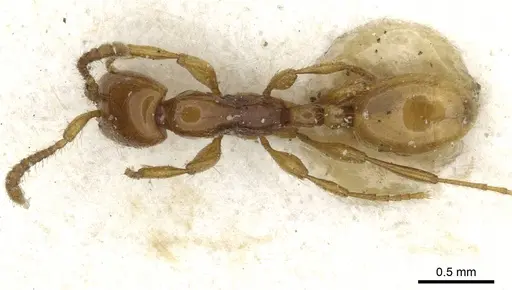
CASENT0917362
AntWeb'de Görüntüle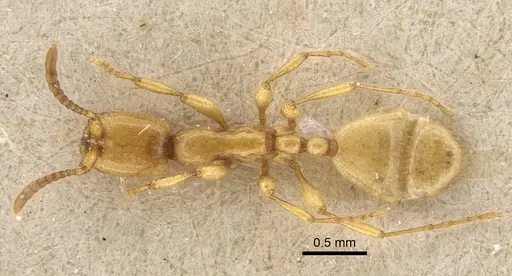

CASENT0922685
AntWeb'de Görüntüle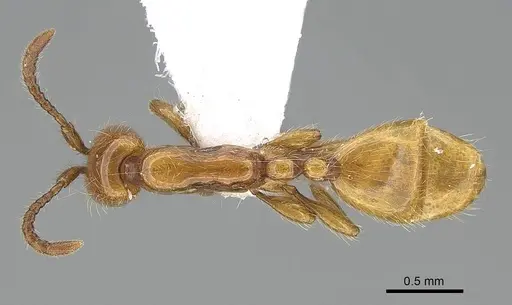
Literatür
Dağılım haritası yükleniyor...Ürünler yükleniyor...