
Aenictus dlusskyi
- Bilimsel Adı
- Aenictus dlusskyi
- Alt Familya
- Dorylinae
- Yazar (Tanımlayan)
- Arnol'di, 1968
- Dağılım
- 0 ülkede bulundu
Giriş
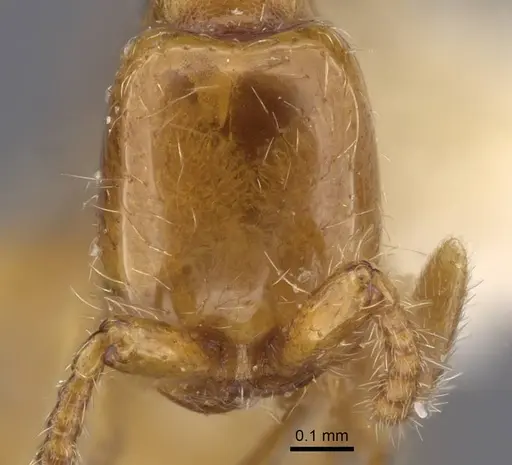
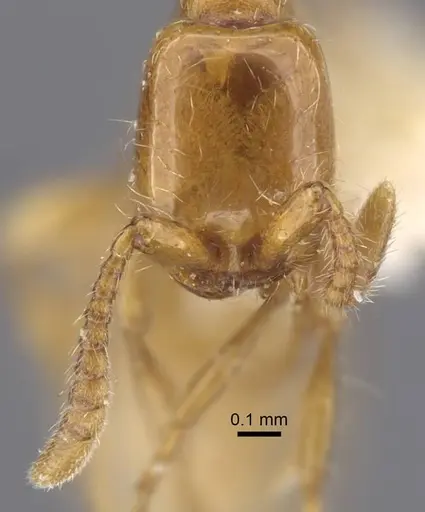
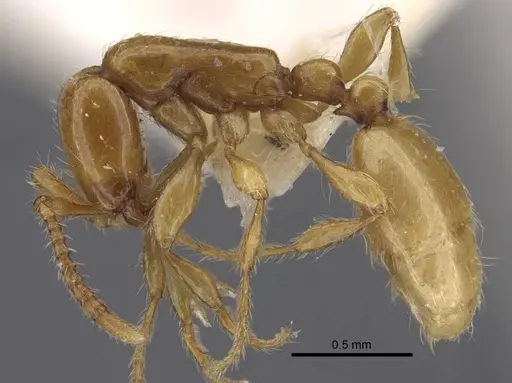
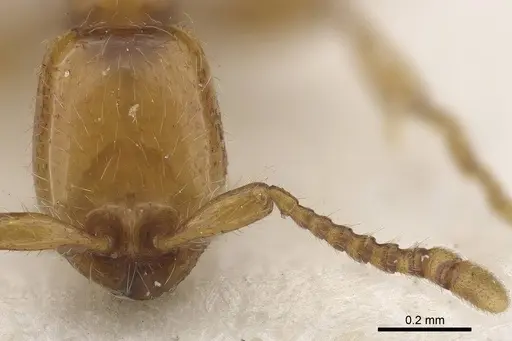
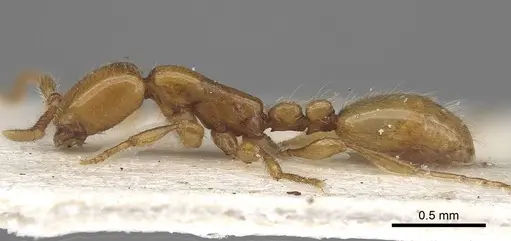
Aenictus dlusskyi is a tiny army ant native to the Palaearctic region, found in Armenia, Iran, and Turkmenistan . Workers measure 2.5-3.5 mm, are completely blind, and display the classic army ant lifestyle - they have no permanent nest and wander nomadically through soil and leaf litter . These shiny yellow to brownish-yellow ants are specialized predators that hunt other ants and termites, making them one of the few true army ants in the region . Despite being described in 1968,this species remains extremely rare in collections and has only been documented from a handful of localities, with most specimens coming from the original type series collected near Yerevan, Armenia .
Quick Summary
- Difficulty: Expert
- Origin & Habitat: Armenia, Iran, and Turkmenistan, found under logs, in soil, and leaf litter of forested areas [2][1].
- Colony Type: Colony structure is unconfirmed. Males and queens remain unknown [2].
- Size & Growth:
- Antkeeping:
- Temperature: Unknown, based on their Armenian and Iranian origin, start with moderate temperatures around 22-25°C and observe colony response.
- Humidity: Found in leaf litter and soil, suggesting moderate to high humidity with good drainage.
- Diapause: Unknown, while Armenia experiences cold winters, army ants often maintain activity year-round.
- Nesting: No permanent nest in nature, they are nomadic army ants that bivouac temporarily [2].
- Behavior: Blind, nomadic army ants that forage in soil and leaf litter [2]. They are specialized predators that hunt other ants and termites, using chemical trails for coordination [2]. Workers are small and smooth-bodied [2].
- Common Issues: colony requires constant supply of other ant colonies or termites as food, impossible to sustain in standard captivity., nomadic behavior means they will not stay in a permanent nest and require enormous foraging areas., extremely small worker size means escape prevention must be exceptional., rarity in the wild and lack of captive breeding makes acquisition ethically questionable., unknown captive requirements and specialized army ant biology likely lead to rapid colony failure.
Army Ant Biology and Captive Challenges
Aenictus dlusskyi belongs to the Old World army ants, a group famous for their nomadic lifestyle and massive raiding columns [2]. Unlike typical ants that establish permanent nests, army ants form temporary bivouacs and move regularly to exploit new foraging areas [2]. This biology makes them fundamentally unsuited to standard antkeeping setups. In captivity, they require enormous spaces with constant substrate changes and impossible amounts of prey. Workers are blind and rely entirely on chemical communication, meaning disruptions to their trail pheromones can collapse colony coordination [2]. While some tropical army ants have been maintained in specialized laboratory facilities, A. dlusskyi has never been successfully kept by hobbyists and likely requires conditions impossible to replicate in home setups.
Feeding Ecology and Prey Requirements
These ants are obligate predators of other social insects, specifically hunting other ants and termites [2]. This dietary specialization creates an insurmountable barrier for captive care. A colony would require constant access to living termite colonies or other ant species, delivered in quantities sufficient to sustain what is likely a large worker population. Unlike generalist ants that accept honey, seeds, or dead insects, A. dlusskyi appears to require live prey and possibly specific chemical cues from their targets. Attempting to substitute with standard antkeeping foods like mealworms or sugar water will result in colony starvation.
Housing and Space Requirements
Because they are nomadic, A. dlusskyi does not use a permanent nest structure [2]. In nature, they form temporary bivouacs in soil cavities, under logs, or in leaf litter. A captive setup would need to replicate this constant mobility, requiring a very large terrarium with deep substrate layers, frequent rearrangement of hiding spots, and no fixed nest area. The small size of workers means any ventilation holes or gaps must be extremely fine to prevent escape [2]. They require high humidity but also ventilation to prevent mold in soil substrates.
Rarity and Conservation Status
Aenictus dlusskyi is one of the rarest ants in the Palaearctic region. Despite multiple collection attempts, it has only been found at the type locality in Armenia and a single site in Iran [3][2]. The species is known from fewer than 30 specimens total. Any attempt to collect these ants for the pet trade would be ecologically irresponsible and potentially harmful to a vulnerable population. Additionally, the lack of captive propagation means any removed colonies would represent a net loss to wild populations.
Frequently Asked Questions
Can I keep Aenictus dlusskyi in a test tube?
No. These are nomadic army ants that do not form permanent nests and require enormous foraging spaces. A test tube setup would be completely inappropriate and lead to immediate colony death.
What do Aenictus dlusskyi eat?
They are specialized predators that hunt other ants and termites [2]. They cannot survive on standard antkeeping foods like honey, sugar water, or mealworms.
How long until Aenictus dlusskyi get their first workers?
Unknown. The development timeline for this species has never been documented, and founding behavior remains unconfirmed.
Do Aenictus dlusskyi need hibernation?
Unknown. While they come from regions with cold winters, army ants often maintain activity year-round. There is no data on whether this species enters diapause.
How big do Aenictus dlusskyi colonies get?
Unknown. No colony size data exists for this species.
Are Aenictus dlusskyi dangerous?
They are small and blind, but as army ants they can be aggressive predators [2]. While unlikely to harm humans significantly due to their size, they are specialized predators of other ants.
Can I keep multiple Aenictus dlusskyi queens together?
Unknown. Colony structure is unconfirmed, and combining unrelated queens has not been documented.
Are Aenictus dlusskyi good for beginners?
Absolutely not. They are army ants with specialized predatory requirements, nomadic behavior, and likely massive space needs. They are effectively impossible to keep in standard antkeeping setups.
Why are my Aenictus dlusskyi dying?
If you somehow acquired these extremely rare ants, they are likely dying because they require constant supplies of live ant or termite prey, nomadic space to move, and specific humidity conditions that are impossible to maintain in captivity. They are not suited to pet keeping.
Where can I buy Aenictus dlusskyi?
You cannot legally or ethically obtain these ants. They are known from only a handful of specimens collected at two locations in Armenia and Iran [3][2]. Removing them from the wild would harm an extremely rare population, and they are not bred in captivity.
Report an Issue
The current care sheet is based fully on literature. See inconsistencies, or something that's incorrect? Please , it will be resolved after review from an admin. Contributing to the blogs tab also helps providing information, to make us be able to further improve the caresheets. Thank you for your support!
References

Bu bakım rehberi şu lisans altındadır: CC BY-SA 4.0 .
Topluluk Blogları
CASENT0917361
AntWeb'de Görüntüle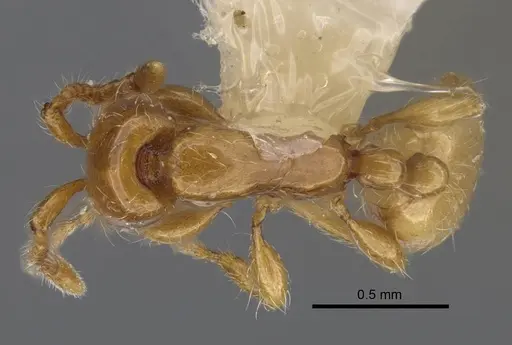
CASENT0919640
AntWeb'de Görüntüle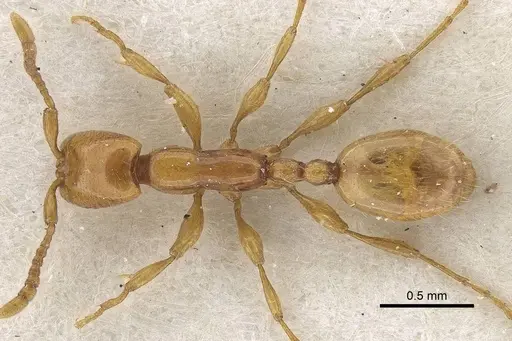
Literatür
Dağılım haritası yükleniyor...Ürünler yükleniyor...