
Acropyga tricuspis
- Bilimsel Adı
- Acropyga tricuspis
- Oymak (Tribe)
- Plagiolepidini
- Alt Familya
- Formicinae
- Yazar (Tanımlayan)
- LaPolla, 2004
- Dağılım
- 0 ülkede bulundu
Giriş
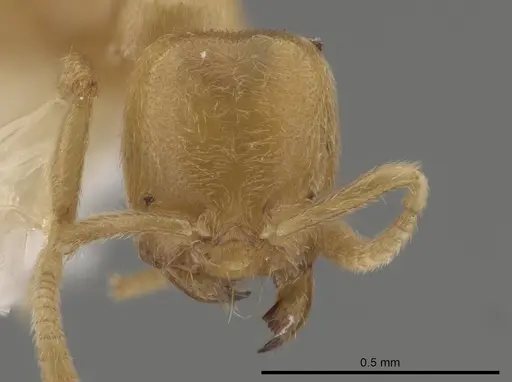
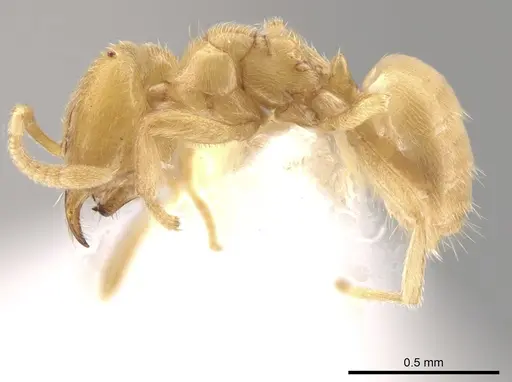
Acropyga tricuspis is a tiny rainforest ant from the Amazon Basin in Brazil and Colombia. Workers measure about 1.8-2 mm, making them one of the smaller ants you'll find. They have a uniform brownish-yellow body,11-segmented antennae, and a unique enlarged basal tooth on their mandibles with three distinct cusps - that's where the name 'tricuspis' (Latin for 'three points') comes from . This species belongs to the donisthorpei species-group and is most closely related to Acropyga donisthorpei. Almost nothing is known about their natural history. They've been collected from leaf litter and rotting wood in rainforests, but there are no documented observations of colony structure, behavior, or captive care .
Quick Summary
- Difficulty: Unknown, Insufficient Data
- Origin & Habitat: Amazon Basin in Brazil (Amazonas, Pará) and Colombia. Found in rainforest habitats, collected from leaf litter and rotting wood [2][3][1].
- Colony Type: Unknown, colony structure has not been documented in scientific literature
- Size & Growth:
- Queen: 2.8-2.91 mm [1]
- Worker: 1.82-1.96 mm [1]
- Colony: Unknown, no colony size data exists
- Growth: Unknown, no development data exists
- Development: Unknown, no development timeline documented (This is one of the least studied ant species. No research has documented development time, founding behavior, or growth rate.)
- Antkeeping:
- Temperature: Unknown, no thermal preference data. Based on their Amazon rainforest origin, they likely prefer warm, humid conditions. Start around 24-26°C and observe colony behavior.
- Humidity: Unknown, no humidity data. Given their collection from leaf litter and rotting wood in rainforest, they likely require high humidity. Keep the nest substrate consistently moist but not waterlogged.
- Diapause: Unknown, no seasonal data. Amazon rainforest species typically do not enter true diapause, but may have reduced activity periods.
- Nesting: In the wild, they nest in leaf litter and rotting wood. For captivity, a small test tube setup or a small plaster nest with fine chambers works well. Keep substrate moist.
- Behavior: Behavior is completely unstudied. Based on genus-level knowledge, Acropyga species are ground-dwelling, slow-moving ants that likely feed on honeydew and small prey. Their tiny size means escape prevention is critical, they can squeeze through extremely small gaps. No information exists on temperament, sting capability, or foraging behavior.
- Common Issues: no documented care requirements, all advice is speculative based on genus patterns, extremely small size makes escape prevention challenging, no information on what foods they accept in captivity, no data on founding success rates or colony establishment, rainforest humidity requirements may be difficult to maintain consistently
Why This Species Is Different
Acropyga tricuspis represents a big challenge for antkeepers: virtually no scientific literature exists on its biology, behavior, or captive care. While most ants have at least some basic research, this species was described in 2004 and collected only a handful of times [1]. The only known specimens come from two localities in Brazil, the type locality near Manaus in Amazonas state, and a recent record from Itupiranga in Pará [3]. That means keeping A. tricuspis is truly pioneering work. Every observation you make could be new information for the antkeeping hobby. You'll need to be patient, methodical, and prepared to experiment, while documenting your results carefully.
Appearance and Identification
This species is distinctive among New World Acropyga because of its unique mandible structure. The basal tooth (at the base of the mandible) is enlarged, roughly square, and has three clearly visible cusps, this feature gives the species its name 'tricuspis' (Latin for 'three points') [1]. Workers have 11-segmented antennae that are thickened, and the entire body is a uniform brownish-yellow. Queens are similar but larger at 2.8-2.9 mm, and males have 12-segmented antennae. The combination of tiny size (under 2 mm for workers), yellow-brown color, and three-cusped basal tooth makes them easy to identify under magnification.
Housing and Setup
Given their tiny size (workers under 2 mm), you'll need small-scale housing. A test tube setup works well for founding colonies, use a small test tube with a cotton ball for water. The tube should be small enough that the ants can easily walk on the moist cotton. For established colonies, a small plaster nest or Y-tong nest with very fine chambers and passages works. Passages should be only 2-3 mm wide so the ants don't get lost in large open spaces. Because they're so small, escape prevention is critical. Use fluon on container edges and ensure lid seals are tight. As they come from leaf litter and rotting wood in rainforest, a naturalistic setup with moist substrate and some decaying organic material may help them feel at home [1].
Feeding and Diet
The diet of Acropyga tricuspis is completely unstudied. Based on genus patterns, they likely feed on honeydew from aphids or scale insects, and may hunt small micro-arthropods. For captive care, start with sugar water (honey or sucrose solution) on a small piece of cotton or in a test tube with a cotton wick. For protein, offer tiny prey like springtails, fruit flies, or small pieces of mealworm. Start with very small portions and watch what gets consumed. Remove uneaten food after 24-48 hours to prevent mold. Given their tiny size, any prey should be appropriately scaled, even a fruit fly is large relative to these ants. Keep sugar water available constantly and offer protein every 5-7 days.
Temperature and Humidity
No specific temperature or humidity data exists for this species. They come from the Brazilian Amazon rainforest, which is warm and humid year-round. Use this as your starting point: aim for temperatures around 24-26°C with a slight gradient so the ants can choose. Humidity should be high, the nest substrate should feel consistently moist but not have standing water. You can achieve this by keeping the water reservoir in a test tube setup full, or by misting a naturalistic setup regularly. A small water dish in the outworld can also help maintain humidity. Monitor the ants' activity, if they seem sluggish, try warming slightly, if they avoid the heated area, reduce temperature. [1]
Observational Opportunities
Because so little is known about this species, keeping A. tricuspis gives you a unique chance to contribute to our knowledge. Document everything: how quickly they consume different foods, what temperatures they prefer, how fast the colony grows, any interesting behaviors, and what conditions lead to successful colony development. Take photos and notes regularly. If you succeed in breeding this species, your observations could be valuable for future care guides. Consider reaching out to ant researchers or online antkeeping communities to share your findings. Every bit of data helps, this is truly a species where the hobbyist can contribute original scientific observations.
Frequently Asked Questions
How long does it take for Acropyga tricuspis to go from egg to worker?
This is unknown, no research has documented the development timeline. There is no data on egg-to-worker development, and this species has never been documented in captive breeding.
What do Acropyga tricuspis ants eat?
Their diet is unstudied. Based on genus patterns, they likely accept sugar sources (honeydew, sugar water) and small live prey. Start with sugar water constantly available and tiny prey like springtails or fruit flies. Remove uneaten food after 24-48 hours.
Are Acropyga tricuspis good for beginners?
This species cannot be recommended for beginners. Almost nothing is known about their care, and they are extremely small, making them difficult to house and maintain. They are best suited for experienced antkeepers who want to contribute to understanding a poorly documented species.
What temperature should I keep Acropyga tricuspis at?
No specific data exists, but Amazon rainforest origins suggest 24-26°C. Start in this range and adjust based on colony activity. Provide a slight temperature gradient so the ants can choose.
How big do Acropyga tricuspis colonies get?
This is unknown, no colony size data has been documented. They have only been collected a few times in the wild, and no observations of mature colonies exist.
Can I keep multiple queens together?
Unknown, no data exists on their colony founding behavior. The colony structure (monogyne vs polygyne) has never been documented. Do not attempt combining unrelated queens without documented evidence that this is safe.
What is the best nest type for Acropyga tricuspis?
Given their tiny size, a small test tube setup works well for founding colonies. For established colonies, use a small plaster or Y-tong nest with very fine chambers (2-3 mm passages). The key is appropriately scaled housing, these ants are only 1.8-2 mm long.
Where is Acropyga tricuspis found in the wild?
They are known from the Amazon Basin in Brazil (Amazonas state near Manaus, and Pará state) and Colombia. They've been collected from leaf litter and rotting wood in rainforest habitats [2][3][1].
Why is Acropyga tricuspis so poorly documented?
This species was only described in 2004 and has been collected very rarely. Only a handful of specimens exist from two localities in Brazil. The Amazon rainforest is vast, and many species remain unstudied. This species gives antkeepers a chance to contribute original observations [1].
Report an Issue
The current care sheet is based fully on literature. See inconsistencies, or something that's incorrect? Please , it will be resolved after review from an admin. Contributing to the blogs tab also helps providing information, to make us be able to further improve the caresheets. Thank you for your support!
References

Bu bakım rehberi şu lisans altındadır: CC BY-SA 4.0 .
Topluluk Blogları
CASENT0640346
AntWeb'de Görüntüle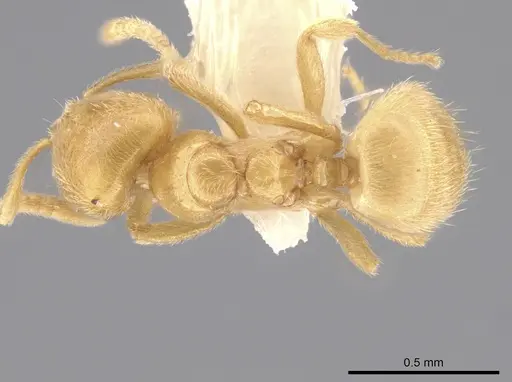
Literatür
Dağılım haritası yükleniyor...Ürünler yükleniyor...