
Yunodorylus eguchii
- Sci. Name
- Yunodorylus eguchii
- Subfamily
- Dorylinae
- Author
- Borowiec, 2009
- Distribution
- Found in 1 countries
Introduction
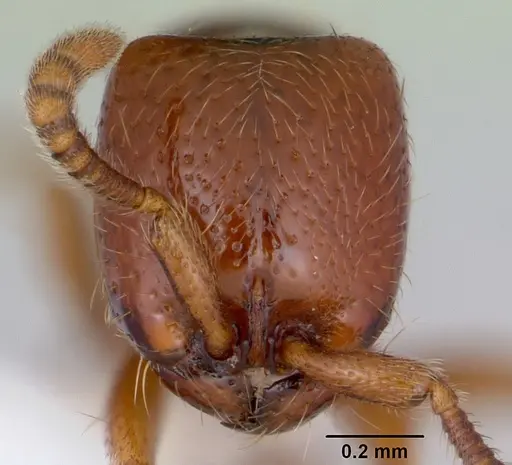
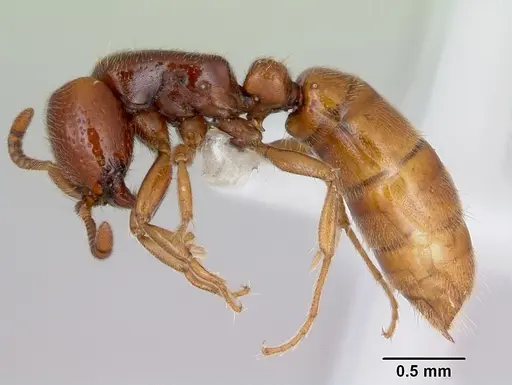
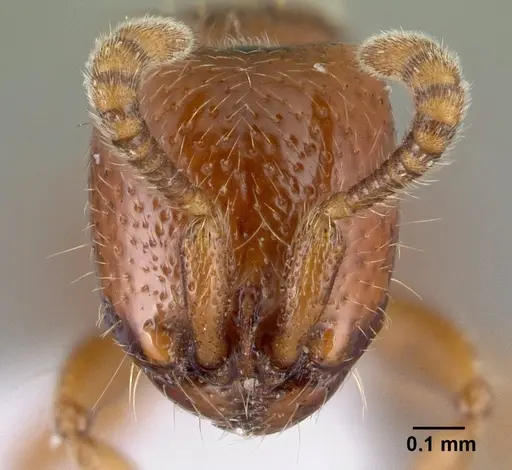
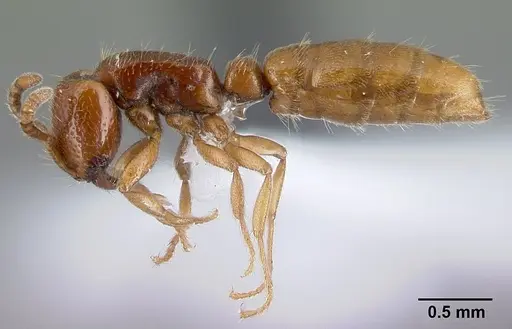
Yunodorylus eguchii is a small predatory ant from the Dorylinae subfamily, native to Vietnam. Workers are polymorphic, meaning they come in noticeably different sizes within the same colony . The species has a distinctive bicolored pattern: large workers have a light chestnut-brown head and mesosoma while the abdomen is yellowish-brown, with smaller workers being lighter overall . This is a non-army doryline ant - unlike true army ants, they don't form massive raiding swarms but instead forage individually or in small groups along established trails . The genus Yunodorylus contains just four named species found in Vietnam and surrounding regions, making this a relatively rare ant in the antkeeping hobby . In Vietnam, they are locally uncommon and nest in soil under stones, found in both lowland evergreen forest and dry dwarf forest habitats .
Quick Summary
- Difficulty: Medium
- Origin & Habitat: Vietnam (Dong Nai Province, Tay Ninh Province) in lowland evergreen/semi-evergreen forest and dwarf forest at 5-160m altitude [1][3]
- Colony Type: Monogyne, single queen colonies with one reproductive queen [2]. Queens are subdichthadiigyne (intermediate form between worker and full dichthadiiform), with weaker dimorphism than typical army ants [3].
- Size & Growth:
- Queen: Size data unavailable, known only from head measurements
- Worker: Size data unavailable, workers are polymorphic with head width ranging 0.50-0.76mm [1][2]. Exact body length not recorded.
- Colony: Several thousand workers in mature colonies [2]
- Growth: Moderate, total development 9-10 weeks from egg to worker [2]
- Development: 9-10 weeks (63-73 days) at room temperature [2] (Egg stage: 16-19 days, larval stage: 24-26 days, cocoon stage: 27-28 days [2]. Phasic reproduction means eggs are laid in batches rather than continuously.)
- Antkeeping:
- Temperature: Tropical species, inferred from natural habitat in lowland Vietnam. Keep at 24-28°C for optimal growth [1][3].
- Humidity: Moderate to high, they nest in soil and have been found in both humid lowland forest and drier dwarf forest [1]. Keep substrate moist but not waterlogged.
- Diapause: No, as a tropical species, they do not require hibernation. They may show reduced activity during cooler periods but no true diapause [2].
- Nesting: Soil-nesting species. In captivity, they do well in naturalistic setups with moist substrate or plaster nests. They have been found in the walls of termite mounds in the wild [3]. Provide deep substrate (at least 5cm) for nesting. Also recorded under stones [1].
- Behavior: Predatory ants that actively hunt other insects. Workers forage individually or follow trails of other workers. When they find prey, they sting it and recruit nearby nestmates to help subdue it [2]. They have a functional stinger and will use it defensively. Workers are moderately aggressive when defending their colony. Escape prevention is important due to their very small size, they can slip through small gaps easily.
- Common Issues: tiny size means escapes are likely without fine mesh barriers and sealed connections, predatory diet requires live prey, they may reject some foods like Drosophila or crickets unless immobilized [2], phasic reproduction means colony growth is cyclical, not continuous, expect pauses between brood batches, queen can die during physogastric period, documented in lab colonies [2], workers do not lay eggs if queen is lost, meaning orphaned colonies cannot recover [2]
Housing and Nest Setup
Yunodorylus eguchii is a soil-nesting ant that does well in naturalistic setups with deep, moist substrate. In the wild, they nest in soil under stones and have been found in the walls of termite mounds [1][3]. For captivity, use a setup with at least 5-8cm of moist soil or a plaster nest with a water reservoir to maintain humidity. Because these ants are very small (body size not officially recorded but head width under 0.8mm), escape prevention is critical, use fine mesh on any openings and ensure all connections are sealed. A formicarium with a foraging area connected to a nest chamber works well. They prefer darkness for nesting, so cover the nest portion with a dark cloth or use a nesting box with a cover.
Feeding and Diet
This is a predatory ant that primarily hunts other insects. In laboratory tests, they accepted 100% of ant brood presented to them, including species like Camponotus, Lasius, Myrmica, Pheidole, and Tetramorium [2]. They also readily accepted termites, small mealworms, and dermapteran eggs. However, they rejected Drosophila larvae, crickets, centipedes, isopods, and springtails [2]. Cockroaches and crickets were only accepted after artificial immobilization. For captive feeding, offer small live insects such as fruit flies, pinhead crickets, and ant brood from feeder colonies. They also accept small pieces of mealworm or other soft-bodied insects. Feed protein 2-3 times per week, and remove uneaten prey after 24 hours to prevent mold.
Temperature and Seasonal Care
As a tropical species from Vietnam, Yunodorylus eguchii requires warm temperatures. Keep the nest area at 24-28°C for optimal brood development. At this temperature range, development from egg to worker takes about 9-10 weeks [2]. They do not require hibernation or diapause, this is a year-round active species. However, avoid temperatures above 30°C as this can stress the colony. A heating cable on one side of the nest can create a temperature gradient, allowing the ants to self-regulate. Room temperature in most homes (20-24°C) may slow development but should be survivable. Monitor colony activity, if workers seem sluggish, increase temperature slightly.
Colony Structure and Reproduction
Yunodorylus eguchii forms monogyne colonies with a single queen. The queen is a subdichthadiigyne, an intermediate form between a worker and the fully developed dichthadiiform queens seen in true army ants. This means the queen is larger than workers but not dramatically so, and she retains some worker-like features [3]. Colonies in the wild contain several thousand workers [2]. The species exhibits phasic reproduction, queens go through cycles of physogastry (abdominal swelling) followed by egg-laying, rather than laying eggs continuously. In lab colonies, the reproductive cycle took 56-63 days [2]. Workers are polymorphic, varying considerably in size, with the largest workers having head widths about 1.5 times larger than the smallest [2]. Workers do not lay eggs if the queen is lost, meaning orphaned colonies cannot replace her [2].
Foraging Behavior
Unlike true army ants that form massive raiding columns, Yunodorylus eguchii forages in a more modest fashion. Workers either walk along the trails of other foragers or search alone [2]. When a forager encounters prey, it grabs the prey, bends its abdomen to sting it, and then surrounding workers converge to help subdue and transport the prey back to the nest. Notably, no conspicuous trail-laying behavior (like pheromone marking) was observed, the ants simply follow each other [2]. In laboratory colonies, sometimes almost half of the entire colony was actively foraging, with forager numbers matching the number of larvae present. This suggests they are opportunistic foragers that can mobilize many workers when food is available.
Defense and Stinging
As a member of the Dorylinae subfamily, Yunodorylus eguchii has a functional stinger. Workers will use it defensively when the colony is threatened [2]. The sting is primarily used for subduing prey, workers grab prey with their mandibles, then sting it to immobilize it with venom before recruiting help from nestmates [2]. The venom is effective against other insects, including a wide range of ant species. For antkeepers, this means the ants can sting if handled roughly or if the nest is disturbed. The sting is not dangerous to humans but may cause mild irritation. Always handle these ants gently and avoid disturbing their nest unnecessarily.
Frequently Asked Questions
How long does it take for Yunodorylus eguchii to raise first workers?
At optimal temperatures (24-28°C), development from egg to worker takes approximately 9-10 weeks. The egg stage lasts 16-19 days, larval stage 24-26 days, and cocoon stage 27-28 days [2].
What do Yunodorylus eguchii ants eat?
They are predatory ants that primarily eat other insects. They readily accept ant brood, termites, small mealworms, and other soft-bodied insects. They generally reject Drosophila, crickets, and larger prey unless immobilized [2].
Can I keep multiple queens together?
No. This species is monogyne, meaning colonies have only a single queen. Multiple queens would likely fight [2].
How big do Yunodorylus eguchii colonies get?
Mature colonies can reach several thousand workers [2]. Workers are polymorphic, with the largest workers about 1.5 times bigger (by head width) than the smallest [2][1]. Exact body length is not recorded.
Do they need hibernation?
No. As a tropical species from Vietnam, they do not require diapause or hibernation. Keep them at warm temperatures (24-28°C) year-round [1].
What type of nest is best?
They are soil-nesting ants that prefer moist substrate. Naturalistic setups with deep, moist soil or plaster nests with water reservoirs work well. They have been found in termite mound walls in the wild, indicating they can tolerate close association with other insects [3]. Provide darkness for the nest area.
Are Yunodorylus eguchii good for beginners?
They are rated as medium difficulty. While not the hardest ant to keep, they require specific care: warm temperatures, live prey as food, and excellent escape prevention due to their tiny size. They are not as forgiving as some beginner species like Lasius or Tetramorium.
Why are my ants not eating?
They may be in a non-foraging phase, phasic reproduction means colony activity fluctuates. Also ensure prey is small enough and appropriate (they reject Drosophila, large crickets, and springtails). Check that temperatures are warm enough (24-28°C) to stimulate activity [2].
How do I start a colony?
Founding behavior is unconfirmed. If you have a queen (subdichthadiigyne), provide a setup with moist substrate and keep her warm (around 26-28°C). Once workers emerge, begin offering small live prey. Founding colonies may take several months to establish. Note that queens are not commonly available, and this species is rare in the hobby [3].
Report an Issue
The current care sheet is based fully on literature. See inconsistencies, or something that's incorrect? Please , it will be resolved after review from an admin. Contributing to the blogs tab also helps providing information, to make us be able to further improve the caresheets. Thank you for your support!
References

This caresheet is licensed under CC BY-SA 4.0 .
Community Blogs
CASENT0173071
View on AntWeb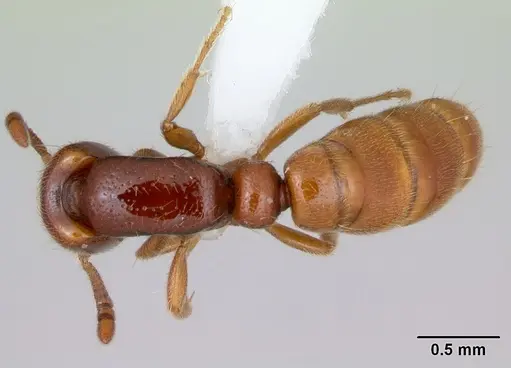
CASENT0217033
View on AntWeb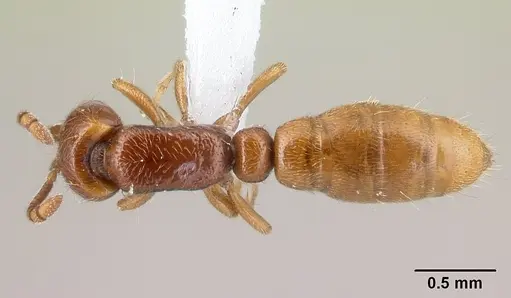
Literature
Loading distribution map...Loading products...