
Xenomyrmex panamanus
- Sci. Name
- Xenomyrmex panamanus
- Tribe
- Crematogastrini
- Subfamily
- Myrmicinae
- Author
- Wheeler, 1922
- Distribution
- Found in 3 countries
Introduction
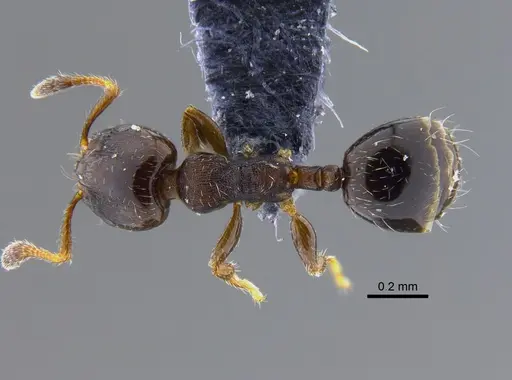
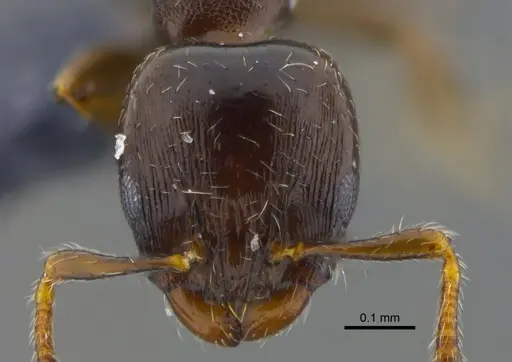
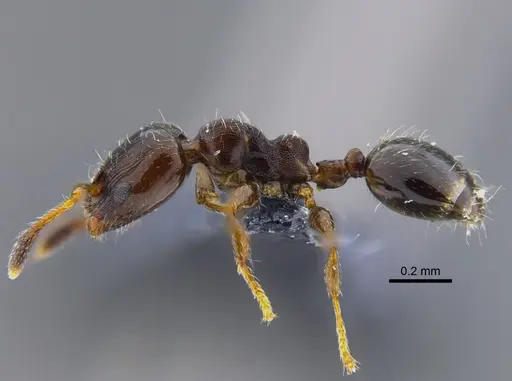
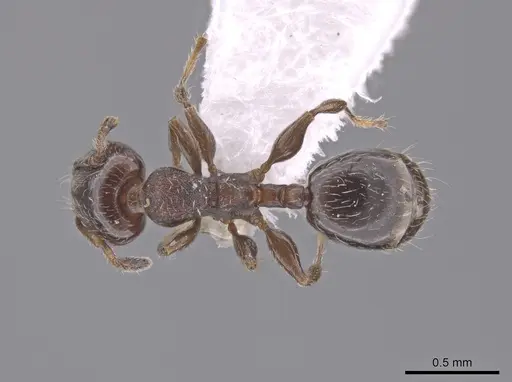
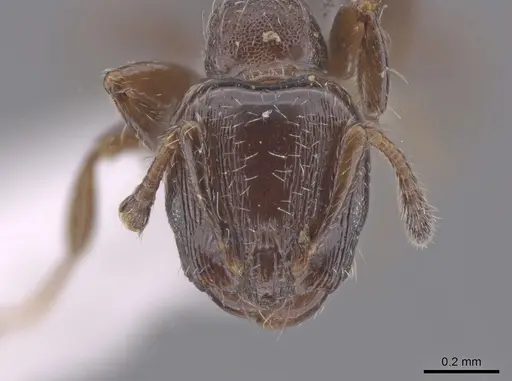
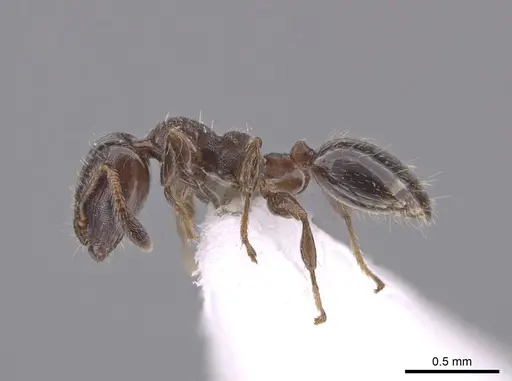
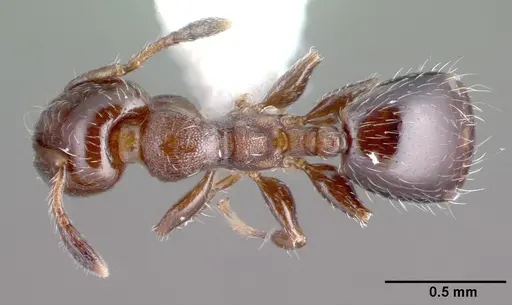
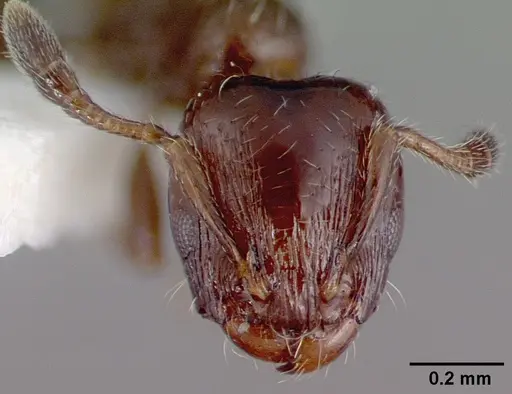
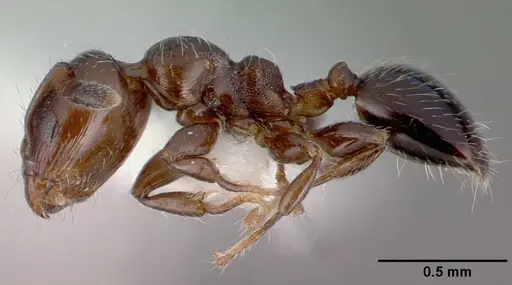
Xenomyrmex panamanus is a tiny, rare arboreal ant native to Central America, with records from Costa Rica, Mexico, and Panama . Workers are dark brown and about 2–3 mm long . They live exclusively in the forest canopy, nesting under flat bark on tree branches . Researchers have only ever found a few workers at a time, and nests with brood have never been observed . They are associated with scale insects (Coccoidea), which they tend for honeydew . This species belongs to the arboreal omnivore functional group .
Quick Summary
- Difficulty: Expert
- Origin & Habitat: Neotropical region – Costa Rica, Mexico, and Panama. These ants live in the forest canopy, nesting under securely attached bark on branches and tree trunks [1][3].
- Colony Type: Unknown – colony structure has never been documented.
- Size & Growth:
- Antkeeping:
- Temperature: Exact requirements unknown. As a tropical under‑canopy species, keep warm, roughly 24–28 °C. Use a small heating cable on one side of the nest to create a gradient [1].
- Humidity: High – they naturally live under bark in the humid canopy. Keep the nest substrate moist but not waterlogged [1].
- Diapause: No – this is a tropical species that remains active year‑round [1].
- Nesting: Arboreal specialists. Provide flat bark, cork bark, or slate pressed together to create narrow chambers. A naturalistic setup mimics their under‑bark habitat [1].
- Behavior: Very shy and fast‑moving. When disturbed, workers immediately run into tiny crevices. Primary defense is smearing venom onto attackers (typical of Crematogastrini). Escape prevention is critical due to their 2–3 mm size – use fine mesh and tight lids [1].
- Common Issues: tiny size means escapes are likely without fine mesh barriers, extreme rarity in the wild means obtaining colony founders is nearly impossible, no breeding data exists – expect very slow, unpredictable growth, skittish and may stress easily in captivity, unknown founding behavior and queen biology
Natural History and Habitat
Xenomyrmex panamanus is one of the rarest ant species in the Neotropics. Despite being described in 1922,these ants have only been collected a handful of times by researchers [1]. They are strictly arboreal, living in the forest canopy where they nest under flat bark attached to tree branches [3][1]. Longino's observations in Costa Rica found workers in tiny, connected chambers beneath bark on a Licania tree – one chamber contained pink scale insects (Coccoidea) that the workers were tending [1]. The species has never been collected with brood, and the largest group found together was just 3 workers [1]. Their distribution spans from Panama through Costa Rica to southern Mexico, but they occur at very low densities – only one of nearly 50 fogged tree crowns in a study contained this species [1].
Housing and Nest Setup
This species requires an arboreal‑style setup that mimics their natural canopy habitat. The key is providing tight, flat spaces between surfaces where they can create their tiny chambers. A naturalistic setup works best – place flat pieces of cork bark, slate, or similar materials pressed together to create narrow gaps (2–5 mm). Alternatively, a Y‑tong (AAC) nest with the smallest available chamber sizes can work, though they may not use it as readily as natural materials [1]. The outworld should be small and escape‑proof – these 2–3 mm ants can slip through remarkably small gaps. Use fluon on container edges and fine mesh on any ventilation. Place the nest setup in the upper portion of the enclosure since they are canopy‑dwellers [1].
Feeding and Diet
Based on field observations of scale insects in their nests, Xenomyrmex panamanus likely feeds primarily on honeydew produced by Coccoidea (scale insects) and other homopterans in the canopy [1]. They are classified as arboreal omnivores in functional group studies [4]. In captivity, offer sugar water or honey water regularly, and supplement with small live prey like fruit flies, springtails, or tiny crickets. Given their association with scale insects, they may have a strong preference for sugary liquids. Feed small amounts every 2–3 days and remove uneaten prey within 24 hours. Their tiny size means even a fruit fly is a substantial meal [4][1].
Temperature, Humidity, and Diapause
As a tropical canopy species from Costa Rica and Panama, these ants need warm, humid conditions year‑round. Maintain temperatures roughly between 24–28 °C – use a small heating cable on one side of the nest if your room temperature is below this range. Place the heating element on top of the nest, not underneath, to avoid evaporating moisture too quickly [1]. Humidity should stay high – mist the outworld occasionally and keep the nest substrate moist. Since they live under bark in the humid canopy, they are not tolerant of dry conditions [1]. No hibernation or diapause is needed – keep them warm throughout the year [1].
Behavior, Defense, and Handling
These ants are extremely shy and fast‑moving. When researchers pried bark loose in the field, exposed workers would immediately run into crevices no wider than their own bodies [1]. Their primary defense is characteristic of the Crematogastrini tribe – they use a modified, flattened stinger to wipe or smear venom onto enemies rather than piercing them. Do not expect to observe much activity or foraging – they will flee rather than defend themselves. Handle any container changes with extreme care – they are nearly invisible when stationary and can escape during transfers. Their 2–3 mm size makes escape prevention essential with fine mesh and tight lids [1].
Frequently Asked Questions
How hard is Xenomyrmex panamanus to keep?
This is an expert‑only species. They are extremely rare in the wild, with no evidence of colonies exceeding a few workers, and almost no captive breeding data exists. They require specific arboreal housing and may stress easily in captivity [1].
What do Xenomyrmex panamanus ants eat?
They are arboreal omnivores that likely feed on honeydew from scale insects. In captivity, offer sugar water or honey water as a primary food source, plus small live prey like fruit flies or springtails [4][1].
Can I keep Xenomyrmex panamanus in a test tube?
Since queens have never been collected, it is unknown if a test tube setup would work. For an arboreal species, a naturalistic setup with flat surfaces pressed together to create tight chambers is recommended to mimic their under‑bark habitat [1].
Do Xenomyrmex panamanus ants sting?
No record of stinging exists. Their primary defense is smearing venom (typical of Crematogastrini tribe). These tiny ants are extremely shy and will flee rather than defend themselves when disturbed [1].
How big do Xenomyrmex panamanus colonies get?
Unknown in captivity. In the wild, researchers have never found more than 2–3 workers together, suggesting colonies remain extremely small – likely under 50 workers [1].
What temperature do Xenomyrmex panamanus need?
Exact data is unavailable. As a tropical under‑canopy species, keep warm, roughly 24–28 °C. Use a heating cable on one side for a gentle gradient. No hibernation is needed [1].
Why are Xenomyrmex panamanus so rarely kept?
This species has only been collected a handful of times in scientific history. They live exclusively in the forest canopy, nest under bark, and colonies appear to be tiny. Finding a wild colony to establish in captivity is nearly impossible [1].
Do Xenomyrmex panamanus need high humidity?
Yes, they need high humidity – keep the nest substrate consistently moist but not waterlogged. As canopy dwellers under bark in tropical forests, they are not tolerant of dry conditions [1].
How long until first workers in Xenomyrmex panamanus?
Unknown – no breeding data exists for this species. The egg‑to‑worker timeline has never been documented, and colonies in the wild have never been found with brood [1].
Are Xenomyrmex panamanus good for beginners?
No. This species is not recommended for beginners. They are extremely rare, have no captive breeding data, require specific arboreal housing, and colonies are nearly impossible to obtain [1].
Report an Issue
The current care sheet is based fully on literature. See inconsistencies, or something that's incorrect? Please , it will be resolved after review from an admin. Contributing to the blogs tab also helps providing information, to make us be able to further improve the caresheets. Thank you for your support!
References

This caresheet is licensed under CC BY-SA 4.0 .
Community Blogs
Literature
Loading distribution map...Loading products...