
Wasmannia williamsoni
- Sci. Name
- Wasmannia williamsoni
- Tribe
- Attini
- Subfamily
- Myrmicinae
- Author
- Kusnezov, 1952
- Distribution
- Found in 2 countries
Introduction
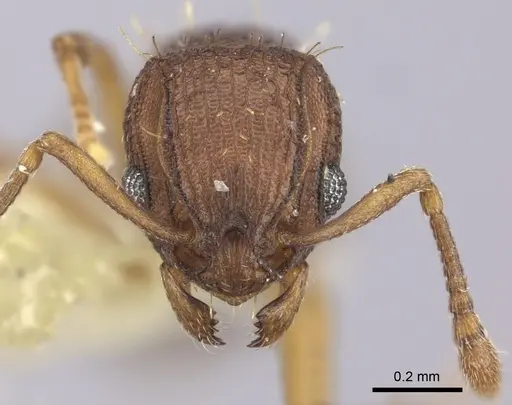
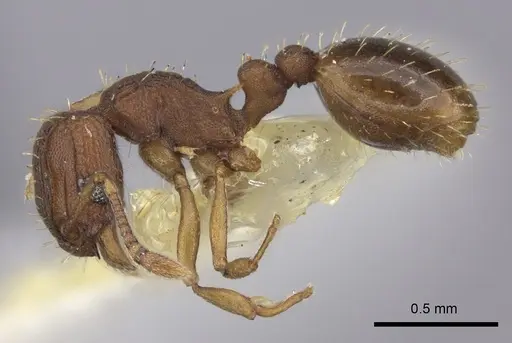
Wasmannia williamsoni is a small ant species native to central-eastern Argentina and southern Brazil. Workers are the largest in the genus, with a distinctive heavy striate sculpture on the face and a very small propodeal spiracle . The body is reddish-brown with the gaster slightly darker . It is closely related to Wasmannia sulcaticeps, and both may be the most primitive members of the genus . This species occurs in arid to semi-arid habitats of the Pampeana and Espinal ecoregions, often under stones in shrublands and grasslands . Males have never been collected, and it is considered a relict endemic lineage .
Quick Summary
- Difficulty: Medium
- Origin & Habitat: Central-eastern Argentina (La Pampa, Buenos Aires provinces) and southern Brazil (Santa Catarina, Rio Grande do Sul). Found under stones in arid shrublands, grasslands, and caldenal forest districts, often at 400-1000m elevation in mountain grasslands [2][3][4].
- Colony Type: Likely monogyne, small colonies with a single queen found under stones [2].
- Size & Growth:
- Queen: Size data unavailable, no total length published [2].
- Worker: Size data unavailable, workers are the largest in the genus but no total length recorded [1].
- Colony: Small, field observations suggest under 100 workers [2].
- Growth: Moderate (inferred from related Wasmannia species).
- Development: Not documented, estimate based on typical Myrmicinae: roughly 6-10 weeks at optimal temperature. (Development likely depends on temperature, keep at 20-25°C for steady growth.)
- Antkeeping:
- Temperature: Keep at 20-25°C for activity and brood development. They experience summer means of 20.5°C and winter means of 8°C, with absolute highs up to 40°C and frequent winter frosts [2]. Avoid temperatures below 5°C or above 35°C.
- Humidity: Moderate, natural rainfall is 500-800mm/year [2]. Keep nest substrate moderately moist but not waterlogged. Provide a water source.
- Diapause: Yes, likely required, natural winters are cold (mean 8°C, frosts common). Provide 2-3 months at 10-15°C during winter [2].
- Nesting: Ground-nesting under stones in arid grasslands [2]. Use test tubes for founding, for larger colonies, use a naturalistic setup with soil and flat stones, or Y-tong (AAC) nests with tight chambers.
- Behavior: Generally calm and non-aggressive. Workers are small and active foragers, likely feeding on small invertebrates and honeydew [2]. Escape risk is high due to tiny size, use standard barrier methods (fluon or talc). They prefer tight spaces and avoid open areas.
- Common Issues: slow colony growth due to small colony size, beginners may lose patience., cold sensitivity, sudden drops can stress colonies, maintain stable temperatures., high escape risk from tiny workers, seal all gaps in the setup., humidity management, avoid both drying out and waterlogging., winter diapause is likely needed for colony health, provide a cool rest period.
Housing and Nest Setup
Wasmannia williamsoni naturally nests under stones in arid shrublands and grasslands [2]. For captive care, a test tube with a water reservoir and cotton plug works well for founding. For established colonies, use a naturalistic setup with a soil substrate and flat stones on top, or a Y-tong (AAC) nest with small chambers. Because workers are tiny, ensure all gaps are sealed with fluon or similar barriers to prevent escape. Keep the nest area dark and stable.
Feeding and Diet
As a member of the tribe Attini, this species likely feeds on small insects, honeydew, and possibly seeds, though specific dietary studies are lacking [2]. Offer small live prey like fruit flies, pinhead crickets, or tiny mealworms. Provide sugar water or honey for carbohydrates. Feed protein 2-3 times per week and remove uneaten prey after 24 hours to prevent mold.
Temperature and Seasonal Care
This species comes from temperate regions with distinct seasons [2]. Summer averages 20.5°C, winter 8°C, with frequent frosts. Keep colonies at 20-25°C for optimal activity. During winter, provide a diapause period of 2-3 months at 10-15°C to mimic natural conditions, this is likely important for colony health. Avoid temperatures below 5°C or above 35°C.
Humidity and Water Needs
Natural rainfall is 500-800mm/year, moderate [2]. Keep the nest substrate moderately moist, damp but not waterlogged. A test tube setup with a water reservoir maintains good humidity. For naturalistic setups, mist the soil occasionally and let it partially dry between waterings. Provide a separate water tube or dish.
Colony Structure and Growth
Wasmannia williamsoni forms small colonies with a single queen (monogyne, inferred from field observations) [2]. Field collections found only dozens of workers, and males have never been recorded. The queen is dark brown, slightly larger than workers. Growth is moderate, expect several months for first nanitics, and potentially over a year to reach a modest colony size. Colonies likely peak in summer.
Frequently Asked Questions
How long does it take for Wasmannia williamsoni to produce first workers?
Not documented, estimate 6-10 weeks from egg to worker at optimal 20-25°C, based on typical small Myrmicinae. Founding queens may take longer as they raise brood without foraging.
Can I keep Wasmannia williamsoni in a test tube?
Yes, test tubes work well. Use a standard setup with a water reservoir. The small colony size means they can stay in test tubes longer than many species. Ensure proper temperature and humidity [2].
What temperature range is best for Wasmannia williamsoni?
Keep at 20-25°C for normal activity. They can briefly tolerate up to 40°C (wild maximum) but avoid extremes. In winter, provide 10-15°C for 2-3 months of diapause [2].
Are Wasmannia williamsoni good for beginners?
Rated medium difficulty. They require careful humidity control and escape prevention. Availability is limited, and the slow growth may test patience.
Do Wasmannia williamsoni need hibernation?
Yes, likely, natural winters are cold (mean 8°C, frosts common) [2]. Provide 2-3 months at 10-15°C during winter for colony health.
How big do Wasmannia williamsoni colonies get?
Small, likely under 100 workers based on field observations [2]. This is a slow-growing, low-density species.
What do Wasmannia williamsoni eat?
Feed small live prey (fruit flies, tiny crickets) and sugar water or honey. They may also take seeds. Remove uneaten food after 24h.
Where is Wasmannia williamsoni found in the wild?
Central-eastern Argentina (La Pampa, Buenos Aires) and southern Brazil (Santa Catarina, Rio Grande do Sul). Lives in arid shrublands and grasslands under stones at 400-1000m elevation [2][3].
Why is my Wasmannia williamsoni colony declining?
Check temperature stress, improper humidity, lack of protein, or missing winter diapause. Also examine for escape gaps, tiny workers can squeeze through small cracks. Ensure stable conditions and nutrition.
Report an Issue
The current care sheet is based fully on literature. See inconsistencies, or something that's incorrect? Please , it will be resolved after review from an admin. Contributing to the blogs tab also helps providing information, to make us be able to further improve the caresheets. Thank you for your support!
References

This caresheet is licensed under CC BY-SA 4.0 .
Community Blogs
CASENT0260383
View on AntWeb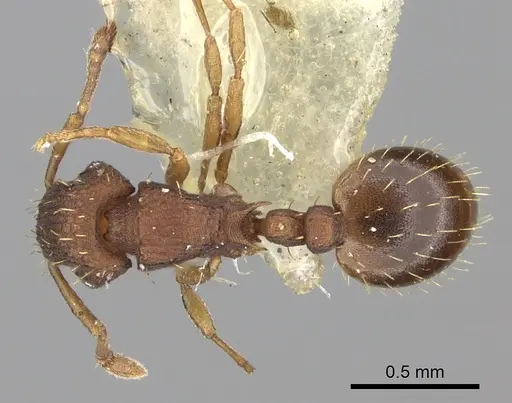
Literature
Loading distribution map...Loading products...