
Wasmannia affinis
- Sci. Name
- Wasmannia affinis
- Tribe
- Attini
- Subfamily
- Myrmicinae
- Author
- Santschi, 1929
- Distribution
- Found in 1 countries
Introduction
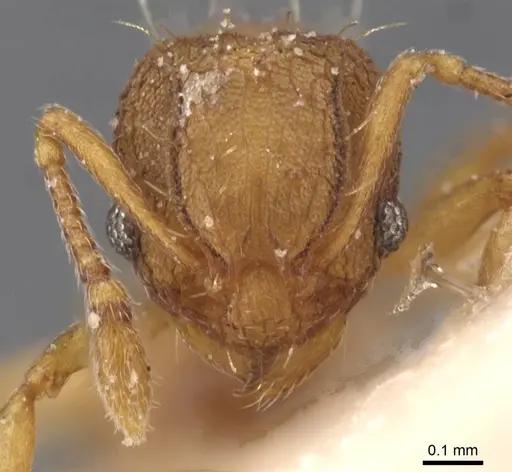
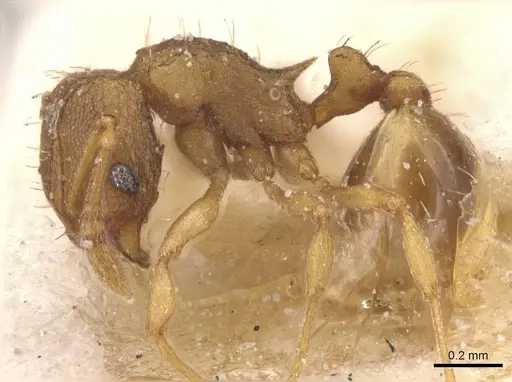
Wasmannia affinis is a tiny ant native to the Atlantic Forests and Amazon Forests of Brazil . Workers are very small (size data unavailable) with a distinctive antennal scrobe that forms a very broad, flat surface extending from the frontal carinae to the side of the head – a unique feature shared only with its close relative Wasmannia lutzi . Their cuticle has a uniform bronze color with darker ridges . These ants are generalist feeders with a remarkably broad diet that includes small arthropods, sugars, seeds, and fallen fruits . They are particularly attracted to fallen fleshy fruits, especially those that have been handled by frugivores . As members of the Myrmicinae subfamily, they possess a functional stinger, though their venom is not medically significant to humans.
Quick Summary
- Difficulty: Medium
- Origin & Habitat: Atlantic Forest of southeastern Brazil and Amazon Forest in Brazil [1]
- Colony Type: Colony structure unconfirmed – likely monogyne based on genus patterns
- Size & Growth:
- Queen: Size data unavailable (no total length measurements recorded). Queens are very small, typical of the genus [2].
- Worker: Size data unavailable (no total length measurements recorded). Workers are tiny, with head length of approximately 0.55–0.61 mm [2].
- Colony: Unknown – likely reaches several hundred workers based on similar litter-dwelling Myrmicinae
- Growth: Moderate – inferred from typical Attini development
- Development: 6–10 weeks (estimated, based on related Attini species at 22–26°C) (No direct species-specific data available. Development time is temperature-dependent, warmer temperatures within the recommended range speed up growth.)
- Antkeeping:
- Temperature: Keep at 22–26°C year-round. These are tropical forest ants that need stable warmth. A gentle gradient created by a heating cable on one side of the nest is beneficial. Avoid prolonged temperatures below 18°C.
- Humidity: Keep the nest substrate consistently moist but not waterlogged. Provide a gradient with a damp side and a slightly drier area. In the wild they inhabit damp leaf litter, so mimic that moisture level (not a wet sponge, but moist soil).
- Diapause: No – these are tropical ants from Brazil and do not require hibernation. Keep them at warm temperatures year-round.
- Nesting: These tiny ants naturally nest in leaf litter, rotting twigs, and under stones in forest habitats. In captivity, a naturalistic setup with leaf litter, small twigs, or a Y-tong/plaster nest with very fine chambers works well. They prefer tight, narrow spaces scaled to their tiny size.
- Behavior: Wasmannia affinis is a generalist forager that actively searches leaf litter for food. They are not aggressive and typically flee from disturbance rather than fight. They do possess a functional stinger but rarely use it defensively, and it is not medically significant to humans. Their tiny size makes escape prevention critical – use fine mesh and tight-fitting lids. They are epigaeic (ground-dwelling) and forage primarily in the leaf litter layer [3][4].
- Common Issues: escape prevention is critical – their tiny size allows them to squeeze through gaps that larger ants cannot, slow colony growth can frustrate beginners – these are naturally slow developers, overfeeding can lead to mold in small nests – remove uneaten food promptly, wild-caught colonies may carry parasites that can decimate the colony in captivity, they are very small so feeding appropriately sized prey (fruit flies, springtails) is essential, maintaining appropriate humidity levels – too dry can cause brood failure
Housing and Nest Setup
Wasmannia affinis is a tiny ant that requires appropriately scaled housing. In the wild, they live in leaf litter, under stones, and in small rotting twigs in the Atlantic Forest [3]. For captivity, a naturalistic setup works best – use a container filled with moist forest floor substrate (a mix of soil and leaf litter) with small twigs and pieces of bark for them to nest under. Alternatively, a Y-tong (AAC) nest with very narrow chambers or a small plaster nest can work well. The key is providing tight, small chambers that match their miniature size. Because they are so tiny, standard formicarium chambers are too large – they need passages and chambers scaled to their tiny workers. Use a test tube setup for founding colonies with a cotton ball providing moisture. Always use excellent escape prevention – these ants can squeeze through the tiniest gaps. Apply Fluon or similar barrier to the rim of any container you use.
Feeding and Diet
Wasmannia affinis is a generalist feeder with an unusually broad diet for a small ant. In the wild, they consume small arthropods, sugars, seeds, and fallen fruits [3]. They are particularly attracted to fallen fleshy fruits, especially those that have been handled by frugivores (animals that eat fruit) – they showed the highest attraction to fruits that had been mandibulated or passed through an animal's digestive system [4]. They also consume melezitose (a sugar found in honeydew) and are known to feed on termites and seeds [5]. In captivity, offer a varied diet: small live prey like fruit flies, pinhead crickets, and springtails for protein, sugar water, honey, or diluted maple syrup for carbohydrates, and small seeds or fruit pieces. Because of their tiny size, prey items must be appropriately sized – even small fruit flies may need to be cut up. Remove uneaten food promptly to prevent mold, which can be deadly in small nests.
Temperature and Seasonal Care
These are tropical ants from the Atlantic Forests of southern Brazil, so they need warm temperatures year-round. Keep the nest area at 22–26°C – this supports normal activity and brood development. Unlike temperate species, they do not require any winter cooling or diapause period. A heating cable placed on one side of the nest can create a gentle temperature gradient, allowing the ants to regulate their own temperature by moving between warmer and cooler areas. Avoid temperatures below 18°C for extended periods, as this can slow their metabolism and potentially harm the colony. Room temperature within the 22–26°C range is often suitable without additional heating in most homes.
Behavior and Temperament
Wasmannia affinis is a peaceful, non-aggressive species that prefers to flee rather than fight when disturbed. They are epigaeic (ground-dwelling) foragers that actively search through leaf litter for food [3]. Their generalist feeding habits and broad trophic niche make them adaptable to various food sources [5]. They possess a functional stinger (typical of Myrmicinae), but it is not used defensively toward keepers and is not medically significant. Their tiny size creates a significant escape risk – they can slip through gaps that seem impossibly small. Always use fine mesh on any ventilation, apply barrier products like Fluon to container rims, and check for gaps regularly. They are easily overlooked and can be accidentally crushed during nest maintenance – handle with care.
Colony Establishment
Founding a colony of Wasmannia affinis requires patience. If you obtain a founding queen, she will likely seal herself in a small chamber and raise the first brood alone (claustral founding) – this is typical for Attini ants, though it has not been directly documented for this species. The first workers (nanitics) will be very small and may take 6–10 weeks to emerge, depending on temperature. The colony will grow slowly at first. Queens are tiny (size data unavailable). Wild-caught colonies may carry internal parasites that can kill the colony in captivity – quarantine and observe new colonies carefully before introducing them to established setups. Because they are small and slow-growing, they are best suited for keepers who enjoy observing gradual colony development. [2]
Frequently Asked Questions
How long does it take for Wasmannia affinis to produce first workers?
Based on typical Attini development patterns, expect 6–10 weeks from egg to first worker at optimal temperatures (22–26°C). This is an estimate since specific development timing has not been documented for this species.
Can I keep Wasmannia affinis in a test tube?
Yes, test tubes work well for founding colonies. Use a small test tube with a water reservoir sealed with cotton – the tiny workers can navigate the narrow space. However, you will need to move them to a larger setup as the colony grows, since test tubes can become moldy with larger colonies.
What do Wasmannia affinis eat?
They are generalist feeders that accept small arthropods, sugary liquids (honey, sugar water), seeds, and fallen fruits. They are particularly attracted to fruit that has been handled by frugivores. In captivity, offer small live prey, sugar water, and small fruit pieces [3][4][5].
Are Wasmannia affinis good for beginners?
They are rated as medium difficulty. While not aggressive, their tiny size makes escape prevention challenging, and their slow growth requires patience. They are best suited for keepers who already have some experience with small ant species and can provide appropriately scaled housing.
How big do Wasmannia affinis colonies get?
Colony size is not well documented, but based on similar litter-dwelling Myrmicinae, colonies likely reach several hundred workers. They are not among the largest ant species.
Do Wasmannia affinis need hibernation?
No, they are tropical ants from Brazil and do not require hibernation. Keep them warm (22–26°C) year-round. Unlike temperate species, they do not enter diapause and may become sluggish or die if kept cool for extended periods.
Why are my Wasmannia affinis dying?
Common causes include: escape-related losses (they are tiny and can slip through tiny gaps), mold from overfeeding or poor ventilation, temperatures too low (below 18°C), or parasites from wild-caught colonies. Ensure excellent escape prevention, remove uneaten food promptly, maintain warm temperatures, and monitor for signs of parasite infection.
When should I move Wasmannia affinis to a formicarium?
Move them when the colony reaches roughly 30–50 workers and the test tube is becoming crowded or moldy. A naturalistic setup with leaf litter substrate works well, or a Y-tong nest with fine chambers scaled to their tiny size.
Report an Issue
The current care sheet is based fully on literature. See inconsistencies, or something that's incorrect? Please , it will be resolved after review from an admin. Contributing to the blogs tab also helps providing information, to make us be able to further improve the caresheets. Thank you for your support!
References

This caresheet is licensed under CC BY-SA 4.0 .
Community Blogs
CASENT0912540
View on AntWeb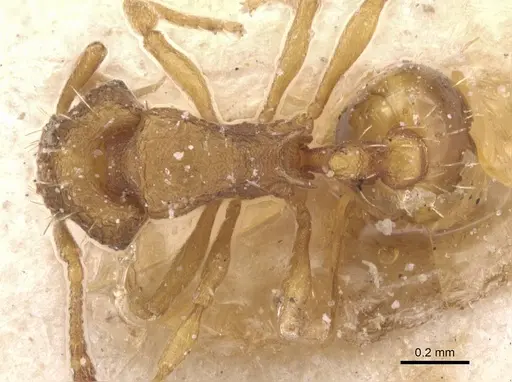
Literature
Loading distribution map...Loading products...