
Vombisidris regina
- Sci. Name
- Vombisidris regina
- Tribe
- Crematogastrini
- Subfamily
- Myrmicinae
- Author
- Bolton, 1991
- Distribution
- Found in 1 countries
Introduction
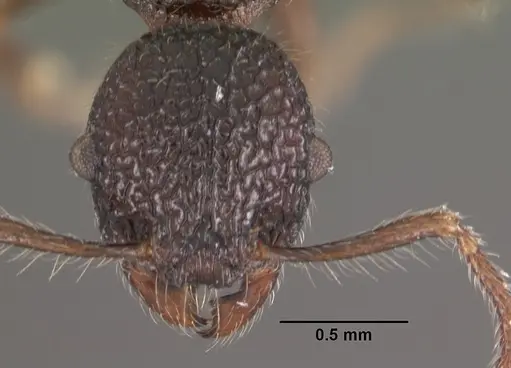
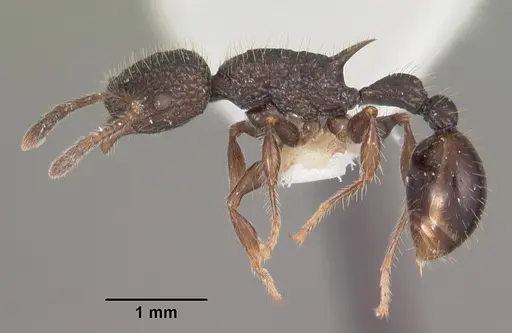
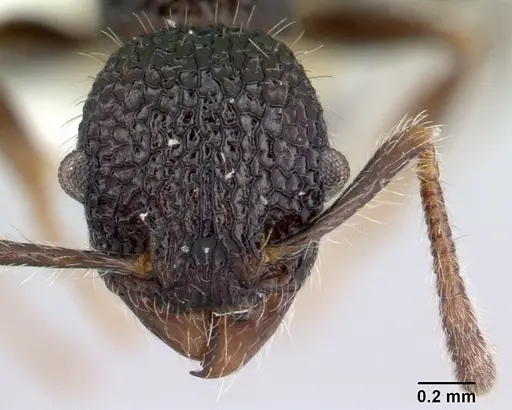
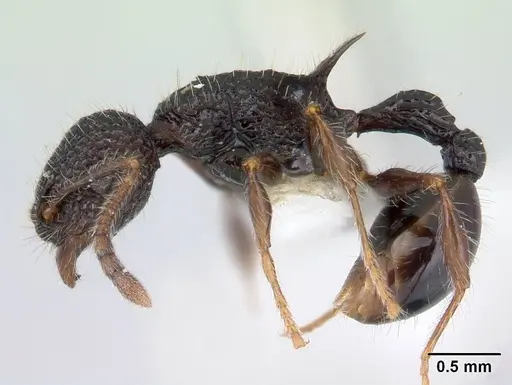
Vombisidris regina is a black ant from the mountains of Borneo, specifically the montane forests of Mount Kinabalu in Sabah, Malaysia, at elevations around 1500-1650 m . Workers are 4.8-5.6 mm in total length , with a uniform black to blackish-brown color and prominent dome-shaped eyes . This species is unique within its genus because it lives and forages on the ground - most other Vombisidris are tree-dwelling . Nearly all specimens have been collected using Winkler sampling of leaf litter, so they spend their time in the forest floor layer .
Quick Summary
- Difficulty: Medium
- Origin & Habitat: Montane forests of Borneo (Sabah, Malaysia) and Indonesia, at elevations of 1500-1650 m [1][2]. Unlike its arboreal relatives, this species is terrestrial and lives in leaf litter on the forest floor [1].
- Colony Type: Colony structure is undocumented, no published data on queen number or colony size exists.
- Size & Growth:
- Queen: Undocumented, no queen measurements have been published.
- Worker: 4.8-5.6 mm total length [1].
- Colony: Unknown, no colony size data has been published.
- Growth: Unknown
- Development: Unconfirmed, no development data exists for this species. Estimated 6-10 weeks at optimal temperature, based on patterns in similar Southeast Asian forest-floor Myrmicinae. (This is a rough estimate, not a confirmed value.)
- Antkeeping:
- Temperature: Based on their montane forest home (1500-1650 m elevation), they likely prefer cooler temperatures than typical tropical ants. Aim for 20-24 °C in the nest, and avoid overheating above 28 °C [1].
- Humidity: Terrestrial leaf-litter species from Borneo's montane forests need high humidity. Keep the nest substrate consistently damp but not waterlogged, with some drier areas for the ants to choose.
- Diapause: Unknown, no published data on seasonal requirements. As a montane species near the equator, they may have minimal or no diapause needs, but this is unconfirmed.
- Nesting: In the wild they live in leaf litter and soil on the forest floor. A naturalistic setup with moist substrate or a Y‑tong/plaster nest with good humidity retention works well in captivity. Avoid dry, arid setups.
- Behavior: Ground-dwelling species that forages in leaf litter. Not known to be aggressive, and unlikely to sting. Their small size and ground‑living habits make escape prevention important, they can squeeze through tiny gaps. Specific behavior is poorly documented.
- Common Issues: lack of published care information makes proper husbandry challenging., humidity requirements are easily misjudged, too dry leads to colony death., escape prevention is essential for this small, ground‑dwelling ant., wild‑caught colonies may have parasites or stress from collection., very limited availability in the antkeeping hobby.
Natural History and Distribution
Vombisidris regina is known only from the montane forests of Mount Kinabalu in Sabah, Malaysia, with additional records from Indonesia [1][2]. Type specimens were collected at 1500-1650 m elevation in April and May 1987,and additional material was found on the Pinosuk Plateau in March 1964 [1]. This species stands out because it is the only member of the genus that lives on the ground, all other Vombisidris are arboreal [1]. Most specimens have been obtained by Winkler extraction of leaf litter, which confirms their terrestrial lifestyle [1].
Identification and Morphology
Workers are medium‑sized ants,4.8-5.6 mm in total length [1]. Their body is uniformly black to blackish‑brown [1][2]. The eyes are very prominent and dome‑shaped, sticking out from the head when viewed from the front [1]. The top of the head and the thorax have a net‑like, wrinkled texture, while the abdomen is smooth and shiny [1]. Propodeal spines (on the back of the thorax) are long, sharp, and only slightly curved [1]. The whole body is covered with many hairs, giving it a fuzzy look [1]. This species belongs to the philax species group within the genus Vombisidris [1].
Housing and Nest Setup
Because this ant lives on the forest floor of Borneo's mountains, you need a setup that stays moist and humid. A naturalistic terrarium with a thick layer of damp substrate, a mix of soil, rotting wood, and leaf litter, works well. You can also use a Y‑tong (AAC) or plaster nest with a water reservoir to control humidity. The substrate should feel damp to the touch but not waterlogged. Provide a foraging area with leaf litter and small hiding spots. Since they are small and terrestrial, you must seal every tiny gap to prevent escapes. [1]
Feeding and Diet
The natural diet of Vombisidris regina has not been studied. As a Myrmicine ant that lives in forest litter, it probably eats small invertebrates (like tiny insects and mites) and may also collect honeydew from aphids. In captivity, offer a variety of small live prey, fruit flies, pinhead crickets, or tiny mealworms, along with sugar water or honey water. Start with small amounts and watch what the colony takes. Remove uneaten prey to prevent mold in the humid nest.
Temperature and Humidity Requirements
This species comes from 1500-1650 m elevation on Mount Kinabalu, so it likes cooler conditions than lowland tropical ants [1]. Keep the nest at 20-24 °C. Avoid temperatures above 28 °C, which can be stressful or fatal. Humidity should be high, the substrate should always feel damp (like a forest floor) but not soaking wet. Good ventilation is important to stop mold, but avoid too much airflow that dries the setup.
Colony Development and Growth
No published data exists on egg‑to‑worker timing, colony size, or reproduction. The original description only covers worker morphology [1]. Based on similar Southeast Asian forest‑floor Myrmicinae, the first workers (nanitics) might appear 6-10 weeks after the eggs are laid at optimal temperature (around 22 °C), but this is just a guess. Colony growth is probably slow to moderate. Maximum colony size is unknown, from worker size and genus patterns, it might reach a few hundred workers, but that is speculative. Be patient with young colonies.
Frequently Asked Questions
How long does it take for Vombisidris regina to produce first workers?
The development time is not documented. Based on similar forest‑floor Myrmicinae, expect 6-10 weeks from egg to first worker at 22 °C, but this is an estimate, not a confirmed value.
What do Vombisidris regina ants eat?
Their natural diet hasn't been studied. Like other forest‑floor Myrmicinae, they probably eat small invertebrates and may tend aphids for honeydew. Offer small live prey (fruit flies, tiny crickets, mealworms) and sugar water or honey water. Watch what they accept.
What temperature do Vombisidris regina ants need?
As a montane species from 1500-1650 m elevation on Mount Kinabalu, they prefer 20-24 °C. Avoid temperatures above 28 °C [1].
Are Vombisidris regina ants good for beginners?
No. This species is extremely rare in the hobby and has no published care data. Proper humidity, temperature, and diet are not well understood, making successful keeping difficult even for experienced antkeepers.
How big do Vombisidris regina colonies get?
Colony size data is not published. From worker size and genus patterns, colonies might reach a few hundred workers at most, but this is an estimate.
Do Vombisidris regina ants sting?
As a member of the Myrmicinae subfamily, they have a stinger. But they are not known to be aggressive, and any sting would probably be mild. Stings are unlikely unless the colony is heavily threatened.
What humidity level do Vombisidris regina ants need?
They need high humidity. Keep the nest substrate consistently damp (like a damp forest floor) but not waterlogged.
Can I keep multiple Vombisidris regina queens together?
No data exists on colony structure (monogyne vs. polygyne). Combining multiple unrelated queens is not recommended without knowing whether they accept each other.
What type of nest is best for Vombisidris regina?
A naturalistic setup with moist substrate (soil mixed with rotting wood and leaf litter) works best. A Y‑tong or plaster nest with good humidity retention is also suitable. The key is keeping the nest moist.
Where is Vombisidris regina found in the wild?
Only in the montane forests of Mount Kinabalu in Sabah, Malaysia, and nearby Indonesia, at 1500-1650 m elevation. It is unique in its genus as the only predominantly terrestrial species [1][2].
Do Vombisidris regina ants need hibernation?
No data exists on seasonal requirements. As a montane species near the equator, they probably don't need diapause, but a slight cooling period during the wet season might be beneficial, this is unconfirmed.
Why is Vombisidris regina so rare in the antkeeping hobby?
It has an extremely small natural range (only Mount Kinabalu region) and is rarely collected, mostly through Winkler extraction of leaf litter. It has never been common in the hobby and has no captive breeding history [1].
Report an Issue
The current care sheet is based fully on literature. See inconsistencies, or something that's incorrect? Please , it will be resolved after review from an admin. Contributing to the blogs tab also helps providing information, to make us be able to further improve the caresheets. Thank you for your support!
References

This caresheet is licensed under CC BY-SA 4.0 .
Community Blogs
CASENT0102595
View on AntWeb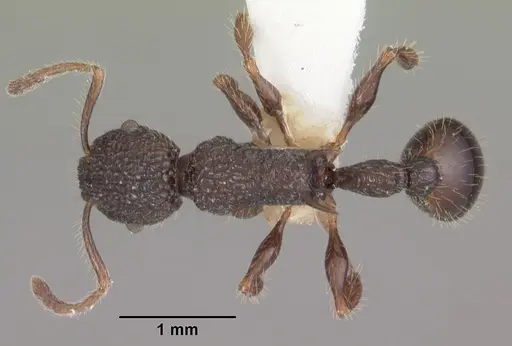
CASENT0178737
View on AntWeb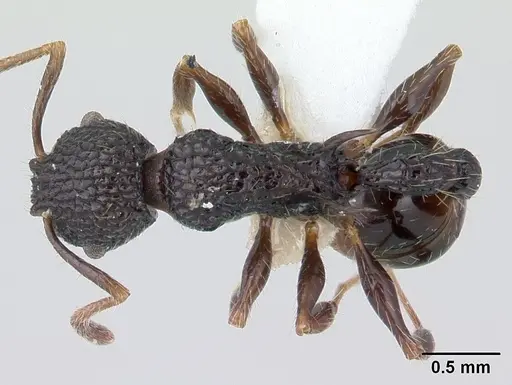
Literature
Loading distribution map...Loading products...