
Vombisidris bilongrudi
- Sci. Name
- Vombisidris bilongrudi
- Tribe
- Crematogastrini
- Subfamily
- Myrmicinae
- Author
- Taylor, 1989
- Distribution
- Found in 1 countries
Introduction
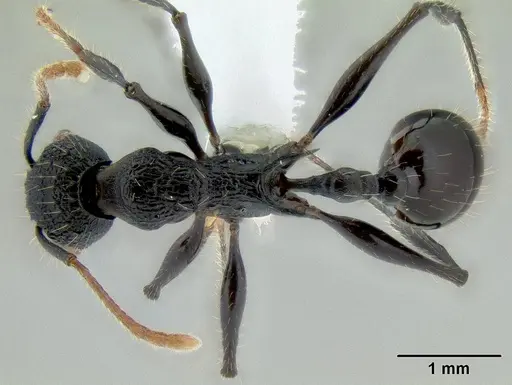
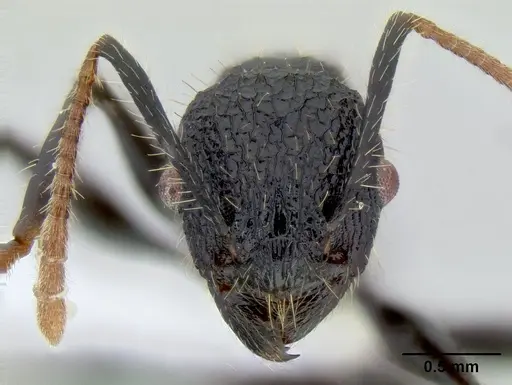
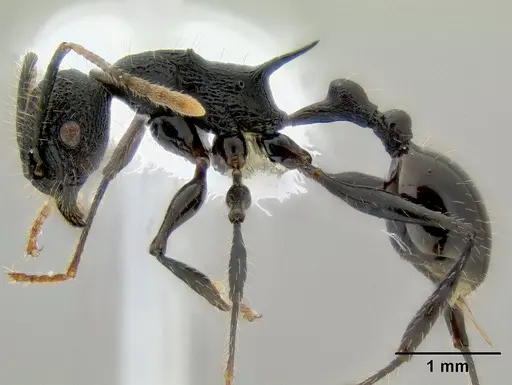
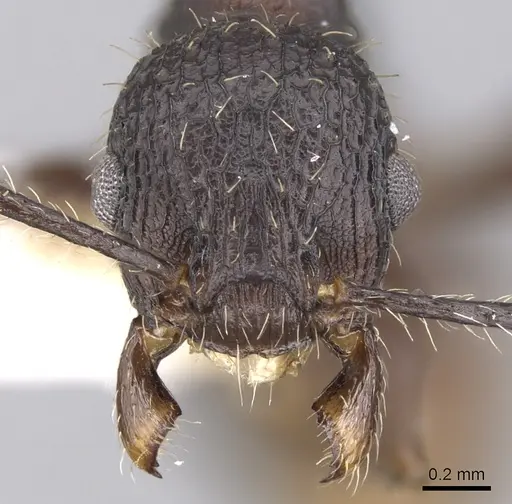
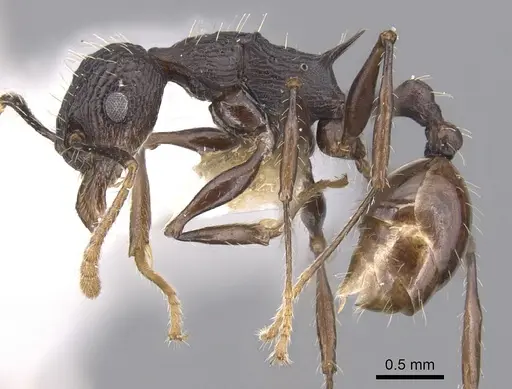
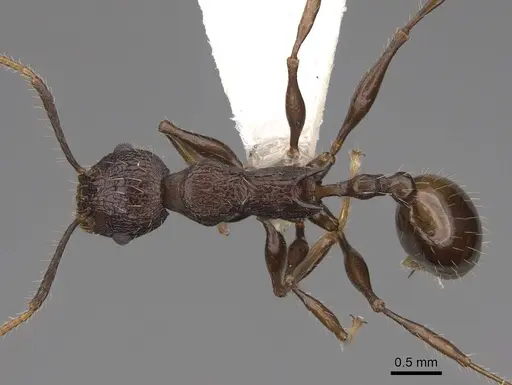
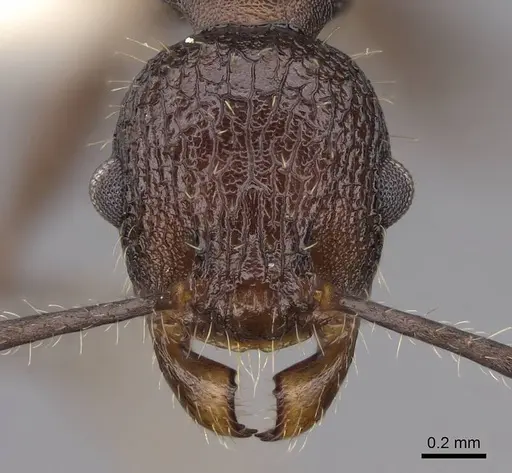
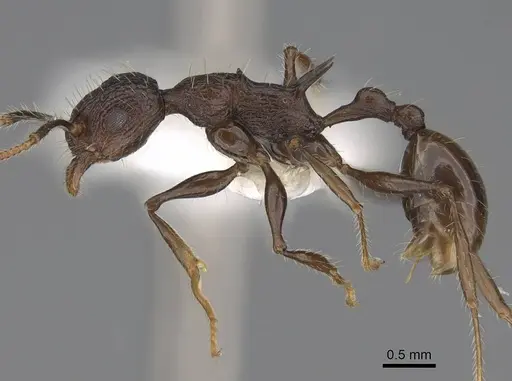
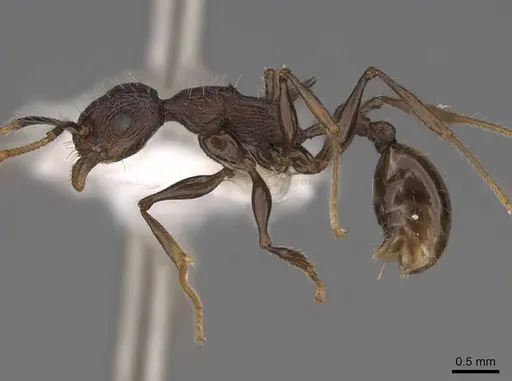
Vombisidris bilongrudi is a small myrmicine ant from the highlands of Papua New Guinea. Workers and queens were described in 1989 by R.W. Taylor, originally placed in the genus Leptothorax and later moved to Vombisidris by Barry Bolton in 1991 . The type location is the Victor Emmanuel Range in West Sepik Province, at about 1550 meters elevation . This species lives in tropical highland rainforest, a region known for its rich biodiversity. As a member of the tribe Crematogastrini, it is related to ants like Crematogaster but occupies its own niche in Papua New Guinea's forests.
Quick Summary
- Difficulty: Unknown
- Origin & Habitat: Papua New Guinea, specifically the Victor Emmanuel Range in West Sepik Province near Telefomin at 1550 m elevation. This is a highland tropical rainforest environment in the Australasian region [1][2].
- Colony Type: Colony structure is unconfirmed. No direct observations are available for this species.
- Size & Growth:
- Queen: Size data unavailable.
- Worker: Size data unavailable.
- Colony: Unknown – no colony size data available.
- Growth: Unknown – no development data available.
- Development: Not documented for this species. Based on related Myrmicinae, possibly 6–10 weeks at tropical temperatures, but this is a rough guess. (Development timeline is unconfirmed. No specific data exists for this species.)
- Antkeeping:
- Temperature: Based on the highland origin (1550 m), this species likely prefers moderate temperatures around 20–26°C. Avoid temperatures above 30°C. Room temperature (22–25°C) is probably suitable [1].
- Humidity: As a highland tropical species, moderate to high humidity is expected. Keep the nest moist but not waterlogged, with some drier areas. Target around 60–80% relative humidity.
- Diapause: Unknown. As a Papua New Guinea highland species from a tropical region, true hibernation is unlikely, but there is no data on overwintering requirements.
- Nesting: Natural nesting behavior is unconfirmed. Related Vombisidris species are often arboreal, nesting in hollow twigs or dead wood [3][4]. In captivity, consider Y-tong, plaster, soil nests, or naturalistic setups with wood or twig elements.
- Behavior: Behavior is unstudied. Based on its subfamily (Myrmicinae, tribe Crematogastrini), the defense mechanism involves smearing venom rather than stinging. Temperament is unknown, but related species are generally docile. Given the small size (likely under 5 mm), escape prevention should be thorough.
- Common Issues: very limited species-specific information means care recommendations are mostly inferred., no established husbandry guidelines exist in the antkeeping hobby., wild-caught colonies may carry unknown parasites or diseases., highland origin suggests temperature sensitivity – avoid overheating., this species is extremely rare and almost never available in the ant trade.
Species Background and Taxonomy
Vombisidris bilongrudi was originally described in 1989 by R.W. Taylor as Vombisidris bilongrudi based on worker and queen specimens from Papua New Guinea [1]. It was transferred to the genus Vombisidris by Barry Bolton in 1991 [1]. The genus Vombisidris is a small group of ants found in the Indomalayan and Australasian regions [2][5]. The type locality at 1550 m elevation in the Victor Emmanuel Range places this species in highland tropical rainforest habitat – a region known for high biodiversity and endemism.
Distribution and Habitat
This species is known only from Papua New Guinea, specifically the Victor Emmanuel Range in West Sepik Province near Telefomin [1]. The elevation of 1550 m is a highland environment, not lowland tropical forest. The original collection occurred in August 1984,suggesting activity year-round in its tropical highland home. No additional records exist in available databases, indicating it may be a localized endemic [2][6].
Keeping Vombisidris bilongrudi
Care guidelines are not established for this species. Based on its highland Papua New Guinea origin, aim for temperatures in the 20–26°C range – cooler than typical tropical ants but warmer than temperate species. Humidity should be moderate to high, imitating the moist highland rainforest. The nest should provide moisture retention while allowing some dry areas for the ants to self-regulate. Given that related Vombisidris species are often arboreal [3][4], consider naturalistic setups with wood or twig elements. Feed standard ant foods: sugar sources (honey, sugar water) and small protein sources (fruit flies, small crickets, mealworms). Start with modest feedings and observe acceptance.
Related Vombisidris Species
The genus Vombisidris contains about 15–20 described species across Southeast Asia and Australasia [5]. Recent discoveries include V. humboldticola from India (associated with ant plants), V. freyae from the Philippines (nocturnal and arboreal), and several new Thai species described in 2023 [3][4][5]. These findings suggest the genus may contain many more undescribed species, especially in poorly surveyed regions like the Papua New Guinea highlands. Many Vombisidris species have a distinctive subocular groove on the head, but some species lack it [4].
Frequently Asked Questions
How do I care for Vombisidris bilongrudi ants?
Care guidelines are not established because this species has never been kept in captivity. Based on its highland Papua New Guinea origin, provide temperatures around 20–26°C, moderate humidity (60–80%), and a moist nest. Feed sugar sources and small insects. This is an expert-level species due to the lack of documented husbandry.
What do Vombisidris bilongrudi ants eat?
Diet is unconfirmed for this species. Based on related Myrmicinae, they likely accept sugar sources (honey, sugar water) and small arthropods. Start with standard ant foods and observe acceptance.
How big do Vombisidris bilongrudi colonies get?
Colony size is unknown – no data exists on maximum colony size for this species.
What temperature do Vombisidris bilongrudi ants need?
Based on the highland Papua New Guinea origin (1550 m elevation), aim for 20–26°C. Avoid temperatures above 30°C. Room temperature in most homes should be suitable [1].
Do Vombisidris bilongrudi ants need hibernation?
Requirements are unknown. As a tropical highland species, true hibernation is unlikely. The ants may show reduced activity during cooler periods but probably do not need a diapause period.
Is Vombisidris bilongrudi a good species for beginners?
No – this species is not recommended for beginners. It has never been kept in captivity, no care guidelines exist, and it is extremely rare. The lack of documented husbandry makes success very uncertain.
How long does it take for Vombisidris bilongrudi to develop from egg to worker?
The timeline is unconfirmed for this species. If related Myrmicinae patterns hold at tropical temperatures, it might be 6–10 weeks, but this is a rough guess with no direct data.
Can I keep multiple Vombisidris bilongrudi queens together?
Colony structure is unconfirmed. No data exists on whether this species is monogyne (single queen) or polygyne (multiple queens). Do not attempt combining unrelated queens without specific knowledge of the species' behavior.
Where is Vombisidris bilongrudi found in the wild?
This species is known only from Papua New Guinea, specifically the Victor Emmanuel Range in West Sepik Province near Telefomin at 1550 m elevation. It is a highland tropical rainforest species [1].
Are Vombisidris bilongrudi ants aggressive?
Aggression level is unstudied. Based on genus-level knowledge, Vombisidris species are typically docile and non-aggressive. However, no specific behavioral data exists for this species.
What size are Vombisidris bilongrudi workers?
Specific measurements are unavailable. The original description included workers and queens but exact body lengths were not provided in available sources.
Is Vombisidris bilongrudi available in the antkeeping trade?
This species is extremely rare and not available in the antkeeping hobby. It is known only from the original type collection in Papua New Guinea and has never been documented in captivity or commercial trade.
Report an Issue
The current care sheet is based fully on literature. See inconsistencies, or something that's incorrect? Please , it will be resolved after review from an admin. Contributing to the blogs tab also helps providing information, to make us be able to further improve the caresheets. Thank you for your support!
References

This caresheet is licensed under CC BY-SA 4.0 .
Community Blogs
Literature
Loading distribution map...Loading products...