
Vollenhovia samoensis
- Sci. Name
- Vollenhovia samoensis
- Tribe
- Crematogastrini
- Subfamily
- Myrmicinae
- Author
- Mayr, 1876
- Distribution
- Found in 2 countries
Introduction
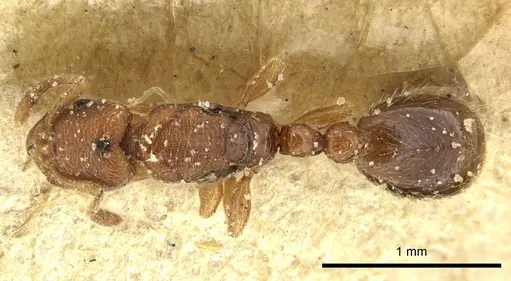
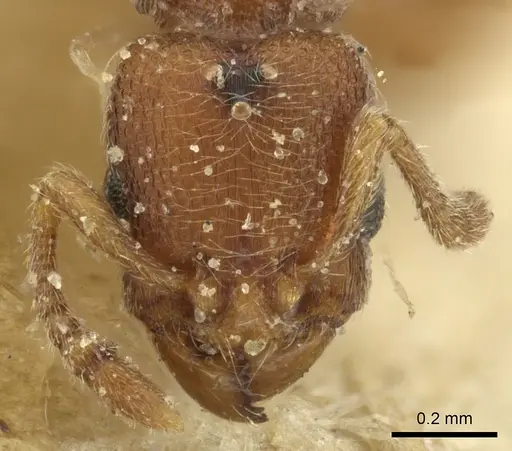
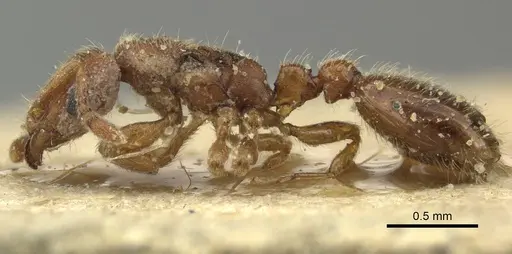
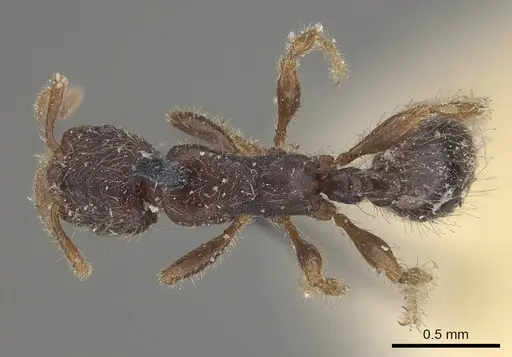
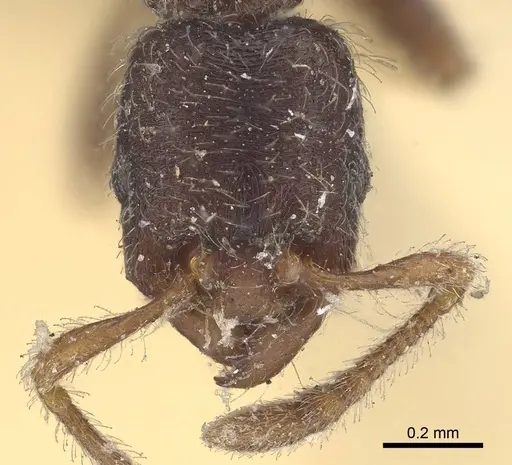
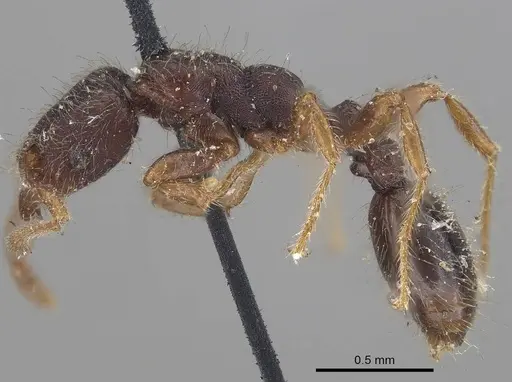
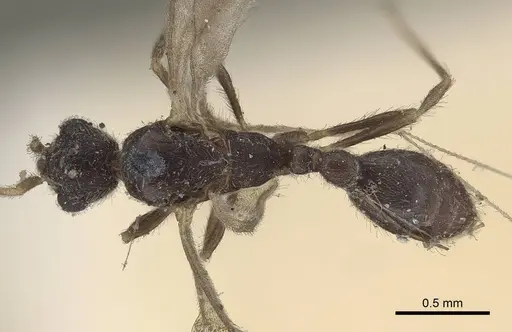
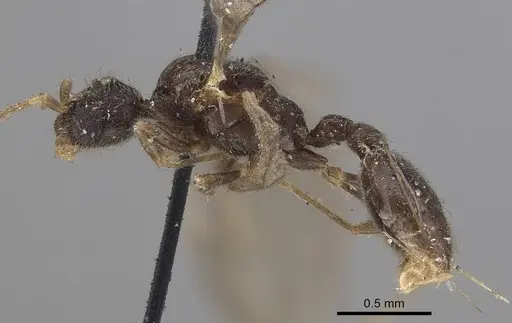
Vollenhovia samoensis is a tiny Myrmicinae ant native to the tropical South Pacific islands, including American Samoa, Samoa, Tonga, and Niue. Workers are reddish-brown and very small, measuring around 2-3 mm. The species was first described by Mayr in 1876 from Samoa, and the synonym Vollenhovia agilis (described by Santschi in 1928) was later recognized as the same species . It belongs to the myrmicine tribe Crematogastrini. This ant is one of the lesser‑known species in the hobby, with almost no captive care data available. Its distribution across Samoa, Tonga, and Niue suggests it is a true Pacific island endemic, well adapted to warm, humid climates year‑round .
Quick Summary
- Difficulty: Unknown, Insufficient hobby data
- Origin & Habitat: Native to the tropical Pacific islands of American Samoa (Tutuila), Samoa (Upolu, Savaii), Tonga ('Eua, Tongatapu, Vava'u), and Niue. Found in forest habitats on these islands [3][2][6].
- Colony Type: Colony structure is unconfirmed. Most Vollenhovia species are monogyne (single queen), but no specific data exists for V. samoensis.
- Size & Growth:
- Queen: Approximately 4-5 mm (inferred from related Vollenhovia species)
- Worker: Approximately 2-3 mm (inferred from related Vollenhovia species)
- Colony: Up to 500 workers (inferred from related Vollenhovia species)
- Growth: Unknown
- Development: Estimated 4-8 weeks at tropical temperatures (inferred from typical Myrmicinae patterns) (Development time is not documented for this species. The estimate is based on patterns in related myrmicine ants kept in warm conditions.)
- Antkeeping:
- Temperature: As a tropical species, keep warm year‑round, aim for 24-28°C. Use a heating cable on one side if room temperature drops below 24°C. No specific research data exists, this is inferred from its tropical origin.
- Humidity: High humidity is needed, maintain the nest substrate consistently moist but not waterlogged. A test tube reservoir or moist Y‑tong block works well. Humidity should be high enough to prevent desiccation, but ensure good ventilation to avoid mold. No specific research data is available.
- Diapause: No, being a tropical species, it does not require hibernation. Keep warm year‑round.
- Nesting: In the wild, likely nests in rotting wood, under bark, or in soil. For captivity, a small test tube setup or a Y‑tong nest with narrow chambers works. Given their tiny size, use fine‑grained substrate and ensure all openings are sealed to prevent escape.
- Behavior: Behavior is poorly documented. Most Vollenhovia are relatively docile and not aggressive. Workers are tiny and likely forage individually or in small groups. Escape prevention is critical, these ants can squeeze through gaps of 1 mm or less. Use fine mesh on ventilation and tight‑fitting lids.
- Common Issues: tiny size makes escape a serious concern, seal every gap, no species‑specific care information available, keepers must infer from related species, high humidity requirements can lead to mold if ventilation is poor, wild‑caught colonies may carry parasites or fail to adapt to captivity
Origin and Natural Range
Vollenhovia samoensis is endemic to islands of the South Pacific, specifically the Samoan Archipelago and Tonga. It has been recorded on American Samoa (Tutuila), Samoa (Upolu, Savaii), Tonga ('Eua, Tongatapu, Vava'u), and Niue [3][6][5]. It was originally described from Samoa by Mayr in 1876,and Vollenhovia samoensis (described by Santschi in 1928) was later synonymized under V. samoensis [1][2]. In American Samoa it is considered native and was detected at multiple sites on Tutuila [3]. This distribution makes it a true Pacific island endemic.
Temperature and Heating
No specific temperature data exists for Vollenhovia samoensis. As a tropical species from the Pacific islands, it likely requires warm conditions year‑round, around 24-28°C. Do not expose it to cold or hibernation. If your room temperature falls below 24°C, use a heating cable on one side of the nest to create a warm gradient. Place the heating element on top of the nest (not underneath) to avoid drying the substrate. Monitor with a thermometer.
Humidity and Water
High humidity is important for this tropical species. Keep the nest substrate consistently moist, damp to the touch, but avoid standing water. A test tube water reservoir with a cotton plug provides steady moisture. Because the ants are tiny, even small humidity drops can be stressful. Balance humidity with good ventilation to prevent mold. No research data defines exact levels, so aim for a generally humid environment.
Feeding and Diet
The diet of Vollenhovia samoensis has not been studied. Based on typical Omnivorous Myrmicinae behavior, offer small protein sources such as fruit flies, pinhead crickets, or tiny mealworms. Sugar water or honey water may also be accepted. Feed small amounts every few days and remove uneaten food to prevent mold. Prey items must be appropriately small given the workers’ tiny size (2-3 mm).
Nest Setup and Housing
Due to their very small size, use a scaled‑down setup. A narrow test tube with a water reservoir and cotton plug works for founding and small colonies. For larger groups, a Y‑tong (AAC) nest with small chambers or a plaster nest with fine‑grained substrate is suitable. Escape prevention is paramount, these ants can slip through gaps of 1 mm or less. Use fine mesh on all ventilation and seal connectors with PTFE or fluon. Ensure the nest has a moist zone (e.g., a test tube or damp substrate section).
Defense Mechanism
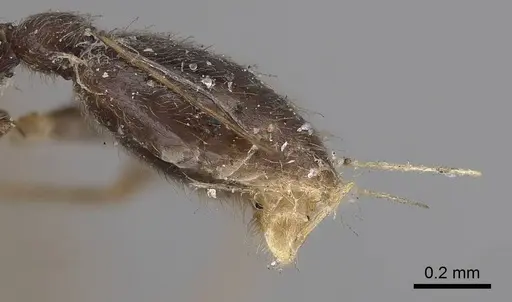
As a member of the tribe Crematogastrini, Vollenhovia samoensis uses a smear defense: it has a modified, flattened stinger used to wipe or smear venom onto enemies rather than piercing flesh. No specific literature data exists for this species, this description is based on general subfamily/tribe knowledge.
Frequently Asked Questions
How long does it take for Vollenhovia samoensis to produce first workers?
The exact development time is unknown. Based on typical tropical myrmicine patterns, expect roughly 4-8 weeks from egg to worker at warm temperatures (24-28°C). This is an estimate, actual timing may vary.
What do Vollenhovia samoensis ants eat?
Their specific diet is not documented. Offer small protein sources like fruit flies or tiny mealworms, plus sugar water or honey water. Remove uneaten food to prevent mold. This is inferred from related omnivorous myrmicines.
Do Vollenhovia samoensis ants sting?
Yes, like other Myrmicinae they have a stinger. However, given their tiny size (workers ~2-3 mm), any sting is negligible to humans. They are not aggressive toward keepers.
What temperature do Vollenhovia samoensis need?
Keep them warm year‑round, aim for 24-28°C. They do not tolerate cold and do not need hibernation. Use a heating cable if room temperature drops below 24°C. No exact research data exists, this is based on their tropical origin.
How big do Vollenhovia samoensis colonies get?
Colony size is not documented. Inferred from related Vollenhovia species, colonies may reach up to 500 workers. This is an estimate and could be different for V. samoensis.
Are Vollenhovia samoensis good for beginners?
This species is not recommended for beginners due to the lack of species‑specific care information and its tiny size, which requires precise escape prevention. Only experienced keepers comfortable adapting care from related species should attempt keeping it.
Can I keep multiple Vollenhovia samoensis queens together?
Colony structure is unconfirmed. Most Vollenhovia are monogyne, but polygyny has not been studied in this species. It is not recommended to combine unrelated queens, start with a single queen.
Do Vollenhovia samoensis need hibernation?
No, as a tropical species, they do not require any cooling period. Maintain warm temperatures (24-28°C) year‑round.
What humidity level do Vollenhovia samoensis need?
High humidity is required, keep the nest substrate consistently moist but not waterlogged. No exact percentage is known, aim for a humid environment typical of tropical islands.
Why are my Vollenhovia samoensis escaping?
Their tiny size (workers 2-3 mm) lets them squeeze through gaps of 1 mm or less. Use fine mesh on all ventilation, seal all connections, and consider a fluon or PTFE barrier on the outworld walls. Check every access point regularly.
Report an Issue
The current care sheet is based fully on literature. See inconsistencies, or something that's incorrect? Please , it will be resolved after review from an admin. Contributing to the blogs tab also helps providing information, to make us be able to further improve the caresheets. Thank you for your support!
References

This caresheet is licensed under CC BY-SA 4.0 .
Community Blogs
Literature
Loading distribution map...Loading products...