
Vollenhovia okinawana
- Sci. Name
- Vollenhovia okinawana
- Tribe
- Crematogastrini
- Subfamily
- Myrmicinae
- Author
- Terayama & Kinomura, 1997
- Distribution
- Found in 1 countries
Introduction
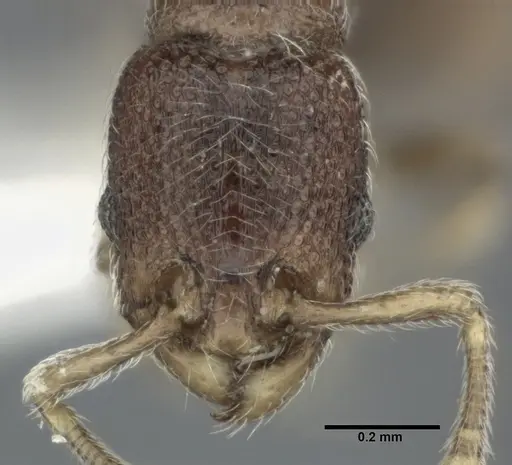
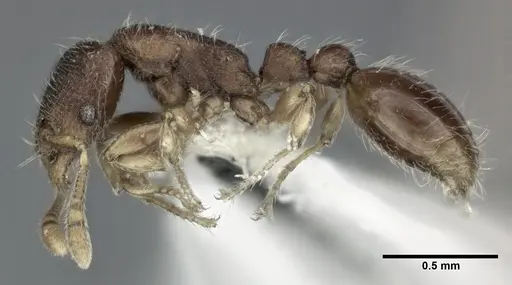
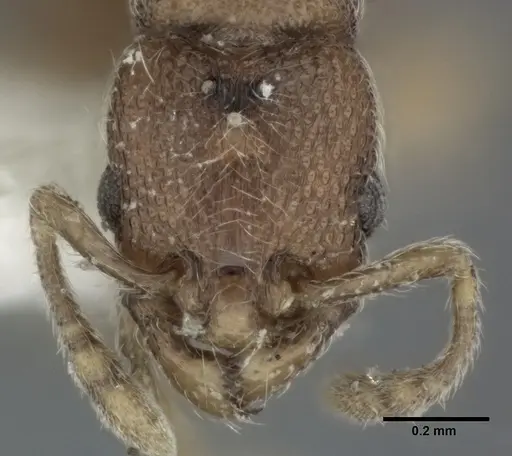
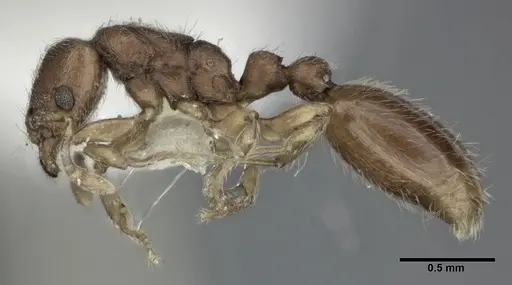
Vollenhovia okinawana is a tiny ant native to Okinawa Island, Japan. Workers are about 2.0-2.2 mm in total length (some sources report up to 2.5 mm ), with a reddish‑brown body and yellowish‑brown legs and antennae. Queens are slightly larger at 2.6 mm and are normally winged . They can be told apart from the similar Vollenhovia benzai by the shape of their postpetiole: it is highest at the rear third and has a concave upper rear edge . This species is interesting because it comes in two forms. The common form has winged queens that fly out to start new colonies. But in the northern part of Okinawa, there is a population that uses ergatoid (wingless) females as reproductives instead of winged queens. Despite this difference, the workers and males of both forms look identical .
Quick Summary
- Difficulty: Medium
- Origin & Habitat: Okinawa Island, Japan, found in decaying wood in forests [2][1].
- Colony Type: Colony structure varies by population. The widespread form likely has a single winged queen, a separate population in northern Okinawa uses ergatoid (wingless) females as reproductives [1].
- Size & Growth:
- Queen: ~2.6 mm total length [1]
- Worker: 2.0-2.5 mm total length [1][2]
- Colony: Unknown, no published data. Similar Vollenhovia species probably have small colonies, likely under a few hundred workers.
- Growth: Slow to moderate (estimated from related species)
- Development: No specific data, development likely takes several weeks at warm temperatures, similar to other small Myrmicinae. (Timing is inferred from related species, exact data not available.)
- Antkeeping:
- Temperature: Subtropical origin suggests warm conditions. Keep at 22-26 °C, but precise requirements are undocumented. Provide stable warmth and avoid extremes [2][1].
- Humidity: High, they nest in decaying wood in forests [2][1]. Keep nest substrate damp but not waterlogged.
- Diapause: Not required due to subtropical origin [2], but if kept in cool climates, a short winter cooling (e.g.,10-15 °C for a few weeks) may be safe, though unconfirmed.
- Nesting: Provide decaying wood or a test tube with moist substrate. Use narrow chambers (3-5 mm) to prevent escapes. Y‑tong or plaster nests work well, but avoid tall open spaces [2][1].
- Behavior: Vollenhovia okinawana is docile and not aggressive. Like other members of the tribe Crematogastrini, its main defense is smearing venom onto enemies using a modified stinger. However, they rarely use it in captivity. Their tiny size (under 3 mm) makes escape prevention critical, even the smallest gaps in tubing or lid seals will allow them out. Use fine mesh (0.5 mm) and seal all connections.
- Common Issues: tiny size makes escape easy, use 0.5 mm mesh and tight seals., specific humidity needs, too dry stops brood, too wet causes mold., growth is slow, colonies take many months to build up., workers can get stuck in water feeders, provide shallow sources or cotton‑plugged tubes., wild‑caught nests may carry parasites, quarantine new colonies.
Housing and Nest Setup
Because workers are only about 2 mm long, you need a nest with small chambers. A test tube with a water reservoir and tightly packed cotton works well for starting a colony [2][1]. For a larger colony, use a Y‑tong (AAC) or plaster nest with narrow passages (3-5 mm wide and high) so workers don't get lost in big open spaces. These ants naturally live in decaying wood in forests [2][1], so adding a piece of soft wood or cork can make them feel at home. Avoid tall chambers and always seal every gap, even the smallest opening will let them escape.
Feeding and Diet
In the wild, Vollenhovia okinawana likely scavenges small insects and drinks honeydew. In captivity, offer tiny protein sources such as fruit flies, pinhead crickets, or chopped mealworms. Sugar water or diluted honey gives them energy. Feed small amounts two to three times a week and remove uneaten prey after 24 hours to stop mould. Because workers are so tiny, cut prey into pieces no larger than their head, anything bigger will be ignored. A constant supply of sugar water helps small colonies grow [2].
Temperature and Seasonal Care
Vollenhovia okinawana comes from subtropical Okinawa, so it likes warmth. Keep the nest at 22-26 °C for good brood development. Create a slight temperature gradient so workers can choose their own spot. They do not need hibernation, Okinawa has mild winters, so they stay active all year if kept warm [2]. If your room gets below 20 °C in winter, use a heating cable on one side of the nest. Avoid long periods above 30 °C or below 18 °C.
Colony Structure and Reproduction
This species has two known reproductive strategies. In most of Okinawa, the ants produce normal winged queens (alates) that fly out to mate and start new colonies. In the northern part of the island, a separate population makes only ergatoid (wingless) females that stay in the nest as reproductives [1]. The workers and males of both groups look exactly the same [1]. If you collect a queen, she will probably be of the winged type. No studies have confirmed how she founds a colony, but it is probably claustral (sealing herself in a chamber and rearing the first workers on her body reserves), as is common in Myrmicinae. Be patient, small colonies grow slowly.
Handling and Temperament
These ants are very docile and rarely show aggression. They do not sting or bite noticeably. When you open the nest, they may run around quickly but will not try to attack you. Because they are so small, handle them gently, they can easily be crushed. Keep them away from larger ant species, which might prey on them. The biggest challenge is preventing escapes, not dealing with defensive behaviour. Use fine mesh and seal all joints [1].
Frequently Asked Questions
How long does it take for Vollenhovia okinawana to raise first workers?
There is no exact data. Based on related small Myrmicinae, expect the first workers (nanitics) to appear several weeks after the queen lays eggs at 24-26 °C. Be patient during founding, small colonies grow slowly.
Can I keep multiple Vollenhovia okinawana queens together?
Probably not. Most evidence points to single‑queen colonies, and combining unrelated queens usually leads to fighting. If you find a queen, keep her alone. The ergatoid females in northern Okinawa are replacement reproductives, not multiple founding queens [1].
Do Vollenhovia okinawana ants sting?
They have a stinger, but it is modified for smearing venom and is rarely used. They are very docile and not a sting risk to humans. The main worry is their tiny size and ability to escape.
What do Vollenhovia okinawana eat?
They are generalist feeders. Offer small insects (fruit flies, pinhead crickets, tiny mealworms) for protein and sugar water or honey for energy. Remove uneaten prey within 24 hours. Because workers are only 2 mm, prey must be very small [2].
Are Vollenhovia okinawana good for beginners?
They are moderate difficulty. Their small size demands careful escape prevention and feeding, but they are docile and do not need hibernation. If you have experience with other tiny Myrmicinae, you should do well. Patience is required because growth is slow.
What temperature do Vollenhovia okinawana need?
Keep them warm at 22-26 °C. As a subtropical species, they prefer stable warmth. A heating cable on one side of the nest can create a gradient. Avoid temperatures below 18 °C or above 30 °C for long periods [2].
How big do Vollenhovia okinawana colonies get?
No colony size data exists for this species. Based on related Vollenhovia, colonies are probably small, under a few hundred workers at most. Growth is slow and steady.
Do Vollenhovia okinawana need hibernation?
No, they do not require hibernation. Their subtropical origin means they are active year‑round with proper warmth [2]. If your room gets cool in winter, maintain nest heating rather than letting them get cold.
Why are my Vollenhovia okinawana escaping?
Their tiny size (2 mm) lets them squeeze through the smallest gaps. Use fine mesh (0.5 mm openings) on ventilation, seal all tubing connections, and check lid seals regularly. Even a tuft of cotton can have gaps, pack it tightly [1].
When should I move Vollenhovia okinawana to a formicarium?
Wait until the colony has at least 30-50 workers. For founding colonies, keep them in the test tube until they are well established. Moving too early stresses the queen and can cause colony failure. Use a Y‑tong or plaster nest with narrow chambers (3-5 mm).
Report an Issue
The current care sheet is based fully on literature. See inconsistencies, or something that's incorrect? Please , it will be resolved after review from an admin. Contributing to the blogs tab also helps providing information, to make us be able to further improve the caresheets. Thank you for your support!
References

This caresheet is licensed under CC BY-SA 4.0 .
Community Blogs
CASENT0246158
View on AntWeb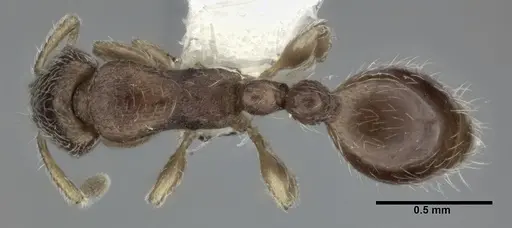
CASENT0246159
View on AntWeb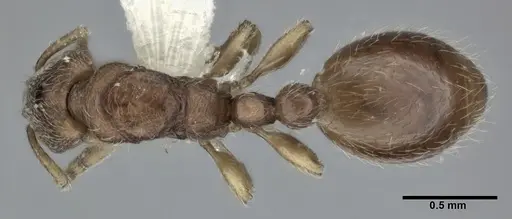
Literature
Loading distribution map...Loading products...