
Vollenhovia dentata
- Sci. Name
- Vollenhovia dentata
- Tribe
- Crematogastrini
- Subfamily
- Myrmicinae
- Author
- Mann, 1919
- Distribution
- Found in 1 countries
Introduction
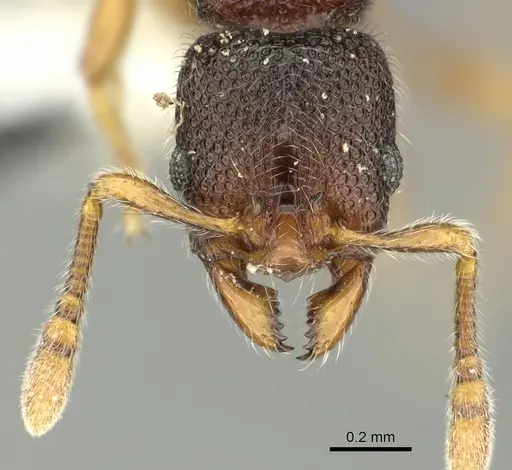
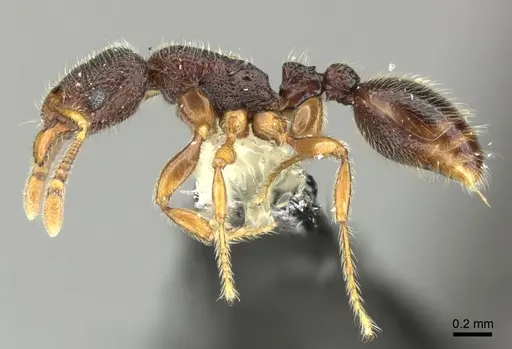
Vollenhovia dentata is a small Myrmicinae ant from the Solomon Islands archipelago in Oceania. It was first described in 1919 by William Mann during his survey of the local ant fauna . Workers are tiny, as typical for the genus, and the species has been recorded on Makira, Guadalcanal, and Ugi islands . A subspecies, Vollenhovia dentata marginata, was also described by Mann . Being rarely studied, almost nothing is known about its biology or captive care. The genus Vollenhovia belongs to tribe Crematogastrini, whose members use a spatulate stinger to smear venom rather than puncture skin.
Quick Summary
- Difficulty: Unknown, species rarely kept in captivity
- Origin & Habitat: Solomon Islands (Makira, Guadalcanal, Ugi), tropical island environment with warm temperatures and high humidity [2][1]
- Colony Type: Unconfirmed, colony structure has not been documented in scientific literature
- Size & Growth:
- Queen: Unknown, no measurements available in published literature
- Worker: Unknown, no specific measurements documented
- Colony: Unknown, colony size data not available
- Growth: Unknown
- Development: Unknown, development has not been studied. Based on typical Myrmicinae patterns from similar tropical island species, expect approximately 4-8 weeks at optimal warm temperatures, but this is an estimate only. (No species-specific development data exists. Temperature dependency is inferred from habitat (tropical Solomon Islands).)
- Antkeeping:
- Temperature: Warm tropical conditions expected, aim for 24-28°C based on native habitat. Solomon Islands are consistently warm year-round. Use a heating cable or mat if room temperature falls below this range.
- Humidity: High humidity expected, tropical island environment. Keep nest substrate consistently moist but not waterlogged. Provide a water tube as a constant moisture source.
- Diapause: Unlikely, Solomon Islands have no true winter. The species likely remains active year-round, though activity may slow during cooler periods.
- Nesting: Unknown in captivity, in nature they likely nest in soil, rotting wood, or under stones on the forest floor. A small test tube setup or a small plaster/Y-tong nest with moist substrate would be a reasonable starting point.
- Behavior: Not documented, specific behavior and temperament are unknown. Based on typical Vollenhovia genus patterns, they are likely relatively docile and non-aggressive. As a member of Crematogastrini, they use a modified stinger to smear venom rather than sting, but their tiny size means any venom application is negligible to humans. Their small size suggests minimal escape risk, though standard barriers are still recommended.
- Common Issues: This species has never been documented in the antkeeping hobby, so no established care protocols exist., No information on what foods they accept, start with standard ant diet (sugar water, small insects) and observe., Wild-caught colonies from Solomon Islands face significant transport stress and may have high mortality., No data on founding behavior, queen may be claustral or semi-claustral, but this is unknown., Limited availability, this species is rarely collected or traded.
Species Background and Distribution
Vollenhovia dentata is endemic to the Solomon Islands, a Pacific archipelago northeast of Australia. The species was first described in 1919 by William Mann, who documented the ant fauna during his survey of the British Solomon Islands [1]. Specimens have been recorded from the islands of Makira (formerly San Cristobal), Guadalcanal, and Ugi [2][1]. The Solomon Islands feature a tropical climate with consistently warm temperatures and high humidity year-round. This species likely occupies forest floor microhabitats typical of small Myrmicinae ants, though specific nesting preferences have not been documented. The subspecies Vollenhovia dentata marginata was also described by Mann in the same 1919 publication, indicating some regional variation [3].
Housing and Nest Setup
Since this species has never been documented in the antkeeping hobby, there are no established captive care protocols. A reasonable starting point is a small test tube setup with a water reservoir, which works well for most small Myrmicinae species. The test tube should be kept in a small container with a barrier to prevent escapes. Given their likely tropical origin, maintain warm and humid conditions. A small plaster or Y-tong nest, or a naturalistic setup with moist substrate, could also work once the colony is established. Avoid large, open spaces that could stress a small colony. Monitor the ants' behavior, if they seem stressed or congregate excessively, adjust humidity and temperature accordingly.
Feeding and Diet
The natural diet of Vollenhovia dentata has not been documented. As a small Myrmicinae ant, they likely forage for small insects, honeydew from aphids/scale insects, and possibly nectar. For captive care, start with standard ant foods: a sugar water solution (1:3 sugar to water ratio) should always be available, plus small protein sources like fruit flies, pinhead crickets, or other tiny insects. Offer protein 2-3 times per week. Observe whether they accept the foods offered, if they ignore certain items, try alternatives. Since nothing is known about dietary preferences, experimentation may be necessary. Remove uneaten food after 24-48 hours to prevent mold.
Temperature and Seasonal Care
Based on the species' native habitat in the Solomon Islands, they require warm tropical conditions. Aim for temperatures in the range of 24-28°C. Unlike temperate species, they likely do not require a diapause or winter rest period, the Solomon Islands maintain relatively stable temperatures year-round. If your room temperature falls below 24°C, use a small heating cable or mat placed on one side of the nest to create a gentle temperature gradient. Allow the ants to select their preferred temperature zone. Avoid temperatures above 32°C as this could be harmful.
Behavior and Colony Dynamics
Specific behavioral observations for Vollenhovia dentata are not available in scientific literature. The genus Vollenhovia generally contains small, cryptically colored ants that are not particularly aggressive. As a member of Crematogastrini, they use a spatulate stinger to smear venom rather than sting, but their tiny size means any venom application is negligible to humans. Workers are likely small and may show typical Myrmicinae foraging behaviors. Nothing is known about queen laying rates, brood development times in captivity, or colony reproduction. As a rarely collected species from a remote location, very few hobbyists have attempted to keep this ant, so practical experience is essentially nonexistent. Any successful captive husbandry would represent new knowledge for the antkeeping community.
Frequently Asked Questions
How do I care for Vollenhovia dentata ants?
Care protocols are not established for this species since it has never been documented in the antkeeping hobby. Start with a small test tube setup, keep temperatures at 24-28°C, maintain high humidity, and offer standard ant foods (sugar water and small insects). Monitor your colony closely and adjust conditions based on their behavior. This is essentially an experimental species with no established care guidelines.
Where does Vollenhovia dentata come from?
This species is native to the Solomon Islands, specifically recorded from the islands of Makira, Guadalcanal, and Ugi. It was first described in 1919 by William Mann during his survey of the ant fauna of these Pacific islands [2][1].
What do Vollenhovia dentata ants eat?
Their natural diet is not documented. Based on typical Myrmicinae behavior, they likely consume honeydew, small insects, and nectar. In captivity, offer sugar water (always available) plus small protein sources like fruit flies or tiny crickets 2-3 times weekly. Experiment with different foods to see what they accept.
What temperature do Vollenhovia dentata ants need?
Based on their tropical Solomon Islands origin, keep them warm at 24-28°C. They do not require hibernation or winter rest. Use a heating cable if your room temperature is below this range.
Are Vollenhovia dentata ants good for beginners?
No, this species is not recommended for beginners. It has never been documented in the antkeeping hobby, meaning no established care protocols exist. Additionally, wild-caught colonies face extreme stress from collection and transport from such a remote location. This species would be appropriate only for very experienced antkeepers interested in pioneering husbandry of an undocumented species.
How big do Vollenhovia dentata colonies get?
Colony size is unknown, no scientific data exists on maximum colony sizes for this species. Based on the genus Vollenhovia typically containing small colonies, they likely reach a few hundred workers at most, but this is purely speculative.
Do Vollenhovia dentata ants sting?
As a Myrmicinae species, they have a stinger, but they belong to tribe Crematogastrini, which uses a modified spatulate stinger to smear venom rather than inject it. Given their very small size, any venom application would be negligible to humans.
Can I keep multiple queens together?
Colony structure (monogyne vs polygyne) has not been documented for this species. Without established protocols, combining unrelated queens is not recommended and could result in aggression and colony failure.
How long does it take for Vollenhovia dentata to raise first workers?
Development time is unknown, no research exists on their egg-to-worker timeline. Based on typical Myrmicinae from tropical environments, expect approximately 4-8 weeks at warm temperatures (around 26°C), but this is a rough estimate only.
Is Vollenhovia dentata available to buy?
This species is extremely rare in the antkeeping hobby. It is not commonly collected or traded, and you are unlikely to find colonies for sale from commercial suppliers. Any available colonies would likely be wild-caught from the Solomon Islands, which presents significant logistical and ethical challenges.
Report an Issue
The current care sheet is based fully on literature. See inconsistencies, or something that's incorrect? Please , it will be resolved after review from an admin. Contributing to the blogs tab also helps providing information, to make us be able to further improve the caresheets. Thank you for your support!
References

This caresheet is licensed under CC BY-SA 4.0 .
Community Blogs
CASENT0199921
View on AntWeb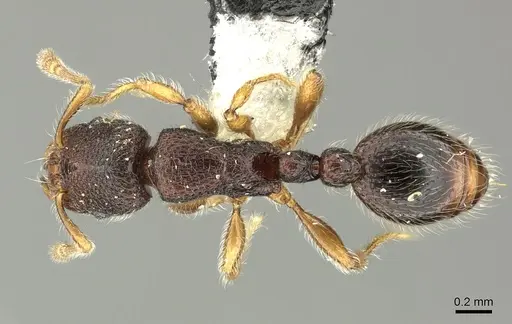
Literature
Loading distribution map...Loading products...