
Vitsika miranda
- Sci. Name
- Vitsika miranda
- Tribe
- Crematogastrini
- Subfamily
- Myrmicinae
- Author
- Bolton & Fisher, 2014
- Distribution
- Found in 1 countries
Introduction
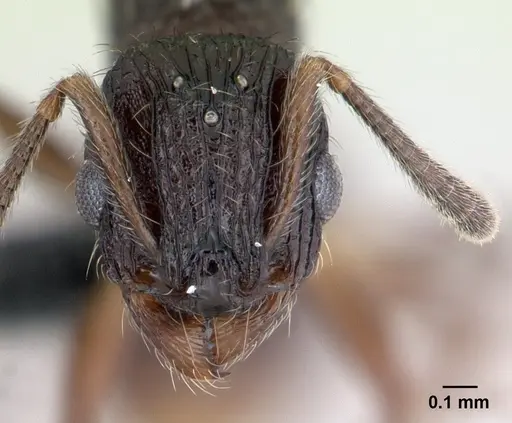
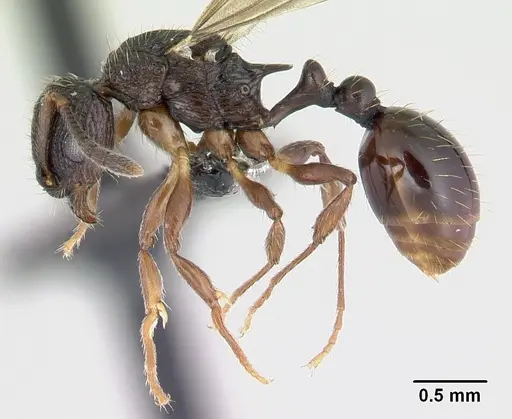
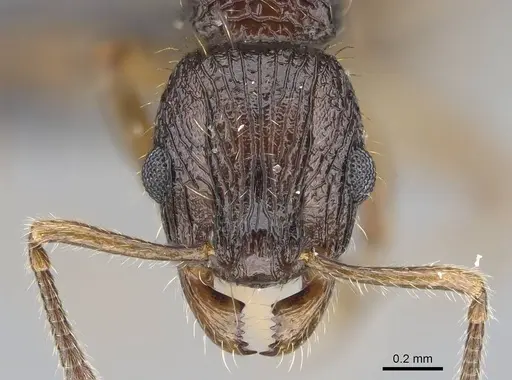
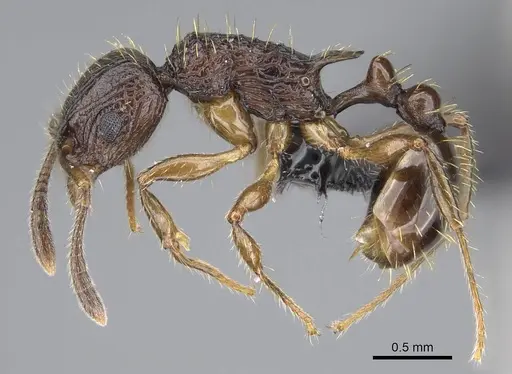
Vitsika miranda is a small Myrmicine ant endemic to Madagascar, with workers measuring 3.5-4.0 mm in total length . They are dark brown to nearly black, with short, stubbly setae on the hind tibiae and clear transverse ridges (costulae) on the propodeum . Described in 2014 by Bolton and Fisher, this species lives in montane rainforest at 1260-1360 m elevation, nesting above ground in dead bamboo stems, twigs, and rotted pockets in standing trees . Males have never been collected . What makes Vitsika miranda stand out is its arboreal nesting style and the fact that only alate (winged) queens have been found - no dealate queens or established colonies have been observed in the wild . Because so little is known about its colony life, antkeepers should treat it as a truly beginner-unfriendly species.
Quick Summary
- Difficulty: Medium
- Origin & Habitat: Endemic to Madagascar, specifically montane rainforest in the R.S. Kalambatritra region, Province Toliara, at elevations of 1260-1360 m [1].
- Colony Type: Unconfirmed, only alate (winged) queens have been collected, no observations of dealate queens or established colonies exist [1].
- Size & Growth:
- Queen: Total length unknown, only head and mesosoma measurements have been recorded [1].
- Worker: 3.5-4.0 mm total length [1].
- Colony: Unknown, no mature colony data available.
- Growth: Unknown, no data on colony development.
- Development: Unknown, no direct measurements exist. (All estimated timelines are speculative, the montane climate may slow development.)
- Antkeeping:
- Temperature: Based on their montane rainforest origin at ~1300 m elevation, they likely prefer cooler conditions than typical tropical ants. Aim for 20-24 °C, with a gradient if possible, and avoid overheating [1].
- Humidity: High humidity is essential, think damp forest floor. Keep the nest substrate consistently moist but not waterlogged. Their natural habitat is constantly humid [1].
- Diapause: Unknown, no data on overwintering. Madagascar has mild seasons, but montane populations may experience cooler periods. Monitor for activity changes.
- Nesting: These ants nest above ground in dead wood, bamboo stems, and twigs [1]. In captivity, use test tubes with a piece of dead twig, or small naturalistic setups with rotting wood. They prefer tight, enclosed spaces.
- Behavior: Workers are small, active foragers that likely move individually or in small groups. They are not aggressive, and as a member of Crematogastrini, they possess a modified spatulate stinger used to smear venom rather than sting. Their tiny size (3.5-4 mm) means escape prevention is critical, they can slip through standard mesh. Omnivorous, accepting both sugars and small protein prey.
- Common Issues: tiny size causes a high escape risk, use fine mesh, fluon, and tight lids [1]., limited published information means care may require trial and error., arboreal nesting habits may need more specialised setups than soil-nesting ants., no data on founding or colony growth, beginners should expect a steep learning curve., high humidity needs can lead to mould if ventilation is poor.
Housing and Nest Setup
Vitsika miranda naturally nests above ground in cavities like dead bamboo, twigs, and rotted tree pockets [1]. In captivity, start with a test tube setup: add a water reservoir and one small piece of dead twig or wood so ants feel at home. Keep the space tight, these tiny ants feel secure in snug chambers. Use fine mesh or fluon to prevent escapes, as workers squeeze through standard barriers. A small foraging arena with dead leaves completes the setup. Avoid overly large nests until the colony is well established.
Feeding and Diet
Like most Myrmicinae, Vitsika miranda is likely omnivorous, but no direct feeding observations have been published. Offer a constant supply of sugar water or diluted honey. For protein, provide small live prey such as fruit flies, pinhead crickets, or small mealworms. Feed every 2-3 days and remove uneaten food after 24 hours to prevent mould. Watch what the colony accepts and adjust accordingly, you're pioneering their captive diet.
Temperature and Humidity
These ants live in montane rainforest at ~1300 m elevation, so they prefer cooler, stable conditions. Keep the nest at 20-24 °C, avoid overheating [1]. Humidity should be high: keep the nest substrate consistently moist (not waterlogged). A test-tube water reservoir provides a humidity gradient. Good ventilation is essential to prevent mould while maintaining dampness.
Colony Development and Growth
Nothing is known about colony founding or development in Vitsika miranda. Workers are small (3.5-4 mm), but no data on egg-to-worker time, growth rate, or mature colony size exists. Any figures you see elsewhere are pure guesswork. Be patient and record your own observations, you may be the first to document their captive development.
Behavior and Temperament
Vitsika miranda is a peaceful ant. Workers forage alone or in small groups on low vegetation [1]. They are not aggressive, and as a member of Crematogastrini, they use a spatulate stinger to smear venom rather than sting. The main behavioral concern is escape: their 3.5-4 mm size lets them slip through standard barriers, so use fine mesh and fluon. They are likely timid and will flee rather than fight.
Seasonal Care and Overwintering
Diapause requirements are unknown. Madagascar has mild seasons, but the montane population may experience cooler, drier periods. If the colony slows down, reduce feeding and avoid disturbance. Do not force hibernation, room temperature (20-24 °C) is likely fine year‑round. Monitor activity and adjust care based on what you see.
Frequently Asked Questions
How long does it take for Vitsika miranda to produce first workers?
The exact development timeline is unknown. No data exists for this species, so be prepared for a long wait. Any estimate (e.g.,6-10 weeks) is pure speculation.
What do Vitsika miranda ants eat?
Likely omnivorous, but no diet studies have been done on this species. Offer sugar water and small protein prey like fruit flies, and observe what they accept.
Can I keep Vitsika miranda in a test tube?
Yes. A test tube with a water reservoir and a small piece of dead twig works well. These ants naturally nest in tight above-ground cavities, so they appreciate snug spaces [1]. Ensure excellent escape prevention.
What temperature do Vitsika miranda ants need?
Aim for 20-24 °C. Their montane rainforest origin suggests they prefer cooler conditions than typical tropical ants [1]. Avoid overheating and sudden swings.
How big do Vitsika miranda colonies get?
Unknown. No mature colony has been documented. Any estimate (e.g., several hundred workers) is a guess.
Do Vitsika miranda ants sting?
They have a modified spatulate stinger used to smear venom, not to sting. The venom is unlikely to affect humans, and the ants are not aggressive.
Are Vitsika miranda good for beginners?
Rated Medium difficulty, but the lack of published care info makes this a species for experienced keepers willing to experiment. Beginners should start with better‑documented ants.
Do Vitsika miranda need hibernation?
Diapause requirements are unknown. Madagascar has mild seasons, so there's no evidence they need a cold period. If activity drops in winter, simply reduce feeding and avoid disturbance.
Why are my Vitsika miranda escaping?
Their tiny size (3.5-4 mm) lets them squeeze through standard barriers. Use fine mesh, tight lids, and fluon to prevent escapes [1]. Check all connections regularly.
When should I move Vitsika miranda to a formicarium?
Wait until the nest is clearly overcrowded, at least several dozen workers, but there are no firm guidelines. Test tubes work well for small colonies. Move only when the outworld is full of foraging workers.
Can I keep multiple Vitsika miranda queens together?
Unknown. Only alate queens have been collected, and no data on colony founding exists [1]. It is not recommended to combine queens without evidence that they are non‑aggressive toward each other.
What humidity level do Vitsika miranda need?
High humidity, keep the nest substrate consistently moist but not waterlogged. Their montane rainforest habitat is damp year‑round [1]. Good ventilation prevents mould.
Report an Issue
The current care sheet is based fully on literature. See inconsistencies, or something that's incorrect? Please , it will be resolved after review from an admin. Contributing to the blogs tab also helps providing information, to make us be able to further improve the caresheets. Thank you for your support!
References

This caresheet is licensed under CC BY-SA 4.0 .
Community Blogs
CASENT0003876
View on AntWeb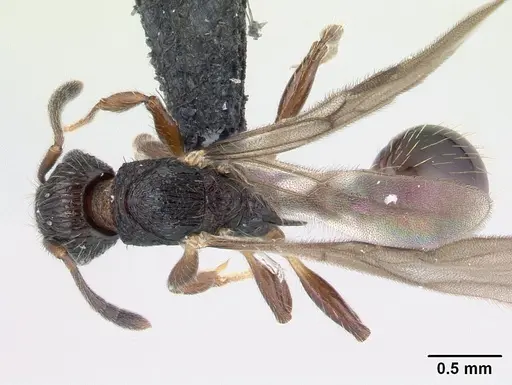
CASENT0147524
View on AntWeb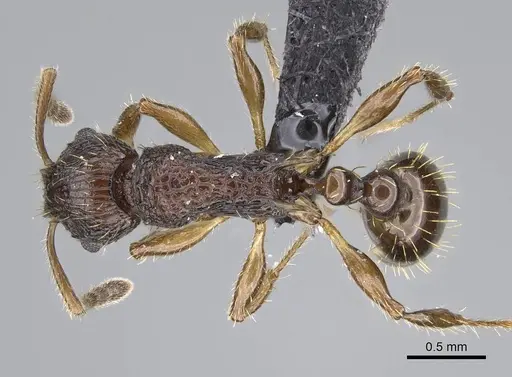
Literature
Loading distribution map...Loading products...