
Trichomyrmex oscaris
- Sci. Name
- Trichomyrmex oscaris
- Tribe
- Crematogastrini
- Subfamily
- Myrmicinae
- Author
- Forel, 1894
- Distribution
- Found in 7 countries
Introduction
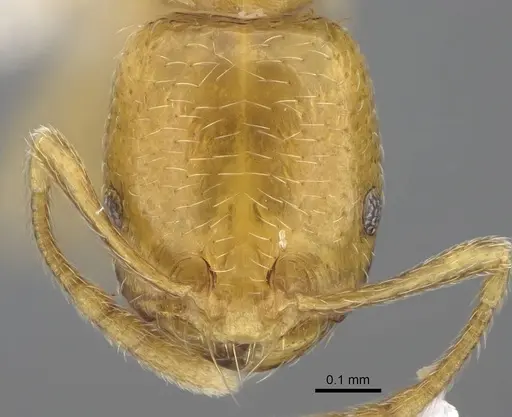
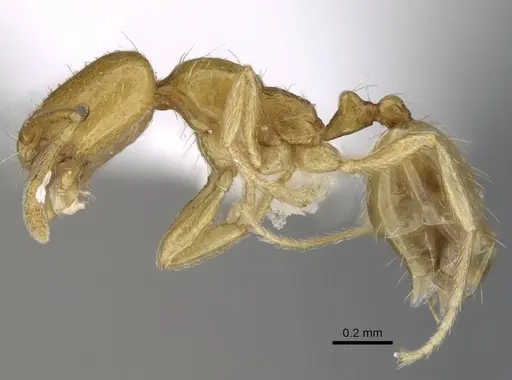
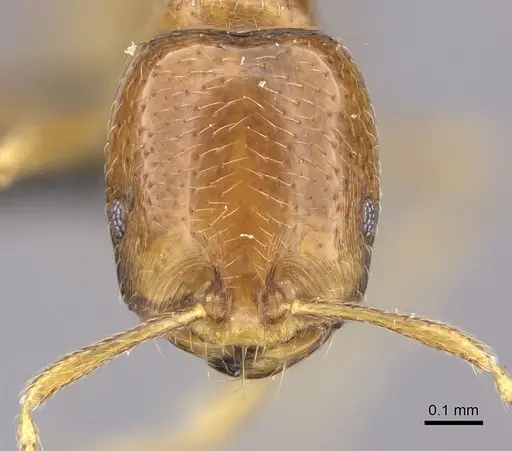
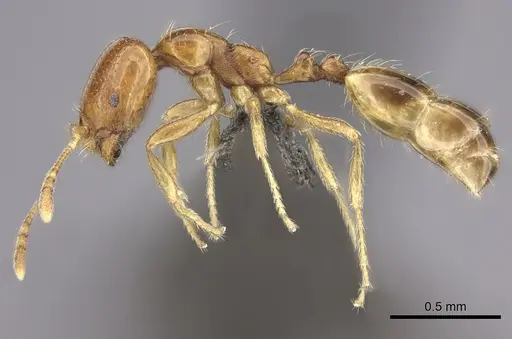
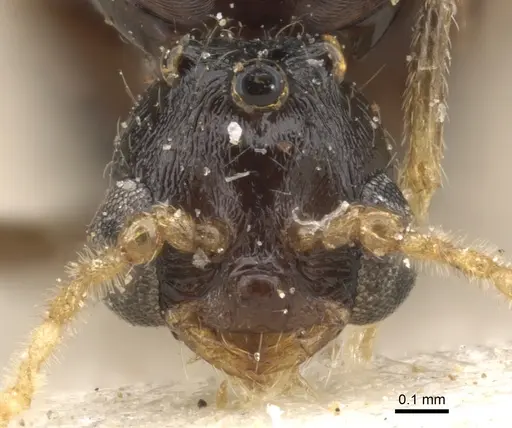
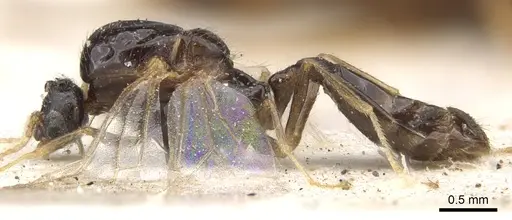
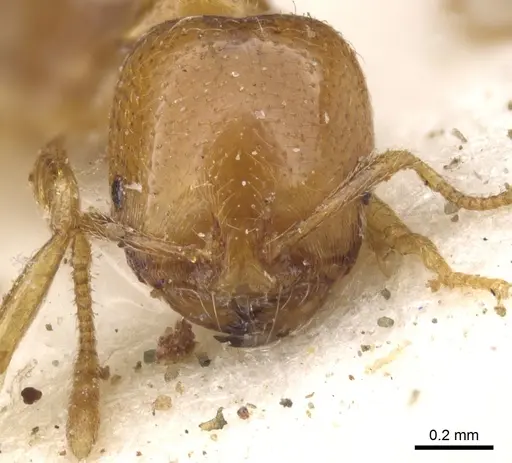
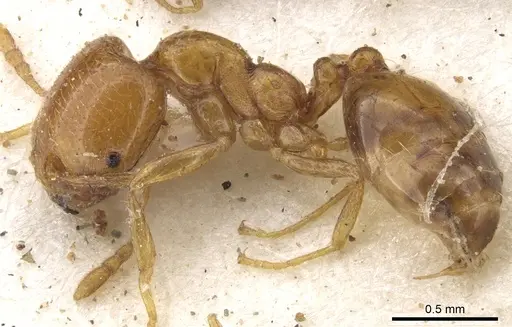
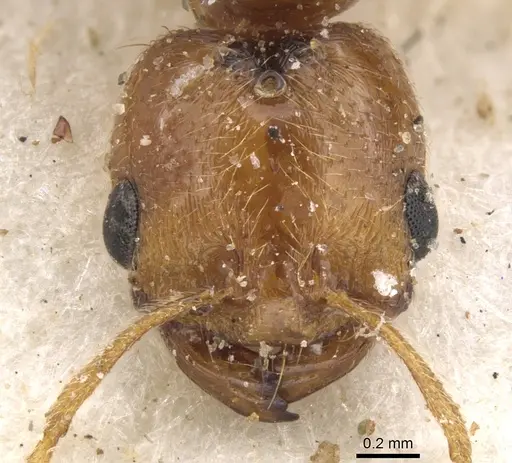
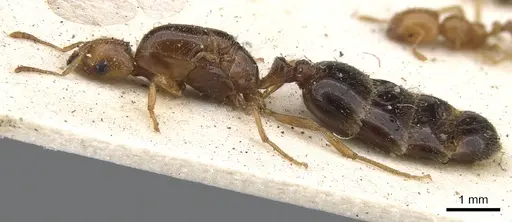
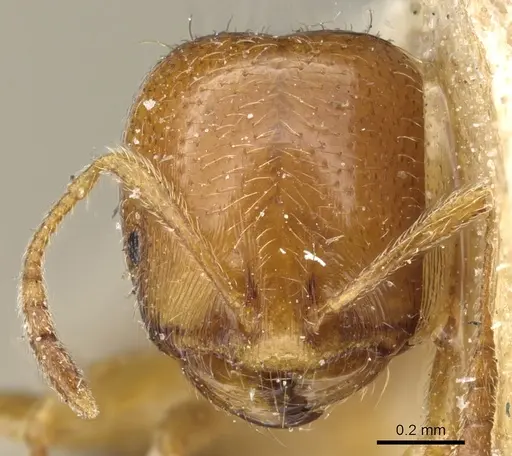
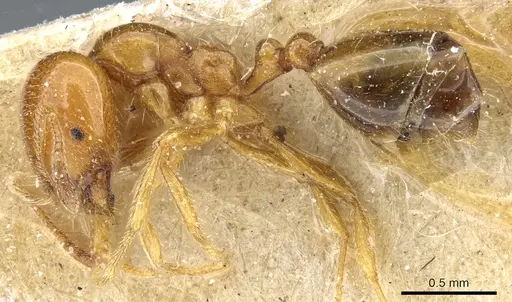
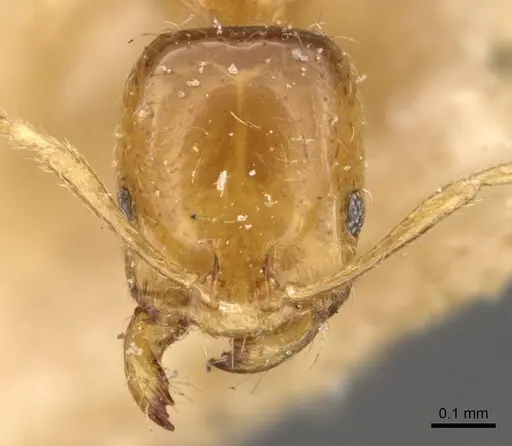
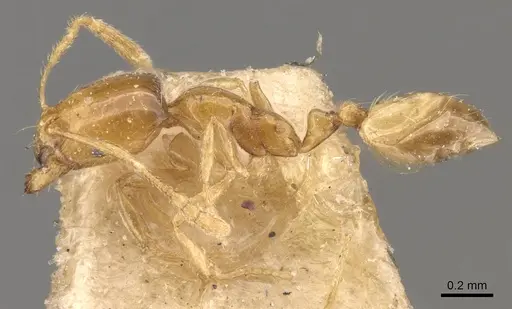
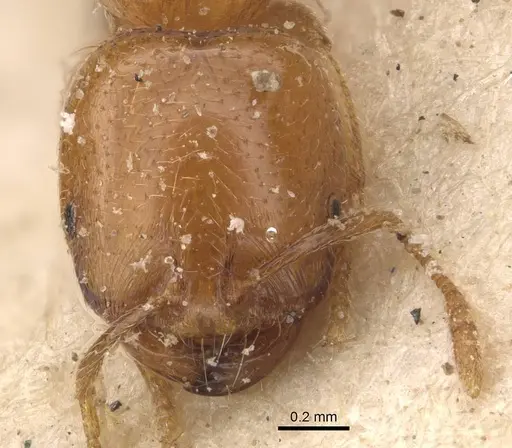
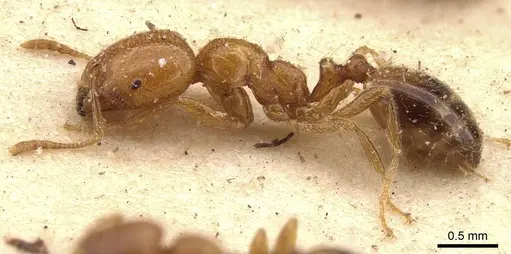
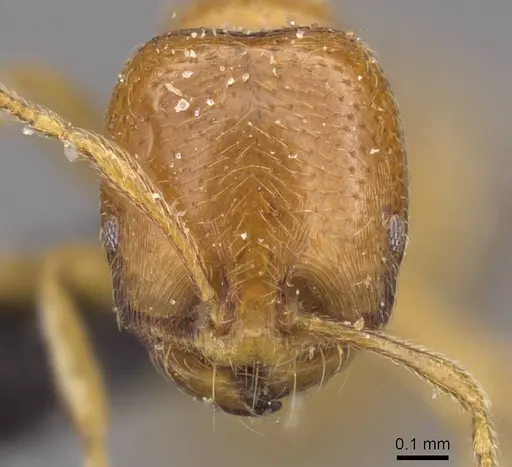
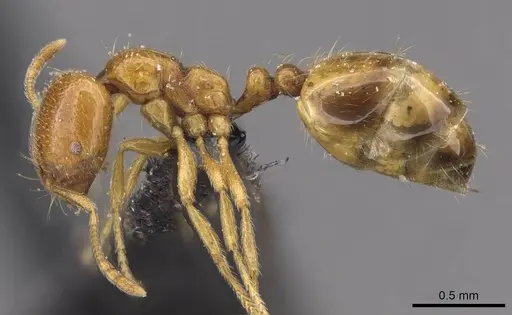
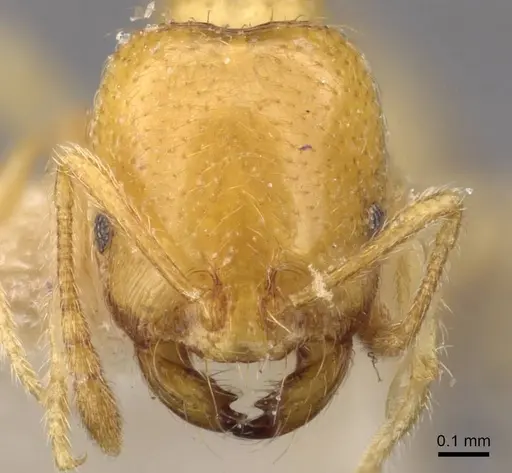
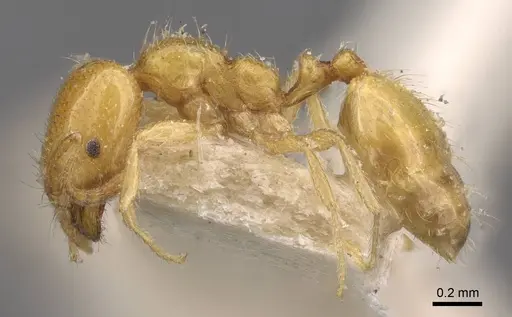
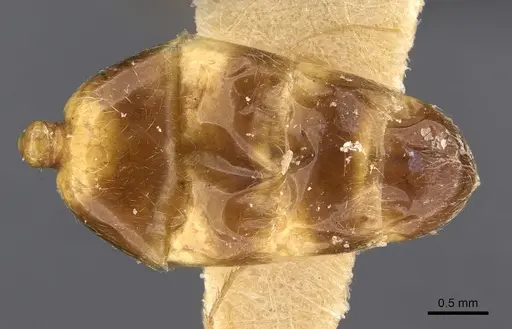
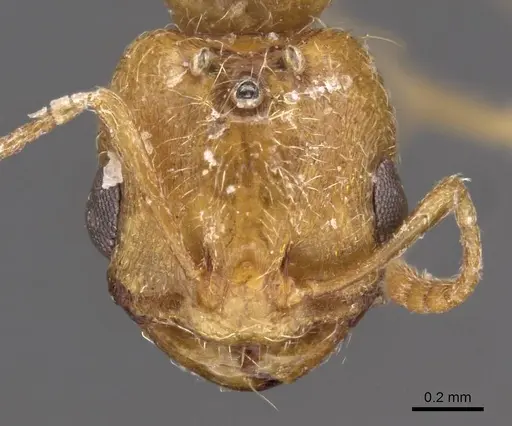
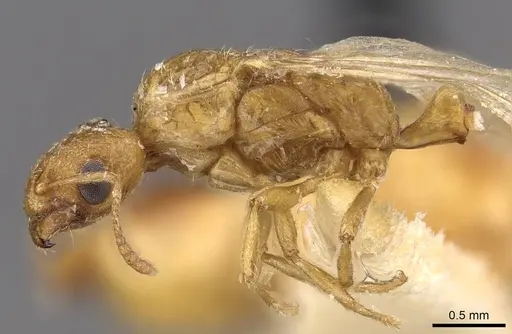
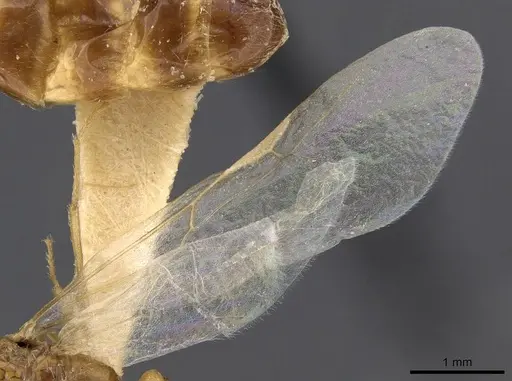
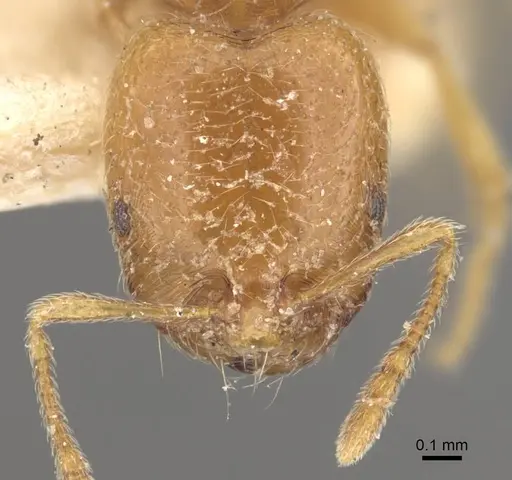
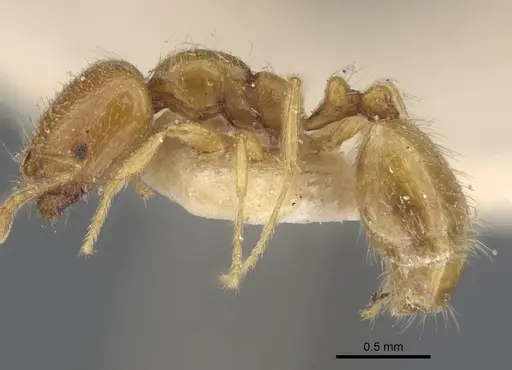
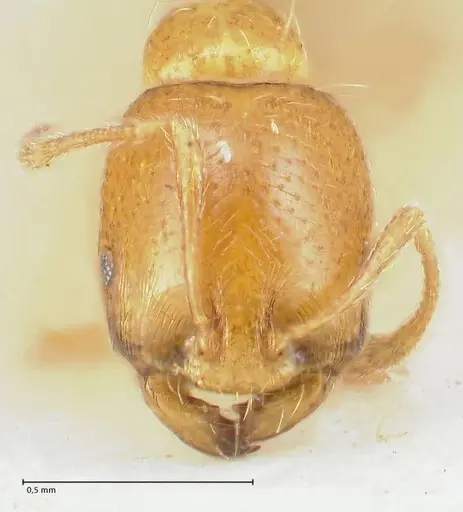
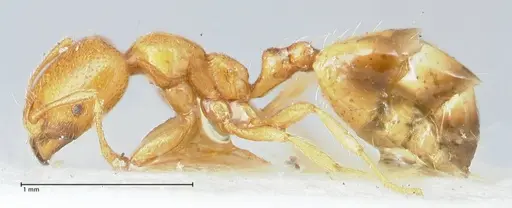
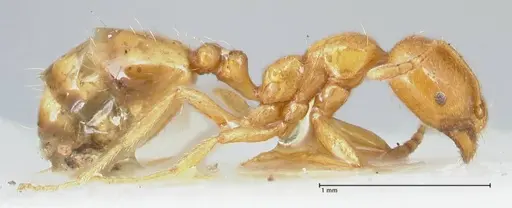
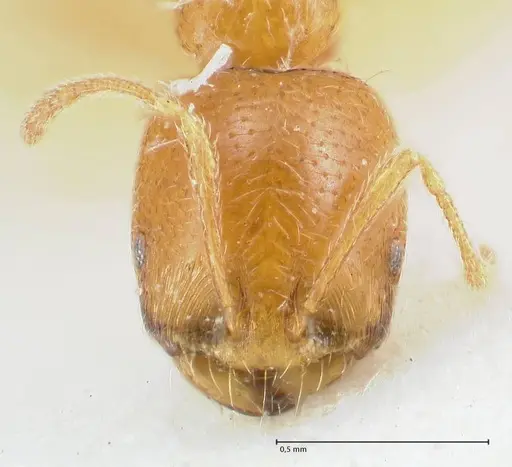
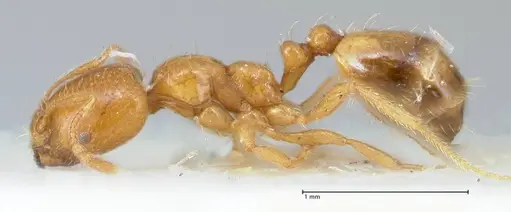
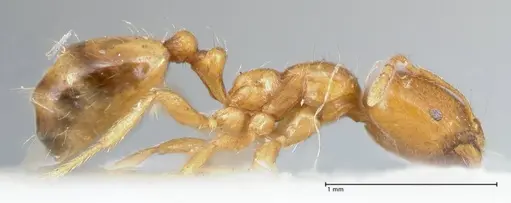
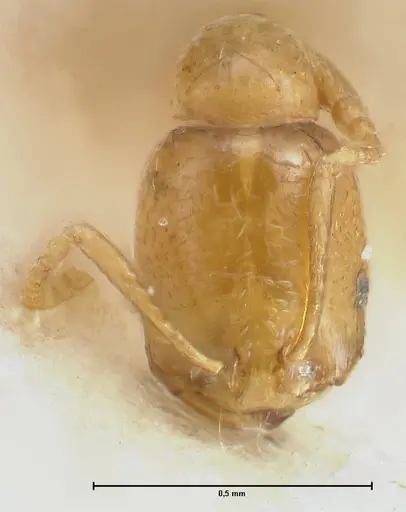
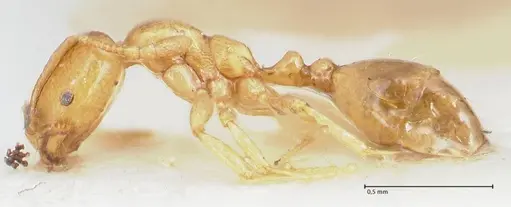
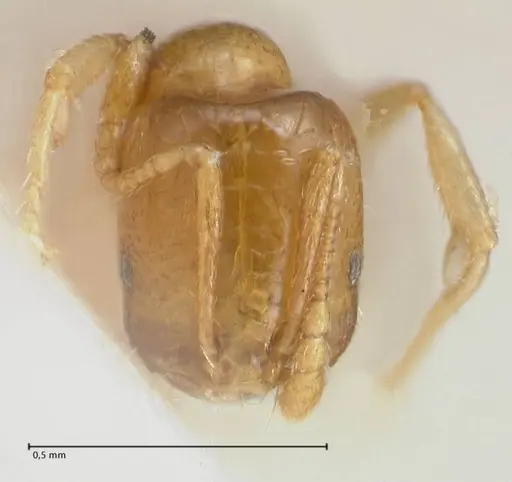
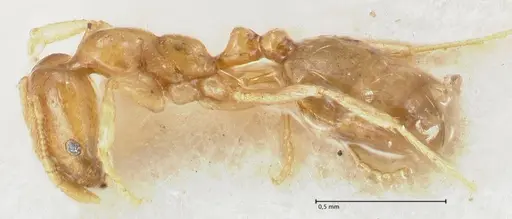
Trichomyrmex oscaris is a small ant species native to the Afrotropical region, ranging from Senegal east to Ethiopia and south to South Africa . Workers measure 1.6-3.8mm and show significant size variation within colonies . They are yellow to light brownish yellow with a glossy body, and can be told apart from their close relative Trichomyrmex destructor by the shape of the petiole node: in T. oscaris it is strongly compressed front-to-back (transverse), while in T. destructor it is more rounded . This ground-nesting ant is highly adaptable - it builds nests under stones, in termitaria, in soil, and even inside old rotting cocoa pods still hanging from trees . It also lives in mango orchards and is considered a potential bioindicator for grassland habitats in Togo . Recently it was recorded for the first time in Rwanda and the Arabian Peninsula (Saudi Arabia) .
Quick Summary
- Difficulty: Easy
- Origin & Habitat: Native to the Afrotropical region: Benin, Botswana, Burkina Faso, Democratic Republic of Congo, Eritrea, Ethiopia, Ghana, Nigeria, Senegal, South Africa, Togo, Uganda, Tanzania, Zimbabwe [1]. Also recorded in Rwanda and Saudi Arabia [2][4]. Found in open grassland habitats and savanna, often nesting under stones, in termitaria, or in sandy soil near Acacia trees [1][2].
- Colony Type: Unconfirmed. Colony structure (whether single or multiple queens) has not been documented in scientific literature for this species.
- Size & Growth:
- Antkeeping:
- Temperature: Based on its warm Afrotropical habitat, keep the nest at 24-28°C. Room temperature (20-24°C) may be acceptable but will likely slow growth. Avoid sustained temperatures below 18°C [2][1].
- Humidity: Provide a humidity gradient. In nature they nest in sandy, moderately dry soils [2], so keep the substrate slightly moist but not waterlogged, with one area drier. Allow the nest to dry out between waterings.
- Diapause: Not required. As an Afrotropical species, Trichomyrmex oscaris does not experience prolonged cold winters in its natural range.
- Nesting: Ground-nesting species that accepts various setups. Test tubes work well for founding. For larger colonies, use Y-tong (AAC) nests or naturalistic setups with soil/sand substrate. They naturally nest under stones, in termitaria, and in earth [1].
- Behavior: Docile and non-aggressive. This species belongs to the Crematogastrini tribe, which uses a 'smear' defense, they wipe venom onto attackers with a modified spatulate stinger rather than stinging. Escape risk is moderate due to the small worker size (down to 1.6mm), use barriers like fluon or tightly packed cotton.
- Common Issues: keeping temperatures too low will slow or stop colony development, maintain warmth year-round., small workers can escape through standard barriers, use well-packed cotton and fluon on test tube rims., wild-caught colonies may harbor parasites from termitaria or soil habitats., overfeeding can cause mold in test tube setups, remove uneaten prey within 24 hours., founding queens may fail if disturbed, minimize check-ups during the first few weeks.
Housing and Nest Setup
Trichomyrmex oscaris is a versatile ground-nesting ant [1]. For a founding colony, a standard test tube setup works: fill the tube one-third with water, plug with cotton, and place the queen inside. The exact founding method is not known, so provide some sugar water and small protein once workers appear. Once you have 20+ workers, you can move them to a Y-tong (AAC) nest or a naturalistic setup with a soil/sand mix. In their natural habitat, they nest under stones, in termitaria, and in earth [1], so a substrate depth of 2-3cm allows them to dig their own chambers. They readily accept test tube setups and will move into new chambers when offered.
Feeding and Diet
Diet is not specifically documented, but as a generalist tramp species they likely accept both carbohydrates and proteins. Offer sugar water (1:1 ratio) or honey water as a steady energy source. For protein, provide small insects such as fruit flies, pinhead crickets, or small mealworms. Remove uneaten prey within 24 hours to prevent mold. Feed small amounts 2-3 times per week for growing colonies.
Temperature and Seasonal Care
As an Afrotropical species recorded from warm, dry areas [2], Trichomyrmex oscaris prefers warm conditions. Keep the nest area at 24-28°C for good activity and brood development. They can tolerate room temperature (20-24°C) but growth will be slower. Use a heating cable on one side of the nest to create a temperature gradient. Do not allow temperatures to drop below 18°C for long periods. They do not need a hibernation period. If activity slows in winter, a short cool period (18-20°C) for a few weeks may be natural, but it's not required.
Behavior and Colony Dynamics
Colonies show remarkable worker size variation (monophasic allometric variation) but the social structure is not well studied [1]. They are not aggressive, their defense is smearing venom using a flattened stinger. Workers are active foragers and will explore outworlds readily. In Zimbabwe, they have been found nesting alongside small termites with separate galleries [1], suggesting they can live with other soil insects. Their adaptability to disturbed habitats and food sources makes them a tough species for captivity.
Field Identification and Range
Trichomyrmex oscaris has a wide Afrotropical distribution: from Senegal eastward to Ethiopia and south to South Africa, and also in Rwanda and Saudi Arabia [1][2][4]. It was originally described from Ethiopia in 1894. It can be confused with Trichomyrmex destructor, but in T. oscaris the petiole node (seen from above) is distinctly transverse (wider than long and compressed), whereas in T. destructor it is globular or subglobular [1]. Workers in West Africa may show faint head sculpture and lighter queens [1].
Common Problems and Solutions
The main challenges come from their small size and warm-climate needs. Maintain temperatures above 20°C at all times, ideally 24-28°C. Because the smallest workers are only 1.6mm, they can squeeze through standard test tube cotton if it's not packed tightly. Use well-packed cotton and consider adding a fluon barrier at the tube entrance. Wild-caught colonies may bring in parasites from termitaria or soil, so quarantine them if possible. Remove leftover food promptly to avoid mold. Overall, this is a hardy species once you get the warmth and humidity right. [3]
Frequently Asked Questions
How long does it take for Trichomyrmex oscaris to raise first workers?
This has not been documented. Based on similar-sized myrmicine ants, expect roughly 5-8 weeks at warm temperatures, but there are no confirmed data. Cooler temperatures will slow development.
What do Trichomyrmex oscaris ants eat?
No specific diet is known, but they likely accept sugar water and small insects as generalist feeders. Offer honey water or sugar water, and protein sources like small fruit flies or pinhead crickets.
Do Trichomyrmex oscaris ants sting?
They have a functional stinger, but instead of piercing, they use it to smear venom onto attackers (a 'smear' defense). They are not aggressive and rarely sting.
What temperature do Trichomyrmex oscaris need?
Keep them at 24-28°C. They come from warm Afrotropical areas and don't tolerate cold well. Room temperature (20-24°C) is acceptable but slows growth [2].
How big do Trichomyrmex oscaris colonies get?
Colony size is unknown. They show significant worker size variation (1.6-3.8mm), but maximum colony size has not been documented [1].
Can I keep multiple Trichomyrmex oscaris queens together?
Not recommended. Colony structure has not been studied, but most myrmicine ants are monogyne. Keep each queen separately unless you confirm otherwise.
Do Trichomyrmex oscaris need hibernation?
No. As an Afrotropical species, they do not experience cold winters and do not require a hibernation period.
What is the best nest type for Trichomyrmex oscaris?
Test tubes work for founding. Once they have 20+ workers, Y-tong (AAC) nests or naturalistic soil setups are good. They are ground-nesting and naturally live under stones or in termitaria [1].
Why is my Trichomyrmex oscaris colony declining?
The most likely cause is low temperature, they need 24-28°C. Other possibilities: overfeeding causing mold, disturbance during founding, or parasites from wild-caught colonies. Ensure warmth, remove uneaten food, and disturb founding queens as little as possible.
Is Trichomyrmex oscaris a good beginner ant?
Yes, it's a hardy, non-aggressive species that adapts well to captivity. The main caveat is that small workers can escape easily, so pay attention to barriers. Warmth must also be maintained.
Report an Issue
The current care sheet is based fully on literature. See inconsistencies, or something that's incorrect? Please , it will be resolved after review from an admin. Contributing to the blogs tab also helps providing information, to make us be able to further improve the caresheets. Thank you for your support!
References

This caresheet is licensed under CC BY-SA 4.0 .
Community Blogs
ANTWEB1025250
View on AntWeb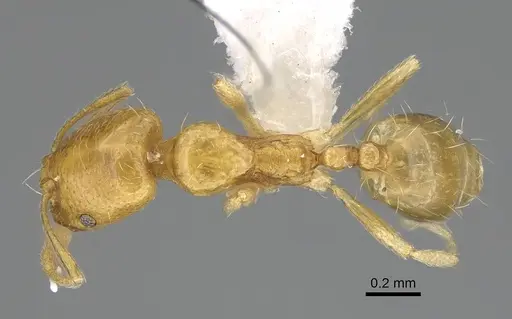
CASENT0066964
View on AntWeb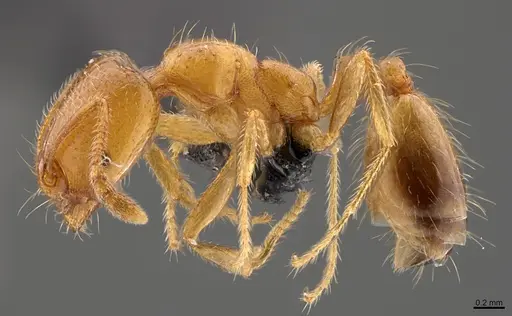
CASENT0235926
View on AntWeb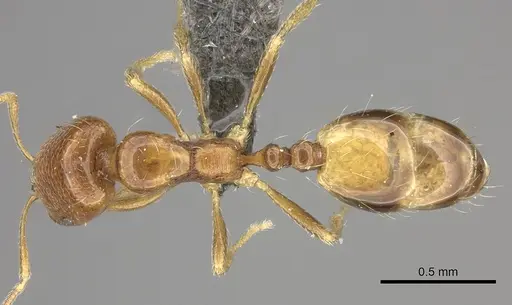
CASENT0902180
View on AntWeb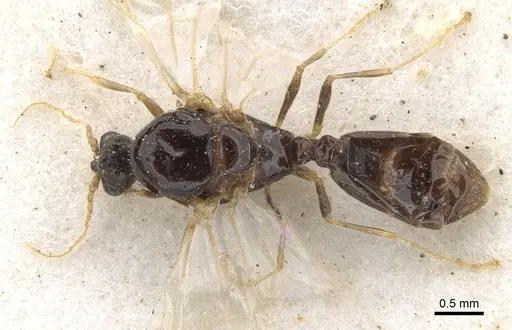
CASENT0902208
View on AntWeb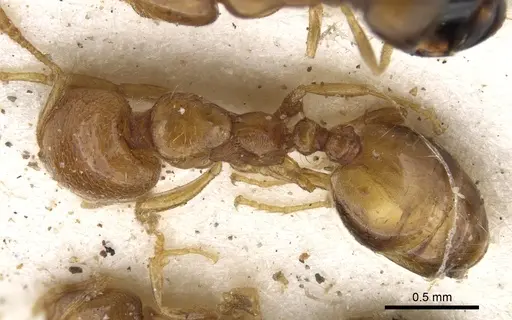
CASENT0902209
View on AntWeb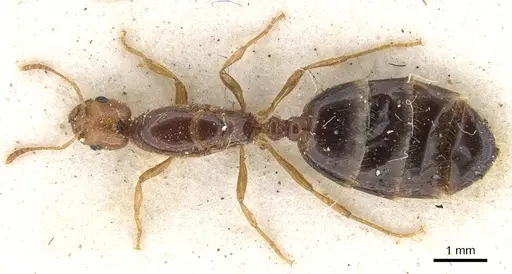
CASENT0904583
View on AntWeb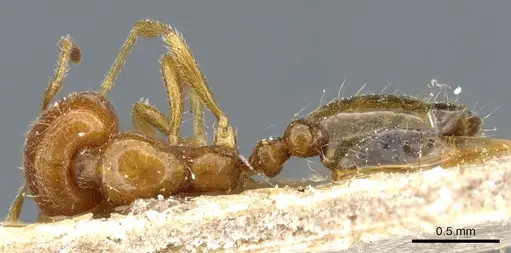
CASENT0908712
View on AntWeb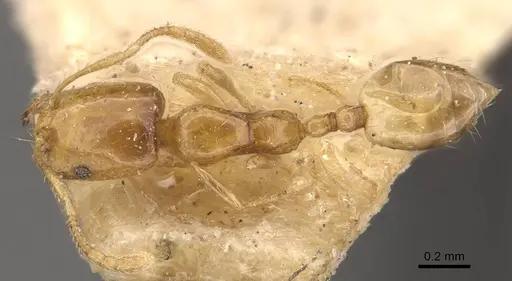
CASENT0908716
View on AntWeb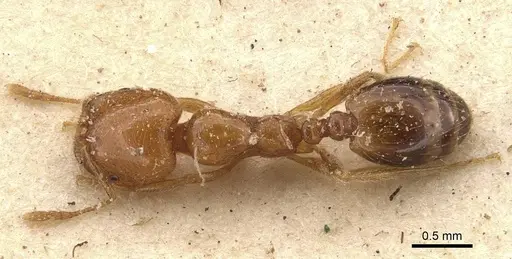
CASENT0908750
View on AntWeb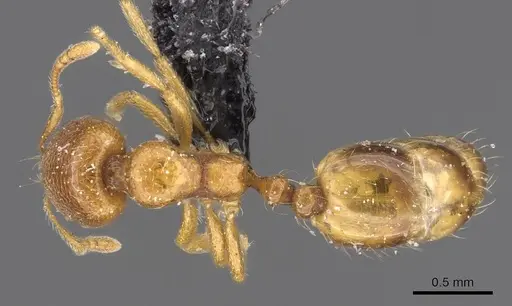
CASENT0908751
View on AntWeb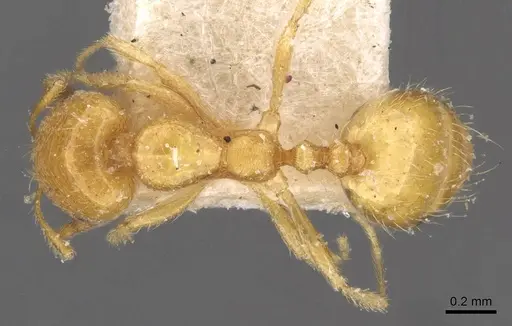
CASENT0909201
View on AntWeb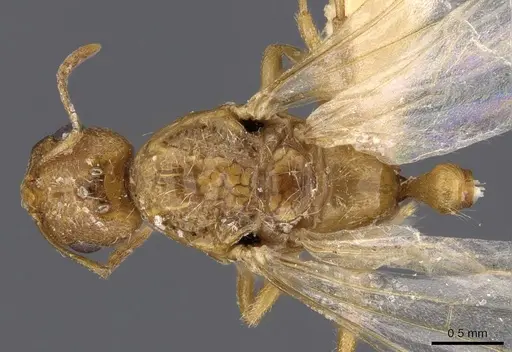
CASENT0917001
View on AntWeb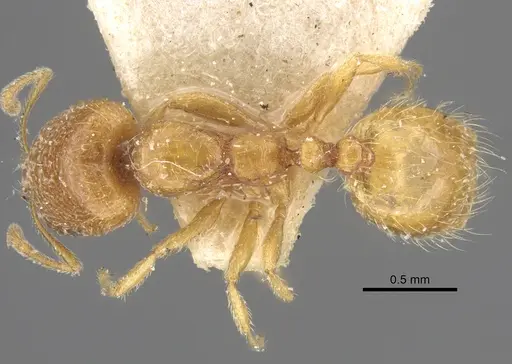
FOCOL1717
View on AntWeb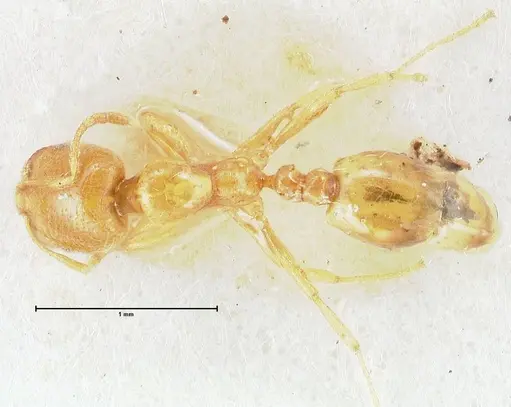
FOCOL1718
View on AntWeb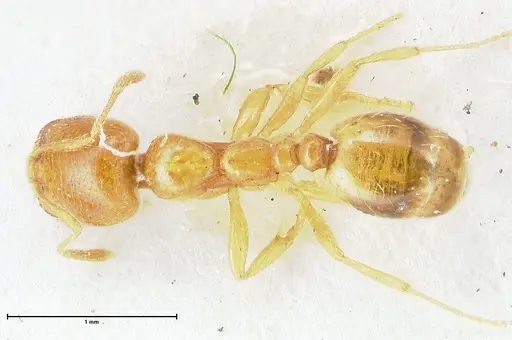
FOCOL1719-1
View on AntWeb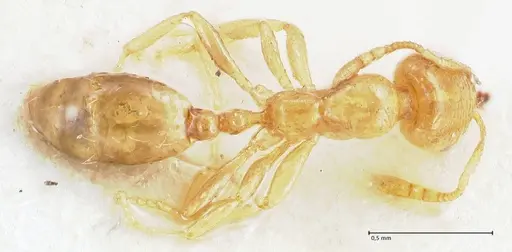
FOCOL1719-2
View on AntWeb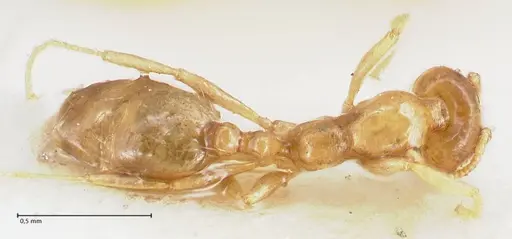
Literature
Loading distribution map...Loading products...