
Trichomyrmex aberrans
- Sci. Name
- Trichomyrmex aberrans
- Tribe
- Crematogastrini
- Subfamily
- Myrmicinae
- Author
- Forel, 1902
- Distribution
- Found in 1 countries
Introduction
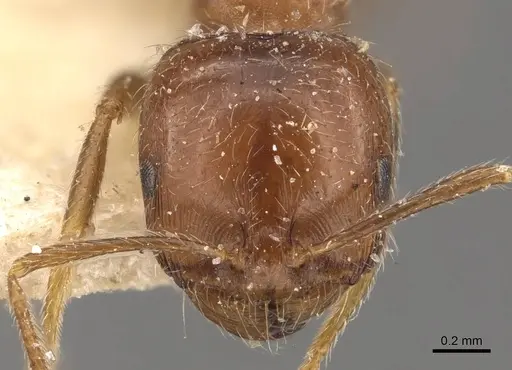
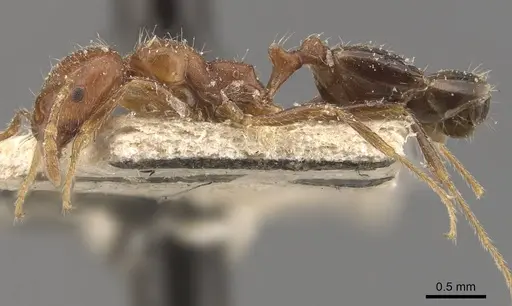
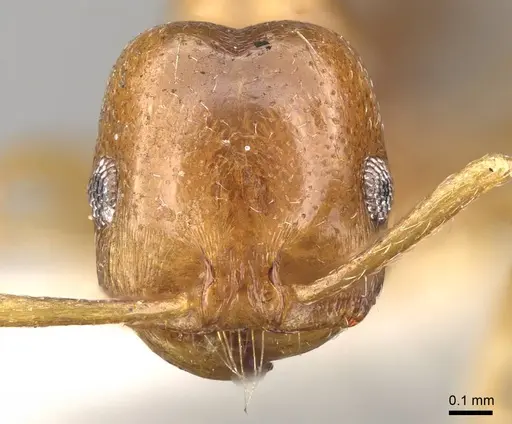
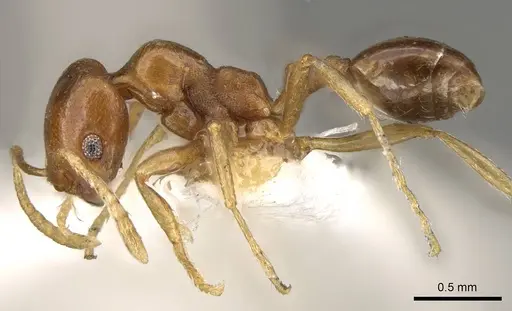
Trichomyrmex aberrans is a small Myrmicine ant native to South Asia, found across India, Pakistan, and Sri Lanka . Workers are about 3.5mm long and have a two-toned look: a reddish-yellow body with a dark brown abdomen. Their body is smooth and shiny, the head is as broad as long, and their antennae extend past the top of the head . They belong to the Generalised Myrmicinae functional group, meaning they are flexible foragers rather than specialists . These ants have been collected from human homes, including kitchens near sugar boxes . They inhabit elevations of 500 to 1000m in the Himalayas, suggesting they can adapt to a range of conditions . Much of their biology in the wild and in captivity has not been studied directly.
Quick Summary
- Difficulty: Medium
- Origin & Habitat: South Asia – India, Pakistan, Sri Lanka. Recorded in Indian states: Arunachal Pradesh, Haryana, Himachal Pradesh, Jammu & Kashmir, Madhya Pradesh, Meghalaya, Uttarakhand [1]. Also found in Pakistan, collected from houses (kitchens) [2]. Present at elevations of 500–1000m in the Himalayas [4].
- Colony Type: Likely single-queen colonies (monogyne), but this is not confirmed from research. Based on related Trichomyrmex species, monogyny is typical.
- Size & Growth:
- Queen: Not recorded in available research, size data unavailable.
- Worker: 3.5mm [3]
- Colony: Unknown – not documented in research.
- Growth: Unknown – not studied.
- Development: Not documented for this species. Based on related small Myrmicinae, estimates are speculative. (No direct data on development time.)
- Antkeeping:
- Temperature: Based on their natural habitat (human dwellings and moderate elevations in the Himalayas), typical room temperatures (around 20–25°C) are likely suitable. Avoid extremes.
- Humidity: Since they are found in homes, average indoor humidity with a water source is likely sufficient. Provide a small water tube or moist area in the nest.
- Diapause: Unknown – no data. Their presence in human homes suggests they may not require a cold period, but this is unclear.
- Nesting: Not documented in research. They have been collected from houses, indicating they adapt to artificial structures. Test tubes or simple formicaria are a reasonable starting point.
- Behavior: Little is known about their behavior in captivity. They belong to the tribe Crematogastrini, whose members use a smearing venom as defense rather than stinging (they do not sting). Their small size (3.5mm) means they can escape through tiny gaps if not properly contained. Based on their association with human homes, they likely tolerate disturbance well.
- Common Issues: escape prevention is essential – workers are small and can slip through tiny gaps., unknown founding behavior – queens may not be claustral, so monitor the queen after capture., wild-caught colonies may carry parasites or nest in hard-to-collect locations inside walls., overfeeding can cause mold – remove uneaten food within 24 hours., colony size and growth rate are unknown, so patience is needed.
Housing and Nest Setup
Because the biology of this species is largely unstudied, follow general practices for small Myrmicinae. Use a test tube setup for founding a colony from a queen. Fill a test tube one-third with water, seal with cotton, and place the queen inside. Keep the tube in a dark, quiet place. If you catch a wild colony (e.g., from a kitchen), you can transfer them into a formicarium. They are small (workers 3.5mm) so ensure all gaps are sealed with fluon or fine mesh. They likely do well with simple artificial nests like Y-tong or plaster, but there is no specific data on nest preferences [3][2].
Feeding and Diet
Trichomyrmex aberrans are generalist omnivores. They have been found near sugar boxes in kitchens, so they are strongly attracted to sweets [2]. Provide a sugar solution (honey water or sugar water) a few times per week. For protein, offer small insects such as fruit flies, small mealworms, or pre-killed crickets 2–3 times per week. Remove uneaten food after 24–48 hours to prevent mold. They are not aggressive hunters, so small, easy prey items are best.
Temperature and Seasonal Care
This species is found in human dwellings and at elevations of 500–1000m in the Himalayas [4][2]. Room temperature (20–25°C) is likely suitable. Avoid direct sunlight or heat sources. There is no information on diapause. Since they live indoors year-round, they may not require a cooling period. If the colony is kept in a very cold room, activity may slow, but true dormancy is unconfirmed.
Behavior and Colony Dynamics
Almost nothing is published about this species' behavior. Workers are 3.5mm and have a two-toned coloration [3]. They belong to the Generalised Myrmicinae functional group, meaning they forage in general ways [4]. They have been collected from kitchens, suggesting they are comfortable around human activity [2]. Their defense mechanism (based on tribe Crematogastrini) is smearing venom, not stinging. Escape prevention is critical due to their small size. Colony size and growth rate are unknown, patience is needed.
Finding and Collecting
In Pakistan, workers have been collected from houses, especially kitchens near sugar boxes [2]. They are also reported from several Indian states [1]. To start a colony, look for queens after nuptial flights during warmer months, or carefully collect a small colony from a house. Note that founding behavior is unconfirmed – the queen may or may not be claustral. Check local regulations before collecting.
Frequently Asked Questions
How long does it take for Trichomyrmex aberrans to go from egg to worker?
There is no direct data for this species. Based on related small Myrmicinae, development might take 6–8 weeks at warm temperature, but this is purely a guess. No evidence is available.
Can I keep Trichomyrmex aberrans in a test tube?
Yes, a test tube setup is a safe choice for any ant species with unknown needs. Use a standard water reservoir and cotton plug. If the queen is claustral (unknown), she will stay in the tube, if not, you may need to provide food. Monitor her closely.
Do Trichomyrmex aberrans ants sting?
No, this species does not sting. Their tribe (Crematogastrini) uses a smearing venom as defense. They are not known to bite either. Handling is not recommended simply because they are tiny and fragile.
What do Trichomyrmex aberrans eat?
They are generalist omnivores. In the wild they have been found near sugar in kitchens [2]. Offer sugar water and small protein sources like fruit flies or pre-killed insects. They accept typical ant foods.
Are Trichomyrmex aberrans good for beginners?
Not recommended for absolute beginners because too many basic care details are unknown (founding type, preferred temperature/humidity, colony size). Only experienced keepers willing to experiment should try this species.
How big do Trichomyrmex aberrans colonies get?
This has not been studied. No estimate can be given. Anecdotal data from related Monomorium species suggests possibly a few hundred workers, but this is not confirmed.
Do Trichomyrmex aberrans need hibernation?
There is no data. Since they are found in human homes year-round, they may not require a cold period. However, without confirmed studies, it's safest to assume no hibernation until proven otherwise.
Why are my Trichomyrmex aberrans escaping?
Workers are only 3.5mm and can squeeze through tiny cracks. Use fine mesh or fluon barriers around the outworld. Check all connections and lids. Their small size makes escape prevention more difficult than with larger species.
When should I move my colony to a formicarium?
Since colony size is unknown, wait until the test tube appears crowded and the colony has at least a few dozen workers. Moving too early can stress an unstudied species. They might do fine in a test tube for many months.
Can I keep multiple queens together?
This is unknown. Most Trichomyrmex species are monogyne, but without research on this species, it is not safe to assume polygyny. It is best to keep only one queen per colony.
Report an Issue
The current care sheet is based fully on literature. See inconsistencies, or something that's incorrect? Please , it will be resolved after review from an admin. Contributing to the blogs tab also helps providing information, to make us be able to further improve the caresheets. Thank you for your support!
References

This caresheet is licensed under CC BY-SA 4.0 .
Community Blogs
CASENT0908722
View on AntWeb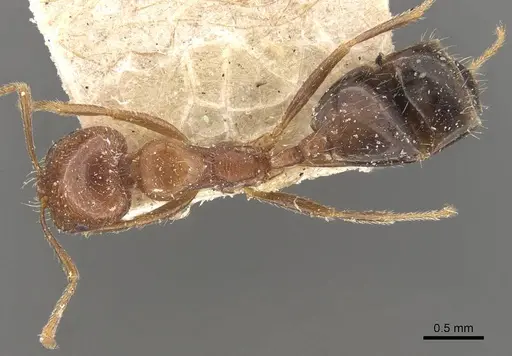
CASENT0914156
View on AntWeb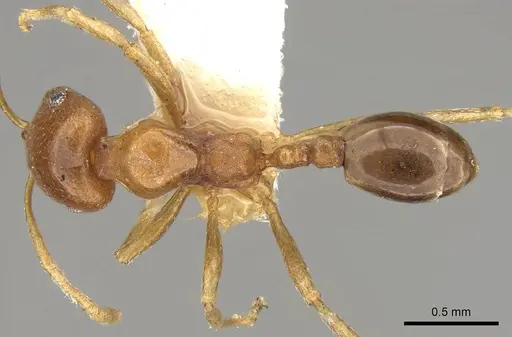
Literature
Loading distribution map...Loading products...