
Thaumatomyrmex atrox
- Sci. Name
- Thaumatomyrmex atrox
- Tribe
- Ponerini
- Subfamily
- Ponerinae
- Author
- Weber, 1939
- Distribution
- Found in 8 countries
Introduction
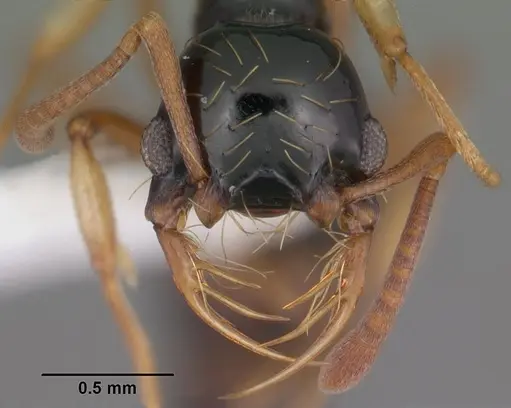
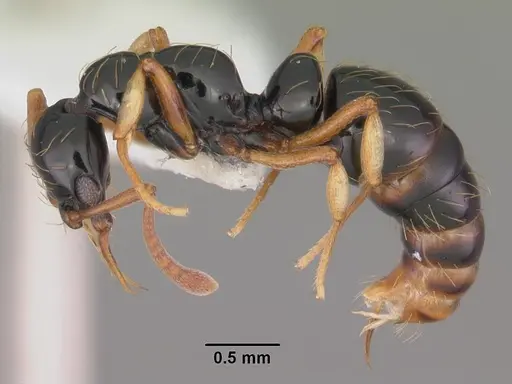
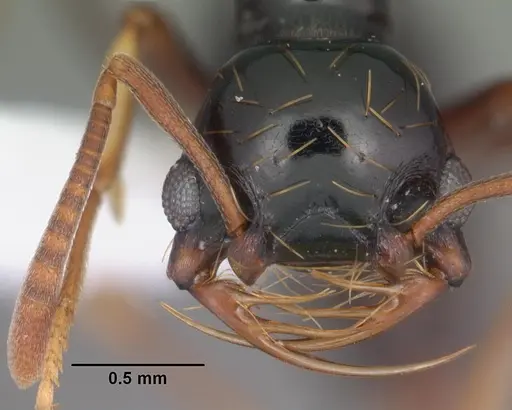
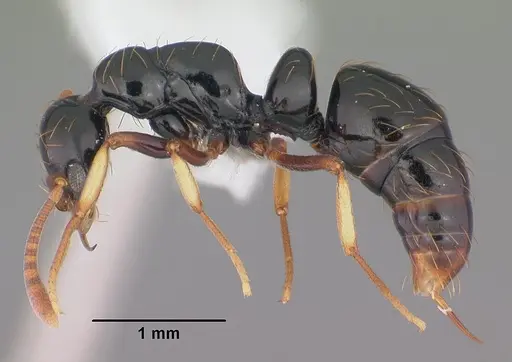
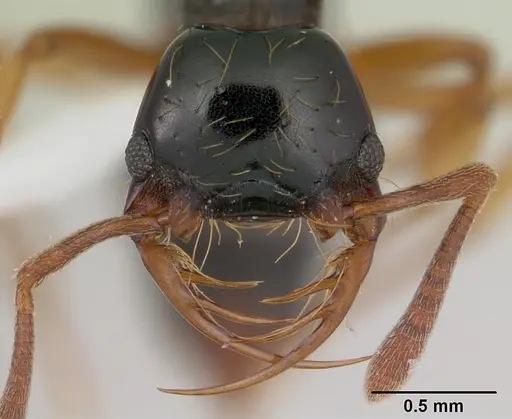
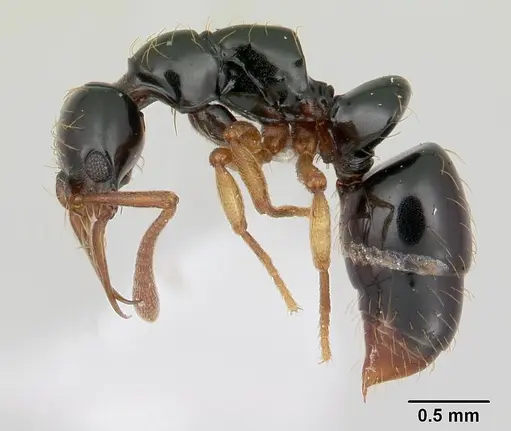
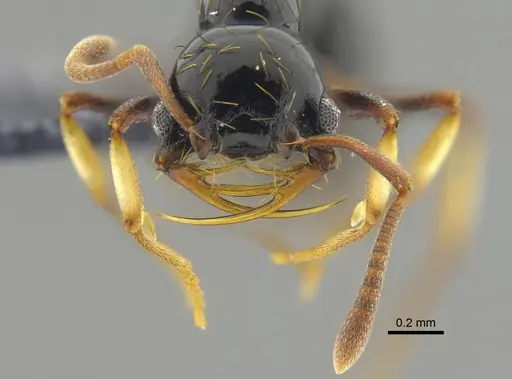
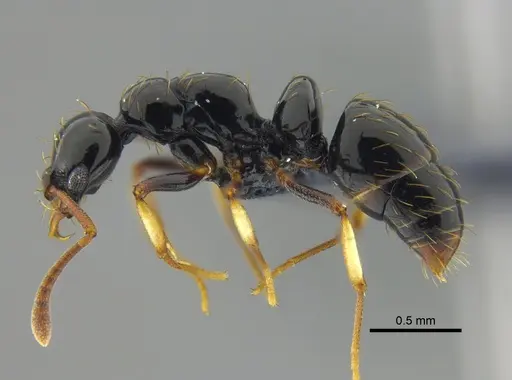
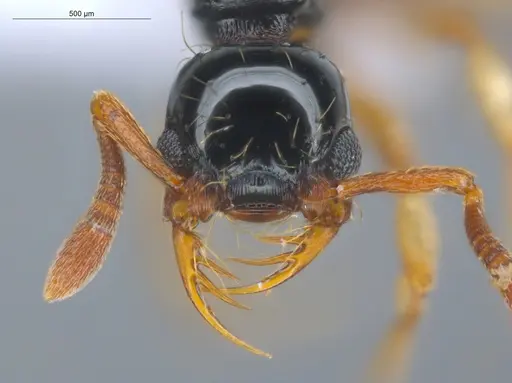
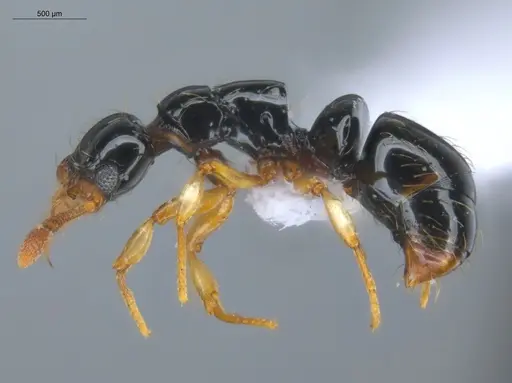
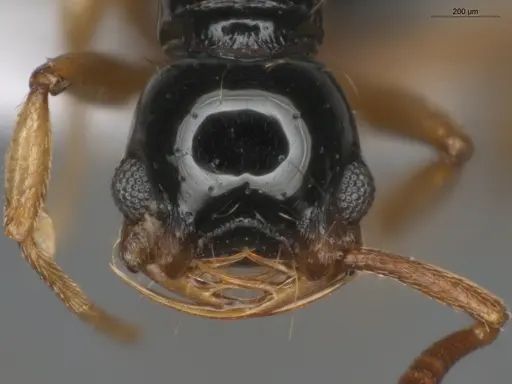
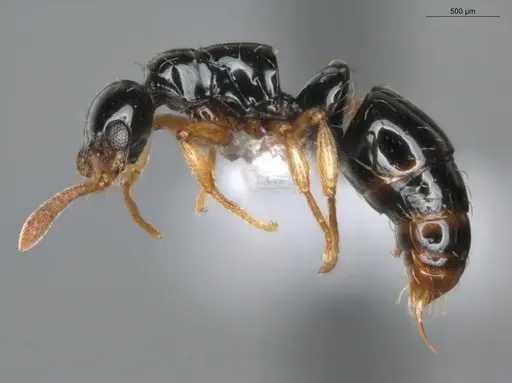
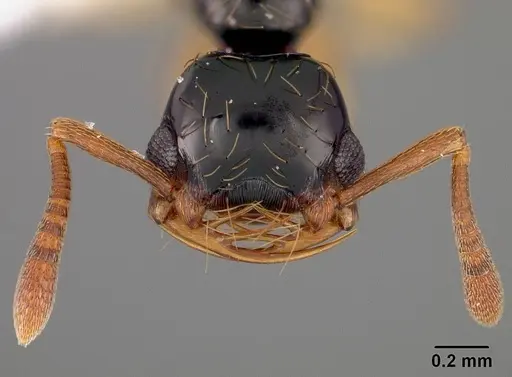
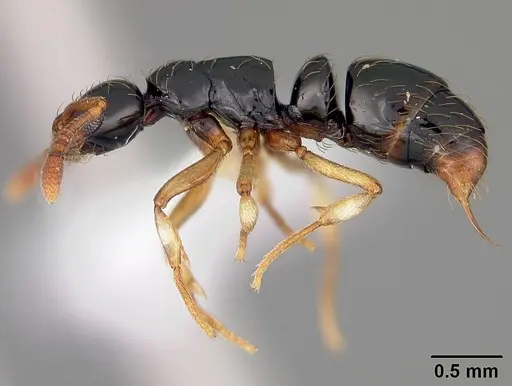
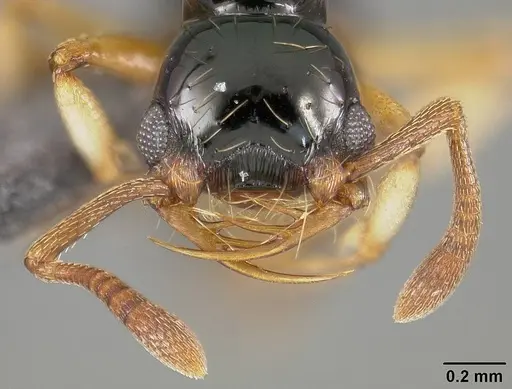
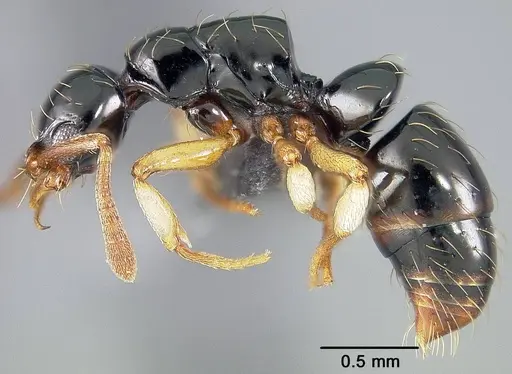
Thaumatomyrmex atrox is a rare neotropical ant with distinctive pitchfork-shaped mandibles that have three long slender teeth. Workers measure just 4.4mm in total length, making them one of the smaller ants in the Ponerinae subfamily . Their head is wider than long and distinctly trapezoidal when viewed from above, wider at the front than the back, with unique semicircular wrinkles between the antennal sockets and eyes . The body is mostly smooth and shiny, with wrinkles only on the frontal lobes, neck, and mandible base . This species has one of the widest distributions in the genus, found from Panama through Colombia, Guyana, Trinidad, Peru, and into Brazil and Bolivia . What makes T. atrox special is that it has no true queen caste. Each colony is headed by a single gamergate - a worker that has become reproductive and can lay eggs . This is one of the few ants where workers directly take over queen function. Colonies are extremely small, typically with up to 9 workers (average 4), the smallest known colonies in the entire ant family . T. atrox is an obligate specialist that hunts exclusively tiny polyxenid millipedes. It uses its unique mandibles to capture these prey and strip their defensive bristles before feeding them to larvae .
Quick Summary
- Difficulty: Expert
- Origin & Habitat: Native to the Neotropical region: Brazil, Colombia, Costa Rica, Guyana, Panama, Peru, Trinidad, and Venezuela. Found in rain forests, cocoa plantations, dry forests, and mangrove areas from sea level to around 980m elevation [3][2][7]. Strictly dependent on leaf litter and forest-structured vegetation, absent from open pastures [3].
- Colony Type: Gamergate system, colonies lack a true queen caste and are headed by a single reproductive worker (gamergate). This is one of the few ant species where workers directly take over queen function [4]. Colonies are extremely small, up to 9 workers with an average of just 4 [5].
- Size & Growth:
- Queen: No true queen caste exists, gamergates (reproductive workers) are the same size as regular workers [4]. Worker size: 4.4mm total length [2].
- Worker: 4.4mm total length (TL) [2].
- Colony: Up to 9 workers, average 4 per colony. This is the smallest known colony size in the entire ant family [5].
- Growth: Slow, colony growth is inherently limited by the tiny colony size and single reproductive worker system [5].
- Development: Unknown, no direct studies exist. Based on typical Ponerinae patterns, expect 2-4 months at tropical temperatures. (Development is likely slow due to the specialized diet and small colony size. First workers may be similar in size to normal workers given the already tiny colony sizes.)
- Antkeeping:
- Temperature: Keep at 24-28°C, these are tropical ants from warm, humid forests. A gentle heating gradient allows them to regulate their temperature (inferred from habitat).
- Humidity: High humidity is essential, they naturally live in leaf litter in tropical rainforests. Keep the nest substrate consistently moist but not waterlogged (inferred from habitat [3]).
- Diapause: No, as a tropical species, they do not require hibernation. Maintain warm conditions year-round (inferred from tropical range).
- Nesting: These tiny ants live in leaf litter and among plant roots. In captivity, they do well in small test tubes or tiny plaster chambers with a thin layer of moist substrate (coco peat or soil) that mimics their natural litter environment. The nest space should be small and scaled to their tiny size (inferred from [2][3]).
- Behavior: Extremely cryptic and secretive, they spend most of their time hunting in leaf litter and are rarely seen. They are specialized predators that hunt exclusively tiny millipedes (Polyxenidae). Workers are not aggressive toward intruders and rely on their secretive lifestyle rather than defensive behavior. As Ponerinae, they possess a functional stinger but rarely use it given their cryptic nature [3][2]. Escape risk is high, they are only 4.4mm and can fit through tiny gaps. Use tight sealing and fine mesh.
- Common Issues: obtaining proper prey, they require live polyxenid millipedes which are extremely difficult to source and culture in captivity, colony collapse, tiny colonies with only one reproductive worker are highly vulnerable to loss if the gamergate dies, extreme rarity, this species is rarely available in the antkeeping hobby due to difficulty in collecting and culturing, slow colony growth, the single gamergate system limits how fast colonies can expand, requiring extreme patience, specialized diet requirements, they will not accept standard ant foods like sugar water or most insects, they need their specific millipede prey
Unique Colony Structure: The Gamergate System
Thaumatomyrmex atrox has one of the most unusual social structures known in ants, the complete absence of a true queen caste. Instead, colonies are headed by a gamergate, which is simply a worker that has become reproductive and can lay eggs [4]. This means there is no morphological difference between the egg-laying female and the foraging workers. Studies of 52 colonies found no morphologically distinct reproductive female in any of them, confirming that all adult females in the colony are essentially equal in morphology [5]. The colony contains up to 9 individuals, with an average of just 4 workers, making this the smallest known colony size in the entire ant family [5]. This system means your colony's survival depends entirely on the single gamergate, if she dies, the colony will eventually die out unless other workers can somehow take over reproduction, which has not been documented in this species.
Specialized Millipede Predation
This species is an obligate specialist predator that hunts exclusively polyxenid millipedes (Diplopoda: Polyxenida), tiny millipedes often called pencil millipedes due to their slender bodies [3][2][6]. These millipedes possess defensive bristles (setae) that can irritate predators, and T. atrox has developed a unique behavior to deal with this: workers strip the millipedes of their stinging setae before feeding them to the larvae [2]. The pitchfork-shaped mandibles with their three long slender teeth are perfectly adapted for grasping these tiny prey items [3]. This extreme dietary specialization is what makes keeping T. atrox so challenging, they will not accept standard ant foods like sugar water, honey, or most common feeder insects. In captivity, you would need to culture or source live polyxenid millipedes, which are themselves extremely difficult to find and maintain. Some keepers have had success offering other tiny arthropods experimentally, but the species appears to be an obligate millipede specialist [2][6].
Natural History and Distribution
T. atrox has one of the broadest distributions in the genus Thaumatomyrmex, found across the neotropics from Panama through Colombia, Guyana, Trinidad, Peru, Brazil, and into Bolivia [3][2]. It occupies diverse habitats including rain forests, cocoa plantations, dry forests, and even mangrove areas [3][2]. The species is strictly dependent on leaf litter and forest-structured vegetation, it is completely absent from pastures and open areas [3]. Studies in southeast Bahia, Brazil found it to be the most common Thaumatomyrmex species in the region, but even there, finding more than three individuals in a Winkler extraction sample is exceptional [3]. The apparent rarity is largely due to inadequate sampling methods, specialized techniques like Winkler sacks and Berlese-Tullgren litter extraction are needed to find them [3]. Males have been captured in light traps throughout the year, indicating they may reproduce continuously in tropical conditions [3].
Housing and Care Requirements
Keeping Thaumatomyrmex atrox is an expert-level challenge due to their extreme dietary specialization and unusual colony structure. Housing should consist of small, tightly sealed enclosures, their tiny size and cryptic nature mean they can easily become lost in larger setups. A small test tube setup with a moist cotton ball and a thin layer of substrate (coco peat or fine soil) works well for founding colonies or small groups. For established colonies, a small plaster nest with chambers scaled to their minute size is appropriate. Temperature should be maintained at 24-28°C with high humidity, mimicking their tropical leaf-litter environment. The most critical challenge is food, they absolutely require live polyxenid millipedes, which are nearly impossible to obtain in the hobby. Some keepers have attempted to culture these millipedes, but success is extremely rare. Without their specific prey, the colony will not survive long-term. This species is NOT recommended for beginners or even intermediate antkeepers, it is truly a specialist's species requiring extraordinary effort to maintain. [2][3][5]
Reproduction and Nuptial Flights
The reproductive biology of T. atrox remains poorly documented. Males have been captured in light traps throughout the year in Brazil, suggesting nuptial flights may occur during multiple seasons in tropical environments [3]. Unlike most ants, there is no true queen to conduct nuptial flights, instead, winged males likely mate with gamergates (reproductive workers) within or near the nest. Colony foundation has not been observed. It may involve a group of workers leaving with a gamergate, but this is unknown. Given the extreme difficulty of maintaining this species in captivity and the lack of documented captive breeding success, obtaining mated colonies or establishing new ones from wild-caught specimens remains the primary approach for keepers.
Frequently Asked Questions
Can I keep Thaumatomyrmex atrox in a test tube?
Yes, a small test tube setup works well for this species. Use a small test tube with a moist cotton ball for humidity and add a thin layer of substrate (coco peat or fine soil) to mimic their natural leaf-litter environment. The chambers should be small and scaled to their tiny 4.4mm size. However, the bigger challenge is obtaining their specialized food, they will not survive on standard ant foods.
What do Thaumatomyrmex atrox ants eat?
They eat exclusively live polyxenid millipedes, tiny millipedes that they capture in leaf litter. This is an obligate specialist predator that will not accept sugar water, honey, or most common feeder insects. Workers strip the millipedes of their defensive bristles before feeding them to larvae. Obtaining their specific prey is the biggest challenge in keeping this species.
How long until first workers in Thaumatomyrmex atrox?
The exact development time is unconfirmed, no direct studies exist on their egg-to-worker timeline. Based on typical Ponerinae development at tropical temperatures (24-28°C), expect approximately 2-4 months from egg to worker. However, the specialized diet and single gamergate system likely make development slower than average Ponerinae species.
Do Thaumatomyrmex atrox ants sting?
As a member of the Ponerinae subfamily, they possess a functional stinger. However, they are extremely cryptic and secretive, rarely using defensive stings. Their small size and preference for avoiding confrontation rather than fighting means sting incidents are exceptionally rare in captivity.
Are Thaumatomyrmex atrox good for beginners?
No, this is an expert-level species that is not recommended for beginners. The challenges are immense: they require live specialized millipede prey that is nearly impossible to obtain, colonies are tiny (up to 9 workers) and vulnerable, and they have an unusual gamergate system instead of a true queen. Even experienced antkeepers struggle with this species. Consider starting with easier Ponerinae like Odontomachus or Neoponera, or more common species.
How big do Thaumatomyrmex atrox colonies get?
Colonies are among the smallest in all ants, typically up to 9 workers with an average of 4. This represents the smallest known colony size in the entire ant family. Unlike most ants that can grow to hundreds or thousands of workers, T. atrox colonies remain extremely small throughout their lifespan due to the single gamergate reproductive system.
Do Thaumatomyrmex atrox need hibernation?
No, as a tropical species from the neotropics, they do not require hibernation or winter cooling. Maintain warm, stable temperatures year-round (24-28°C) to mimic their natural rainforest environment. They are active throughout the year in the wild.
Why is my Thaumatomyrmex atrox colony dying?
The most likely cause is improper food, they will starve without live polyxenid millipedes. Other common causes include: the gamergate has died (colony will eventually die out), humidity too low (they need high humidity), temperature too cold (keep at 24-28°C), or stress from excessive disturbance. These are extremely sensitive colonies that require minimal intervention.
Can I keep multiple queens together?
This species does not have a true queen caste, colonies are headed by gamergates (reproductive workers). Combining unrelated colonies has not been documented and is not recommended. The gamergate system means there is no queen to introduce, and the tiny colony size makes introducing any new individuals risky. Each colony should be kept separately.
Where does Thaumatomyrmex atrox live in the wild?
They live in leaf litter and among plant roots in tropical forests across the neotropics, from rainforests in Brazil and Guyana to dry forests and even mangrove areas in Colombia. They are strictly dependent on forest-structured vegetation and absent from pastures or open areas. They prefer warm, humid conditions in the leaf litter layer.
What makes Thaumatomyrmex atrox unique?
Several things make this species unique: they are one of the few ants with no true queen, colonies are headed by gamergates (reproductive workers). They have the smallest known colonies in the ant family (up to 9 workers). They are obligate specialists that eat only one type of prey (polyxenid millipedes). They have distinctive pitchfork-shaped mandibles. And they are extremely cryptic, living hidden in leaf litter where they are rarely seen.
Report an Issue
The current care sheet is based fully on literature. See inconsistencies, or something that's incorrect? Please , it will be resolved after review from an admin. Contributing to the blogs tab also helps providing information, to make us be able to further improve the caresheets. Thank you for your support!
References

This caresheet is licensed under CC BY-SA 4.0 .
Community Blogs
CASENT0010852
View on AntWeb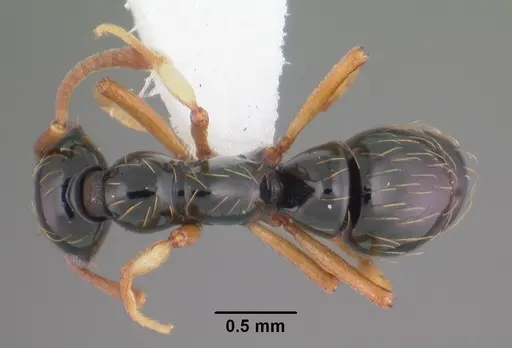
CASENT0010857
View on AntWeb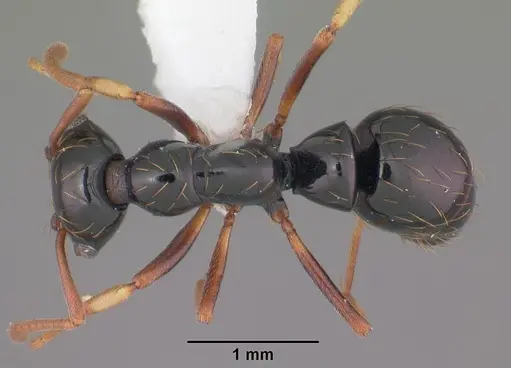
CASENT0178703
View on AntWeb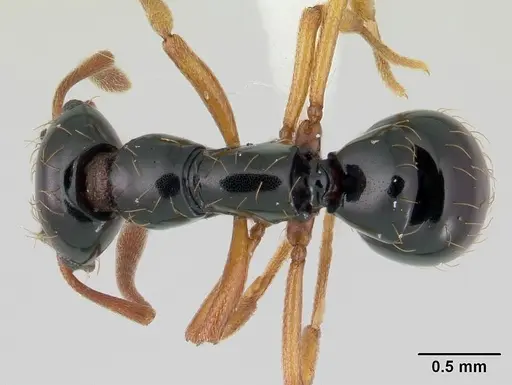
CBUMAGENT41671
View on AntWeb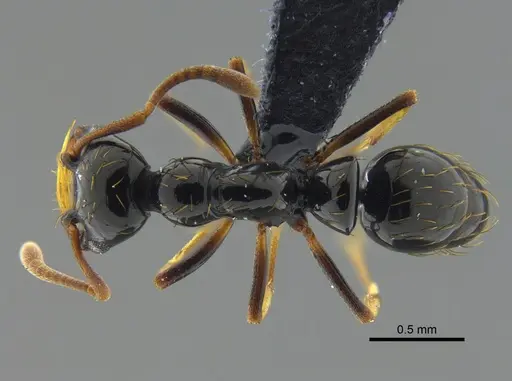
ECOFOG-GAL18-0145-20
View on AntWeb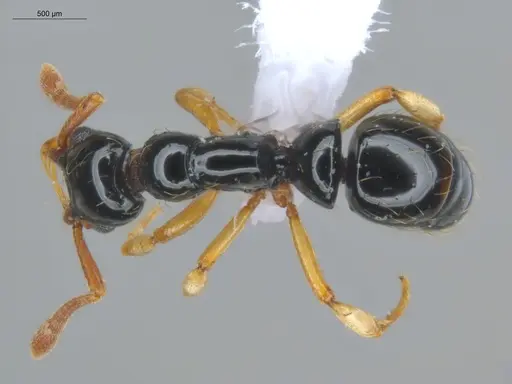
ECOFOG-MI15-0087-34
View on AntWeb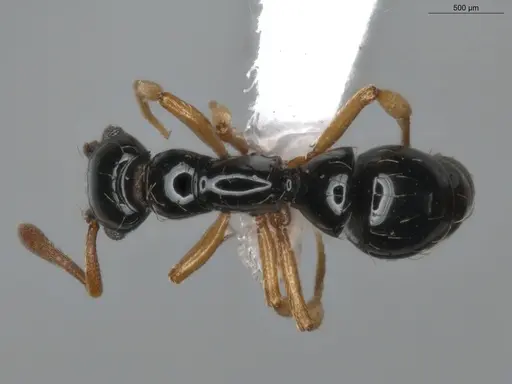
USNMENT00412378
View on AntWeb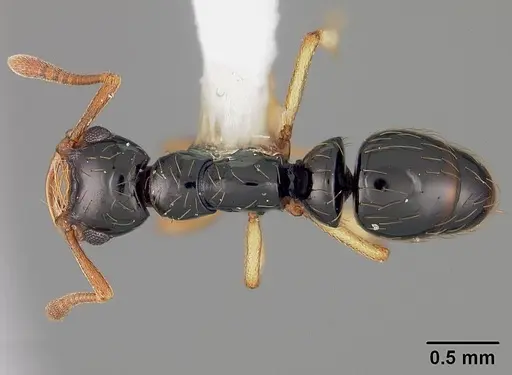
USNMENT01124293
View on AntWeb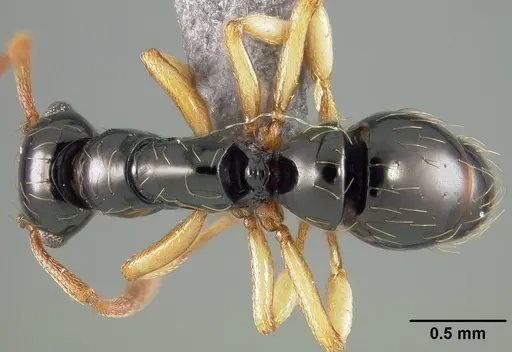
Literature
Loading distribution map...Loading products...