
Tetraponera nodosa
- Sci. Name
- Tetraponera nodosa
- Tribe
- Pseudomyrmecini
- Subfamily
- Pseudomyrmecinae
- Author
- Ward, 2001
- Distribution
- Found in 1 countries
Introduction
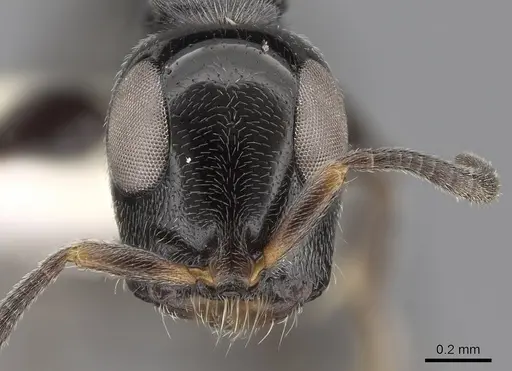
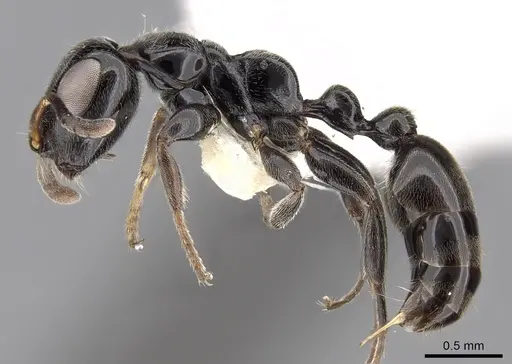
Tetraponera nodosa is a slender, medium-sized arboreal ant from Southeast Asia. Workers are black with dark brown legs and mandibles, and the postpetiole and gaster are covered in a dense mat of short, pressed-down hairs that hide the shiny surface underneath . This ant is known from scattered locations in Thailand, Borneo, Sumatra, and Malaysia, with the original specimens collected in a mangrove forest at Bako National Park, Sarawak . Like other members of the Pseudomyrmecinae subfamily, they are fast-moving and live in hollow twigs or stems.
Quick Summary
- Difficulty: Hard
- Origin & Habitat: Southeast Asia: Borneo, Sumatra (Indonesia), Sarawak (Malaysia), and Thailand (Songkhla: Hat Yai). The type locality is mangrove forest [3][2].
- Colony Type: Not documented for this species.
- Size & Growth:
- Queen: Not documented, inferred from genus to be slightly larger than workers, approximately 5-7 mm.
- Worker: Body length not directly reported, head measurements indicate a medium‑sized Tetraponera, estimated total length 4-5 mm [1].
- Colony: Unknown, field sampling shows local abundance but does not indicate colony size [4].
- Growth: Unknown
- Development: Not documented for this species. (Life cycle details are unstudied, based on tropical arboreal ants, expect warm temperatures and high humidity to support development.)
- Antkeeping:
- Temperature: Tropical species requiring stable warmth,24-28 °C year‑round. Below 22 °C will likely slow activity and harm the colony [2].
- Humidity: High humidity (70-85%) from their mangrove/rainforest home. Keep nesting substrate moist but not waterlogged, and provide good ventilation to prevent mold [2].
- Diapause: No hibernation needed, maintain tropical conditions year‑round [2].
- Nesting: Arboreal nesters that use hollow twigs, stems, or bark cavities. In captivity, offer Y‑tong (AAC) nests with tight chambers, test tubes, or 3D‑printed nests with vertical climbing space [2].
- Behavior: Fast, alert, and nervous, characteristic of Pseudomyrmecinae. They are arboreal and will use all vertical space. Workers have a functional sting and can deliver a mild sting when threatened. Their small size makes escape prevention critical, use fine mesh (0.5 mm) and barrier fluids. They are likely predatory, hunting small arthropods in their natural habitat.
- Common Issues: escape prevention is critical, workers can squeeze through tiny gaps due to their small body size., tropical humidity requirements can cause mold if ventilation is poor., wild‑caught colonies may be stressed from disruption of their arboreal nesting sites., temperature drops below 22 °C will slow activity and can harm brood development.
Housing and Nest Setup
Tetraponera nodosa is an arboreal ant that naturally nests in hollow twigs, stems, or bark cavities [2]. In captivity, use a Y‑tong (AAC) nest with small, tight chambers that suit their tiny size. A test tube connected to an outworld with vertical climbing surfaces is also a good option. Avoid large, open formicaria, these ants prefer compact spaces. The nest should be kept humid but well‑ventilated. Provide branches or cork bark so they can climb and forage in their preferred vertical orientation.
Feeding and Diet
No specific diet has been studied for T. nodosa, but as a member of Pseudomyrmecinae, it is likely predatory [2]. Offer small live prey such as fruit flies, pinhead crickets, or small mealworms. Sugar water or honey water can be provided occasionally, though acceptance is not guaranteed. Feed protein 2-3 times per week and remove uneaten food after 24 hours to prevent mold. Because they are small, make sure prey items are tiny enough for them to handle.
Temperature and Humidity
This tropical species needs warm conditions year‑round. Keep the nest at 24-28 °C [2]. Below 22 °C the colony will become sluggish and brood development may stop. Humidity should be high (70-85%), use a water reservoir in the nest and mist regularly if needed. Ensure good airflow to avoid mold, especially in the moist nest chambers. A heating cable on one side of the nest can help maintain a stable temperature gradient.
Behavior and Temperament
T. nodosa workers are fast and alert, typical of arboreal ants. They have a functional sting and may use it if they feel trapped, but they are not aggressive toward keepers if left undisturbed. Their tiny size makes them escape artists, use fine mesh (0.5 mm) on all openings and apply fluon or PTFE barrier gel around the outworld edges. They prefer to climb and will forage in elevated areas, so give them plenty of vertical space. [2]
Colony Development
Colony founding and development have not been documented for T. nodosa. Based on what is known from other Tetraponera species, queens likely start new colonies independently, but the exact method (claustral or semi‑claustral) is unconfirmed. Keep the founding queen undisturbed in a test tube at warm, humid conditions. Expect slow growth, colony size may eventually reach several dozen to over a hundred workers, but this is speculative. Do not disturb the queen during the initial weeks. [2]
Frequently Asked Questions
Can I keep Tetraponera nodosa in a test tube?
Yes, a test tube setup works well, especially for founding. Use a water reservoir and cotton plug, and connect it to an outworld with vertical climbing space. Make sure any ventilation holes are covered with fine mesh (0.5 mm) because the workers are tiny and can escape through standard gaps.
How long does it take for Tetraponera nodosa to produce first workers?
This is not documented for this species. Based on general tropical arboreal ant patterns, it might take several weeks to months at warm temperatures, but there are no specific data.
Do Tetraponera nodosa ants sting?
Yes, they do. As members of Pseudomyrmecinae, they have a well‑developed functional sting and can use it for defense. The sting is not dangerous to humans but may cause mild, temporary irritation.
Are Tetraponera nodosa good for beginners?
No. This species is best suited for experienced keepers because little is known about its care, and maintaining the high humidity and warm temperatures required can be challenging. Their small size also makes escape prevention tricky. Beginners should start with hardier species like Lasius or Camponotus.
What do Tetraponera nodosa eat?
Their diet in the wild is not documented, but they are likely predators of small arthropods. In captivity, offer small live prey such as fruit flies, pinhead crickets, or tiny mealworms. Sugar water or honey water may be accepted as a supplement. Feed protein 2-3 times per week and remove leftovers after a day.
Do Tetraponera nodosa need hibernation?
No. As a tropical species, they do not require a winter diapause. Keep them warm and humid all year round, temperatures below 22 °C will harm the colony.
Why are my Tetraponera nodosa escaping?
Their small size (estimated 4-5 mm) allows them to slip through very small gaps. Ensure all openings are sealed with fine mesh (0.5 mm or finer), apply fluon or PTFE barrier gel around the outworld rim, and check tubing connections. Inspect daily until you identify and block all escape routes.
How big do Tetraponera nodosa colonies get?
Colony size is unknown. Field sampling has found many individuals in certain areas, but this does not directly reveal colony size [4]. They are not likely to form huge colonies, a mature nest probably contains several dozen to at most a few hundred workers.
Report an Issue
The current care sheet is based fully on literature. See inconsistencies, or something that's incorrect? Please , it will be resolved after review from an admin. Contributing to the blogs tab also helps providing information, to make us be able to further improve the caresheets. Thank you for your support!
References

This caresheet is licensed under CC BY-SA 4.0 .
Community Blogs
CASENT0281874
View on AntWeb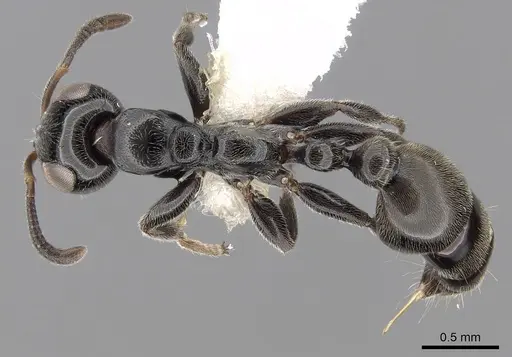
Literature
Loading distribution map...Loading products...