
Tetraponera furcata
- Sci. Name
- Tetraponera furcata
- Tribe
- Pseudomyrmecini
- Subfamily
- Pseudomyrmecinae
- Author
- Xu & Chai, 2004
- Distribution
- Found in 1 countries
Introduction
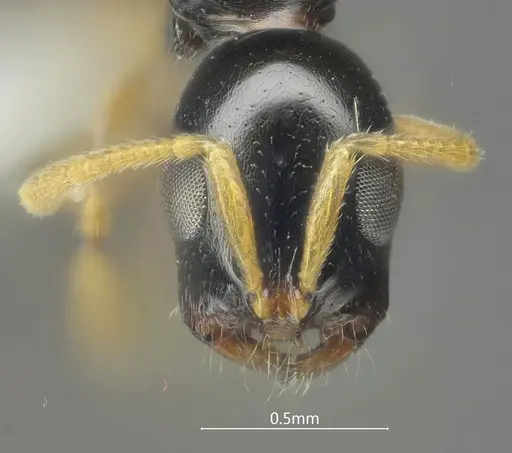
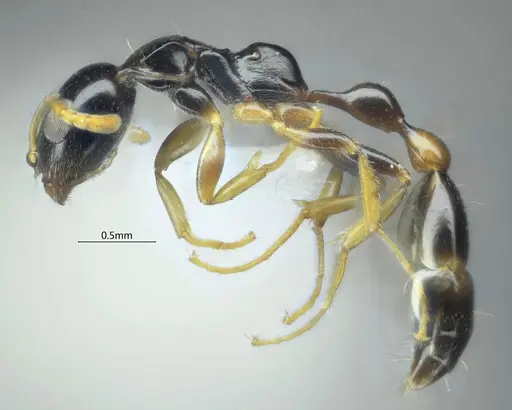
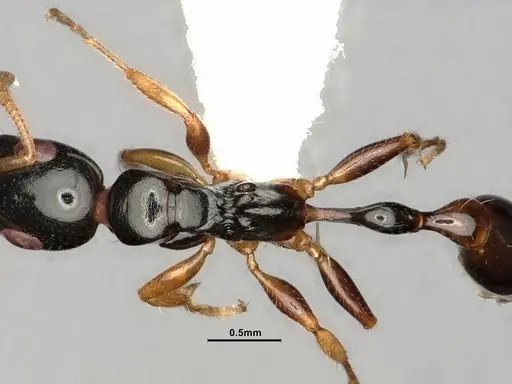
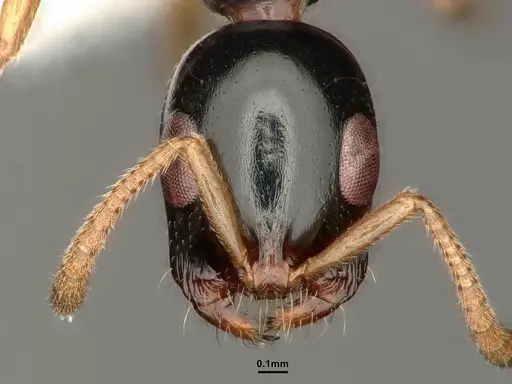
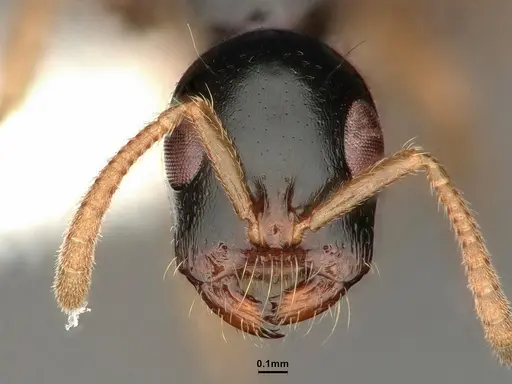
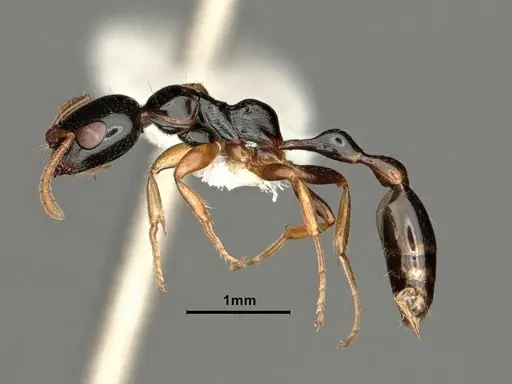
Tetraponera furcata is a small, slender ant from the Pseudomyrmecinae subfamily. Workers measure 4.1-4.7 mm and have an elongated body, long legs, and large eyes that stick out past the head . The body is black, with reddish-brown mandibles and clypeus, and yellow antennae, tibiae, and tarsi. This species was first described in 2004 from Yunnan Province, China . These ants live in mountain forests at elevations of 820-1620 m, including tropical rain forests, monsoon evergreen broadleaf forests, conifer-broadleaf mixed forests, and secondary shrub areas . As a Pseudomyrmecinae, they likely have good vision and are active foragers, but specific behavior for this species hasn't been documented.
Quick Summary
- Difficulty: Hard
- Origin & Habitat: Native to Yunnan Province, China. Found in mountain forest habitats: tropical rain forest, monsoon evergreen broadleaf forest, conifer-broadleaf mixed forest, and secondary shrub, at elevations 820-1620 m [1].
- Colony Type: Colony structure is unconfirmed. The genus Tetraponera typically forms moderate-sized colonies, but specific data on T. furcata colony size and queen number is not available.
- Size & Growth:
- Queen: Unknown, queens have not been described [1].
- Worker: 4.1-4.7 mm [1].
- Colony: Unknown, no colony size data available.
- Growth: Unknown
- Development: Unconfirmed, no development data for this species. Based on typical Pseudomyrmecinae patterns, expect 6-10 weeks at optimal temperature. (This timeline is an estimate. Actual development will depend on temperature and colony health.)
- Antkeeping:
- Temperature: Based on mountain forest origin (820-1620 m in Yunnan), they likely prefer moderate temperatures. Start around 20-24°C and observe colony behavior. Avoid overheating, mountain forest species are not adapted to temperatures above 28°C.
- Humidity: Mountain forest habitats suggest moderate to high humidity. Keep the nest substrate consistently moist but not waterlogged, with a slight gradient (drier area and wetter area). Yunnan's monsoon season means high humidity part of the year.
- Diapause: Unknown, no specific overwintering data. Their elevation suggests they experience cooler periods, so a moderate cool period (15-18°C for 2-3 months) may be beneficial, but this is speculative.
- Nesting: No specific nesting data exists. Based on genus and habitat, they likely prefer naturalistic setups with soil or rotting wood. A Y-tong or plaster nest with moderate moisture is a reasonable starting point.
- Behavior: Specific behavioral observations for T. furcata are not documented. As a Pseudomyrmecinae, they likely have good vision, are active foragers, and can deliver a painful sting when threatened. Escape risk is moderate given their 4-5 mm size, standard escape prevention (fluon or oil) should work.
- Common Issues: rarely kept in the hobby with very limited care documentation, keepers must experiment based on habitat inference, mountain forest origin means they may be sensitive to overheating (keep below 28°C) and dry conditions, unconfirmed founding type means you may struggle to raise a colony from a queen, wild-caught colonies may carry parasites or suffer from stress
Housing and Nest Setup
Since specific nesting data for T. furcata isn't available, base your setup on its natural habitat: mountain forests in Yunnan at 820-1620 m where humidity is moderate to high and temperatures are cool [1]. Use a naturalistic setup with a soil chamber or a Y-tong nest with fine chambers. Keep the nest material moderately moist, these ants are not adapted to dry conditions. Given worker size (4.1-4.7 mm), make sure chambers are appropriately scaled. Provide an outworld for foraging and patrol.
Temperature Management
T. furcata comes from mountainous regions in southern China, so it likely prefers moderate temperatures. Start with a target range of 20-24°C and watch how the colony behaves. If workers become sluggish and cluster, they may need slightly warmer conditions. If they avoid heated areas, lower the temperature. Mountain forest species are often sensitive to overheating, don't put the colony in direct sunlight or near heat sources above 28°C. A small heating cable on one side can create a gentle gradient if room temperature drops below 20°C.
Feeding and Diet
As a Pseudomyrmecinae, T. furcata is likely an omnivorous forager that hunts small prey and collects sugar sources. Offer a mix of protein and carbohydrates: small live prey like fruit flies, pinhead crickets, and mealworms for protein, sugar water, honey, or diluted maple syrup for carbohydrates. They may also take honeydew from aphids. Feed small amounts every 2-3 days and remove uneaten prey to prevent mold. Observe what they accept most readily and adjust accordingly.
Humidity Requirements
Mountain forest habitats in Yunnan experience high humidity, especially during the monsoon season. Keep the nest substrate consistently moist but not waterlogged. The substrate should feel damp, and you might see occasional condensation on the nest walls. Allow for a slight gradient, a drier area and a more humid area, so the colony can choose. Avoid stagnant air (which promotes mold) and excessive airflow (which dries the nest). A water reservoir or moist cotton in a test tube setup works well for maintaining humidity.
Seasonal Care and Overwintering
The elevation range (820-1620 m) suggests T. furcata experiences seasonal temperature changes in the wild. Specific diapause requirements aren't documented, but a moderate cool period during winter is likely beneficial. Reduce temperatures to about 15-18°C for 2-3 months in winter if your colony slows down. Don't feed actively during this period. Avoid sudden temperature drops, transition gradually over 1-2 weeks. Monitor closely because improper cooling can cause colony decline.
Frequently Asked Questions
How long does it take for Tetraponera furcata to produce first workers?
The egg-to-worker timeline is unconfirmed, no development studies exist. Based on typical Pseudomyrmecinae patterns, expect first workers (nanitics) in about 6-10 weeks under optimal conditions. This is an estimate, actual time depends on temperature and colony health.
What temperature is best for keeping Tetraponera furcata?
Based on their mountain forest origin in Yunnan, aim for 20-24°C. Start in the middle and adjust based on colony behavior. Mountain forest species are sensitive to heat, avoid temperatures above 28°C. If workers avoid heated areas, lower the temperature.
Can I keep Tetraponera furcata in a test tube setup?
Yes, a test tube setup works well for founding colonies and small colonies. Make sure the tube is large enough for the colony and brood. Keep the water reservoir moderate to avoid flooding, and maintain humidity by rehydrating the cotton before it dries completely. Transfer to a larger nest (Y-tong or naturalistic) when the colony outgrows the tube.
Do Tetraponera furcata ants sting?
Pseudomyrmecinae ants have a functional stinger and can deliver painful stings if threatened. Specific sting potency for T. furcata isn't documented, but handle with care and avoid provoking the colony. Their large eyes and active foraging suggest they are alert to threats.
How big do Tetraponera furcata colonies get?
Colony size is unknown. The genus Tetraponera typically forms moderate-sized colonies, but specific maximum sizes for T. furcata aren't documented. Based on related species, they might reach several hundred workers, but this is speculative.
What do Tetraponera furcata eat?
As Pseudomyrmecinae ants, they are likely omnivorous. Offer small live prey (fruit flies, small crickets, mealworms) for protein and sugar sources (honey water, maple syrup) for carbohydrates. They may also collect honeydew. Start with small amounts and remove uneaten food promptly.
Is Tetraponera furcata suitable for beginners?
No, this species is not recommended for beginners. It is rarely kept, has minimal established care protocols, and almost everything about its care is inferred from habitat and related species. Keeping it requires experience in reading colony responses and adjusting conditions.
Do Tetraponera furcata need hibernation?
Specific diapause requirements are unknown, but their mountain forest origin (up to 1620 m) suggests they experience seasonal changes. A moderate cool period (15-18°C) for 2-3 months during winter is likely beneficial. Reduce feeding during this period and avoid sudden temperature changes.
Why are my Tetraponera furcata dying?
Common causes include overheating (keep below 28°C), excessive dryness (maintain moist substrate), poor nutrition (offer varied diet), and stress from improper humidity. Make sure escape prevention is adequate, while not tiny, they can squeeze through small gaps. Wild-caught colonies may carry parasites that cause decline in captivity.
When should I move Tetraponera furcata to a formicarium?
Keep them in a test tube or small container during founding. Transfer to a larger nest (Y-tong, plaster, or naturalistic) when the colony outgrows the tube, when it becomes crowded or brood starts spilling out. Make sure the new setup has similar humidity to reduce stress.
Report an Issue
The current care sheet is based fully on literature. See inconsistencies, or something that's incorrect? Please , it will be resolved after review from an admin. Contributing to the blogs tab also helps providing information, to make us be able to further improve the caresheets. Thank you for your support!
References

This caresheet is licensed under CC BY-SA 4.0 .
Community Blogs
ANTWEB1060542
View on AntWeb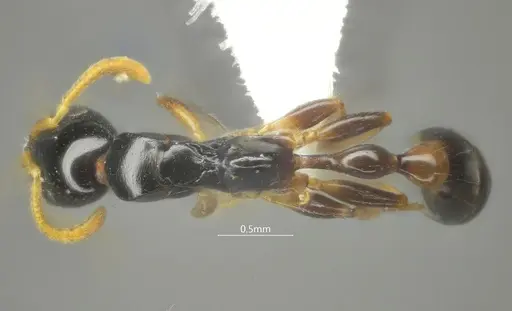
CASENT0884025
View on AntWeb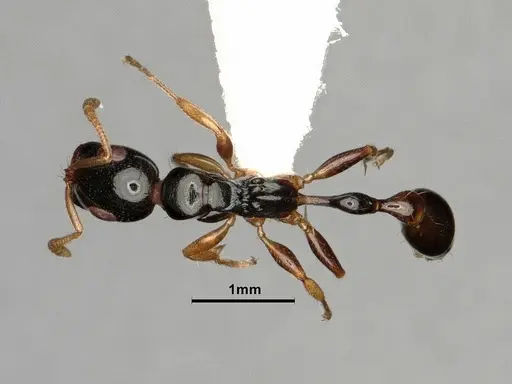
Literature
Loading distribution map...Loading products...