
Tetraponera anthracina
- Sci. Name
- Tetraponera anthracina
- Tribe
- Pseudomyrmecini
- Subfamily
- Pseudomyrmecinae
- Author
- Santschi, 1910
- Distribution
- Found in 6 countries
Introduction
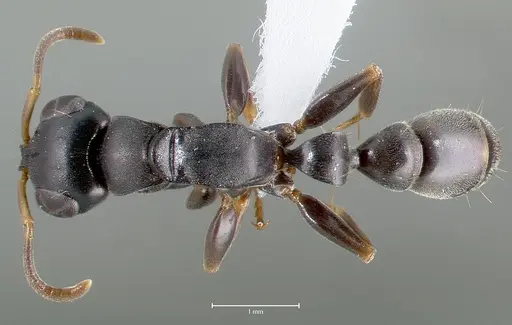
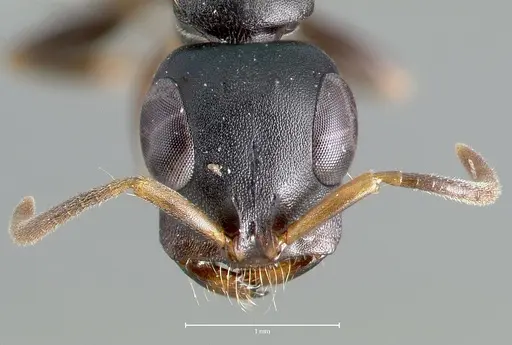
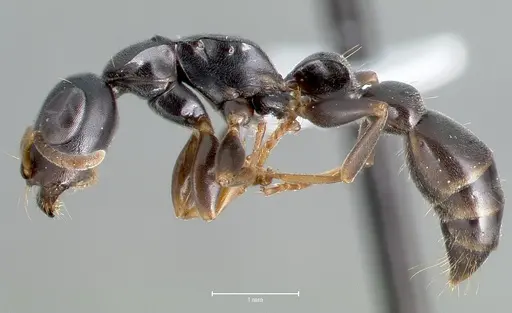
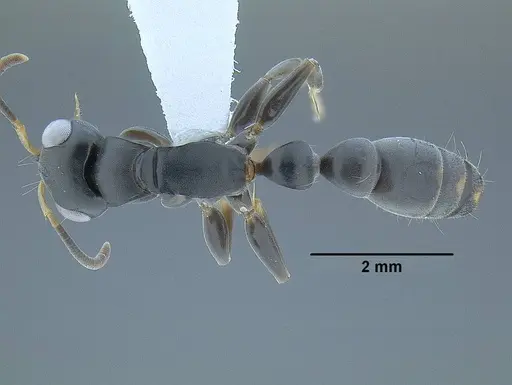
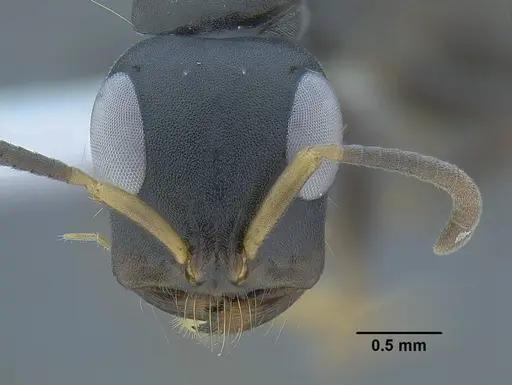
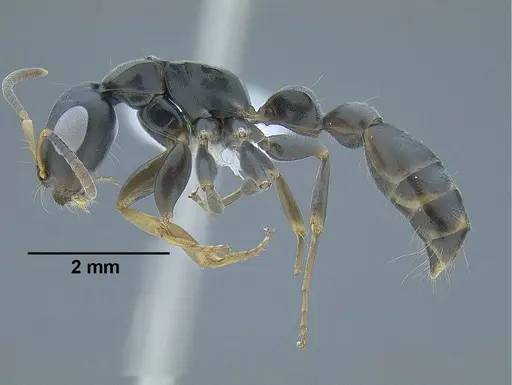
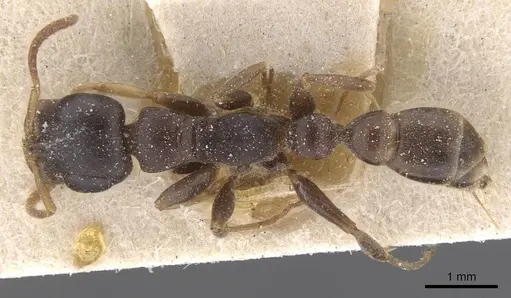
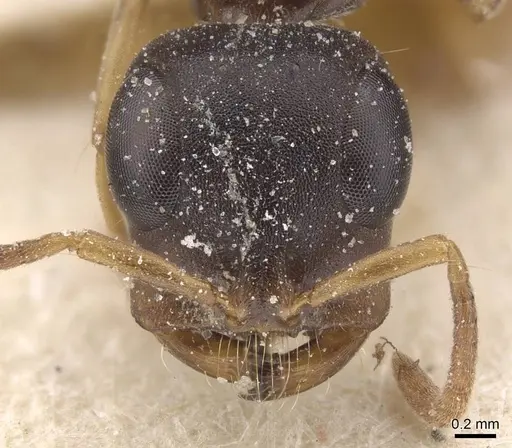
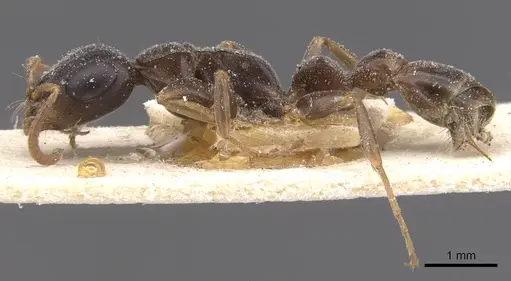
Tetraponera anthracina is a slender, elongated ant from the rainforests of Central and West Africa. Workers are typically dark brown to black, with the long legs and large eyes typical of the Pseudomyrmecinae subfamily. Body sizes are not well documented - based on related species, workers are roughly 4-6mm and queens 7-9mm. This species is primarily arboreal, often nesting in hollow plant stems or under bark, and has been recorded in association with the plant Barteria fistulosa . Colonies are mainly polygynous, meaning they contain multiple queens that work together . The ant is distributed from Angola to Uganda, found from lowland areas at 110 m elevation up to about 1000 m in Cameroon .
Quick Summary
- Difficulty: Medium
- Origin & Habitat: Central and West African rainforests, from lowland areas (110 m in Gabon [3]) to mid‑elevation sites up to 1000 m in Cameroon [4]. Recorded in the Democratic Republic of Congo, Cameroon, Nigeria, Ghana, Uganda, Angola, Equatorial Guinea, and Congo [5]. Typically found in forested habitats, nesting in plant stems or under bark, and sometimes in Barteria fistulosa [1].
- Colony Type: Mainly polygynous (multiple queens per colony). Queen pheromones help regulate which larvae develop into new queens, maintaining a balanced number of reproductive individuals [2][6][7].
- Size & Growth:
- Queen: ~7‑9 mm (inferred from related Tetraponera species, exact size unconfirmed)
- Worker: ~4‑6 mm (inferred from related Tetraponera species, exact size unconfirmed)
- Colony: Exact numbers unknown, related species typically reach several hundred workers
- Growth: Moderate, development timeline not specifically documented for this species
- Development: 6‑10 weeks (inferred from related Pseudomyrmecinae species) (Queen pheromones influence caste development, inhibiting the development of queen‑destined larvae when sufficient queens are present [6][7].)
- Antkeeping:
- Temperature: 24‑28 °C. These tropical ants need warm, stable conditions. A gentle temperature gradient allowing slightly cooler areas is beneficial. Avoid drops below 22 °C for extended periods.
- Humidity: Moderate to high (60‑80%). Keep the nest substrate slightly moist but ensure good ventilation to prevent mold. Being arboreal‑nesting, they tolerate a range but prefer some air moisture.
- Diapause: No, tropical species that remain active year‑round if kept warm. No hibernation required.
- Nesting: Arboreal setup, Y‑tong (AAC) nests, bamboo sections, cork, or naturalistic wood pieces work well. They prefer tight, enclosed chambers mimicking plant‑cavity nest sites. Avoid fully underground test tubes.
- Behavior: As a Pseudomyrmecine, Tetraponera anthracina has a well‑developed sting used to defend its host plants against herbivores. In captivity, however, they are generally non‑aggressive toward keepers, preferring to flee or pinch rather than sting. Workers are active diurnal foragers with excellent vision. They are quick and agile, so ensure all connections are secure. Use a barrier like fluon to prevent escapes, their slender bodies and long legs make them skilled climbers.
- Common Issues: tropical species requires consistent warmth, cold drafts or temperatures below 22 °C can stress colonies, being arboreal‑nesting, they may not accept fully underground test tube setups, provide above‑ground nesting options, polygynous colonies can be sensitive to queen removal, avoid disturbing queens unless absolutely necessary, moderate humidity needs, both overly dry and overly wet conditions can cause problems, escape prevention is important, they are active climbers and will find gaps in enclosures
Housing and Nest Setup
Tetraponera anthracina does best in setups that mimic their natural arboreal habitat. Y‑tong (AAC) nests provide tight, enclosed chambers similar to plant stems. Alternatively, a naturalistic setup with cork, bamboo sections, or wooden pieces allows them to nest in cavities, just like the hollow stems of Barteria fistulosa they use in the wild [1]. Avoid fully underground test tubes, these ants prefer to nest above ground. The outworld should be escape‑proof with fluon applied to barrier zones, as they are active climbers. A small water tube for drinking and a consistent food source complete the setup.
Feeding and Diet
Like other Pseudomyrmecinae ants, T. anthracina is predatory and readily accepts small live insects such as fruit flies, pinhead crickets, and small mealworms. They also consume honeydew and sugar sources, so offer sugar water or honey occasionally. Feed protein‑rich prey 2‑3 times per week, with sugar available constantly. Remove uneaten prey after 24 hours to prevent mold. Young colonies prefer very small prey, start with fruit flies or newly hatched mealworms.
Temperature and Seasonal Care
Maintain temperatures between 24‑28 °C for optimal health and brood development. These tropical ants do not enter diapause and remain active year‑round when kept warm. Avoid temperatures below 22 °C, this can cause stress and slow colony growth. Use a heating cable or mat on one side of the nest to create a warm zone, but place the heating element on top to avoid drying out the substrate. No winter cooling is required.
Colony Structure and Queen Care
T. anthracina forms polygynous colonies with multiple queens coexisting [2]. This is unusual among many ants and means you may receive colonies with several reproductive queens. Queen pheromones regulate colony dynamics, queens produce chemicals that inhibit other larvae from developing into queens, helping to balance the number of egg‑layers [6][7]. Avoid removing queens unless absolutely necessary, as this can destabilize the colony. The species has documented queen lifespans exceeding 3 years [2].
Behavior and Temperament
As a Pseudomyrmecine, T. anthracina possesses a functional sting used primarily against herbivores on their host plants. In captivity, they are generally calm and prefer to flee or pinch rather than sting the keeper. Workers are active diurnal foragers with excellent vision. They are quick and agile, so ensure all connections between nest and outworld are secure. Their slender build and long legs make them skilled climbers, use a barrier like fluon on the outworld walls.
Frequently Asked Questions
Can I keep Tetraponera anthracina in a test tube?
Test tubes are not ideal. They prefer arboreal‑style nests with above‑ground chambers. A Y‑tong (AAC) nest or naturalistic setup with cork/bamboo works much better. If you must use a test tube, provide it horizontally and add plant material or cork inside for them to nest around.
How long does it take for Tetraponera anthracina to raise first workers?
Based on related Pseudomyrmecinae species, expect 6‑10 weeks from egg to worker at optimal temperature (24‑28 °C). Development may be slower if temperatures drop below optimal. Nanitics (first workers) will be smaller than mature workers.
Do Tetraponera anthracina ants sting?
Yes, they possess a sting typical of Pseudomyrmecinae ants, used primarily to defend their host plants against herbivores. In captivity, they are not aggressive toward humans and will generally avoid stinging unless directly handled. Their sting is mild compared to many ants and is rarely used on keepers.
Can I keep multiple queens together in one colony?
Yes, this is natural for the species. T. anthracina is polygynous, meaning colonies naturally contain multiple queens that coexist and all lay eggs [2]. Do not combine unrelated foundress queens, only keep queens from the same colony together.
What do Tetraponera anthracina eat?
They are predatory ants that need live protein prey (fruit flies, small crickets, mealworms) 2‑3 times per week. They also accept sugar sources like honey water or sugar water. Offer a varied diet for best colony growth.
Are Tetraponera anthracina good for beginners?
They are intermediate‑level ants. The main challenges are providing appropriate arboreal‑style housing and maintaining warm temperatures year‑round. If you can meet these needs, they are rewarding and relatively calm to keep.
Do Tetraponera anthracina need hibernation?
No, they are tropical ants and do not require hibernation or winter cooling. Keep them warm (24‑28 °C) year‑round. Cold temperatures can stress and kill colonies.
How big do Tetraponera anthracina colonies get?
Colony size is not well documented, but based on related species, expect moderate colonies of several hundred workers. Their polygynous nature can support larger initial colony sizes.
Why is my Tetraponera anthracina colony declining?
Check temperature first, they need 24‑28 °C and suffer below 22 °C. Also verify humidity is adequate (60‑80%) but not waterlogged. Poor acceptance of artificial nests can also cause decline, consider switching to a more naturalistic setup.
When should I move Tetraponera anthracina to a formicarium?
Move them when the test tube or founding setup becomes too small, typically when the colony reaches 30‑50 workers. They do better in formicariums designed for arboreal species, Y‑tong nests or naturalistic setups work best.
Report an Issue
The current care sheet is based fully on literature. See inconsistencies, or something that's incorrect? Please , it will be resolved after review from an admin. Contributing to the blogs tab also helps providing information, to make us be able to further improve the caresheets. Thank you for your support!
References

This caresheet is licensed under CC BY-SA 4.0 .
Community Blogs
Literature
Loading distribution map...Loading products...