
Tetramorium zapyrum
- Sci. Name
- Tetramorium zapyrum
- Tribe
- Crematogastrini
- Subfamily
- Myrmicinae
- Author
- Bolton, 1980
- Distribution
- Found in 4 countries
Introduction
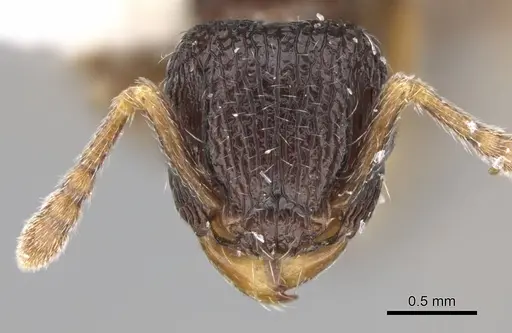
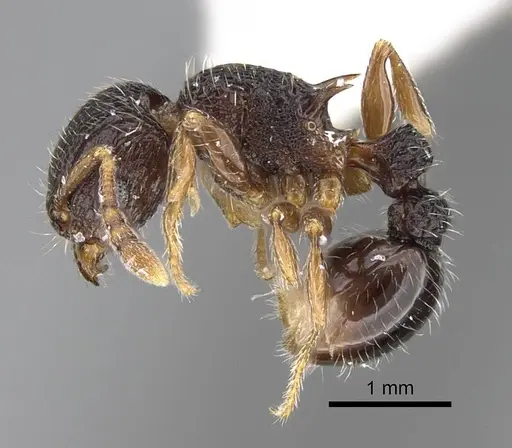
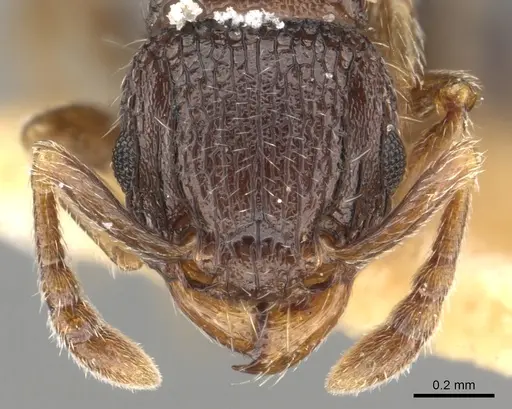
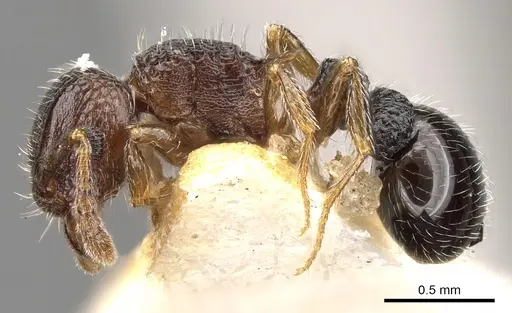
Tetramorium zapyrum is a tiny dark brown ant native to West Africa, with workers measuring 2.7-3.2 mm in total length . Their body is dark brown with a blackish brown gaster (abdomen), and is covered in short, fine hairs . This species belongs to the Tetramorium angulinode group and is the most common member of this group across West Africa . They live in forested areas or land cleared for agriculture, nesting inside twigs or pieces of rotten wood on the ground . These ground-dwelling foragers thrive in humid forest environments.
Quick Summary
- Difficulty: Easy
- Origin & Habitat: West Africa: Burkina Faso, Cameroon, Gabon, Ghana, Ivory Coast, Kenya, Liberia, Nigeria [2]. Found in forested areas or cleared agricultural land, nesting in twigs or rotten wood on the ground [2][1].
- Colony Type: Colony structure is not documented. Based on typical Tetramorium patterns, they may be monogyne, but this is unconfirmed.
- Size & Growth:
- Queen: Unconfirmed, no queen measurements have been published.
- Worker: 2.7-3.2 mm (total length) [1].
- Colony: Unknown, no colony size data exists. Estimated several hundred workers based on related species.
- Growth: Moderate, inferred from typical Tetramorium development.
- Development: 6-10 weeks estimated based on similar small Myrmicinae species. (No specific data for T. zapyrum. Temperature strongly affects speed.)
- Antkeeping:
- Temperature: Maintain at 24-28°C. These tropical forest ants need warm, stable conditions. Use a heat mat if your room is cooler [2].
- Humidity: High humidity, they come from damp forest floors. Keep the nest substrate consistently moist but not waterlogged. Provide a water tube for drinking access.
- Diapause: No diapause required. As a tropical species, keep warm year-round [2].
- Nesting: Natural nesting in twigs and rotten wood on the ground translates well to test tubes or small Y‑tong (AAC) nests. They prefer tight, humid chambers scaled to their tiny size. Test tube setups work well for founding colonies [2].
- Behavior: Peaceful, ground‑dwelling foragers. They are not aggressive and use a smearing venom defense (typical of their tribe Crematogastrini) rather than piercing stings, their stinger is flattened and not meant for piercing. Their small size means escapes are a real risk: use fine mesh and tight lids. Workers forage individually and do not form large raiding parties. They do not climb well on smooth surfaces.
- Common Issues: tiny size means escapes are likely without fine mesh barriers and tight-fitting lids., high humidity requirements can lead to mold if ventilation is poor., small colony founding means slow initial growth, patience is needed., wild-caught colonies may carry parasites that can cause colony failure., test tube flooding can drown founding queens if the water reservoir is too large.
Housing and Nest Setup
For Tetramorium zapyrum, a test tube setup is ideal for founding colonies. Use a small test tube with a water reservoir (about one‑third full) plugged with cotton. The queen will seal herself into a chamber at the end of the tube. These tiny ants need tight spaces, they can escape through gaps that would hold larger ants. Apply fluon or use fine mesh on any lid. Once the colony reaches roughly 20-30 workers, you can move them to a small Y‑tong (AAC) nest or keep them in a test tube with a foraging area. A small outworld (like a plastic container) connected to the nest with tubing gives them space to forage. Keep the nest area humid by occasional misting or using a water tube connected to the foraging area [2].
Feeding and Diet
Tetramorium zapyrum is omnivorous. Offer small protein sources like fruit flies, pinhead crickets, or small mealworms. They also accept sugar water, honey, or diluted honey. Feed small amounts every 2-3 days, removing uneaten food to prevent mold. For founding colonies, a drop of sugar water every few days is sufficient until the first workers appear. After that, add small prey 2-3 times per week. These tiny ants have small appetites: a few drops of honey or a single small insect is enough for a colony of 10-20 workers [2].
Temperature and Humidity
As a West African tropical species, Tetramorium zapyrum needs warm temperatures between 24-28°C. Use a heat mat on one side of the nest to create a gentle gradient if your room is cooler, never place heat directly on the nest as it can dry them out or cook the colony. High humidity is important: keep the nest substrate consistently moist but never waterlogged. A water tube in the setup helps maintain humidity through evaporation. Avoid placing the nest near air conditioning vents or in drafty areas [2].
Colony Development
The queen will lay eggs after sealing herself in her test tube chamber. Founding behavior is unconfirmed (not documented), but based on typical Tetramorium she likely uses stored fat reserves to produce the first brood. The first workers (nanitics) are usually smaller than normal workers and emerge after an estimated 6-10 weeks, depending on temperature. After the first workers arrive, the colony enters a growth phase. Growth is moderate, expect several months to reach 50 workers, and over a year to reach larger sizes. Be patient: avoid disturbing the queen during founding to prevent brood consumption from stress [2].
Behavior and Temperament
These are peaceful, ground‑dwelling ants. Workers forage individually on the ground surface and do not form large swarms. They are members of the Crematogastrini tribe and use a smearing venom defense, their flattened stinger wipes venom onto enemies rather than piercing. Their sting is not painful to humans. Their small size means they can slip through tiny openings, so use fine mesh and tight seals. They are active during the day but can forage at any time. They communicate with pheromones and may form simple trails to food. They do not climb well on smooth surfaces [2].
Frequently Asked Questions
How long does it take for Tetramorium zapyrum to produce first workers?
No specific data exists, but based on similar small Myrmicinae species, expect roughly 6-10 weeks from egg to first worker at optimal temperature (24-28°C). Cooler temperatures will slow development significantly.
Can I keep Tetramorium zapyrum in a test tube?
Yes, test tubes are ideal for founding colonies. Use a small test tube with a water reservoir (about one‑third full) and a cotton plug. The queen will seal herself in the chamber. Once the colony grows to 20-30 workers, move to a small Y‑tong (AAC) nest with a foraging area [2].
What do Tetramorium zapyrum ants eat?
They are omnivorous. Offer sugar water, honey, or diluted honey regularly, plus small insects like fruit flies, pinhead crickets, or small mealworms. Feed small amounts every 2-3 days and remove uneaten food [2].
Do Tetramorium zapyrum ants sting?
They have a stinger but it is modified for smearing venom rather than piercing, so it does not hurt humans. They are not aggressive and rarely sting even when handled [2].
Are Tetramorium zapyrum good for beginners?
Yes, they are considered easy to keep. They are small, peaceful, have straightforward care requirements, and do not need hibernation. The main challenge is escape prevention due to their tiny size [2].
What temperature do Tetramorium zapyrum need?
Keep them warm at 24-28°C. Use a heat mat on one side of the nest if your room is cooler. This is a tropical species that must never be exposed to cold [2].
How big do Tetramorium zapyrum colonies get?
Colony size is not documented, but based on related Tetramorium species, colonies likely reach several hundred workers. Growth is moderate.
Do Tetramorium zapyrum need hibernation?
No, they are a tropical West African species and need warm temperatures year‑round. Do not expose them to cold [2].
Why are my Tetramorium zapyrum escaping?
Their tiny size allows them to squeeze through very small gaps. Use fine mesh on all openings, apply fluon to barrier surfaces, check that all lids fit tightly, and seal gaps around tubing connections [2].
Can I keep multiple queens together?
This has not been documented for this species. Based on typical Tetramorium behavior, it is not recommended as queens may fight. Start with a single founding queen.
What humidity level do Tetramorium zapyrum need?
High humidity, these ants come from damp forest floors. Keep the nest substrate consistently moist but not waterlogged. A water tube in the setup helps maintain humidity [2].
When should I move Tetramorium zapyrum to a formicarium?
Move them when the colony reaches 20-30 workers and the test tube becomes crowded. A small Y‑tong (AAC) or 3D‑printed nest works well. They prefer tight chambers scaled to their tiny size [2].
Report an Issue
The current care sheet is based fully on literature. See inconsistencies, or something that's incorrect? Please , it will be resolved after review from an admin. Contributing to the blogs tab also helps providing information, to make us be able to further improve the caresheets. Thank you for your support!
References

This caresheet is licensed under CC BY-SA 4.0 .
Community Blogs
ANTWEB1025000
View on AntWeb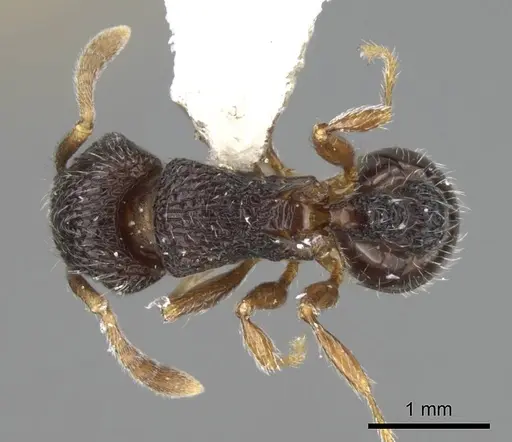
CASENT0901176
View on AntWeb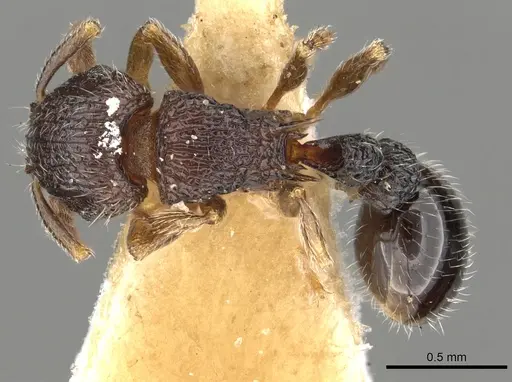
Literature
Loading distribution map...Loading products...