
Tetramorium yammer
- Sci. Name
- Tetramorium yammer
- Tribe
- Crematogastrini
- Subfamily
- Myrmicinae
- Author
- Hita Garcia & Fisher, 2012
- Distribution
- Found in 1 countries
Introduction
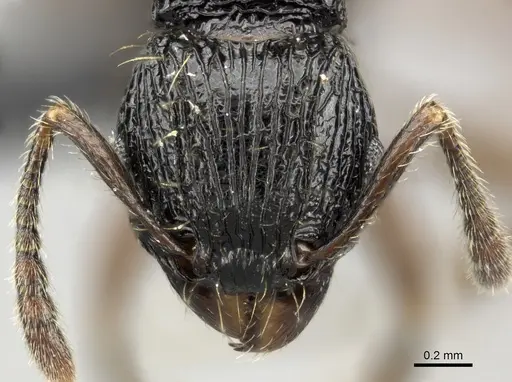
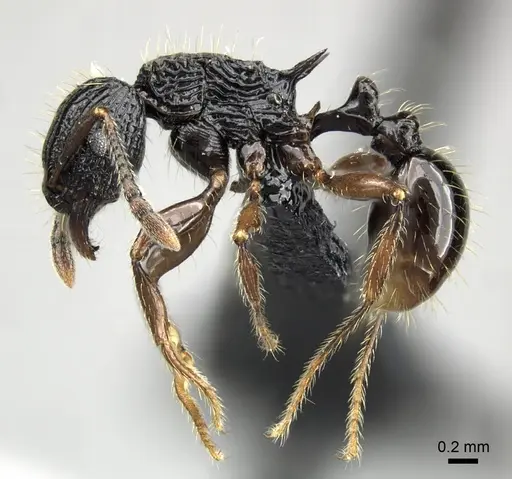
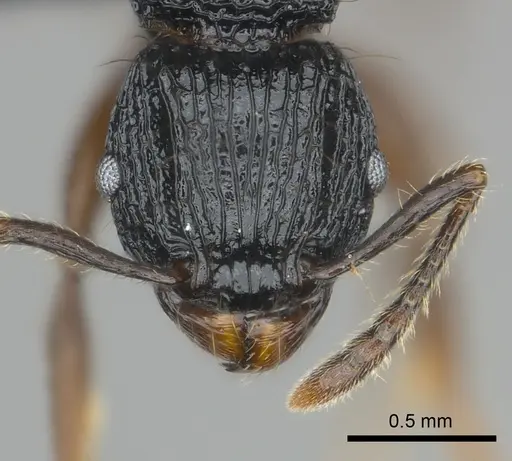
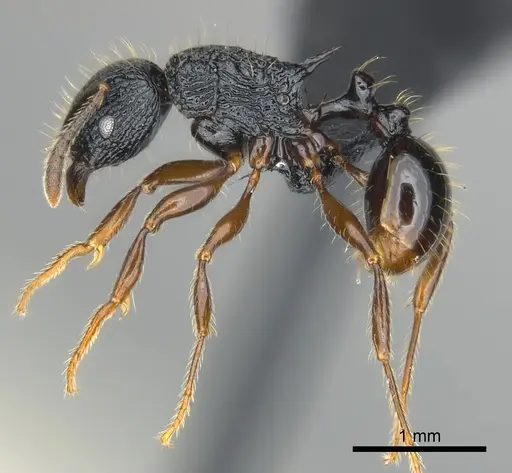
Tetramorium yammer is a very small, dark ant species found only in one place: the Parc National de Marojejy in northeastern Madagascar. Workers are tiny, with total length not directly recorded but likely around 3-4 mm based on related Tetramorium species. They are easily recognized by their very dark brown to black body, short antennal scapes that do not reach the back of the head, and exceptionally long propodeal spines that stick out from the rear of their mesosoma . The petiolar node has a distinctive shield-like shape, with the front edge sitting slightly higher than the back . This species belongs to the Tetramorium dysalum species group and was described in 2012 . What makes T. yammer special is that it has never been kept in captivity. It is known only from a handful of workers collected from leaf litter and rotting wood in a montane rainforest at 1325 meters elevation . The cool, humid conditions of this high-elevation habitat suggest that these ants need stable moisture and moderate temperatures, unlike many lowland tropical species. Their tiny size and completely undocumented biology make them a challenging species that only the most dedicated antkeepers should consider.
Quick Summary
- Difficulty: Expert
- Origin & Habitat: Endemic to northeastern Madagascar, specifically Parc National de Marojejy at 1325m elevation in montane rainforest [1]. Collected from forest leaf litter and rotting wood.
- Colony Type: Colony structure is unconfirmed. No data exists on whether they have single queens (monogyne) or multiple queens (polygyne).
- Size & Growth:
- Queen: Unknown, no queen specimens have been described [1].
- Worker: Total length has not been directly recorded, based on related Tetramorium species, workers likely measure around 3-4 mm, but this is unconfirmed [1].
- Colony: Unknown, only about 20 workers have been collected in leaf litter [1].
- Growth: Unknown
- Development: Unknown, no development data exists. Based on typical Tetramorium patterns for montane tropical species, expect roughly 6-10 weeks at warm temperatures, but this is a rough estimate. (No direct observations of founding or development exist. All estimates are inferred from genus patterns.)
- Antkeeping:
- Temperature: Based on their montane rainforest habitat (1325m elevation in Madagascar), aim for cooler temperatures than typical tropical species. Start around 20-24°C with a slight gradient. Avoid temperatures above 28°C. They likely come from a relatively cool, stable microclimate [1].
- Humidity: High humidity is essential, think damp forest floor. Keep the nest substrate consistently moist but not waterlogged. Montane rainforests are persistently humid environments [1].
- Diapause: Unknown, no data on seasonal behavior. The Parc National de Marojejy experiences cool, dry winters, so some form of seasonal slowdown is possible but unconfirmed [1].
- Nesting: In the wild they live in leaf litter and rotting wood [1]. In captivity, a naturalistic setup with moist substrate or a well-hydrated Y-tong/plaster nest works best. They need tight chambers scaled to their tiny size.
- Behavior: No behavioral observations have been documented in captivity. Based on typical Tetramorium behavior, they are likely ground-nesting and forage through leaf litter for small prey. Workers are about 3-4 mm long, so escape prevention must be excellent, they can squeeze through standard mesh. Expect them to be shy and non-aggressive, typical of small litter-dwelling ants. As a member of Myrmicinae (tribe Crematogastrini), they likely use a smear-type venom defense, but this has not been observed directly.
- Common Issues: this species has never been kept in captivity, there are no established care protocols., tiny size (around 3-4 mm) means escapes are likely without fine mesh barriers (0.3mm or smaller)., no information on what foods they accept, start with small live prey like springtails and fruit flies., high humidity requirements can lead to mold problems if ventilation is poor., no data on founding behavior, queens may be claustral like other Tetramorium but this is unconfirmed.
Discovery and Distribution
Tetramorium yammer was described in 2012 by Hita Garcia and Fisher as part of a comprehensive revision of Malagasy Tetramorium species [1]. The type locality is Parc National de Marojejy in northeastern Madagascar, one of the most biodiverse regions on the island. These ants were collected at 1325 meters elevation in montane rainforest, sifted from leaf litter and rotting wood [1]. The species name 'yammer' honors George Zachary and his company for supporting biodiversity research. This ant is known only from this single location, it may be a localized endemic or simply rarely collected due to its tiny size and cryptic habits.
Identification and Morphology
Workers of T. yammer are very small. Their total length has not been directly measured, but based on related species they are around 3-4 mm. Distinctive features include very long propodeal spines, a shield-shaped petiolar node with the front margin higher than the back, short antennal scapes, and small eyes. The entire body is very dark brown to black, with the appendages often slightly lighter. Abundant long erect hairs cover the dorsal surfaces. These traits separate it from all other members of the T. dysalum species group [1].
Housing and Nest Setup
Since this species has never been kept in captivity, housing recommendations are based on its natural habitat and what works for similar small Tetramorium species. A naturalistic setup with moist, decomposing leaf litter and small pieces of rotting wood mimics their natural environment well [1]. Alternatively, a well-hydrated Y-tong or plaster nest with narrow chambers scaled to their tiny size works. The critical factor is maintaining high humidity without stagnation, use adequate ventilation to prevent mold while retaining moisture. Escape prevention is essential: at around 3-4 mm body length, they can escape through standard mesh. Use fine mesh (0.3 mm or smaller) or fluon barriers on all openings.
Feeding and Diet
No captive feeding observations exist for this species. Based on typical Tetramorium ecology and the small size of workers, they likely forage in leaf litter for tiny prey such as springtails, mites, and small insects. Start with small live prey like springtails, fruit fly larvae, and other micro-arthropods. They may also tend aphids or collect honeydew. Offer sugar water or honey occasionally, though acceptance is uncertain. Given their tiny size, prey items should be appropriately scaled, even small mealworm pieces may be too large.
Temperature and Seasonal Care
The montane rainforest habitat of T. yammer (1325 m elevation in northeastern Madagascar) provides key clues [1]. Montane environments are cooler and more stable than lowland tropics. Aim for temperatures in the 20-24°C range, cooler than typical tropical ant species. Avoid temperatures above 28°C. The Parc National de Marojejy experiences seasonal variation, with a cooler, drier winter period. Some form of seasonal slowdown may be beneficial, though no data exists on diapause requirements [1]. Start with room-temperature conditions (around 20-22°C) and observe colony activity before adding heat.
Challenges and Why This Species Is Expert-Only
This is not a species for beginners. T. yammer has never been kept in captivity, meaning there are no established care protocols, no documented feeding success, and no known colony development timelines. Every aspect of keeping this species would be experimental. The tiny size creates practical challenges: escape prevention, appropriate prey sizing, and finding suitable nest chambers. Without any baseline data, keepers would be essentially pioneering husbandry for a species that may have very specific requirements. Only experienced antkeepers with the ability to experiment and document results should attempt this species.
Frequently Asked Questions
Can I keep Tetramorium yammer as a beginner antkeeper?
No. This species is not recommended for beginners. It has never been kept in captivity, meaning there are no established care protocols. Every aspect of keeping this species would be experimental, and the tiny worker size creates practical challenges with escape prevention and feeding appropriate prey.
What do Tetramorium yammer ants eat?
This is unknown, no captive feeding observations exist. Based on typical Tetramorium ecology and their tiny size, they likely accept small live prey like springtails, mites, and fruit fly larvae. They may also collect honeydew. Start with small live prey and offer sugar sources occasionally to test acceptance.
How big do Tetramorium yammer colonies get?
Unknown. This species is only known from about 20 workers collected in leaf litter [1]. No large colony samples exist. Based on similar small Tetramorium species, colonies likely reach a few hundred workers at most.
Do Tetramorium yammer ants sting?
Tetramorium belongs to the Myrmicinae subfamily, which includes species with stingers. As a member of tribe Crematogastrini, they likely use a smear-type venom defense (spreading venom rather than piercing). However, these ants are tiny (around 3-4 mm) and likely non-aggressive. The sting, if present, would be negligible due to their small size.
What temperature do Tetramorium yammer need?
Based on their montane rainforest habitat (1325 m elevation in Madagascar), aim for cooler temperatures than typical tropical ants, roughly 20-24°C [1]. Avoid overheating above 28°C. Start with room temperature and adjust based on colony activity.
Where is Tetramorium yammer found in the wild?
Only in Parc National de Marojejy in northeastern Madagascar, at 1325 meters elevation. This is a montane rainforest habitat [1]. The species is known only from this single location.
How long does it take for Tetramorium yammer to develop from egg to worker?
Unknown, no development data exists for this species. Based on typical Tetramorium patterns for montane tropical species, expect roughly 6-10 weeks at warm temperatures, but this is a rough estimate.
Can I keep multiple Tetramorium yammer queens together?
Unknown. No data exists on colony structure or founding behavior for this species. The colony type (single-queen vs multi-queen) has not been documented [1].
What size is a Tetramorium yammer worker?
Total length has not been directly measured. Based on related Tetramorium species, workers likely measure around 3-4 mm in total body length [1]. This is among the smaller Tetramorium species.
Is Tetramorium yammer a good species for ant farms?
No. This species is essentially unavailable in the antkeeping hobby and would be extremely difficult to keep successfully given the complete lack of captive care data. There are many better-documented species available.
Do Tetramorium yammer need hibernation or diapause?
Unknown. The Parc National de Marojejy experiences seasonal variation with cooler, drier winters [1], so some form of seasonal slowdown may be appropriate. However, no data exists on their exact requirements. Observe colony behavior and provide a slight temperature reduction during winter months.
How do I set up a nest for Tetramorium yammer?
Use a naturalistic setup with moist leaf litter and small rotting wood pieces, or a well-hydrated Y-tong/plaster nest with narrow chambers. High humidity is essential. Escape prevention must be excellent, use fine mesh (0.3 mm or smaller) due to their tiny size. Scale all chambers and passages to their small worker size [1].
Report an Issue
The current care sheet is based fully on literature. See inconsistencies, or something that's incorrect? Please , it will be resolved after review from an admin. Contributing to the blogs tab also helps providing information, to make us be able to further improve the caresheets. Thank you for your support!
References

This caresheet is licensed under CC BY-SA 4.0 .
Community Blogs
CASENT0042832
View on AntWeb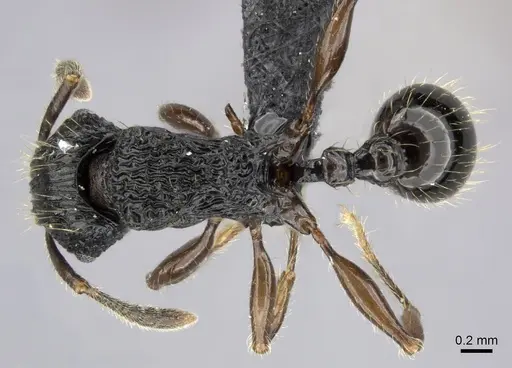
CASENT0499759
View on AntWeb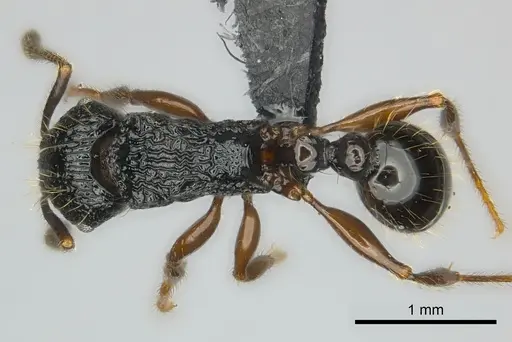
Literature
Loading distribution map...Loading products...