
Tetramorium trirugosum
- Sci. Name
- Tetramorium trirugosum
- Tribe
- Crematogastrini
- Subfamily
- Myrmicinae
- Author
- Hita Garcia <i>et al.</i>, 2010
- Distribution
- Found in 2 countries
Introduction
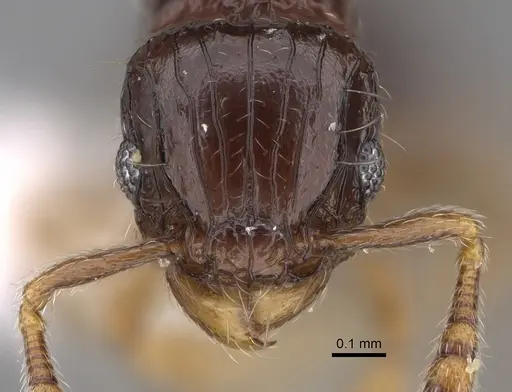
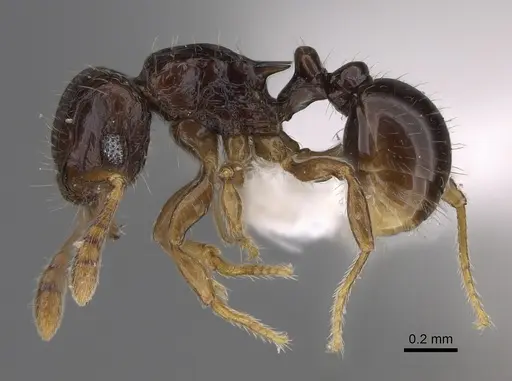
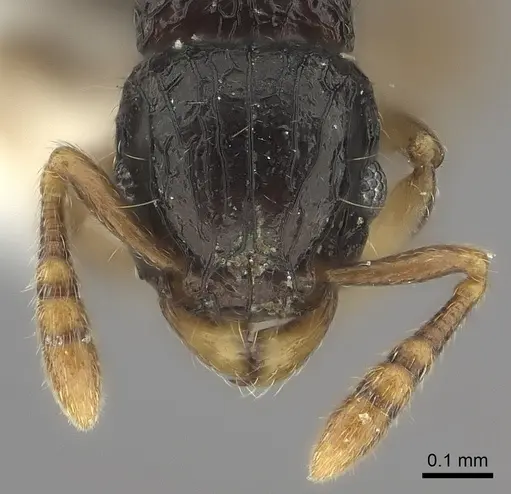
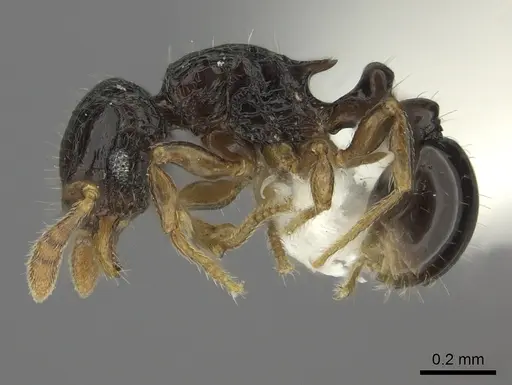
Tetramorium trirugosum is a rarely seen rainforest ant from Cameroon and Gabon in Central Africa. Workers are uniformly dark brown to nearly black. The species gets its name from three strong longitudinal ridges on its back, which make it easy to identify within its species group. They live in leaf litter and rotting wood in lowland rainforests (around 40m elevation) . Because it was only described in 2010 and has a small range, almost nothing is known about its captive care or colony biology.
Quick Summary
- Difficulty: Expert
- Origin & Habitat: Native to Cameroon and Gabon in the Afrotropical region. Found in rainforest leaf litter and rotting wood, in lowland areas around 40m elevation [1][2].
- Colony Type: Colony structure is unconfirmed, no published data on queen number or social organization exists for this species [1]. Most Tetramorium are monogyne (single queen), but this cannot be confirmed for T. trirugosum.
- Size & Growth:
- Queen: Size data unavailable, no queen specimens have been documented for this species.
- Worker: Total length not documented in literature, inferred from genus patterns to be approximately 3-5 mm [1].
- Colony: Unknown, no wild colony size data has been published. Related Tetramorium species form colonies of several hundred to a few thousand workers.
- Growth: Unknown, no development data exists. Expect moderate growth if genus patterns apply, but this is unconfirmed.
- Development: Unknown, no direct measurements exist. Inferred from typical Tetramorium development to be 6-10 weeks at optimal temperatures, but this is not confirmed. (All timeline estimates are based on genus-level patterns, not on this species specifically.)
- Antkeeping:
- Temperature: Likely requires warm, stable temperatures around 24-28°C based on its rainforest origin. This is an estimate since no specific thermal data exists [1].
- Humidity: Requires high humidity, the nest substrate should be consistently damp but not waterlogged. Inferred from rainforest leaf litter habitat [1]. Aim for 70-85% relative humidity, though this is an estimate based on habitat rather than direct research.
- Diapause: Unlikely to require diapause, as a tropical lowland species, it probably does not experience cold winters. However, this is unconfirmed [1].
- Nesting: In nature, nests in leaf litter and rotting wood on rainforest floors [1]. In captivity, a naturalistic setup with moist soil-organic mix or a Y‑tong (AAC) / plaster nest with high humidity likely works. Avoid dry conditions.
- Behavior: Temperament is unconfirmed, but most Tetramorium are docile and not aggressive. They possess a modified stinger used to smear venom (typical of tribe Crematogastrini), but their tiny size makes any sting negligible. Escape prevention is critical due to small size, use fine mesh and tight-fitting lids.
- Common Issues: escape prevention is critical, standard gaps allow tiny ants to squeeze through, humidity management is challenging, too dry causes decline, too wet causes mold, no captive husbandry data exists, keepers must experiment with conditions and expect failures, wild-caught colonies may carry parasites or pathogens not adapted to captivity
Acquiring Tetramorium trirugosum
This is the hardest part of keeping this species. Tetramorium trirugosum is extremely rare in the hobby and not available from common suppliers. It was only described in 2010 and has a very limited distribution in Cameroon and Gabon [1]. If you obtain a colony, it will almost certainly be wild‑caught since captive breeding is virtually nonexistent. Inspect wild‑caught colonies for disease, parasites, or transport stress. Wild‑caught colonies fail more often than captive‑bred ones, be ready for potential losses.
Housing and Nest Setup
Mimic their natural rainforest floor habitat. Use a moist substrate mixture, a blend of soil, coco fiber, and rotting wood pieces. Keep the substrate damp but never waterlogged. A Y‑tong (AAC) nest with narrow chambers or a plaster nest can also work if humidity is kept high. The key is preventing the colony from drying out. Provide a water tube or moisture reservoir and consider misting the outworld occasionally. Escape prevention is vital: their tiny size lets them squeeze through gaps that larger ants cannot. Use fine mesh on all ventilation holes. [1][2]
Temperature and Humidity
As a tropical rainforest ant from Central Africa, Tetramorium trirugosum needs warm and humid conditions. Aim for 24-28°C (estimated from habitat). Use a heating cable on one side of the nest to create a gradient so ants can choose their spot. Humidity is critical: keep the substrate consistently moist, targeting 70-85% relative humidity (estimated). The substrate should feel damp but not have standing water. Watch for mold, which indicates too much moisture. Dry conditions will likely kill the colony quickly. [1]
Feeding and Diet
No specific diet data exists for this species. Based on typical Tetramorium behavior, they are probably generalists that accept both sugar and protein. Offer sugar water or honey for carbohydrates, and small insects (fruit flies, pinhead crickets, pieces of mealworms) for protein. Feed every 2-3 days and remove uneaten food to prevent mold. Some Tetramorium eat seeds, but that is not confirmed for this species. Observe your colony and adjust accordingly.
Colony Development and Growth
No direct development data exists for Tetramorium trirugosum. Inferred from typical Tetramorium patterns, the first workers (nanitics) likely emerge 6-10 weeks after eggs are laid, given optimal temperature and humidity, but this is an estimate. Nanitics are smaller than mature workers. Growth rate is unknown but probably moderate. Colonies likely reach several hundred workers over time, but maximum size is unknown. Be patient and expect a slower learning curve due to the lack of documented information.
Handling and Temperament
Behavior is undocumented, but most Tetramorium are docile and not aggressive. They have functional stingers (typical of Myrmicinae), but their small size means any sting is negligible. Use gentle techniques when working with the colony and avoid disturbing the queen. Because they are tiny and need high humidity, minimize the time the nest is open. Always maintain excellent escape prevention, they climb smooth surfaces easily. [1]
Frequently Asked Questions
How do I get Tetramorium trirugosum ants?
This species is extremely rare in the hobby. It was only described in 2010 and has a very limited distribution (Cameroon and Gabon). You would need to find a specialized supplier dealing with African ants or collect them yourself if you have access to the region. Most likely any colony will be wild‑caught.
What size colony does Tetramorium trirugosum reach?
The maximum colony size is unknown, no published data exists. Based on related Tetramorium species, colonies likely reach several hundred to a few thousand workers, but this is not confirmed.
Do Tetramorium trirugosum ants sting?
As members of Myrmicinae, they have functional stingers. They belong to tribe Crematogastrini and use a smearing venom application rather than piercing. Due to their tiny size, any sting would be barely noticeable to humans. Most Tetramorium are docile and unlikely to sting unless directly threatened.
What temperature do Tetramorium trirugosum ants need?
Based on their natural rainforest habitat, they likely need warm temperatures around 24-28°C. This is an estimate since no specific thermal data exists. Use a heating cable on one side of the nest to create a gradient.
Do Tetramorium trirugosum ants need hibernation?
Unlikely, as a tropical lowland species from Cameroon and Gabon, they probably do not require a diapause period. However, this is unconfirmed since no biological studies exist for this species [1].
How long does it take for Tetramorium trirugosum to raise first workers?
No species‑specific development data exists. Inferred from typical Tetramorium patterns to be 6-10 weeks from egg to first worker at optimal temperature (around 24-28°C). This is an estimate.
Are Tetramorium trirugosum good for beginners?
No, this species is not recommended for beginners. It is extremely rare, has no documented captive care information, requires specific tropical conditions, and is difficult to obtain. This is an expert‑level species for experienced keepers interested in rare African ants [1].
What do Tetramorium trirugosum ants eat?
Diet is unconfirmed for this species, but they are likely generalist feeders like most Tetramorium. Offer sugar water or honey for carbohydrates, and small insects (fruit flies, pinhead crickets, pieces of mealworms) for protein. Feed every 2-3 days and remove uneaten food.
Can I keep Tetramorium trirugosum in a test tube?
A test tube setup could work for a founding queen, but their need for high humidity makes test tubes challenging long‑term. A naturalistic setup with moist substrate or a Y‑tong nest with humidity control is more appropriate for an established colony.
Why are my Tetramorium trirugosum dying?
Without specific data, common causes likely include: low humidity (they need damp rainforest conditions), temperatures outside their preferred range (likely 24-28°C), poor escape prevention leading to colony loss, or stress from being wild‑caught. Monitor conditions carefully and adjust incrementally.
Is Tetramorium trirugosum aggressive?
No documented behavior exists, but most Tetramorium species are relatively docile and not aggressive. They will likely flee rather than fight when disturbed. Their small size means they pose minimal threat.
What makes Tetramorium trirugosum special?
This species is distinguished by three prominent longitudinal ridges on its back, that is how it gets its name 'trirugosum' (three‑wrinkled). It is also one of the rarest Tetramorium in the hobby, making it a unique challenge for experienced antkeepers [1].
Report an Issue
The current care sheet is based fully on literature. See inconsistencies, or something that's incorrect? Please , it will be resolved after review from an admin. Contributing to the blogs tab also helps providing information, to make us be able to further improve the caresheets. Thank you for your support!
References

This caresheet is licensed under CC BY-SA 4.0 .
Community Blogs
CASENT0218391
View on AntWeb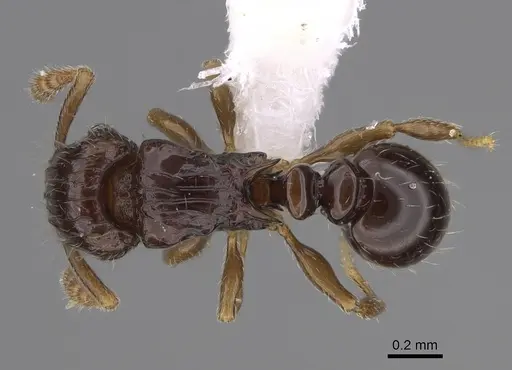
CASENT0218418
View on AntWeb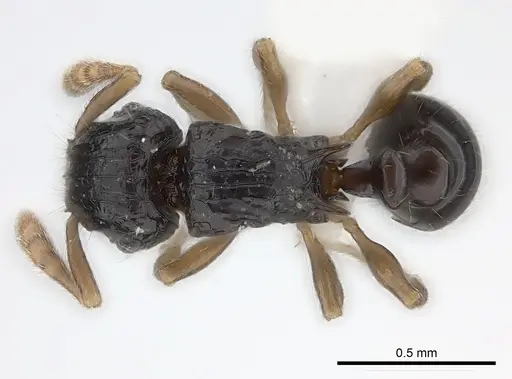
Literature
Loading distribution map...Loading products...