
Tetramorium taylori
- Sci. Name
- Tetramorium taylori
- Tribe
- Crematogastrini
- Subfamily
- Myrmicinae
- Author
- Bolton, 1985
- Distribution
- Found in 1 countries
Introduction
Tetramorium taylori is a small, dark-colored ant species known only from northern Queensland, Australia . Workers were collected from gum forests and rainforests in the Cape York region, including Tozer Gap, Shipton's Flat, and Rocky River . The species was originally described as Tetramorium australe in 1977,but was renamed in 1985 because the name was already occupied by another taxon . No queens or colony structure have been recorded in the literature.
Quick Summary
- Difficulty: Easy
- Origin & Habitat: Northern Queensland, Australia, specifically Cape York region, found in gum (eucalyptus) forests and rainforests [3].
- Colony Type: Unknown, no data on queen number or colony structure.
- Size & Growth:
- Queen: Size data unavailable, queens have not been described.
- Worker: Size data unavailable, Tetramorium workers typically 3-4 mm, but not confirmed for this species.
- Colony: Unknown, no colony size data available.
- Growth: Unknown
- Development: No data available. (No studies have documented development for this species.)
- Antkeeping:
- Temperature: No specific data. Based on tropical origin, likely needs warm conditions (roughly 22-26°C). Avoid extremes.
- Humidity: No specific data. Collected from humid forests, so moderate to high humidity is recommended. Keep nest substrate moist but not waterlogged.
- Diapause: No specific data. As a tropical species from northern Queensland, true diapause is probably not required. A slight winter cool-down may be beneficial but is not confirmed.
- Nesting: No specific data. Plaster, Y-tong, or soil nests with good moisture retention are likely suitable. Provide small, tight chambers.
- Behavior: No specific behavioral data. As a member of tribe Crematogastrini, it likely uses a spatulate stinger to smear venom onto enemies rather than stinging. General temperament and escape risk are unknown.
- Common Issues: no confirmed issues, this species has not been studied in captivity, wild-caught colonies may carry unknown parasites, small size means high escape risk, use tight barriers
Natural History and Distribution
Tetramorium taylori is known only from a handful of locality records in northern Queensland, Australia [3]. All specimens were collected by P. F. Darlington in January-June 1958 from gum forests and rainforests in the Cape York area, including Tozer Gap, Shipton's Flat, and Rocky River [3]. The species was originally described as Tetramorium taylori by Bolton (1977), but that name was a junior secondary homonym of an older taxon, so Bolton (1985) proposed the replacement name taylori [3]. The species is included in phylogenetic studies of Myrmicinae [1][2], but its biology remains almost entirely unknown.
Identification
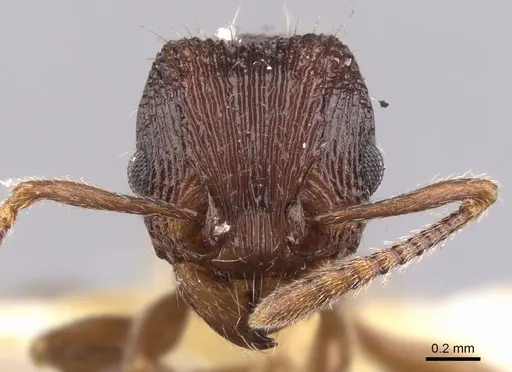
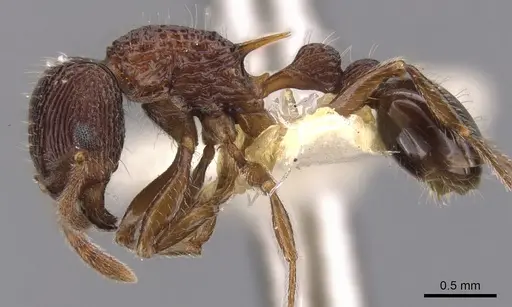
Workers are small with a 12-segmented antenna and a two-segmented petiole, typical of the genus Tetramorium. No queen or male has been described. The original description (Bolton 1977) includes a figure of the worker (fig. 68) [3]. For definitive identification, examine type material or consult the key provided in Bolton (1977).
Care Recommendations (Inferred from Genus)
30°C) and dry air. A true diapause is probably unnecessary. Monitor the colony closely, as wild-caught queens may have unknown requirements.
Frequently Asked Questions
How long does it take for Tetramorium taylori to produce first workers?
No data is available for this species. In other Tetramorium species, first workers may emerge in 6-10 weeks under warm conditions, but this is unconfirmed for T. taylori.
Can I keep Tetramorium taylori in a test tube?
It is likely, since most Tetramorium species can be founded in test tubes. Use a cotton water reservoir and keep the tube warm and humid. However, no documented experience exists for this species.
Do Tetramorium taylori ants sting?
As a member of tribe Crematogastrini, they have a modified stinger adapted for smearing venom, not piercing. They may smear venom onto attackers, but this is not a typical sting. No specific observations exist for this species.
What temperature do Tetramorium taylori need?
No specific data. Based on its tropical origin, maintain temperatures around 22-26°C. Avoid extremes below 15°C or above 30°C.
How big do Tetramorium taylori colonies get?
Unknown. Colony size has not been documented for this species. Other Tetramorium species can reach several hundred workers, but this is not confirmed.
Do Tetramorium taylori need hibernation?
No data. As a tropical species, true hibernation is probably not required. A slight winter cool-down may be attempted but is not necessary.
What do Tetramorium taylori eat?
Likely omnivorous like other Tetramorium. Provide small live prey (fruit flies, small crickets) and sugar water. Remove uneaten food to prevent mold.
Are Tetramorium taylori good for beginners?
Possibly, but the lack of specific care data makes this species a risk for beginners. More common Tetramorium species with documented care (e.g., Tetramorium caespitum) are better choices.
Why is my Tetramorium taylori colony dying?
No specific causes are documented. Check humidity (they likely need high moisture), temperature (avoid extremes), and ensure no mold or starvation. If wild-caught, parasites may be an issue.
When should I move my colony to a formicarium?
No standard guideline exists for this species. For most Tetramorium, move when the test tube is crowded or the water runs low (30-100 workers). Connect the tube to the new nest and let the colony move gradually.
Report an Issue
The current care sheet is based fully on literature. See inconsistencies, or something that's incorrect? Please , it will be resolved after review from an admin. Contributing to the blogs tab also helps providing information, to make us be able to further improve the caresheets. Thank you for your support!
References

This caresheet is licensed under CC BY-SA 4.0 .
Community Blogs
CASENT0106297
View on AntWeb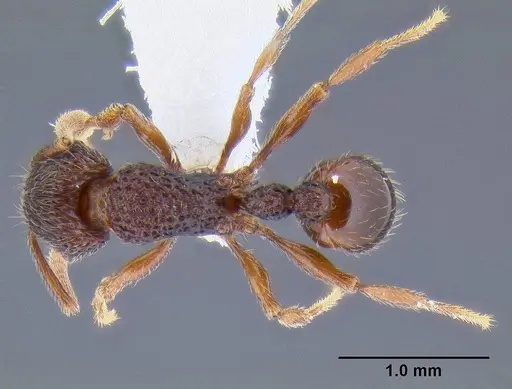
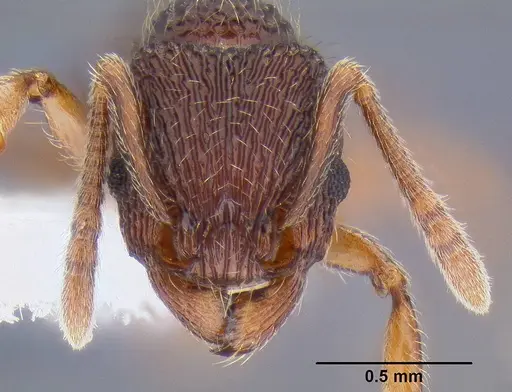
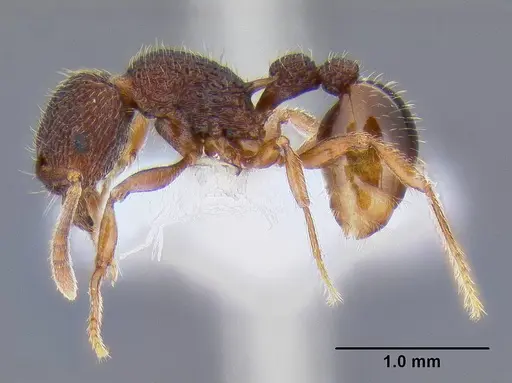
CASENT0901045
View on AntWeb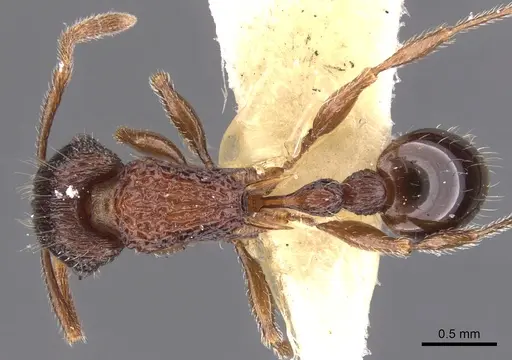
Literature
Loading distribution map...Loading products...