
Tetramorium striativentre
- Sci. Name
- Tetramorium striativentre
- Tribe
- Crematogastrini
- Subfamily
- Myrmicinae
- Author
- Mayr, 1877
- Distribution
- Found in 2 countries
Introduction
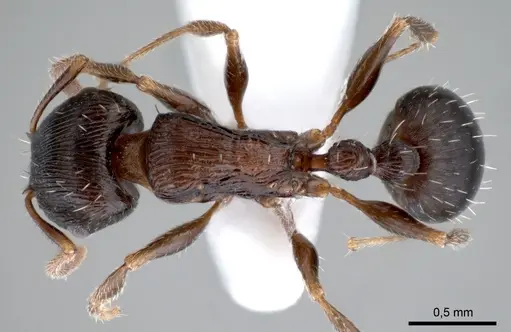
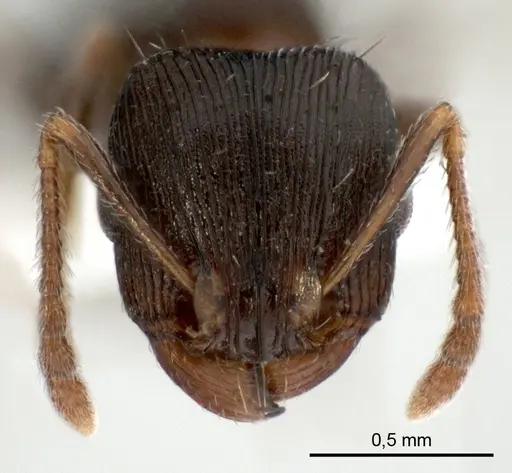
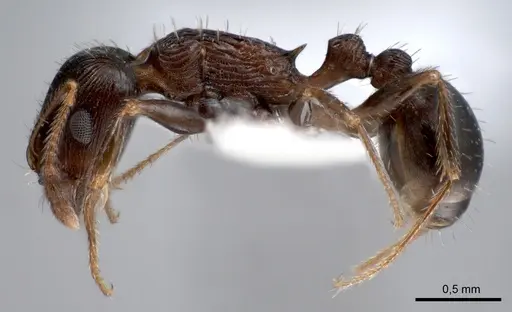
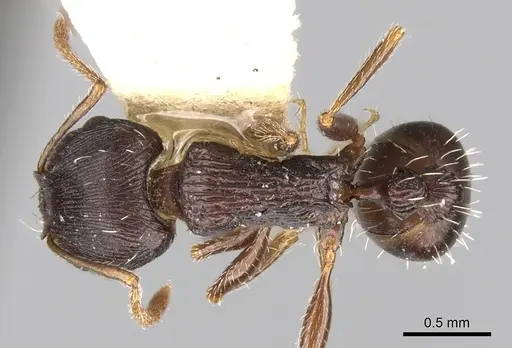
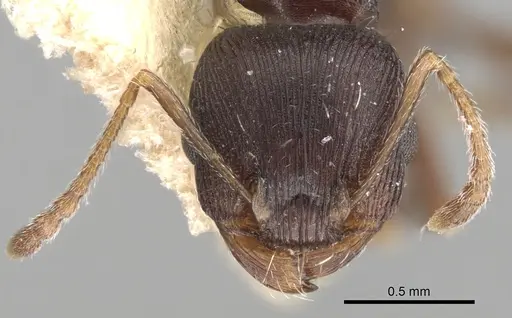
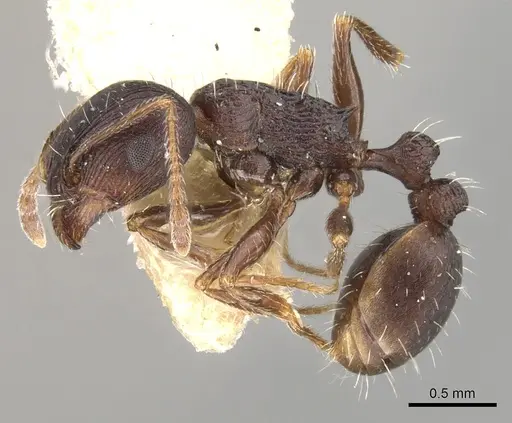
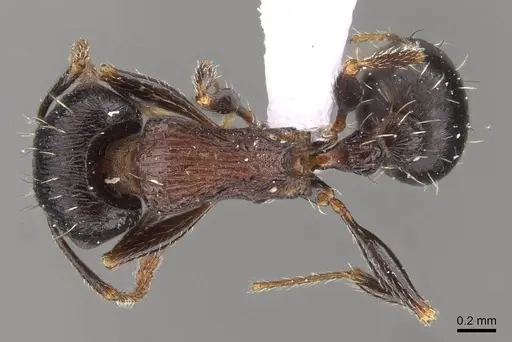
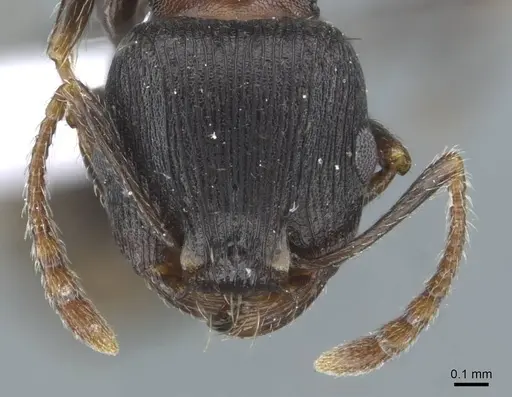
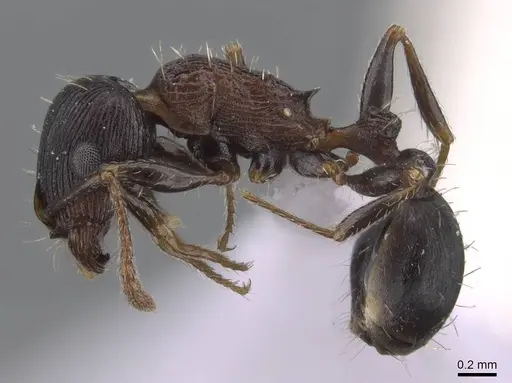
Tetramorium striativentre is a small to medium-sized ant from Central Asia. Workers are about 3-4mm (inferred from the Tetramorium genus) and queens slightly larger . They have dark brown to black heads, postpetioles, and gasters, with brown thoraxes, petioles, and legs . The first segment of the gaster has fine grooves (striations) that help tell them apart from similar species . They live in mountain regions across Central Asia, Afghanistan, Iran, and northwestern China, in dry steppe and semi-desert habitats with little vegetation . Nests are in the soil, often under rocks . These ants eat both live and dead small creatures, plus plant seeds .
Quick Summary
- Difficulty: Easy
- Origin & Habitat: Central Asia (Kazakhstan, Uzbekistan, Turkmenistan, Kyrgyzstan, Tajikistan), Afghanistan, Iran, and northwestern China. Inhabits mountain regions with steppe-like and semi-desert biotopes with sparse vegetation [1][4][3].
- Colony Type: Likely single-queen colonies (monogyne), based on typical Tetramorium patterns, though not directly confirmed in studies.
- Size & Growth:
- Queen: ~5-6mm, inferred from Tetramorium genus patterns [1]
- Worker: ~3-4mm, inferred from Tetramorium genus patterns [1]
- Colony: Unknown, no documented maximum for this species
- Growth: Moderate, consistent with other Tetramorium
- Development: Estimated 6-8 weeks at optimal temperature (inferred from related Tetramorium species) [1] (Specific development time for T. striativentre has not been directly studied.)
- Antkeeping:
- Temperature: Keep at 20-26°C, with the warmer end preferred. These ants come from warm steppe habitats [3]. Use a heating cable on one side of the nest to create a gradient.
- Humidity: Provide a humidity gradient. Keep the nest substrate mostly dry, with one small area slightly moist. These ants come from semi-desert environments, so avoid constant wetness [1][4].
- Diapause: Yes, likely needs a winter rest. Nuptial flights in May-June suggest a seasonal cycle [1]. Provide 2-3 months at 10-15°C in winter.
- Nesting: Soil nests work best, mimicking their natural under-rock nesting [1]. Y-tong (AAC) or plaster nests are also fine. Make sure the nest has a dry area and a small moist zone.
- Behavior: Workers are calm and not aggressive toward humans. They forage actively for both live and dead prey, and also collect seeds [1][5]. Their defense is a smell-based venom: they have a modified, flat stinger that wipes venom onto enemies rather than piercing. Escape risk is low due to their moderate size, but use barriers like fluon on the outworld rim. These ants are daytime active.
- Common Issues: colonies may slow down in winter, this is normal, not a problem., overfeeding can lead to mold in the nest, remove uneaten food right away., dry substrate can cause founding queens to eat or abandon brood, keep a small moist area., wild-caught colonies may carry parasites, quarantine and observe new colonies., seed collection may clutter the outworld, clean it out now and then.
Housing and Nest Setup
Tetramorium striativentre does well in standard ant setups. For founding, a test tube setup works: fill it partway with water trapped behind a cotton plug to provide humidity. Once the colony has around 20 workers, move them to a formicarium. A naturalistic setup with soil substrate is ideal since they naturally nest in soil under stones [1]. Y-tong (AAC) nests or plaster nests also work. The nest should have a dry area and a small moist zone. The outworld can be dry. Provide a shallow water dish to prevent small prey from drowning.
Feeding and Diet
These ants are zoonecrophagic, they eat both live and dead small creatures [1]. Offer a varied diet: small live prey like fruit flies, springtails, or pinhead crickets. They also scavenge dead insects and collect plant seeds [1][5]. In the wild, nests store significant food reserves (average 196 mg) [5]. Offer tiny seeds occasionally, but protein should be the main food. Sugar water or honey can be energy sources, but they aren't as sugar-dependent as some ants. Feed protein 2-3 times per week, and keep sugar water available. Remove uneaten food to prevent mold.
Temperature and Seasonal Care
Keep the colony at 20-26°C, with the warmer end preferred. These ants come from Central Asian mountain regions with warm summers [3]. Place a heating cable on one side of the nest to create a temperature gradient. In winter, lower the temperature to 10-15°C for 2-3 months to imitate their natural seasonal cycle [1]. After the winter rest, expect increased activity in spring, with alates (winged reproductives) appearing in late May or June [1].
Colony Development
Founding behavior is unconfirmed, but like most Tetramorium species, queens likely seal themselves in a chamber and raise the first brood on stored body reserves (claustral founding) [1]. The first workers (nanitics) are typically smaller than mature workers. Once they emerge, they start foraging. Growth rate is moderate. Avoid disturbing the queen during founding, stress can cause her to eat her brood. Keep the founding chamber with a small moist area but not waterlogged.
Behavior and Temperament
Workers are active foragers that search both alone and in groups. They are not aggressive toward humans and will only use their defense if directly threatened. Their defense is unusual: they have a modified, flat stinger that wipes venom onto enemies instead of piercing, this gives off a smell. Because of their moderate size (3-4mm), their sting is mild. They are daytime active and will form clear foraging trails once settled. The species is an indicator of central desert habitats in Iran [6].
Frequently Asked Questions
How long does it take for Tetramorium striativentre queens to raise their first workers?
Expect about 6-8 weeks from egg to first worker at around 24-26°C. This is estimated from related species since the timing hasn't been directly studied for T. striativentre [1]. The queen seals herself in and raises the brood without foraging.
Can I keep multiple Tetramorium striativentre queens together?
Probably not. The species is thought to be monogyne (single queen), so unrelated queens would likely fight. Keep them separate. Pleometrosis (multiple queens founding together) has not been reported for this species.
Do Tetramorium striativentre ants sting?
They have a modified stinger, but it doesn't pierce like a typical stinger. Instead, they use it to smear venom onto attackers. To a human, it feels mild at most. They are not aggressive and only use it if handled roughly.
What do Tetramorium striativentre ants eat?
They eat small live prey (fruit flies, springtails, small crickets), dead insects, and also collect plant seeds [1][5]. Offer protein 2-3 times a week and keep sugar water available. Remove leftovers to avoid mold.
Do Tetramorium striativentre ants need hibernation?
They likely benefit from a winter rest. Nuptial flights occur in May-June, which suggests a seasonal cycle [1]. Give them 2-3 months at 10-15°C in winter. This helps keep the colony healthy and may trigger spring reproduction.
Are Tetramorium striativentre ants good for beginners?
Yes, they are a good choice for beginners. They are hardy, accept a range of conditions, and have simple care needs. Their moderate size makes them easy to observe, and their diet is straightforward.
How big do Tetramorium striativentre colonies get?
The maximum colony size hasn't been documented. Based on related Tetramorium species, they likely reach several hundred workers after a couple years under good conditions, but this is an estimate.
When do Tetramorium striativentre nuptial flights occur?
Nuptial flights happen in late May or June in their native Central Asian range [1]. If you have an established colony, you can expect alates to appear in spring after the winter rest, with flights in late spring.
What temperature is best for Tetramorium striativentre?
Keep the nest at 20-26°C, with the warmer end (24-26°C) preferred for active growth. These ants come from warm temperate areas with hot summers. Use a heating cable to create a temperature gradient.
How do I set up a nest for Tetramorium striativentre?
A naturalistic setup with soil substrate works best since they nest in soil under stones [1]. Y-tong (AAC) or plaster nests are also fine. The nest should have a dry area and a small moist zone. Provide an outworld with a shallow water dish and a feeding area.
Report an Issue
The current care sheet is based fully on literature. See inconsistencies, or something that's incorrect? Please , it will be resolved after review from an admin. Contributing to the blogs tab also helps providing information, to make us be able to further improve the caresheets. Thank you for your support!
References

This caresheet is licensed under CC BY-SA 4.0 .
Community Blogs
Literature
Loading distribution map...Loading products...