
Tetramorium singletonae
- Sci. Name
- Tetramorium singletonae
- Tribe
- Crematogastrini
- Subfamily
- Myrmicinae
- Author
- Hita Garcia & Fisher, 2012
- Distribution
- Found in 1 countries
Introduction
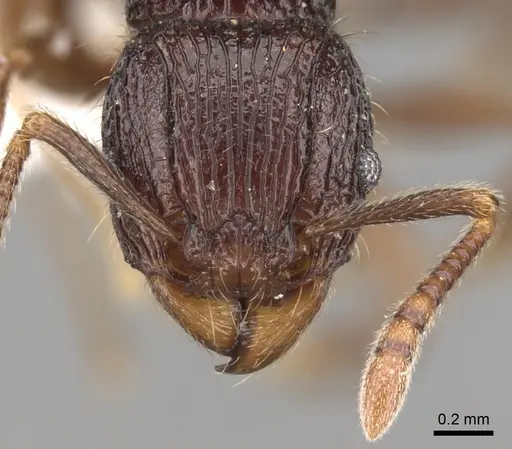
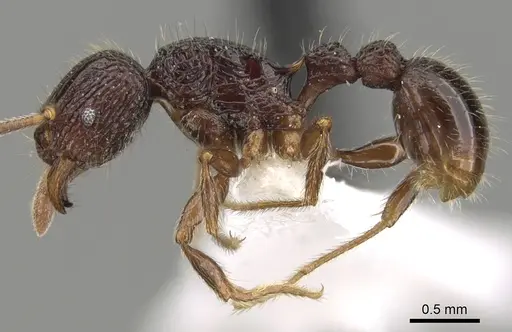
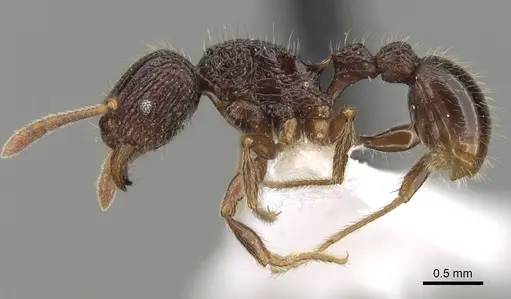
Tetramorium singletonae is a tiny ground-dwelling ant native to the rainforests of northeastern Madagascar. Only workers have been described, queens and males remain unknown. Workers have a uniform brown color, very short antennal scapes, and the smallest eyes in their species complex, which helps distinguish them from related species . The species was discovered in 2012 and named after Sarah Singleton for her support of biodiversity research . This ant lives in tropical rainforests at elevations between 425 and 1000 m, where it forages on the forest floor . As a member of the Tetramorium tortuosum species group (T. noeli complex), it is a relatively newly described species that remains poorly studied in captivity. It is easily recognized by its combination of short propodeal spines, small eyes, and short antennal scapes .
Quick Summary
- Difficulty: Hard
- Origin & Habitat: Northeastern Madagascar, specifically Ambanizana and Amparihibe areas, in tropical rainforests at 425-1000 m elevation [1].
- Colony Type: Colony structure is unconfirmed, the original description only documents worker morphology without mentioning queen number or social structure.
- Size & Growth:
- Queen: Unknown, queens have not been described [1].
- Worker: Size data unavailable, only head and mesosoma measurements were recorded (head ~0.9 mm, mesosoma ~1.1 mm), indicating very small workers [1].
- Colony: Unknown, only eight worker specimens were collected for the original description [1].
- Growth: Unconfirmed but likely moderate for a small tropical Tetramorium species.
- Development: Estimated 6-8 weeks based on typical Tetramorium genus development patterns at tropical temperatures. (Development time is inferred from related species, no specific study exists for this species.)
- Antkeeping:
- Temperature: As a tropical rainforest species from Madagascar, maintain warm temperatures around 24-28 °C. Avoid dropping below 20 °C, as this species is adapted to stable tropical conditions. (Temperature needs are inferred from habitat, no direct study exists.)
- Humidity: Rainforest species require high humidity, keep the nest substrate consistently moist but not waterlogged. Provide a moisture gradient so workers can self-regulate. Aim for high humidity with good ventilation to prevent mold.
- Diapause: No diapause required. Being a tropical species, they do not need hibernation. Keep warm temperatures year-round.
- Nesting: In captivity, they likely do well in naturalistic setups with moist substrate or Y-tong nests with tight chambers scaled to their tiny size. They are ground-dwelling and prefer to forage in lower chambers. (Nest preferences inferred from habitat and genus.)
- Behavior: This is a small, ground-dwelling ant that forages on the forest floor. Workers are likely generalist omnivores, typical of Tetramorium. They are not aggressive and pose no threat to keepers. Their defense mechanism involves a modified spatulate stinger used to smear venom onto enemies rather than piercing flesh (subfamily/tribe trait). Their small size means escape prevention is critical, they can squeeze through very small gaps.
- Common Issues: escape prevention is critical due to their very small size, use fine mesh and tight-fitting lids., high humidity requirements can lead to mold problems if ventilation is inadequate., lack of available colony stock makes this species difficult to obtain, most specimens are wild-caught from Madagascar., tropical temperature requirements mean they cannot tolerate cool conditions., limited information on captive care means keepers must rely on genus-level knowledge.
Housing and Nest Setup
Tetramorium singletonae is a tiny ground-dwelling ant that requires careful housing. Use nests with chambers scaled to their small size, standard test tubes may work but are large relative to the ants. Y-tong (AAC) nests with narrow chambers or naturalistic setups with moist substrate are suitable. Since they come from rainforests, maintain high humidity in the nest area while providing a gradient so workers can choose their preferred level. A layer of moist coco fiber or soil works well as substrate. Ensure excellent escape prevention, these tiny ants can squeeze through gaps that seem impossible. Use fluon on tube rims and fine mesh on any ventilation openings. [1][2]
Feeding and Diet
Like other Tetramorium species, these ants are generalist omnivores. Offer small protein sources such as fruit flies, tiny crickets, mealworm pieces, and other small insects. Sugar sources are also likely accepted, offer diluted honey or sugar water periodically. In the wild, they probably forage for small arthropods and honeydew from insects on the forest floor. Feed small amounts every 2-3 days and remove uneaten food to prevent mold. Their tiny size means prey should be appropriately scaled, avoid large insects they cannot subdue. [2]
Temperature and Humidity
As a tropical rainforest species from northeastern Madagascar, these ants require warm and humid conditions. Aim to maintain temperatures between 24-28 °C year-round, they do not tolerate cool conditions and have no diapause requirement. Humidity should be high, with the nest substrate kept consistently moist but never waterlogged. Use a water reservoir or mist regularly, but ensure adequate ventilation to prevent mold. A heating cable on one side of the nest can help maintain temperature, but avoid direct heat that could dry out the nest. [1]
Obtaining This Species
Tetramorium singletonae is one of the more difficult species to obtain for antkeeping. It was only described in 2012 and has a very limited distribution in northeastern Madagascar. Most specimens available are wild-caught, and established captive colonies are extremely rare in the hobby. If you obtain wild-caught specimens, quarantine them carefully and monitor for parasites, as wild-caught colonies often harbor mites or other pathogens. Due to its limited range, consider whether keeping this species is responsible and ensure you source from ethical suppliers who comply with export regulations. [1]
Behavior and Temperament
This is a peaceful, small ant species that poses no danger to keepers. Workers forage on the ground and likely use chemical trails to recruit nestmates to food sources, typical of Tetramorium behavior. They are not aggressive and will flee rather than fight. Their small size makes them vulnerable in mixed-species setups. They have a modified stinger for smearing venom (a subfamily/tribe trait), but it is negligible to humans. [1][2]
Frequently Asked Questions
Is Tetramorium singletonae good for beginners?
No, this species is not recommended for beginners. It was only described in 2012,has very limited availability in the hobby, and requires specific humidity and temperature conditions that make it more challenging to keep than common temperate species.
How big do Tetramorium singletonae colonies get?
The maximum colony size is unknown, only eight worker specimens were collected for the original description. Based on related species in the T. tortuosum group, colonies likely reach several hundred workers but probably not into the thousands.
Do Tetramorium singletonae ants sting?
They have a modified stinger used to smear venom rather than stab. Due to their tiny size, any venom application is negligible to humans. They are not considered dangerous.
What do Tetramorium singletonae eat?
They are generalist omnivores like other Tetramorium species. Offer small protein sources such as fruit flies, tiny crickets, and mealworm pieces. Sugar sources like diluted honey or sugar water are also likely accepted. Feed small amounts every 2-3 days.
Do Tetramorium singletonae need hibernation?
No, they do not require hibernation. Being a tropical rainforest species from Madagascar, they need warm temperatures year-round, maintain conditions around 24-28 °C continuously.
How long does it take for Tetramorium singletonae to produce first workers?
The exact development timeline is unconfirmed for this species. Based on typical Tetramorium genus patterns at tropical temperatures, expect approximately 6-8 weeks from egg to first worker. This is an estimate based on related species.
Can I keep Tetramorium singletonae in a test tube setup?
Yes, test tubes can work but may be relatively large for such tiny ants. Y-tong nests with narrow chambers or naturalistic setups with moist substrate are often better options. Whichever nest type you choose, ensure excellent escape prevention as they can squeeze through very small gaps.
Where is Tetramorium singletonae found in the wild?
This species is endemic to northeastern Madagascar, specifically found in the Ambanizana and Amparihibe areas. They live in tropical rainforests at elevations between 425 and 1000 m and forage on the forest floor.
Why is Tetramorium singletonae so hard to find for sale?
This species was only described in 2012 and has a very limited geographic range in northeastern Madagascar. It is not commonly kept in captivity, and most available specimens are wild-caught. Established captive colonies are extremely rare in the hobby.
What makes Tetramorium singletonae different from other Tetramorium?
This species is distinguished by having the shortest antennal scapes, smallest eyes, and shortest propodeal spines in the T. noeli species complex. Workers are very small, with head length around 0.9 mm.
What temperature should I keep Tetramorium singletonae at?
Keep them warm at 24-28 °C year-round. As a tropical rainforest species, they do not tolerate cool temperatures and should be kept above 20 °C. Avoid large temperature fluctuations and ensure the nest area maintains consistent warmth.
How do I prevent Tetramorium singletonae from escaping?
Escape prevention is critical due to their very small size. Use fine mesh on all ventilation openings, apply fluon to tube rims and other edges, and ensure all connections are tight-fitting. Check for any gaps larger than 0.5 mm, as these tiny ants can squeeze through surprisingly small spaces.
Report an Issue
The current care sheet is based fully on literature. See inconsistencies, or something that's incorrect? Please , it will be resolved after review from an admin. Contributing to the blogs tab also helps providing information, to make us be able to further improve the caresheets. Thank you for your support!
References

This caresheet is licensed under CC BY-SA 4.0 .
Community Blogs
CASENT0247161
View on AntWeb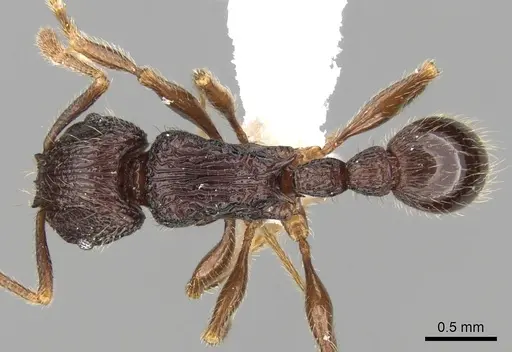
Literature
Loading distribution map...Loading products...