
Tetramorium sepositum
- Sci. Name
- Tetramorium sepositum
- Tribe
- Crematogastrini
- Subfamily
- Myrmicinae
- Author
- Santschi, 1918
- Distribution
- Found in 3 countries
Introduction
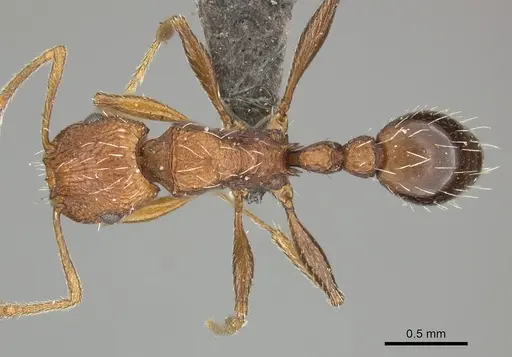
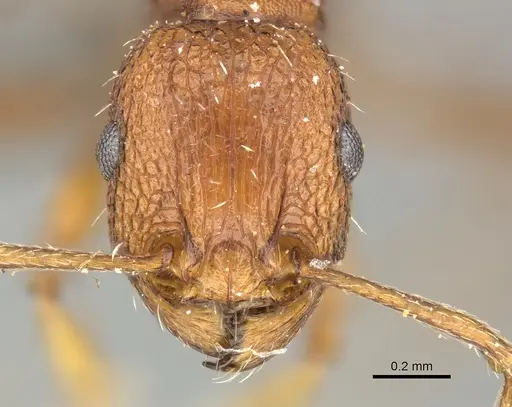
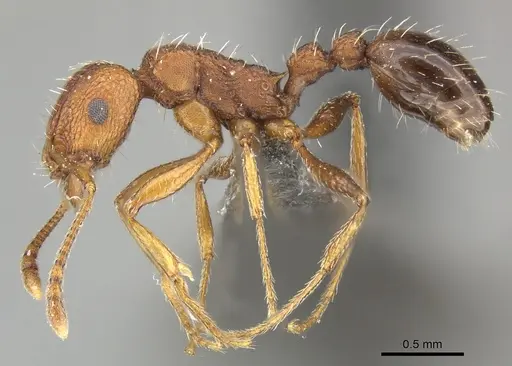
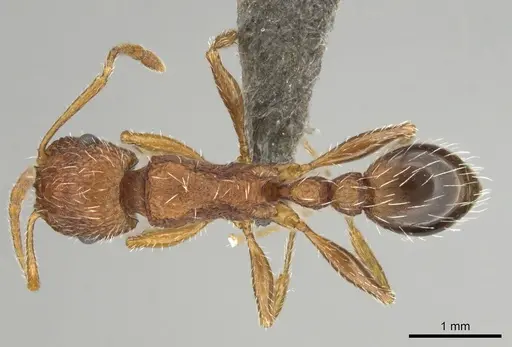
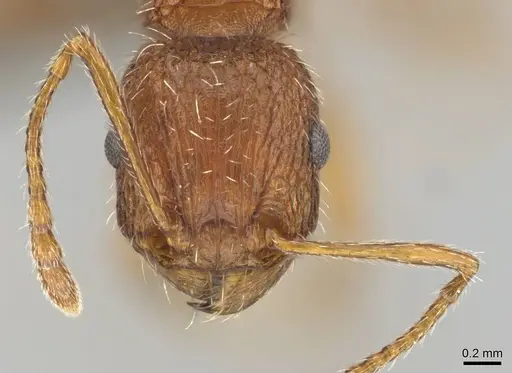
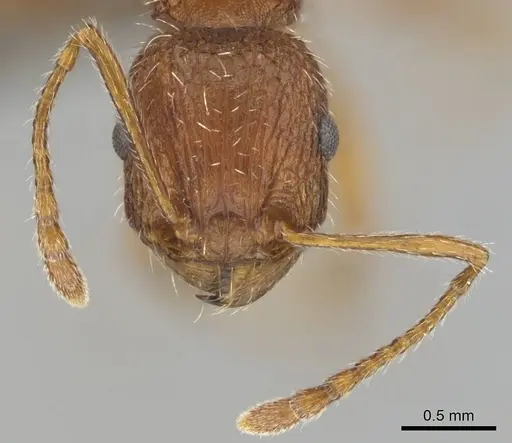
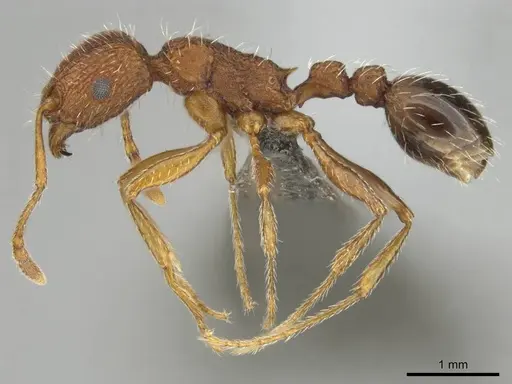
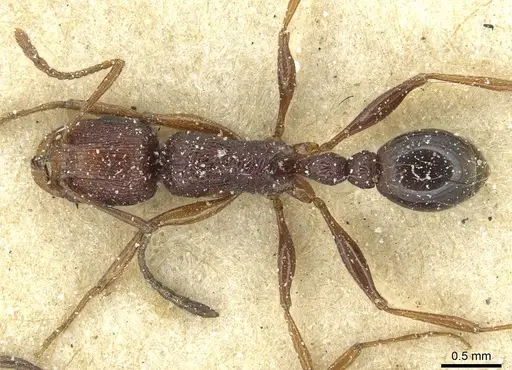
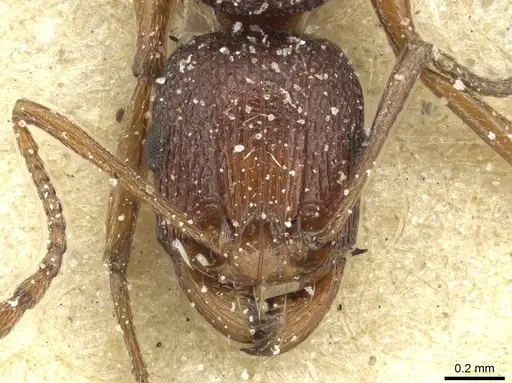
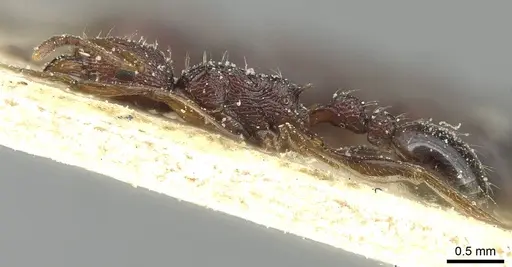
Tetramorium sepositum is a small, reddish-brown ant from the grasslands of southern Africa, specifically Zimbabwe and Mozambique. Workers measure 3.8-4.4 mm and have a distinctive hairy look, with several pairs of long, fine standing hairs on the head and body, and 0-3 hairs projecting from each side of the head behind the eyes. Their color ranges from dull red to reddish-brown, with a darker, often blackish-brown gaster . This species belongs to the sericeiventre-complex and is one of two known hosts for an inquiline (parasitic) ant . Research shows it strongly prefers low-elevation grassland below 1200 m and serves as an indicator species for unburned control plots, meaning it avoids frequently burned areas .
Quick Summary
- Difficulty: Unknown, limited captive care data available
- Origin & Habitat: Grassland habitats in Zimbabwe and Mozambique (Afrotropical Region) [1]. Found in low-elevation areas below 1200 m, with abundance decreasing as elevation rises [3]. Also recorded in urban areas of Côte d'Ivoire [4].
- Colony Type: Unknown, not documented in scientific literature.
- Size & Growth:
- Antkeeping:
- Temperature: Based on its Afrotropical grassland distribution and elevation preference, this species likely does well at warm temperatures around 22-28°C [3].
- Humidity: As a grassland species, likely moderate humidity. Provide a gradient from moist to dry areas in the nest.
- Diapause: Unknown, likely no true diapause given its African distribution, but activity may slow during cooler periods.
- Nesting: Natural grassland nester, probably nests in soil under stones or in small chambers. In captivity, a Y-tong or plaster nest with a moisture gradient works well.
- Behavior: Moderately aggressive when disturbed, with a functional stinger (defense: smear venom). Workers are active foragers. Their small size (under 4.5 mm) means you need fine mesh barriers and tight lids to prevent escapes.
- Common Issues: very little species‑specific care information makes recommendations uncertain, small size requires excellent escape prevention, wild‑caught colonies may carry parasites, aggressive defense when nest is disturbed, be cautious during maintenance, no documented captive breeding success, experienced keepers may have better results
Identification and Distinguishing Features
Tetramorium sepositum workers are small,3.8-4.4 mm in total length. They belong to the sericeiventre‑complex, a group with relatively dense body hairs. Key features: several pairs of hairs on the propodeal dorsum,0-3 long fine hairs projecting from each side of the head behind the eyes, and a dull red to reddish‑brown body with a darker gaster. The hairs are elongate, fine, and sharply pointed. Mandibles are strongly striated, and the antennal scapes are long (scape index over 100) [1].
Natural History and Distribution
This species is known from grassland habitats in Zimbabwe and Mozambique. It is a negative indicator taxon for elevation, its abundance drops above 1200 m, confirming a preference for warm lowlands [3]. Fire‑regime studies show it is an indicator species for unburned control plots, meaning it avoids areas with frequent fires [2]. There are also urban records from Côte d’Ivoire, showing some adaptability [4]. Along with Tetramorium sericeiventre, it is one of two known host species for an inquiline ant [1].
Nesting and Housing in Captivity
In its natural grassland habitat, Tetramorium sepositum probably nests in soil under stones or in small chambers. For captive care, provide a setup that mimics these conditions, a Y‑tong (AAC) or plaster formicarium with moderate moisture works well. Connect the nest to an outworld for foraging. Because workers are small (under 4.5 mm), use fine mesh barriers and tight‑fitting lids to prevent escapes. A small water tube at the nest entrance helps maintain humidity [1].
Feeding and Diet
Like most Tetramorium, this species is likely omnivorous. Offer a varied diet: small live or frozen insects (fruit flies, pinhead crickets, small mealworms), seeds (especially grass seeds, suitable for a grassland ant), and sugar sources (honey water or sugar water). Provide protein 2-3 times per week and keep a constant sugar source available. Remove uneaten food after 24-48 hours to prevent mold. Always provide fresh water.
Temperature and Seasonal Care
Based on its low‑elevation Afrotropical grassland distribution [3], this species likely does best at 22-28 °C. Use a heating cable on one side of the nest to create a temperature gradient, letting the ants choose their preferred spot. True winter diapause is probably not required, but the colony may slow down during cooler periods. Avoid temperatures below 15 °C for long periods.
Behavior and Temperament
Tetramorium sepositum workers are active foragers and moderately aggressive when disturbed. They have a functional stinger and can deliver a painful sting. Their defense method is to smear venom rather than pierce (typical of the Crematogastrini tribe). During routine observation they are not overly aggressive, but they will defend the nest vigorously. Because workers are small, use excellent escape prevention, fine mesh and tight equipment.
Frequently Asked Questions
How long does it take for Tetramorium sepositum to produce first workers?
The exact timeline is not documented for this species. Based on typical Tetramorium patterns, expect roughly 6-8 weeks from egg to first worker at warm temperatures (24-26 °C), but this is an estimate.
What do Tetramorium sepositum ants eat?
They are likely omnivorous. Offer small insects, seeds (especially grass seeds), and sugar water. Protein 2-3 times per week, sugar source always available.
Can I keep Tetramorium sepositum in a test tube setup?
Yes, test tubes work for founding and small colonies. Use a standard setup with a water reservoir. Because workers are small (under 4.5 mm), make sure the opening is narrow or add cotton to prevent escapes.
Do Tetramorium sepositum ants sting?
Yes, they have a functional stinger and can deliver a painful sting. They are not aggressive during casual observation but will sting if the nest is threatened. Be careful during maintenance.
What temperature is best for Tetramorium sepositum?
Given their natural low‑elevation grassland habitat [3], keep them at 22-28 °C, ideally in the mid‑20s. A heating cable on one side creates a gradient. Avoid prolonged temperatures below 20 °C.
How big do Tetramorium sepositum colonies get?
Colony size is undocumented. Typical Tetramorium colonies can reach several hundred to a few thousand workers, so this is a rough guess for this species.
Do Tetramorium sepositum need hibernation or diapause?
Given their African distribution, true winter diapause is unlikely. They may be less active in cooler periods but no special hibernation setup is needed. Keep them above 15 °C.
Are Tetramorium sepositum good for beginners?
Not well‑documented in captivity, so they present a moderate challenge. If you have experience with other Tetramorium species, you may succeed. Their small size means good escape prevention is vital, and they can sting.
Why are my Tetramorium sepositum dying?
Common causes: temperature too cold (below 20 °C), humidity problems, mold from leftover food, stress from disturbance, or parasites in wild‑caught colonies. Keep temperature 22-28 °C, remove uneaten food promptly, and minimize disturbances.
When should I move Tetramorium sepositum to a formicarium?
Move them when the test tube becomes crowded, around 50+ workers or when the water runs low. Transfer to a nest with chambers sized for small workers and maintain similar humidity.
Report an Issue
The current care sheet is based fully on literature. See inconsistencies, or something that's incorrect? Please , it will be resolved after review from an admin. Contributing to the blogs tab also helps providing information, to make us be able to further improve the caresheets. Thank you for your support!
References

This caresheet is licensed under CC BY-SA 4.0 .
Community Blogs
Literature
Loading distribution map...Loading products...