
Tetramorium schneideri
- Sci. Name
- Tetramorium schneideri
- Tribe
- Crematogastrini
- Subfamily
- Myrmicinae
- Author
- Emery, 1898
- Distribution
- Found in 2 countries
Introduction
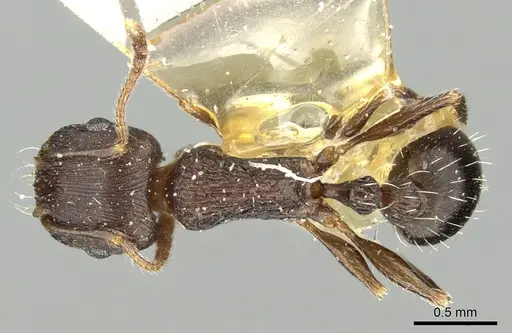
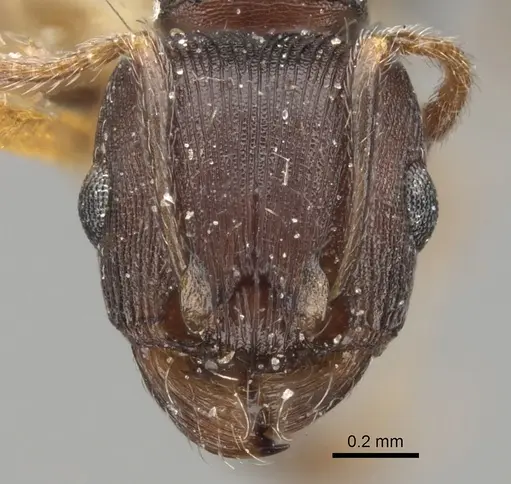
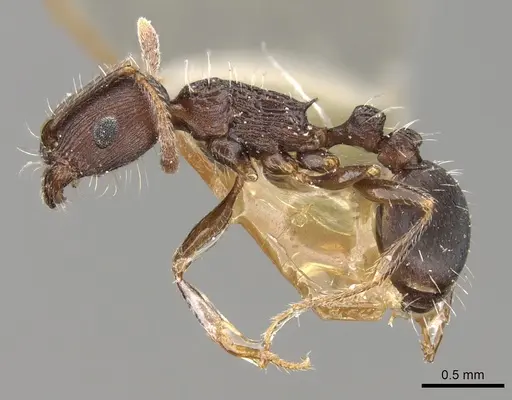
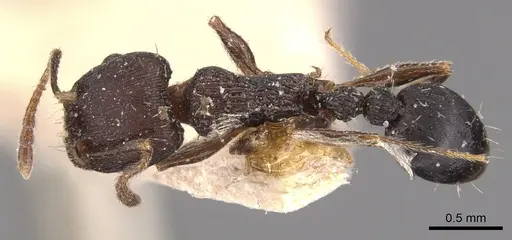
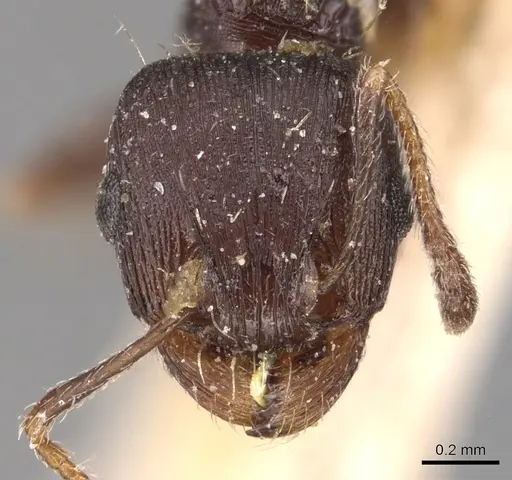
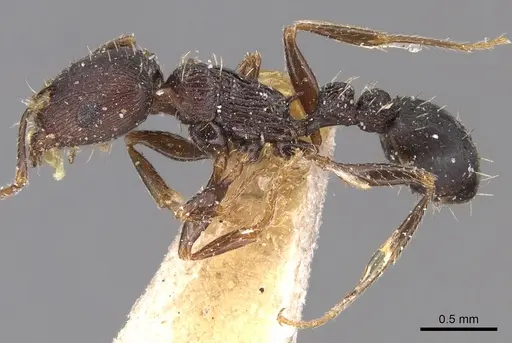
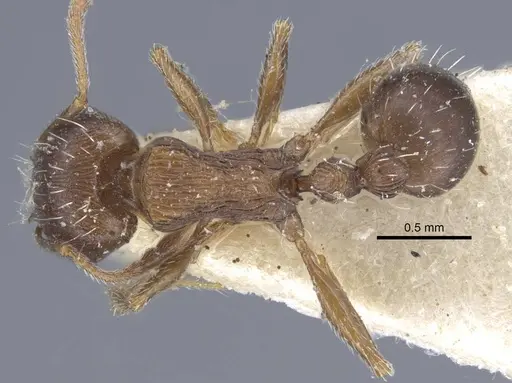
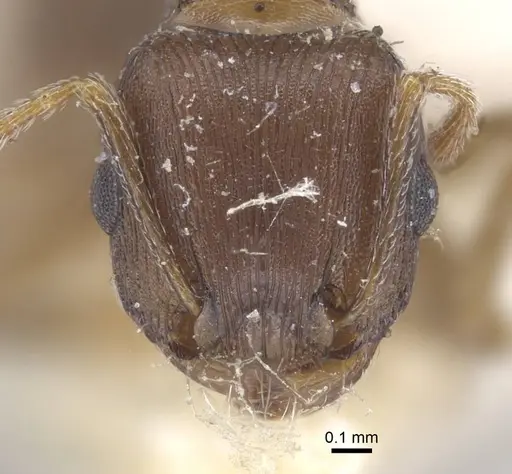
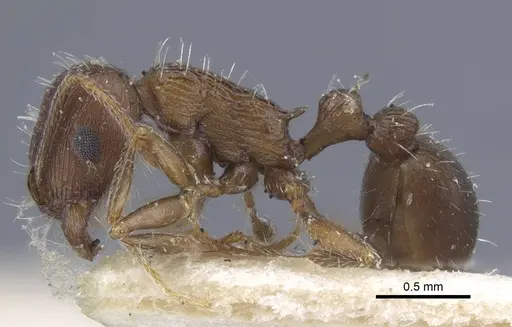
Tetramorium schneideri is a small, dark reddish-brown ant native to Central Asia and the Middle East . Workers are about 3 to 4 millimeters long (inferred from related Tetramorium species), with relatively fine wrinkles on the head (17 to 33 wrinkles, averaging 23) and longer propodeal spines than their close relative Tetramorium striativentre . They live in desert and semi-desert habitats on plains and foothills, nesting in soil or under stones . This species is one of the most common ants across its range in Kazakhstan, Turkmenistan, Uzbekistan, Kyrgyzstan, Tajikistan, Afghanistan, and Iran . Their main food is plant seeds, but they also collect small insects, dead or alive . Nuptial flights happen in May to early June .
Quick Summary
- Difficulty: Easy
- Origin & Habitat: Central Asia, Kazakhstan, Turkmenistan, Uzbekistan, Kyrgyzstan, Tajikistan, Afghanistan, Iran. Prefers desert and semi-desert areas on plains and foothills [1].
- Colony Type: Likely monogyne, single queen per colony. Most Tetramorium species have this structure, but it hasn't been confirmed for this specific species [1].
- Size & Growth:
- Queen: Approximately 5 to 7 millimeters total length, inferred from related Tetramorium species. Direct size data is unavailable [1].
- Worker: Approximately 3 to 4 millimeters total length, inferred from related Tetramorium species [1].
- Colony: Maximum size is unknown. Nest data from Turkmenistan shows average nest volume of 83.4 cm³ and food stores of 196 mg, which suggests a colony of moderate size [2].
- Growth: Moderate, estimated based on typical Tetramorium development [1].
- Development: Estimated 6 to 10 weeks at 22 to 26°C, based on related Tetramorium species [1]. (Development depends on temperature, the queen seals herself in during founding.)
- Antkeeping:
- Temperature: Keep at 20 to 26°C. They come from warm deserts and room temperature is usually fine. Avoid direct heat that dries the nest too fast [1].
- Humidity: Low to moderate. These ants live in dry areas, so keep the nest substrate mostly dry with just a small water source for humidity. Don't let it get soggy [1].
- Diapause: Likely yes. Since they live in Central Asia with cold winters, you should give them a rest period. Aim for 2 to 3 months at 10 to 15°C, but this is based on typical patterns for the region [1].
- Nesting: They nest in soil, sometimes under stones [1]. In captivity, Y-tong (AAC), plaster, or soil nests work well. Keep chambers small and compact. A test tube setup with soil works for starting a colony [1].
- Behavior: Generally peaceful and not aggressive. Workers are small and active, foraging for seeds and small insects. They have a stinger (like all Myrmicinae) but rarely use it. Their defense involves smearing venom rather than stinging. Escape risk is moderate due to small size, so use good barriers. Standard fluon or oil works fine [1].
- Common Issues: colonies may struggle if kept too damp, they need dry conditions, founding phase is slow: the queen seals herself in and it can take months before the first workers appear, small workers can escape through tiny gaps, use fine mesh or tight sealing, wild‑caught colonies sometimes carry parasites that harm the colony, they hoard seeds, so provide enough food but avoid letting seeds mold
Housing and Nest Setup
Tetramorium schneideri is a soil‑nester. In the wild, nests have 2 sections and go about 30 cm deep, with total tunnel length averaging 312 cm and total nest volume 83.4 cm³ [2]. For captive colonies, start with a test tube setup during founding, the queen seals herself into a small chamber. Once you have 20-30 workers, move them to a Y‑tong (AAC), plaster, or soil nest with small, compact chambers. Avoid large open spaces. Since they come from dry areas, keep the nest mostly dry and only offer a small water tube for background humidity [1].
Feeding and Diet
These ants are mainly granivorous, they collect plant seeds and store them. Wild nests hold an average of 196 mg of stored food [2]. The average seed they collect weighs only 0.24 mg [2]. They also eat small living and dead invertebrates for protein [1]. In captivity, offer a constant supply of small seeds (grass seed, millet, bird seed) and provide protein 1-2 times per week (fruit flies, pinhead crickets, or small mealworms). Sugar water or honey can be given occasionally, but they rely less on sugar than many other ants. Remove any seeds that start to mold [1].
Temperature and Seasonal Care
As a desert‑adapted species, Tetramorium schneideri does well at 20-26°C. Normal room temperature (20-22°C) is fine. They can handle warmer temperatures but avoid extreme heat that dries out the nest. For winter, give them a diapause period of 2-3 months at 10-15°C. This matches the cold season in their Central Asian home. During diapause, reduce feeding and keep the nest slightly cooler but not freezing [1].
Colony Development
The queen founds the colony claustrally, she seals herself in and doesn't leave to feed. She uses her own fat reserves to raise the first batch of workers. Based on related Tetramorium species, development from egg to worker takes about 6-10 weeks at good temperatures (22-26°C) [1]. The first workers (nanitics) are smaller than mature ones but quickly start helping. Colony growth is moderate, under good care, you might see 50-100 workers in the first year. The eventual colony size is unknown but likely several hundred to a thousand workers, based on nest size and food storage data [2].
Behavior and Temperament
Tetramorium schneideri is a peaceful ant that rarely stings. Like all Myrmicinae, they have a stinger, but they mainly use a 'smear' defense, they wipe venom onto enemies rather than piercing them. Workers are active foragers, collecting seeds and small insects during the warmer part of the day [1]. Their small size (about 3-4 mm) means they can slip through tiny gaps, so use good barriers such as fluon on test tube rims or oil on nest edges. They are not aggressive toward keepers and are easy to handle with standard precautions [1].
Frequently Asked Questions
How long does it take for Tetramorium schneideri to have first workers?
First workers usually appear 6-10 weeks after the queen lays eggs, at 22-26°C [1]. This is based on related Tetramorium species. The queen seals herself in during founding, so be patient, it can take several months.
What do Tetramorium schneideri ants eat?
They mainly eat plant seeds, offer grass seeds, millet, or small bird seed as a staple. Give small insects (fruit flies, pinhead crickets, small mealworms) for protein 1-2 times per week. They may also take sugar water or honey occasionally [1][2].
Do Tetramorium schneideri ants need hibernation?
Yes, they likely need a winter diapause of 2-3 months at 10-15°C. This matches the cold season in their Central Asian home. Reduce feeding and keep the nest slightly cooler during this period [1].
Can I keep multiple Tetramorium schneideri queens together?
This species is likely monogyne, so only one queen per colony. Multiple unrelated queens will probably fight. If you try pleometrosis (founding together), be aware they may later turn on each other. It's safer to keep one queen [1].
What size colony do Tetramorium schneideri reach?
The exact maximum is unknown. Based on nest volume (83.4 cm³) and food stores (196 mg) from wild colonies, they likely reach moderate sizes, perhaps several hundred to a thousand workers [2]. Growth is moderate, so expect 50-100 workers in the first year.
Are Tetramorium schneideri good for beginners?
Yes, this species is easy to keep. They tolerate minor temperature changes, don't need high humidity, and are not aggressive. Their main food (seeds) is cheap and easy to find. The biggest challenges are the slow founding phase and avoiding too much moisture [1].
What temperature do Tetramorium schneideri need?
Keep them at 20-26°C. Room temperature (20-22°C) is suitable. They come from warm deserts and can handle higher temperatures, but avoid direct heat that dries the nest. A small heating cable on one side of the nest can create a gradient if needed [1].
Do Tetramorium schneideri ants sting?
They have a stinger (like all Myrmicinae) but are not aggressive and rarely sting. Their defense is more of a venom smear than a piercing sting. Handling is safe with normal precautions, wash hands and avoid shaking the nest [1].
When do Tetramorium schneideri have nuptial flights?
In the wild, flights are in May to early June [1]. If your colony produces reproductives, they will likely emerge in spring or early summer.
Why is my Tetramorium schneideri colony dying?
Common causes: too much moisture (they need dry conditions), poor diet, parasites from wild colonies, or stress during founding. Ensure the nest is not damp, provide a varied diet, and if wild‑caught, watch for parasite infections. Also give a proper winter diapause if it's the right season [1].
Report an Issue
The current care sheet is based fully on literature. See inconsistencies, or something that's incorrect? Please , it will be resolved after review from an admin. Contributing to the blogs tab also helps providing information, to make us be able to further improve the caresheets. Thank you for your support!
References

This caresheet is licensed under CC BY-SA 4.0 .
Community Blogs
Literature
Loading distribution map...Loading products...