
Tetramorium schmidti
- Sci. Name
- Tetramorium schmidti
- Tribe
- Crematogastrini
- Subfamily
- Myrmicinae
- Author
- Forel, 1904
- Distribution
- Found in 2 countries
Introduction
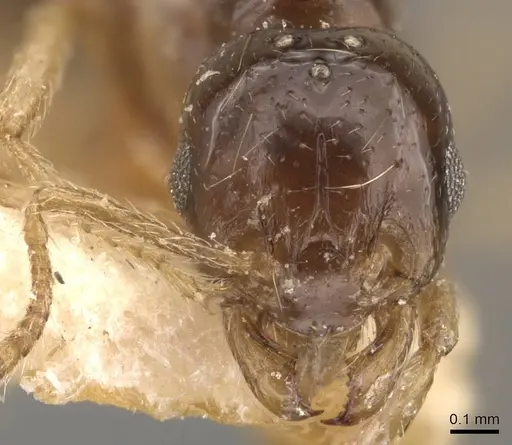
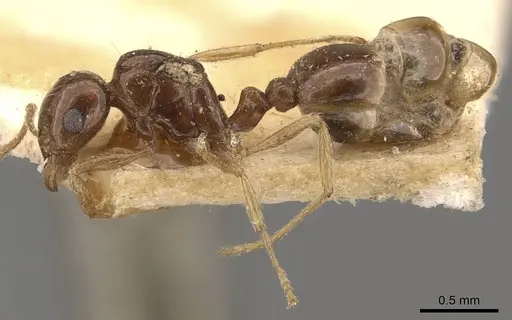
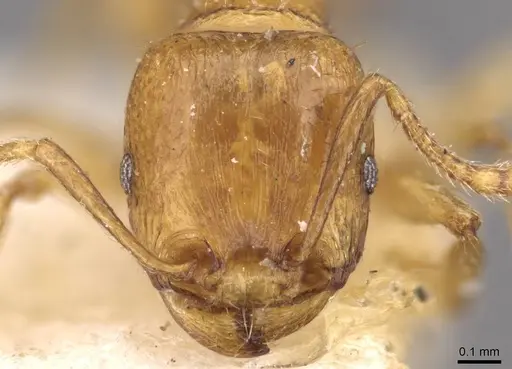
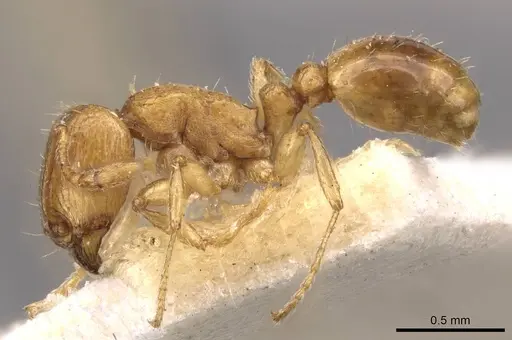
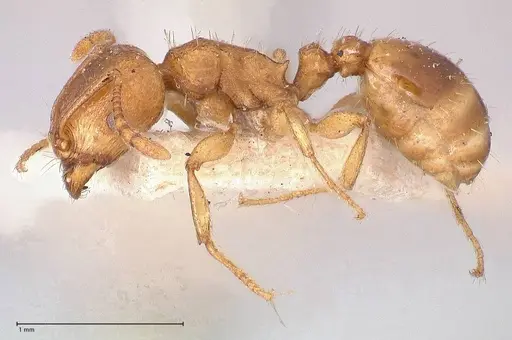
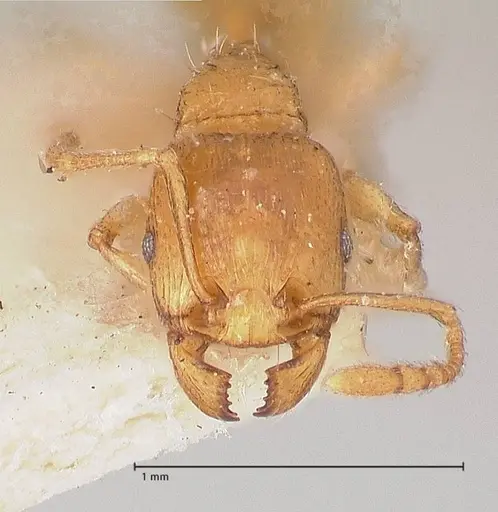
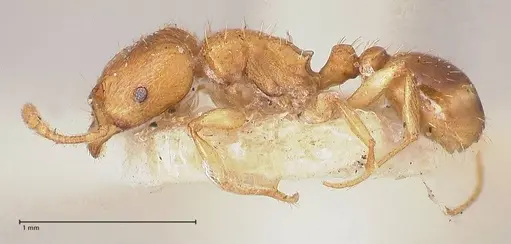
Tetramorium schmidti is a small, ground-dwelling ant from the Tetramorium caespitum species group, specifically the Tetramorium semilaeve complex. Workers are around 3-4 mm and have the 12-segmented antennae and two-spined mesosoma typical of Tetramorium. They are yellowish to light brown with a darker gaster, and the head is often sculptured with longitudinal striations. This species is native to the eastern Mediterranean, found in Greece, Turkey, Israel, Jordan, Lebanon, Cyprus, North Macedonia, Egypt, Algeria, Tunisia, Syria, and Iran . It lives in dry to moderately damp rocky slopes and grassland from sea level up to 1350 m elevation . Like other members of its group, its taxonomy is still being sorted out, so identification can be tricky . For antkeepers, this ant offers a straightforward, hardy pet that does well in Mediterranean-style setups.
Quick Summary
- Difficulty: Easy
- Origin & Habitat: Eastern Mediterranean: Greece, Turkey, Israel, Jordan, Lebanon, Cyprus, North Macedonia, Egypt, Algeria, Tunisia, Syria, Iran. Lives on rocky slopes and grassland, dry to moderately damp, from sea level to 1350 m [1][2][3][4].
- Colony Type: Likely monogyne (single queen) based on typical Tetramorium patterns. Exact colony structure unconfirmed.
- Size & Growth:
- Queen: Estimated 6-8 mm based on related Tetramorium caespitum group species [5].
- Worker: Estimated 3-4 mm based on related species [5].
- Colony: Unknown but likely several hundred workers at maturity, based on related species [5].
- Growth: Moderate (inferred from related Tetramorium species) [5].
- Development: Estimated 6-10 weeks at room temperature, based on related Tetramorium species [5]. (No specific data for this species – timing is inferred from similar species.)
- Antkeeping:
- Temperature: No specific data. As a Mediterranean species, room temperature (20-24°C) likely works well. A slight warm spot (24-26°C) may help brood growth, but avoid overheating [5].
- Humidity: No specific data. Likely prefers moderate to dry conditions. Keep nest substrate slightly moist but not wet, let it dry between waterings [5].
- Diapause: Likely yes – most Palaearctic Tetramorium need a winter rest. If observed, cool to 10-15°C for 8-12 weeks, reduce feeding, don't let nest dry out completely [5].
- Nesting: Y-tong (AAC), plaster, or soil nests work well. Provide compact chambers for small workers. Keep nest mostly dry with one slightly moist area [5].
- Behavior: Workers are active foragers that search for seeds, small insects, and honeydew. Not particularly aggressive but will defend the nest. Their small size (3-4 mm) means good escape prevention is needed – use fine mesh or fluon. They form organized foraging trails and have moderate activity. The sting is present but mild for humans [5].
- Common Issues: keeping the nest too wet can kill the colony – allow substrate to dry between waterings, small workers can escape through tiny gaps – use fine barriers, winter dormancy seems important for this species – skipping it may weaken colonies, taxonomic confusion means wild-caught ants may be misidentified
Housing and Nest Setup
Y-tong (AAC), plaster, or soil nests work well for Tetramorium schmidti. Keep chambers compact – workers are only 3-4 mm and like tight spaces. A test tube setup is ideal for a founding queen, she'll seal herself in and raise her first workers. Once the colony has 20-30 workers, you can move them to a formicarium if you want, but they can stay in the test tube long-term. The outworld should have smooth walls and good escape prevention – use fluon or fine mesh. These ants prefer drier conditions, so don't over-water the nest [5].
Feeding and Diet
These ants are omnivorous. Give them sugar sources (honey, sugar water, syrup) and protein (small insects like fruit flies, pinhead crickets, mealworm pieces). They also collect small seeds in nature. Offer protein 2-3 times per week and keep sugar available always. Remove uneaten prey after 24-48 hours to prevent mold. During founding, the queen only needs sugar water [5].
Temperature and Seasonal Care
No specific data exists for T. schmidti, but as a Mediterranean species, room temperature (20-24°C) should work. You can try a slightly warmer spot (24-26°C) to speed up brood. For winter, most related Tetramorium need a rest period: cool them to 10-15°C for 8-12 weeks, reduce feeding, and keep the nest from drying out completely. Return to normal temperatures gradually in spring [5].
Colony Development
A founding queen likely seals herself in a small chamber and raises her first brood on stored reserves (typical for Tetramorium). First workers (nanitics) are smaller and paler. After they appear, the queen focuses on laying eggs. Colony growth is moderate – expect first workers after 6-10 weeks at room temperature. A healthy colony could reach several hundred workers over 2-3 years. Monitor queen health and worker numbers [5].
Behavior and Temperament
Workers are active, ground-dwelling foragers that form clear trails. They're not aggressive toward humans but will defend the nest if disturbed. They use a small stinger that gives a mild pinch at worst. Because of their small size, they can climb on textured surfaces but not smooth ones. Overall, they're calm and interesting to watch [5].
Frequently Asked Questions
How long does it take for Tetramorium schmidti to raise first workers?
No specific data, but based on related Tetramorium, first workers appear in about 6-10 weeks at room temperature (20-24°C). Warmer temps speed things up, cooler slows them down [5].
Do Tetramorium schmidti ants need hibernation?
Probably yes – most Palaearctic Tetramorium require a winter rest. Provide 8-12 weeks at 10-15°C, reduce feeding, don't let the nest dry out. Skipping it may weaken the colony long-term [5].
What do Tetramorium schmidti eat?
Omnivorous – feed sugar (honey, sugar water) and protein (small insects like fruit flies, pinhead crickets, mealworms). They also take small seeds. Give protein 2-3 times weekly, keep sugar always [5].
Can I keep multiple Tetramorium schmidti queens together?
No specific data. Most Tetramorium are monogyne (single queen), so it's risky to keep multiple queens. House a new queen alone until you see her first workers [5].
Are Tetramorium schmidti ants good for beginners?
Yes, if you can provide a winter rest and good escape prevention. They're small, hardy, and not demanding. Room temperature and a simple setup work well [5].
How big do Tetramorium schmidti colonies get?
Exact size is unknown. Related Tetramorium caespitum group species can reach several hundred to a few thousand workers. Expect a manageable colony size for home keeping [5].
Do Tetramorium schmidti ants sting?
Yes, Tetramorium ants have a stinger, but it's very mild – like a tiny pinprick. They'll only use it if handled roughly [5].
When should I move my Tetramorium schmidti colony to a formicarium?
You can keep them in a test tube indefinitely. If you upgrade, wait until at least 30-50 workers. Y-tong nests suit their dry preferences. Moving too early can stress the colony [5].
What temperature is ideal for Tetramorium schmidti?
Room temperature (20-24°C) is fine. A slight warm spot (24-26°C) can help brood growth, but avoid extremes. Cool down for winter rest [5].
Why is my Tetramorium schmidti colony declining?
Possible causes: too wet (let nest dry between waterings), too cold or hot, not enough food, skipped hibernation, or disease from wild-caught ants. Check each factor [5].
Report an Issue
The current care sheet is based fully on literature. See inconsistencies, or something that's incorrect? Please , it will be resolved after review from an admin. Contributing to the blogs tab also helps providing information, to make us be able to further improve the caresheets. Thank you for your support!
References

This caresheet is licensed under CC BY-SA 4.0 .
Community Blogs
CASENT0908778
View on AntWeb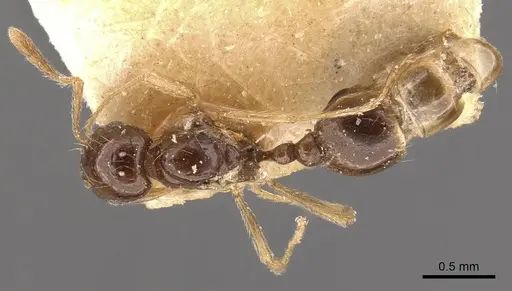
CASENT0909103
View on AntWeb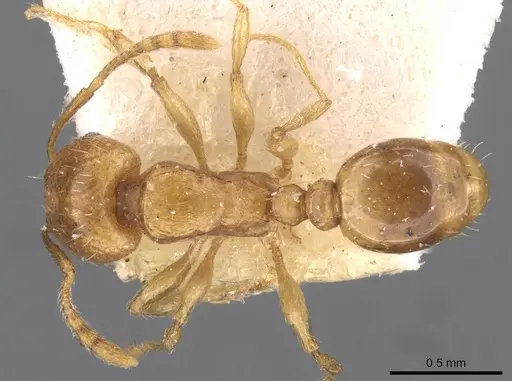
FOCOL0773-1
View on AntWeb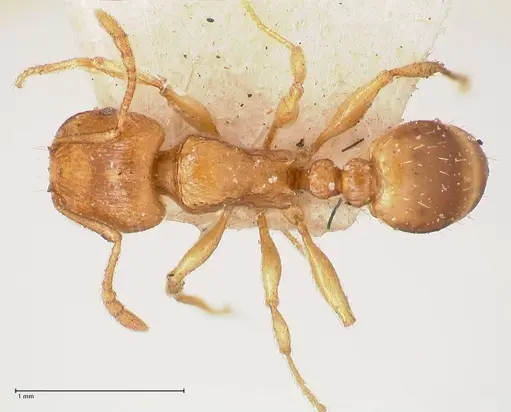
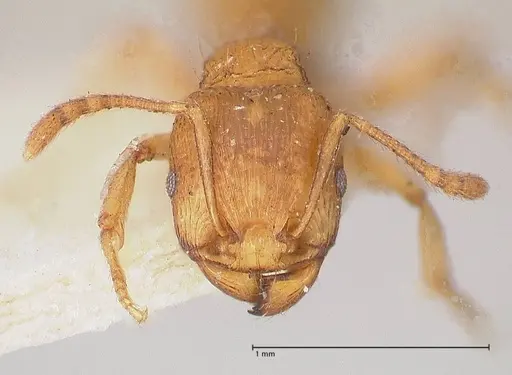
FOCOL0773-2
View on AntWeb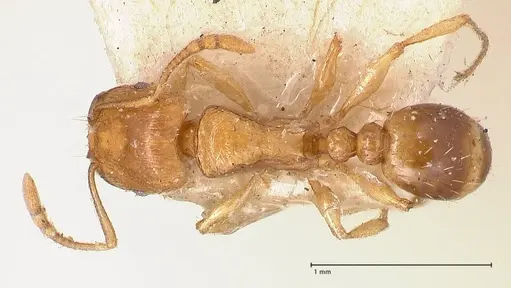
Literature
Loading distribution map...Loading products...