
Tetramorium renae
- Sci. Name
- Tetramorium renae
- Tribe
- Crematogastrini
- Subfamily
- Myrmicinae
- Author
- Hita Garcia <i>et al.</i>, 2010
- Distribution
- Found in 1 countries
Introduction
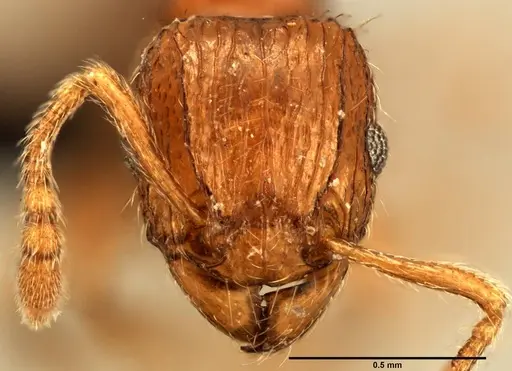
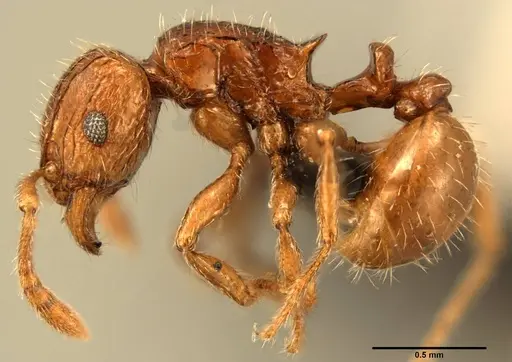
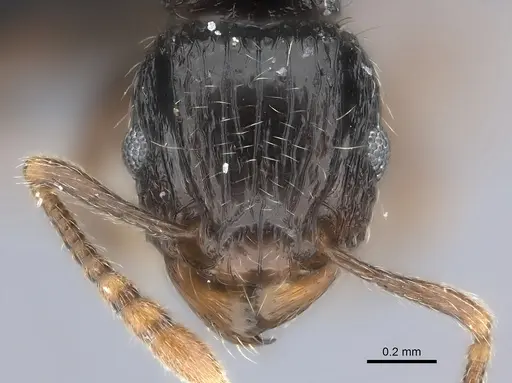
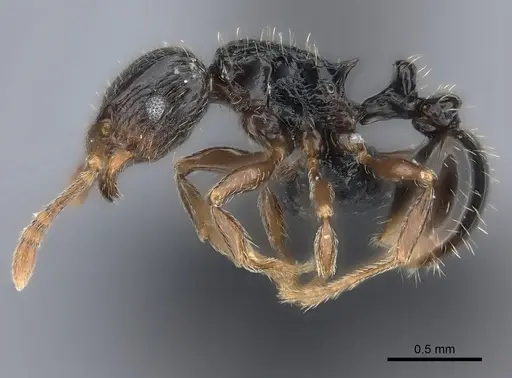
Tetramorium renae is a small, ground-dwelling ant species endemic to the island of São Tomé in the Gulf of Guinea. Workers are small (around 3mm, inferred from related species) and have a bicolored appearance - the head, legs, and abdomen are pale yellowish-brown while the mesosoma (middle body), petiole, and postpetiole are reddish-brown . Some specimens are uniformly dark reddish-brown . The species belongs to the Tetramorium weitzeckeri species complex and can be identified by its reduced mesosomal sculpturing - the top of the mesosoma shows only weak, irregular ridges and is often partly smooth and shiny, unlike related species which have strongly rough (rugose) mesosomas . This is a highland rainforest species found at elevations between 1200-1500 meters in the Ôbó National Park on São Tomé .
Quick Summary
- Difficulty: Unknown, no captive husbandry data available
- Origin & Habitat: Endemic to São Tomé Island (São Tomé & Príncipe) in the Afrotropical region. Found in the equatorial rainforest belt at elevations of 1200-1500m in the Ôbó National Park [1][2].
- Colony Type: Colony structure is unconfirmed, no data on whether they are single-queen (monogyne) or multi-queen (polygyne) colonies
- Size & Growth:
- Queen: Not documented, queen caste has not been described
- Worker: ~3mm (inferred from Tetramorium genus), no total body length recorded in the original description [1]
- Colony: Unknown, no colony size data available
- Growth: Unknown, no development data available
- Development: Unconfirmed, no direct measurements available. Based on typical Tetramorium patterns, expect 6-10 weeks at optimal temperature (This is a poorly studied species with no captive husbandry data. Estimates based on genus-level patterns.)
Species Discovery and Taxonomy
Tetramorium renae was formally described in 2010 by Hita Garcia, Fischer, and Peters as part of a revision of the Tetramorium weitzeckeri species group in the Afrotropical region [1]. The species name honors Rena Denzer from Bonn, Germany, for her support of the first author. The species is only known from the island of São Tomé, making it an endemic species with a very restricted natural distribution [1][2]. It was collected in the Ôbó National Park at elevations between 1200-1500 meters, in the island's highland rainforest areas.
Identification and Distinguishing Features
Tetramorium renae can be distinguished from other species in the weitzeckeri complex by several features. The top of the mesosoma has only weak, irregular ridges and is often partly smooth and shiny. In contrast, related species like Tetramorium boltoni, Tetramorium snellingi, and Tetramorium weitzeckeri all have strongly ridged (rugose) mesosomas [1]. The species also has standing hairs on the first gastral tergite (abdomen), which helps distinguish it from similar species that lack these hairs. The typical coloration is bicolored: the head, appendages, and gaster are pale yellowish-brown, contrasting with the reddish-brown mesosoma, petiole, and postpetiole. However, some specimens are uniformly dark reddish-brown [1][2].
Natural Habitat and Distribution
This species is known only from São Tomé Island, part of the island nation of São Tomé & Príncipe off the coast of West Africa. It is classified as a predominantly equatorial rainforest belt species [2]. All type specimens were collected in the Ôbó National Park at elevations between 1200-1500 meters, in areas between Lagoa Amelia and Bom Successo. The collection dates span from April through May 2001,indicating activity during the wet season in this equatorial region. The highland rainforest habitat suggests this species prefers shaded, humid conditions with stable temperatures.
Keeping Tetramorium renae in Captivity
This is one of the least documented ant species in the hobby, no captive husbandry records exist, and the species has never been commercially available. Based on its natural habitat in the highland rainforests of São Tomé, it likely requires warm temperatures (around 24-28°C) and high humidity. As a ground-nesting species, it would probably accept a test tube setup or small plaster/soil nest with moist substrate. Feeding would likely follow typical Tetramorium patterns, small insects and honeydew. However, all of this is speculative. Anyone wishing to keep this species would need to start with careful observation and be prepared to experiment with conditions. The extreme rarity of this species (known only from a single island) means acquisition would be extremely difficult.
Conservation and Legal Considerations
As an endemic species known only from São Tomé Island, Tetramorium renae has a very restricted natural range. The Ôbó National Park where it was collected provides some protection, but its limited distribution makes it potentially vulnerable to habitat changes. For antkeepers, this species is essentially unavailable, it has never been collected for the antkeeping hobby and likely never will be due to its restricted range and the protected status of its habitat. Anyone somehow obtaining this species should not release it in non-native areas, as establishing an introduced population could have unpredictable ecological consequences. [1]
Frequently Asked Questions
Is Tetramorium renae available for purchase?
No. This species has never been available in the antkeeping hobby. It is endemic to a single island (São Tomé) and has only been collected a few times for scientific research. You will not find this species for sale from any ant breeder or supplier.
What does Tetramorium renae look like?
Workers are small ants, around 3mm (inferred from related species). They have a distinctive bicolored pattern: the head, legs, and abdomen are pale yellowish-brown, while the mesosoma (middle body section), petiole, and postpetiole are reddish-brown. Some specimens are uniformly dark reddish-brown. They have standing hairs on the first abdominal segment and relatively smooth, shiny sculpturing on the mesosoma [1][2].
Where is Tetramorium renae found in the wild?
This species is only known from São Tomé Island in the nation of São Tomé & Príncipe, located in the Gulf of Guinea off the coast of West Africa. It has been collected in the Ôbó National Park at elevations between 1200-1500 meters in highland rainforest areas [1][2].
How do I care for Tetramorium renae?
No captive care information exists for this species. Based on its highland rainforest origin, it likely needs warm temperatures (around 24-28°C) and high humidity. However, this is entirely speculative, the species has never been kept in captivity. It is not recommended for antkeepers due to the complete lack of husbandry data and extreme rarity.
Is Tetramorium renae a good species for beginners?
No. This species is not recommended for antkeepers for several reasons: it has never been kept in captivity, no husbandry information exists, it is extremely rare with a limited distribution, and it is not available in the antkeeping hobby. There are many better-documented species available that are suitable for beginners.
How big do Tetramorium renae colonies get?
Unknown. No colony size data has been documented in scientific literature. Related species in the Tetramorium weitzeckeri complex typically form colonies of several hundred to a few thousand workers, but specific data for Tetramorium renae does not exist [1].
Does Tetramorium renae sting?
Like other Myrmicinae ants, it has a stinger. Based on its subfamily and tribe (Crematogastrini), it uses a venom-smearing defense: the stinger is flattened and used to wipe venom onto enemies rather than piercing. The sting is expected to be mild and not a significant concern for humans.
Do I need to hibernate Tetramorium renae?
Unknown. São Tomé has a mild equatorial climate with little seasonal temperature variation, so this species may not require a true diapause period. However, no research exists on its seasonal requirements. If kept in captivity, a slight reduction in temperature during what would be the 'winter' months (roughly November-February) might be appropriate, but this is speculative [2].
What is the egg-to-worker development time for Tetramorium renae?
Unconfirmed. No development data exists for this species. Based on typical Tetramorium genus patterns, development from egg to worker likely takes 6-10 weeks at optimal temperature, but this is an estimate rather than confirmed data.
Can I keep multiple Tetramorium renae queens together?
Unknown. The colony structure (monogyne vs polygyne) has not been studied for this species. Without data on their natural colony structure, combining unrelated queens is not recommended.
Report an Issue
The current care sheet is based fully on literature. See inconsistencies, or something that's incorrect? Please , it will be resolved after review from an admin. Contributing to the blogs tab also helps providing information, to make us be able to further improve the caresheets. Thank you for your support!
References

This caresheet is licensed under CC BY-SA 4.0 .
Community Blogs
CASENT0095412
View on AntWeb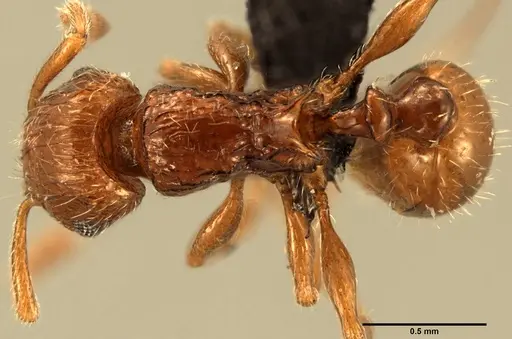
CASENT0095421
View on AntWeb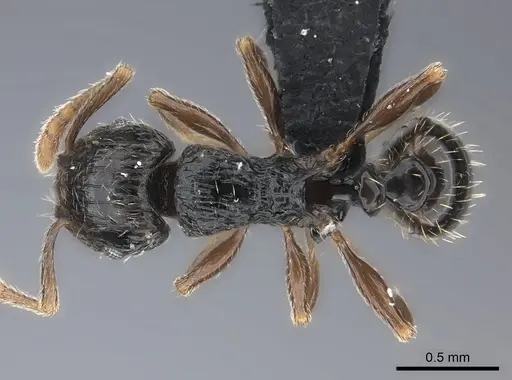
Literature
Loading distribution map...Loading products...