
Tetramorium raptor
- Sci. Name
- Tetramorium raptor
- Tribe
- Crematogastrini
- Subfamily
- Myrmicinae
- Author
- Hita Garcia, 2014
- Distribution
- Found in 1 countries
Introduction
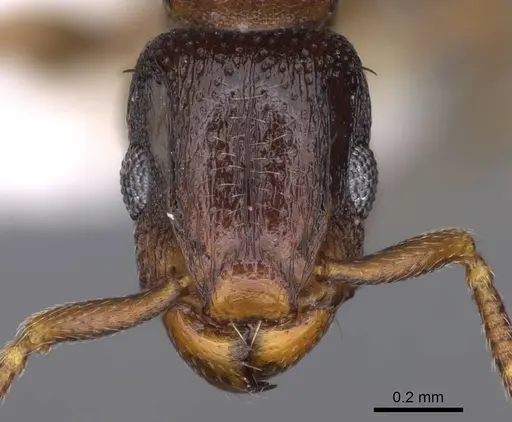
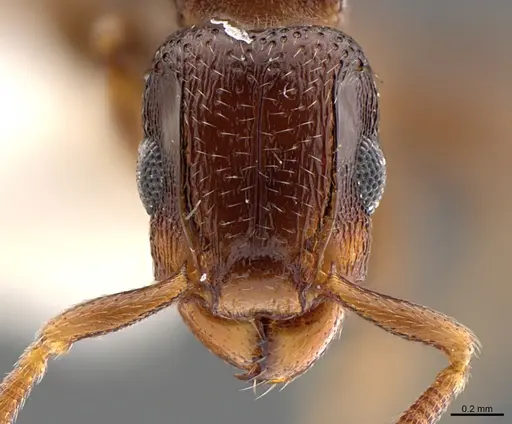
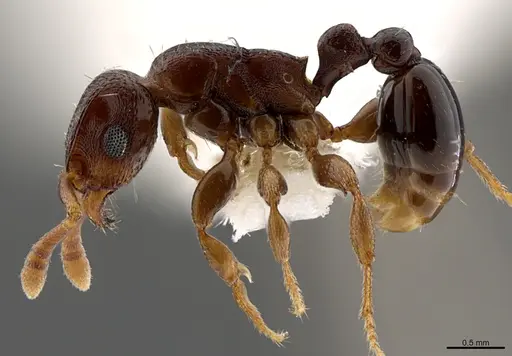
Tetramorium raptor is a tiny rainforest ant from West Africa (Cameroon, Nigeria, Benin). Workers are uniformly dark brown to black with lighter brown legs and antennae, have large eyes, and very short propodeal teeth. The species name 'raptor' means 'thief' or 'robber' in Latin, referring to their predaceous lifestyle: these ants are specialized termite hunters that forage in single file through leaf litter . This ant is known only from the worker caste - queens have never been described. They nest in small cavities inside rotten logs or twigs in rainforest leaf litter. Like other members of the tribe Crematogastrini, they use a modified, flattened stinger to smear venom onto enemies instead of piercing flesh. In Benin, they have also been found in mango orchards .
Quick Summary
- Difficulty: Expert
- Origin & Habitat: Rainforest leaf litter in West Africa (Cameroon, Nigeria, Benin). Found nesting in rotten logs or twigs and foraging in leaf litter, often in single file. Also recorded in mango (Mangifera indica) orchards in Benin [1][2].
- Colony Type: Unknown, only the worker caste has been documented, the queen is undescribed. It is not possible to maintain a breeding colony of this species [1].
- Size & Growth:
- Queen: Undescribed, no queens have been found or measured [1]
- Worker: Approximately 2.5-3mm (estimated from genus Tetramorium, no total body length measurements exist) [1]
- Colony: Unknown, if a queen exists, colonies are likely very small (under a few hundred workers) based on typical litter-dwelling Tetramorium
- Growth: Unknown, no data available
- Development: 6-10 weeks (estimated based on related Tetramorium species and tropical litter ant development) (This is an estimate, no specific studies on T. raptor development exist. Tropical litter ants typically develop faster than temperate species due to year-round warm conditions.)
- Antkeeping:
- Temperature: No specific data, as a tropical rainforest species, keep at 24-28°C. Use a heating cable on one side of the nest to create a gradient.
- Humidity: Keep the nest substrate consistently moist to mimic damp rainforest leaf litter. Provide good ventilation to prevent mold while avoiding excessive airflow that dries the nest [2].
- Diapause: No, as a West African tropical species, it does not require hibernation. Keep warm year-round [1].
- Nesting: Because this species can only be kept as temporary worker groups, a simple test tube setup with moist substrate works. If you had a colony, small chambers in Y-tong (AAC) or test tubes with narrow passages would mimic their natural rotting wood habitat [1].
- Behavior: Workers are active predators that hunt termites and other small invertebrates in single file. They have large eyes and short propodeal teeth possibly used for prey handling. They are not aggressive toward humans. Their primary defense is to smear venom using a modified, flattened stinger (typical of the tribe Crematogastrini). Escape prevention is critical due to their tiny size, they can squeeze through standard mesh, use 0.3mm or smaller mesh [2].
- Common Issues: queens are undescribed, this species cannot be kept as a breeding colony, only worker groups survive temporarily, escape prevention is critical, use fine mesh (0.3mm or smaller) because workers are very small, predatory diet requires live prey, sugar water alone will not sustain them, high humidity needs can lead to mold if ventilation is poor, wild-caught workers may carry parasites that kill the group
Housing and Nest Setup
Tetramorium raptor is known only from workers, so you cannot start a colony. If you obtain a worker group, keep them in a small test tube setup with a water reservoir and moist substrate. The nest should mimic their natural habitat: tight chambers inside rotting wood. Y-tong (AAC) nests with narrow chambers can also be used, but the ants will not reproduce. Because workers are tiny, use fine mesh (0.3mm or smaller) on all openings to prevent escape. A small outworld with a foraging area allows them to hunt prey [1][2].
Feeding and Diet
These ants are dedicated predators. In the wild they primarily hunt termites. In captivity, offer small live prey such as fruit flies, pinhead crickets, and termites. They will also accept other small arthropods like springtails. Sugar water is occasionally taken but must not be the main food, their metabolism is tuned for protein. Feed small live prey every 2-3 days, adjusting based on consumption. Without live prey, workers will weaken and die [1][2].
Temperature and Humidity
As a West African rainforest species, Tetramorium raptor needs warm, humid conditions. Maintain temperatures between 24-28°C year-round, they do not tolerate cool conditions. Use a heating cable on one side of the nest to create a gradient without drying the whole setup. Humidity should be high (keep substrate consistently moist, but not waterlogged). Good ventilation prevents mold while maintaining dampness. Avoid stagnant air and excessive airflow [1][2].
Colony Establishment and Suitability
This species is unsuitable for antkeeping as a breeding colony because the queen caste has never been described. All known specimens are workers from two localities in Cameroon and Nigeria [1]. Without a queen, workers will eventually die out. If you find a group of workers in the wild (highly unlikely for most keepers), they can be kept temporarily, but they will not reproduce. Do not expect a long-term colony. This species should be considered a curiosity for specialized collectors, not a pet ant for beginners or even experienced keepers [1].
Behavior and Foraging
Workers are active, diurnal predators that forage in single file through leaf litter. They have large eyes for spotting prey in the dim rainforest understory. They hunt termites and other small invertebrates. Their defense mechanism involves smearing venom using a modified, flattened stinger, rather than stinging (typical of the tribe Crematogastrini). They are not aggressive toward humans and rarely attempt to bite or sting. Their small size and cryptic lifestyle help them avoid confrontation [2].
Frequently Asked Questions
Can I start a colony of Tetramorium raptor?
No. The queen caste has never been described, all known specimens are workers. It is currently impossible to keep a reproducing colony of this species. Any worker group you obtain will eventually die out without producing new ants [1].
Can I keep Tetramorium raptor workers in a test tube?
Yes, if you have a worker group, a small test tube with a water reservoir and moist substrate works for temporary housing. Use a narrow-bore tube to make the space feel secure. Workers will not reproduce, so the group will only last a few months [1].
What do Tetramorium raptor ants eat?
They are predators that need live prey. Their natural prey is termites, so offer small live insects like fruit flies, pinhead crickets, or termites. They also accept other small arthropods. Sugar water is not a sufficient diet [1][2].
How long do Tetramorium raptor workers live?
Typical worker lifespan for small Tetramorium is a few months to a year, but this species has not been studied in captivity. Without a queen to replace them, the group will not persist [1].
Do Tetramorium raptor ants sting?
They do not sting in the typical sense. Instead, they have a modified, flattened stinger used to smear venom onto enemies. This 'smear' defense is how related Crematogastrini ants protect themselves. They are not considered dangerous to humans [2].
Are Tetramorium raptor ants good for beginners?
No. They are rated as Expert difficulty, and more importantly, they cannot be kept as a breeding colony because the queen is unknown. Beginners should not attempt to keep this species. There are many other ants that can form stable colonies [1].
Do Tetramorium raptor ants need hibernation?
No. As a West African rainforest species, they do not hibernate. Keep them warm (24-28°C) year-round. Cool temperatures slow their metabolism and may kill workers [1].
Why are my Tetramorium raptor ants dying?
Common causes: too cold (keep above 24°C), too dry (maintain humidity), lack of live prey (they need protein), or escape (use 0.3mm mesh). Wild-caught workers may also have parasites. However, the most likely reason is that without a queen, the group naturally dies out [1][2].
Where can I get Tetramorium raptor ants?
This species is not available from ant shops because queens are unknown. All known specimens are from scientific collections in Cameroon and Nigeria. It is extremely unlikely that captive workers are available [1].
Can I keep multiple Tetramorium raptor worker groups together?
It is not recommended. Without a queen to mediate, unrelated worker groups may fight. Even if they accept each other, they will not reproduce. Keep each group separate to avoid aggression [1].
Report an Issue
The current care sheet is based fully on literature. See inconsistencies, or something that's incorrect? Please , it will be resolved after review from an admin. Contributing to the blogs tab also helps providing information, to make us be able to further improve the caresheets. Thank you for your support!
References

This caresheet is licensed under CC BY-SA 4.0 .
Community Blogs
CASENT0195628
View on AntWeb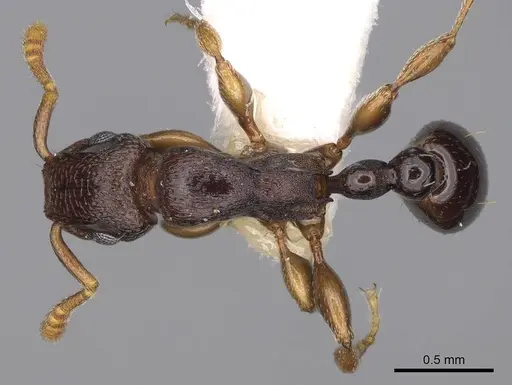
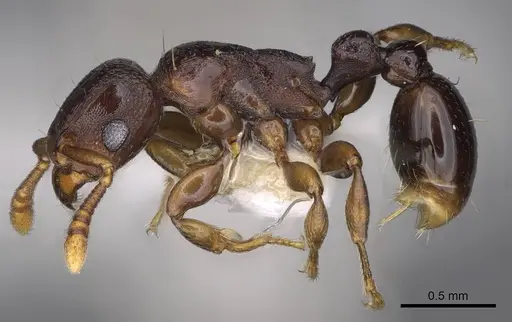
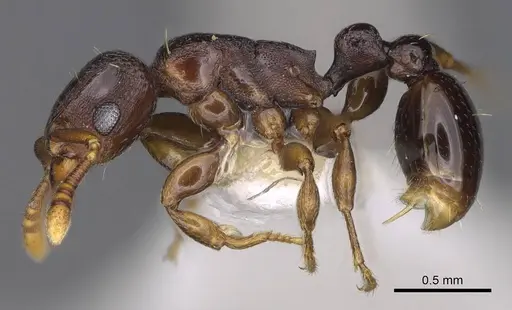
CASENT0195634
View on AntWeb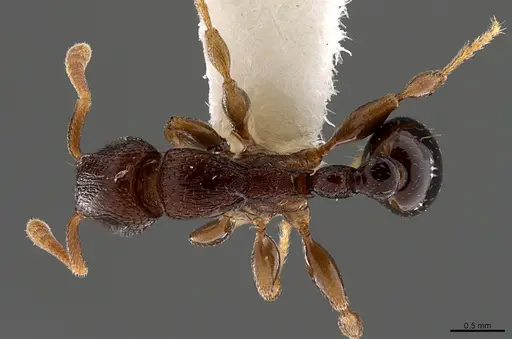
Literature
Loading distribution map...Loading products...