
Tetramorium pulchellum
- Sci. Name
- Tetramorium pulchellum
- Tribe
- Crematogastrini
- Subfamily
- Myrmicinae
- Author
- Emery, 1897
- Distribution
- Found in 1 countries
Introduction
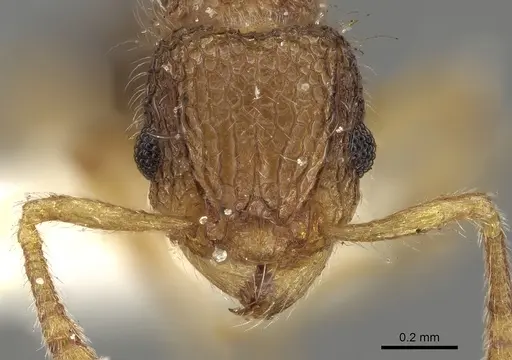
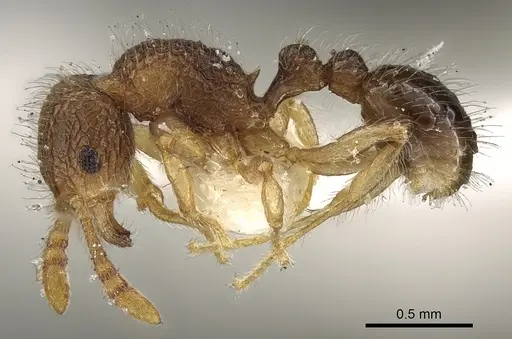
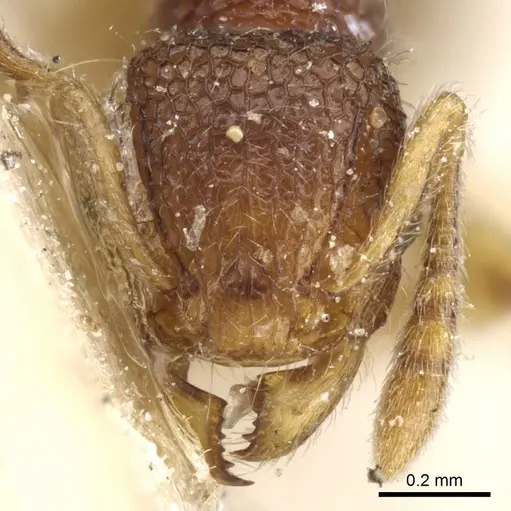
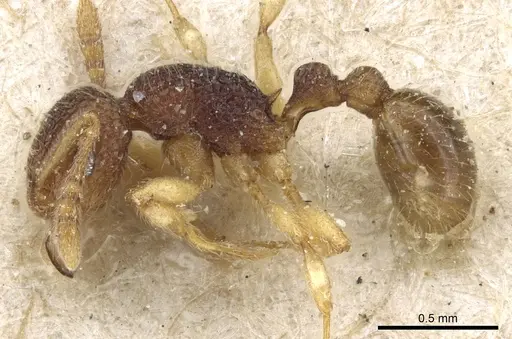
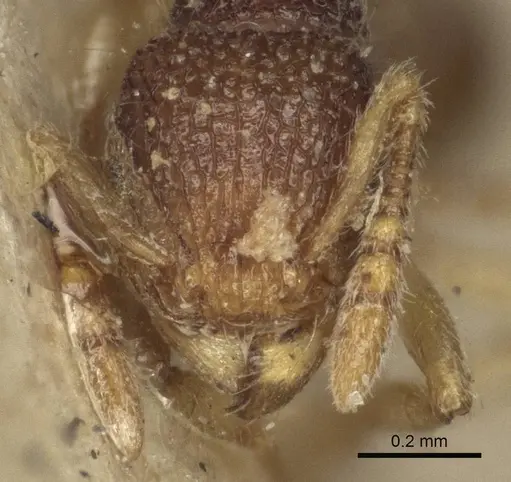
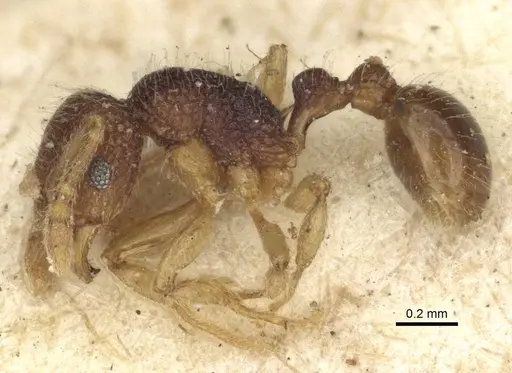
Tetramorium pulchellum is a tiny ant from the rainforests of New Guinea and Singapore . Workers are uniformly brown with yellowish legs and measure 2.8-3.0mm . They live in leaf litter on the forest floor and are found up to about 900 m elevation . A key identifying feature is the coarse, net-like sculpture on the head. The pronotal corners are rounded, which separates them from the similar Tetramorium scabrosum . They have been collected in gardens in Singapore and also recorded from the Solomon Islands .
Quick Summary
- Difficulty: Medium
- Origin & Habitat: New Guinea and Singapore, also recorded from Solomon Islands [4]. Lives in rainforest and montane forest leaf litter [1]. Nest abundance peaks at around 900 m elevation [2].
- Colony Type: Unknown, no published data on colony structure or queen number for this species.
- Size & Growth:
- Antkeeping:
- Temperature: Keep at 22-26°C, based on their mid‑elevation rainforest habitat [2]. Avoid temperatures above 30°C or sudden drops below 20°C.
- Humidity: High humidity, maintain the nest substrate consistently moist but not waterlogged. These ants come from damp leaf litter [1]. Ensure good ventilation to prevent mold.
- Diapause: Not required, tropical species without a winter season.
- Nesting: Y‑tong (AAC) or plaster nests with narrow chambers mimic their confined forest‑floor spaces. A naturalistic setup with damp soil and leaf litter also works [1].
- Behavior: Workers are small, active foragers that stay mostly in the substrate. They are not aggressive but will defend the nest if disturbed. Like other Myrmicinae in the tribe Crematogastrini, they use a smearing defense: they apply venom by wiping it on attackers rather than stinging. Their tiny size makes them excellent escape artists, fine mesh barriers (≤0.5mm) are essential.
- Common Issues: escape prevention is critical, workers can slip through standard test‑tube cotton and tiny gaps, high humidity needs can lead to mold if ventilation is poor, tropical species may struggle if temperatures drop below 20°C for long, small, easily disturbed colonies, handle gently during transfers, wild‑caught colonies may carry mites or parasites that can kill the colony quickly
Housing and Nest Setup
Use a Y‑tong (AAC) or plaster nest with narrow chambers that match the tight spaces these ants would use in forest floor debris. A test tube works for a founding queen but must have very fine mesh or a cotton plug with a tiny hole, workers easily slip through standard cotton. A naturalistic setup with damp soil, small stones, and leaf litter keeps them secure and mimics their natural home. Whatever nest you choose, keep it dark and humid but with some ventilation to avoid mold [1].
Temperature and Humidity
Aim for 22-26°C. This matches their mid‑elevation rainforest habitat where most nests were found at about 900 m [2]. Avoid heat above 30°C and cold below 20°C. Humidity is the real key: the nest substrate should be constantly damp (like a squeezed‑out sponge) but never wet. Mist the outworld occasionally if needed, but balance moisture with good airflow to prevent mold [1].
Feeding and Diet
Offer small protein sources like fruit flies, pinhead crickets, or tiny pieces of mealworm. Provide sugar water or honey for carbohydrates. Feed small amounts every 2-3 days and remove leftovers quickly to avoid mold. Fresh water should always be available via a moist cotton ball or a small tube. Since they are tiny foragers, multiple small feedings work better than one big meal [1].
Colony Establishment
Because founding behavior is unconfirmed, place a queen in a test tube with a water reservoir and minimal disturbance. If she is claustral (unknown), she will not need food until the first workers appear. Expect the first workers to take an unknown amount of time, no published data exists. Once a few workers are present, offer tiny amounts of food in a small outworld. Be extremely careful during any move: workers can be crushed or lost through tiny gaps [1].
Escape Prevention
This cannot be overstated: workers are only 2.8-3.0mm and can squeeze through almost any opening. Use the finest mesh you can find (0.5mm or smaller) on all ventilation holes. Apply fluon or PTFE barriers to the outworld walls. Check all tube and nest connections daily. If you see a worker outside, find and seal the escape route immediately, these ants can quickly set up camp elsewhere [1].
Frequently Asked Questions
How long does it take for Tetramorium pulchellum to produce first workers?
Unknown, no published data exists for this species. Development times from related Tetramorium species may not apply.
Do Tetramorium pulchellum ants need hibernation?
No. As a tropical species from New Guinea and Singapore, they do not experience cold winters and do not require diapause [1].
Can I keep multiple Tetramorium pulchellum queens together?
Not recommended, there is no information on whether they are polygynous. House each queen separately to be safe [1].
What do Tetramorium pulchellum ants eat?
They are omnivorous. Offer small live prey (fruit flies, tiny crickets) for protein and sugar water or honey for carbohydrates. Remove uneaten food after a day to prevent mold [1].
Are Tetramorium pulchellum ants aggressive?
They are not especially aggressive towards humans. They belong to a group of ants that use a smearing venom defense, they wipe venom on enemies rather than stinging. Workers will hide rather than fight [1].
How big do Tetramorium pulchellum colonies get?
Unknown, no published colony size data exists for this species [1].
Why are my Tetramorium pulchellum ants dying?
Common causes include temperature stress (too hot above 30°C or too cold below 20°C), humidity problems (too dry or too wet leading to mold), escape losses, or parasites from wild‑caught colonies. Check your setup parameters first [1].
What size formicarium is best for Tetramorium pulchellum?
A small Y‑tong (AAC) or plaster nest with narrow chambers is best. Avoid oversized open spaces. A naturalistic setup with damp soil also works [1].
Do Tetramorium pulchellum ants sting?
They do not sting in the usual sense. Instead, they smear venom onto attackers using a modified stinger. For humans, this is harmless [1].
Is Tetramorium pulchellum a good species for beginners?
Medium difficulty. Their tiny size and high humidity requirements make them less forgiving than larger, hardier species. They are better for keepers with some experience in tropical ant care and escape prevention [1].
Report an Issue
The current care sheet is based fully on literature. See inconsistencies, or something that's incorrect? Please , it will be resolved after review from an admin. Contributing to the blogs tab also helps providing information, to make us be able to further improve the caresheets. Thank you for your support!
References

This caresheet is licensed under CC BY-SA 4.0 .
Community Blogs
CASENT0280894
View on AntWeb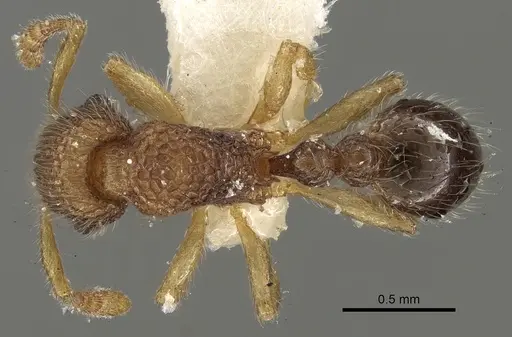
CASENT0435179
View on AntWeb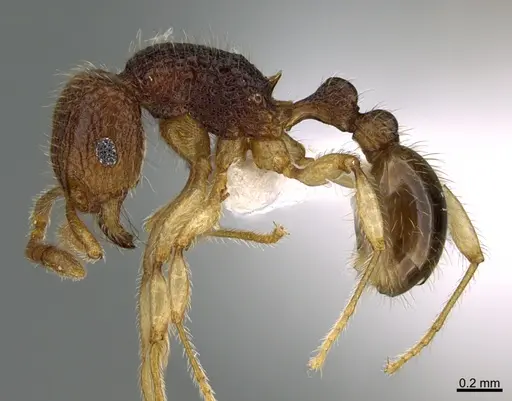
CASENT0904856
View on AntWeb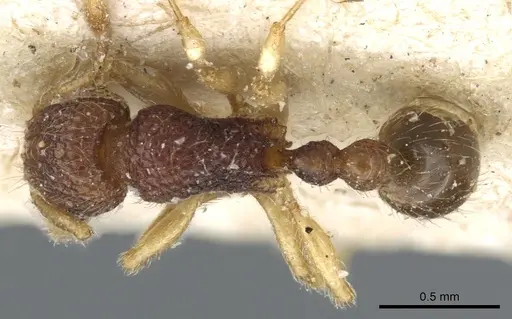
CASENT0916592
View on AntWeb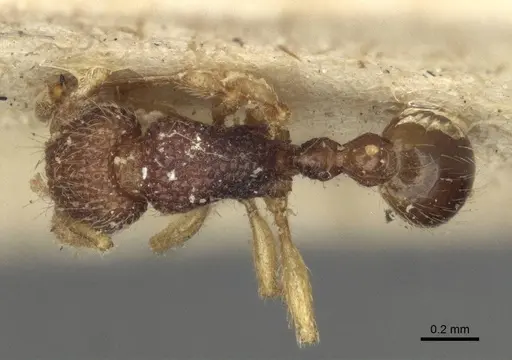
Literature
Loading distribution map...Loading products...