
Tetramorium ornatum
- Sci. Name
- Tetramorium ornatum
- Tribe
- Crematogastrini
- Subfamily
- Myrmicinae
- Author
- Emery, 1897
- Distribution
- Found in 2 countries
Introduction
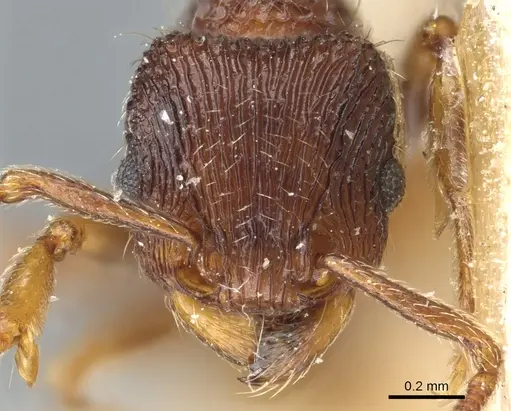
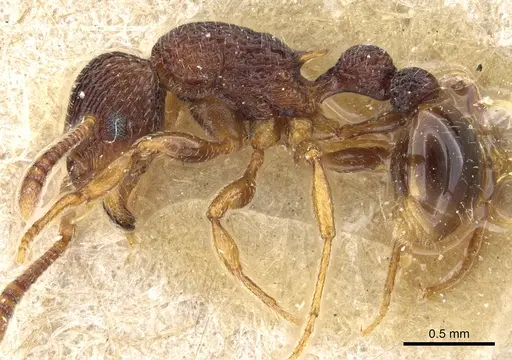
Tetramorium ornatum is a small, ground-dwelling ant native to the Australasian region, including Australia, New Guinea, and the Bismarck Archipelago . Workers are 3.0-3.8 mm in total length and range from reddish brown to blackish brown . Their heads are covered in distinct parallel ridges (longitudinal rugae) and the upper body has a coarse net-like texture . These ants live in damp (mesic) forests, where they nest in leaf litter and ground debris . They are the most widespread member of their group; their closest relative in New Guinea is the larger Tetramorium sculptatum .
Quick Summary
- Difficulty: Medium
- Origin & Habitat: Australasian region: Australia, New Guinea, Bismarck Archipelago. Found in mesic forest leaf litter [2][1].
- Colony Type: Colony structure is unconfirmed. Based on typical Tetramorium patterns, likely single-queen (monogyne) colonies.
- Size & Growth:
- Queen: Size data unavailable, inferred from Tetramorium genus (~5-7 mm estimated)
- Worker: 3.0-3.8 mm [2]
- Colony: Estimated up to several hundred workers based on typical Tetramorium colonies
- Growth: Moderate
- Development: Estimated 6-10 weeks at optimal temperature (inferred from related Tetramorium species) (Direct data unavailable, estimate based on genus-level patterns for tropical Myrmicinae)
- Antkeeping:
- Temperature: Keep at 22-26°C. Their tropical forest habitat suggests stable warmth is essential. Provide a gentle gradient so workers can choose their spot.
- Humidity: Keep the substrate consistently moist but not waterlogged. Their mesic forest home means moderate to high humidity is needed.
- Diapause: Likely no true diapause given their tropical/subtropical distribution. Activity may slow if room temperature drops, but a dedicated cooling period is not required.
- Nesting: Use a naturalistic setup: shallow container with moist soil or coco fiber, topped with leaf litter and small hiding spots. Y-tong (AAC) nests with tight chambers work too. Ensure high humidity and good ventilation.
- Behavior: These ants are calm and non-aggressive. They use a 'smear' defense: a modified flattened stinger wipes venom onto enemies rather than piercing. Workers forage through leaf litter and soil, looking for small prey and sugary sources. Escape risk is moderate due to their small size, use fine mesh barriers. They do not form supercolonies or practice slave-making.
- Common Issues: small size increases escape risk, use fine mesh barriers, high humidity needs can lead to mold if ventilation is poor, colonies may develop slowly, requiring patience during founding, wild-caught colonies may carry parasites, so quarantine new setups, test tubes need careful water management to avoid drowning or flooding
Housing and Nest Setup
For this small litter-dweller, mimic the forest floor. Use a shallow container with moist soil or coco fiber, then add a thick layer of leaf litter, twigs, and small hiding spots. This matches their natural home where they tunnel through decomposing material [2]. Alternatively, a Y-tong (AAC) nest with tight, humid chambers works well for established colonies. The key is consistent humidity, keep the substrate damp but not sopping wet, and provide ventilation to stop mold. Because workers are only 3-4 mm, they can slip through standard test tube cotton, so seal all connections carefully. A hydration zone (wet cotton or sponge) should always be available.
Feeding and Diet
These ants are omnivorous. In the wild they likely eat small invertebrates, honeydew, and nectar. In captivity, offer small live prey like fruit flies, springtails, or tiny crickets for protein 2-3 times a week. Keep a constant source of sugar water, diluted honey, or commercial ant sweets. Remove uneaten prey within 24 hours to prevent mold. Since workers are tiny, cut prey into appropriately sized pieces. Don't overfeed, a single fruit fly per 10 workers is enough.
Temperature and Seasonal Care
Keep temperatures between 22-26°C all year, reflecting their tropical habitat [2]. Room temperature in that range is usually fine. If your space runs cooler, use a heating cable on one side of the nest (placed on top, not underneath, to avoid drying out the nest). They don't need a winter diapause, unlike temperate species, they stay active year-round if kept warm. Avoid sudden temperature swings. If your home gets cold in winter, consider a gentle heat mat to keep the colony humming.
Colony Development and Growth
Details on Tetramorium ornatum founding are unknown, but based on typical Tetramorium patterns, the queen likely starts a colony alone. The first workers (nanitics) will be smaller than mature workers and should appear within 6-10 weeks if conditions are right. After that, the colony expands slowly. A healthy colony might reach 100-200 workers in its first year. Be patient, many colonies fail before the first workers emerge. Growth is moderate, slower than fast-growing genera like Lasius or Monomorium.
Behavior and Temperament
These ants are calm and prefer to avoid confrontation. Their primary defense is a 'smear' technique: they have a modified spatulate stinger that wipes venom onto an attacker rather than stinging. Workers are active foragers in leaf litter but not aggressive toward humans. They do not form supercolonies, practice slave-making, or show specialized behaviors. Escape risk is moderate because of their small size, use fluon or olive oil barriers on container edges. They are not known to bite or sting painfully.
Frequently Asked Questions
How long does it take for Tetramorium ornatum to raise first workers?
Expect 6-10 weeks from egg to first worker at optimal temperature (22-26°C), based on typical Tetramorium development. The first workers will be small (nanitics) and the colony will grow gradually after that.
Can I keep Tetramorium ornatum in a test tube setup?
Yes, test tubes work well for founding. Use a small tube with a water reservoir sealed with cotton. Keep the tube horizontal in a dark, humid area. But because they need high humidity, watch for mold. Move to a larger setup when the colony reaches about 20-30 workers.
Do Tetramorium ornatum ants sting?
They have a stinger, but it's modified for smearing venom, not piercing. They are not aggressive and rarely use it on humans. Even if they do, the effect is minor.
What do Tetramorium ornatum eat?
They are omnivorous. Offer small live prey (fruit flies, springtails, tiny crickets) for protein 2-3 times a week, and keep a constant sugar source (diluted honey, sugar water, or ant sweets). They may also take small pieces of soft fruit.
Are Tetramorium ornatum good for beginners?
Moderate difficulty. Their main needs are consistent warmth (22-26°C) and high humidity. They grow slowly, so beginners need patience. Not the hardest but not the easiest either.
Do Tetramorium ornatum need hibernation?
No true hibernation required. Their tropical origin means they stay active year-round if kept warm. If room temperature drops in winter, activity may slow, but a dedicated cooling period is not needed.
How big do Tetramorium ornatum colonies get?
Based on typical Tetramorium species, colonies likely reach several hundred workers at maturity. They don't become giant supercolonies, but a healthy nest can be quite populous.
When should I move Tetramorium ornatum to a formicarium?
Move them when the test tube becomes crowded or the colony reaches around 30-50 workers. A naturalistic setup with moist substrate works best. Make sure the formicarium has small chambers and high humidity.
Why is my Tetramorium ornatum colony dying?
Common causes: temperature too low (below 20°C), too dry, mold from poor ventilation, or stress from disturbance. Check for mites or other parasites, especially in wild-caught colonies. Keep humidity high but not stagnant, and don't overfeed.
Can I keep multiple Tetramorium ornatum queens together?
This has not been documented. Based on typical Tetramorium behavior, they likely form single-queen colonies. Don't combine unrelated foundresses, they may fight.
Report an Issue
The current care sheet is based fully on literature. See inconsistencies, or something that's incorrect? Please , it will be resolved after review from an admin. Contributing to the blogs tab also helps providing information, to make us be able to further improve the caresheets. Thank you for your support!
References

This caresheet is licensed under CC BY-SA 4.0 .
Community Blogs
CASENT0217973
View on AntWeb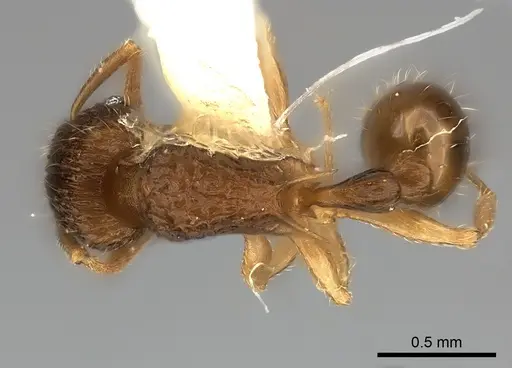
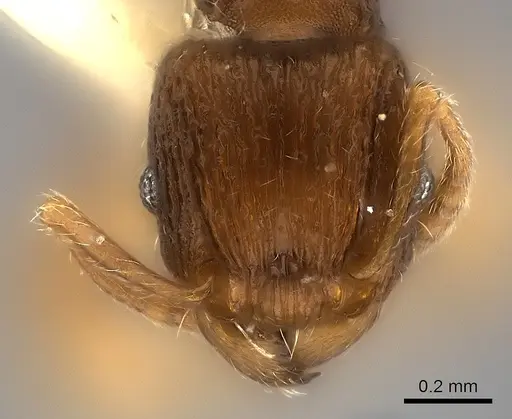
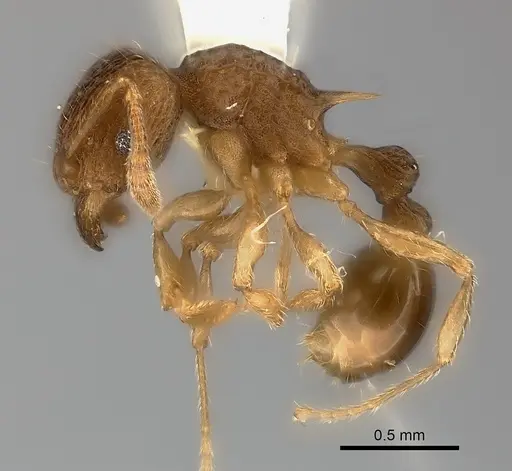
CASENT0904855
View on AntWeb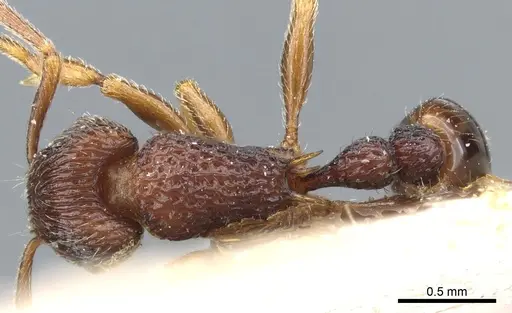
Literature
Loading distribution map...Loading products...