
Tetramorium orc
- Sci. Name
- Tetramorium orc
- Tribe
- Crematogastrini
- Subfamily
- Myrmicinae
- Author
- Hita Garcia & Fisher, 2012
- Distribution
- Found in 1 countries
Introduction
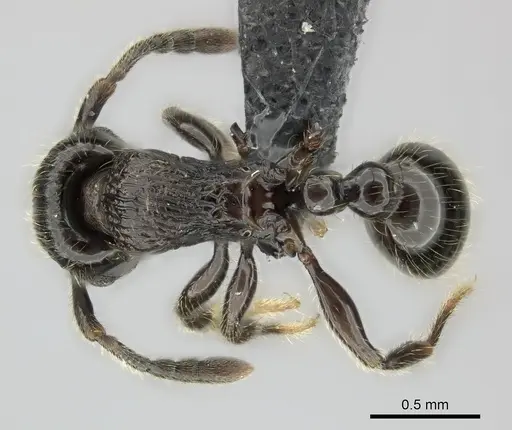
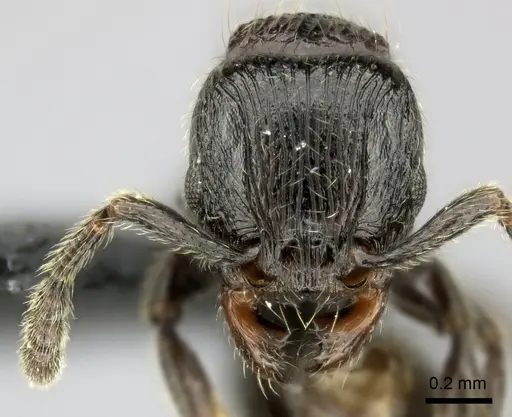
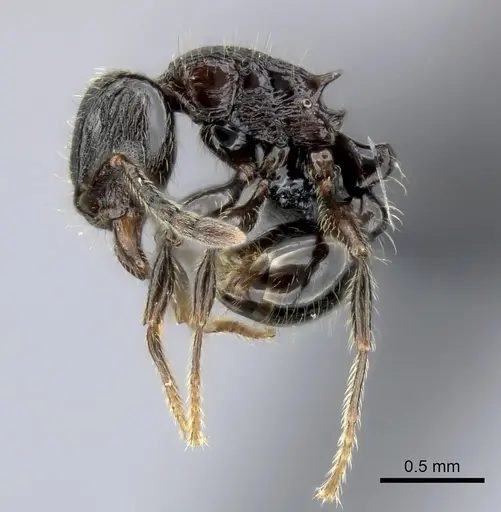
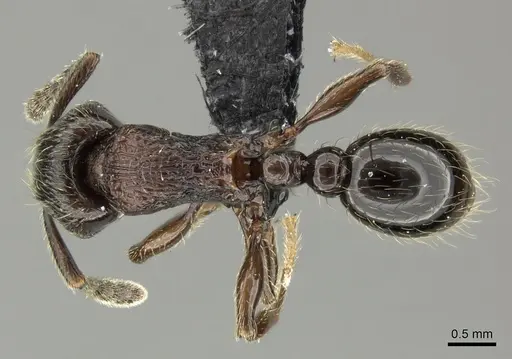
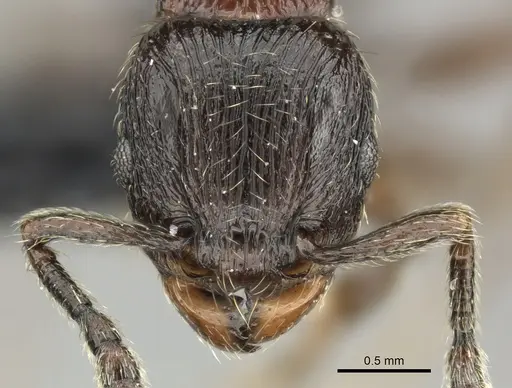
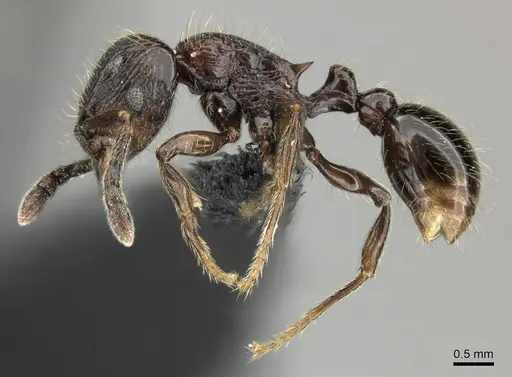
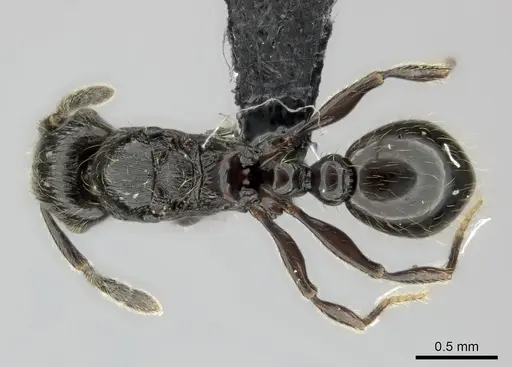
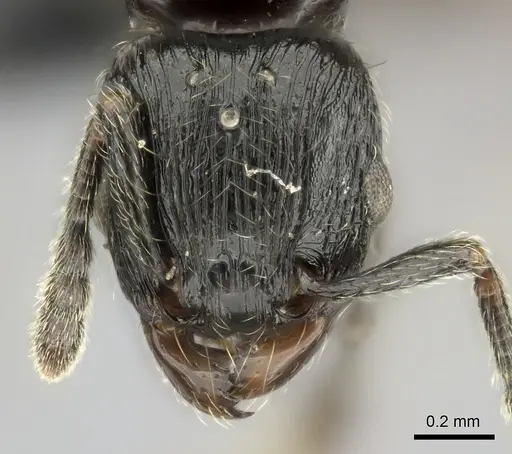
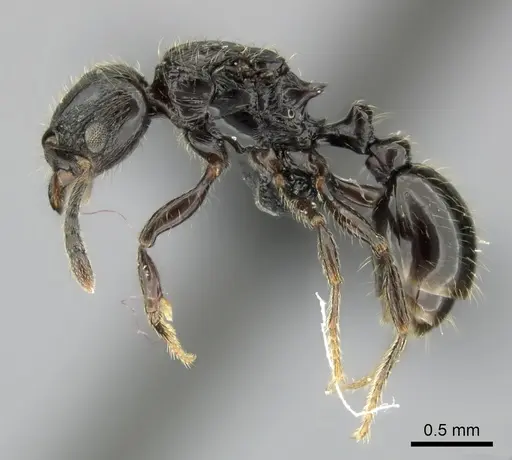
Tetramorium orc is a very small, dark brown ant species endemic to the highlands of northern Madagascar. Workers are among the smaller Tetramorium, with a head slightly longer than wide. They are easily recognized by their very short antennae, short propodeal spines, and a distinctive weakly cuneiform petiolar node shape - the front of the node sits higher than the back, creating a tapered look from the side . Their color is dark to very dark brown, though the mesosoma often appears a lighter reddish-brown . This species is unique within the Tetramorium dysalum group. Unlike its relatives that inhabit lowland and montane rainforests, T. orc is the only member predominantly found in montane shrubland at high elevations (1575-2000 m) . It lives in leaf litter and was collected from soil, under stones, and moss. The name 'orc' comes from Old English meaning 'demon' and is used as a noun in apposition .
Quick Summary
- Difficulty: Hard
- Origin & Habitat: Endemic to Parc National de Marojejy in northern Madagascar, found only at high elevations of 1575-2000 m in montane shrubland habitats [1].
- Colony Type: Unconfirmed, no data on social structure.
- Size & Growth:
- Queen: Size data unavailable, queen has not been described.
- Worker: Size data unavailable, only head length measurements exist (HL 0.67-0.74 mm) [1].
- Colony: Unknown, only known from type specimens collected in the wild.
- Growth: Unknown
- Development: Unconfirmed, estimated 6-10 weeks based on typical Tetramorium development under warm conditions. (No direct development data exists for this species. Estimate based on genus-level patterns for small Myrmicinae in warm climates.)
- Antkeeping:
- Temperature: Based on its high-elevation montane shrubland habitat [1], likely prefers cool conditions around 20-24°C. Avoid overheating above 26°C. Provide a temperature gradient so workers can self-regulate.
- Humidity: Leaf litter and moss dweller [1], keep substrate moderately moist, not waterlogged. Provide a humidity gradient with a moist nest area and drier foraging space.
- Diapause: Unknown, montane origin may suggest seasonal response, but no research documents overwintering behavior.
- Nesting: Nests in leaf litter, soil, under stones, and moss [1]. In captivity, use a Y-tong (AAC) or plaster nest with small, tight chambers, or a naturalistic soil setup. Given the tiny worker size, chambers should be scaled accordingly.
- Behavior: Ground-dwelling leaf litter ant that forages in the substrate [1]. Temperament is unconfirmed, but most Tetramorium are moderately aggressive and will defend their nest. Escape prevention is critical due to extremely small size, they can squeeze through standard barriers. Use fine mesh (0.5 mm or tighter) and ensure all connections are sealed.
- Common Issues: very small size makes escape prevention challenging, standard barriers may be insufficient., limited data means care requirements are largely estimated from genus patterns, not species-specific research., no information on founding behavior or colony establishment success., montane origin may cause temperature sensitivity, overheating is a key risk., wild-caught colonies may carry parasites or stress from collection at remote sites.
Origin and Natural Habitat
Tetramorium orc is endemic to the Parc National de Marojejy in northern Madagascar, one of the island's most biodiverse protected areas. This species is uniquely adapted to high-elevation montane environments, found exclusively between 1575 and 2000 m elevation [1]. Unlike other members of the T. dysalum group that primarily inhabit rainforests, T. orc shows a strong preference for montane shrubland habitats [1]. The type specimens were collected from soil, under stones, from moss, and as ground foragers, indicating they are leaf litter dwellers nesting in the upper soil layers and ground debris [1]. The high elevation implies cooler temperatures and likely higher humidity than typical lowland Madagascar ants.
Identification and Distinguishing Features
Identifying T. orc requires attention to several morphological characters. The most distinctive feature is the very short antennal scapes, the antennae do not reach the back of the head [1]. The propodeal spines are also comparatively short [1]. The petiolar node has a unique weakly cuneiform shape: when viewed from the side, the front sits higher than the back, so the dorsum tapers posteriorly. The mesosomal dorsum has distinct longitudinal ridges (rugae), while the waist segments and gaster are completely smooth and unsculptured [1]. Workers are dark to very dark brown, often with a reddish-brown mesosoma. The head is slightly longer than wide, and the eyes are of moderate size. Mandibles are always smooth and shiny [1].
Temperature and Care
Because T. orc comes from high elevations (1575-2000 m) in Madagascar's montane shrubland, they likely prefer cooler temperatures than most tropical ant species. Start with a temperature range of 20-24°C and monitor colony response. Unlike lowland species that thrive in warmth, this montane ant may become stressed above 26°C [1]. Use a heating cable on only one side of the nest to create a gradient, allowing workers to self-regulate. Never place the heating element directly under water reservoirs. Room temperature may be suitable if your home stays in the low-to-mid 20s°C. Watch for signs of heat stress: workers clustering away from heated areas, lethargy, or brood dying.
Housing and Nesting
In nature, T. orc lives in leaf litter, soil, under stones, and in moss [1]. For captive care, replicate these conditions with a naturalistic setup using soil substrate or a small-scale formicarium with appropriately sized chambers. The tiny worker size means passages and chambers should be small and tight-fitting. A Y-tong (AAC) or plaster nest with narrow chambers works well. Keep the nesting area moderately humid, think damp forest floor rather than wet swamp. Provide a moisture gradient so ants can choose their preferred humidity zone. The outworld should have a shallow water source and minimal setup to prevent escapes, as their small size allows them to exploit tiny gaps.
Feeding and Diet
Based on typical Tetramorium behavior and their leaf litter foraging habits, these ants are likely omnivorous. They probably scavenge dead insects, collect honeydew, and hunt small prey in the leaf litter [1]. In captivity, offer small protein sources like fruit flies, pinhead crickets, or other appropriately sized live prey. Sugar water, honey, or commercial ant jelly can be provided as carbohydrate sources. Feed small amounts every few days and remove uneaten food to prevent mold. Given their tiny size, prey should be scaled accordingly, springtails or similar micro-arthropods may be more suitable than larger feeder insects.
Behavior and Defensive Mechanisms
Tetramorium ants are generally moderately aggressive and will defend their nests energetically. While specific behavior data for T. orc is lacking, most Tetramorium show territorial defense and may swarm when their nest is disturbed. The defense mechanism of this species, like others in the tribe Crematogastrini, involves a modified flattened stinger used to wipe or smear venom onto enemies rather than piercing. The most critical husbandry concern is escape prevention. At their tiny size, T. orc can squeeze through gaps that would contain larger ants. Use fine mesh (0.5 mm or tighter), apply fluon or similar barriers to smooth surfaces, and ensure all enclosure lids fit tightly. Check connections between nest and outworld regularly for gaps. [1]
Frequently Asked Questions
How long does it take for Tetramorium orc to develop from egg to worker?
The development timeline is unconfirmed for this species. Based on typical Tetramorium patterns for small Myrmicinae in warm conditions, estimate 6-10 weeks from egg to first worker at optimal temperature. No species-specific data exists.
What temperature is best for keeping Tetramorium orc?
Start around 20-24°C. This montane species from 1575-2000 m elevation likely prefers cooler conditions than typical tropical ants. Avoid temperatures above 26°C. Use a temperature gradient so workers can self-regulate [1].
Can I keep multiple Tetramorium orc queens together?
Colony structure is unconfirmed for this species. No data exists on whether they are single-queen (monogyne) or multi-queen (polygyne) in nature. Do not attempt combining unrelated queens until more information is available.
How big do Tetramorium orc colonies get?
Colony size is unknown, this is a newly described species with limited collection data. Only worker specimens have been described, colony size in the wild has not been documented.
What is the defense mechanism of Tetramorium orc?
Like other ants in the tribe Crematogastrini, T. orc uses a modified flattened stinger to wipe or smear venom onto enemies rather than piercing. This is a 'smear' defense. Expect defensive behavior if the nest is disturbed.
What do Tetramorium orc ants eat?
Based on typical Tetramorium behavior, they likely accept small invertebrates (fruit flies, springtails, pinhead crickets) and sugar sources (honey water, honeydew). They are ground foragers in leaf litter, so protein and carbohydrates from standard ant foods should be accepted.
Are Tetramorium orc good for beginners?
No. This species is not recommended for beginners. It has limited data on care requirements, comes from a specialized montane habitat, is extremely small (escape risk), and may have specific temperature needs. Experienced antkeepers interested in unusual species are the target audience.
What size nest do I need for Tetramorium orc?
Use a small nest with appropriately scaled chambers, these are tiny ants. A Y-tong (AAC) or plaster nest with small, tight chambers works well. A naturalistic setup with soil substrate is also suitable given their leaf litter dwelling nature.
Do Tetramorium orc need hibernation or diapause?
Diapause requirements are unknown. As a montane species from high elevation Madagascar, they may experience seasonal temperature changes, but no research documents overwintering behavior. Observe your colony for seasonal activity changes.
Why are my Tetramorium orc escaping?
Their extremely small size makes them excellent escape artists. Standard barrier setups often fail against ants this tiny. Use fine mesh (0.5 mm or tighter), apply fluon to all surfaces, check lid seals, and inspect connections between nest and outworld for any gaps.
Report an Issue
The current care sheet is based fully on literature. See inconsistencies, or something that's incorrect? Please , it will be resolved after review from an admin. Contributing to the blogs tab also helps providing information, to make us be able to further improve the caresheets. Thank you for your support!
References

This caresheet is licensed under CC BY-SA 4.0 .
Community Blogs
Literature
Loading distribution map...Loading products...