
Tetramorium obtusidens
- Sci. Name
- Tetramorium obtusidens
- Tribe
- Crematogastrini
- Subfamily
- Myrmicinae
- Author
- Viehmeyer, 1916
- Distribution
- Found in 1 countries
Introduction
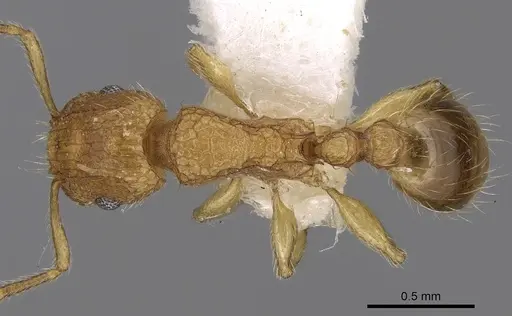
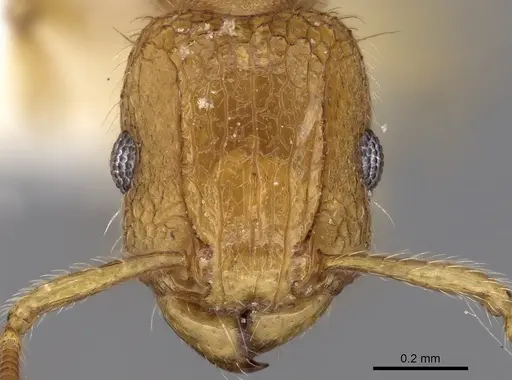
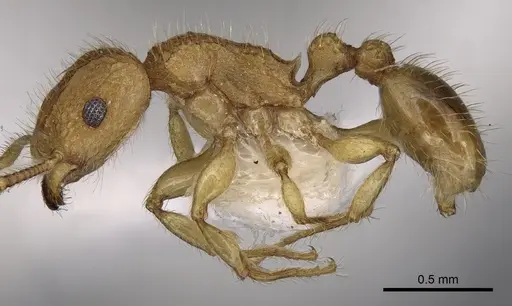
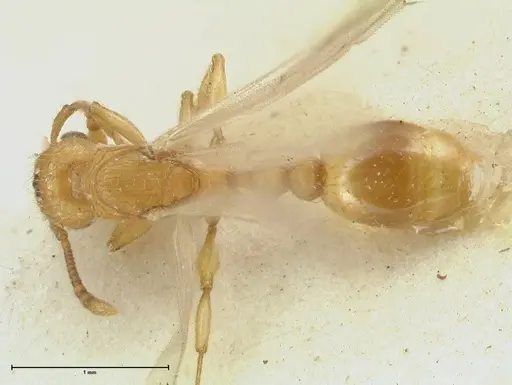
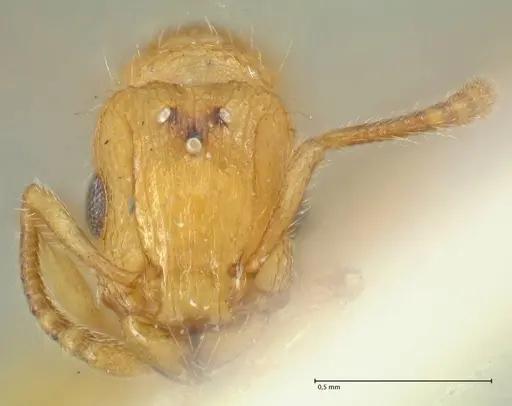
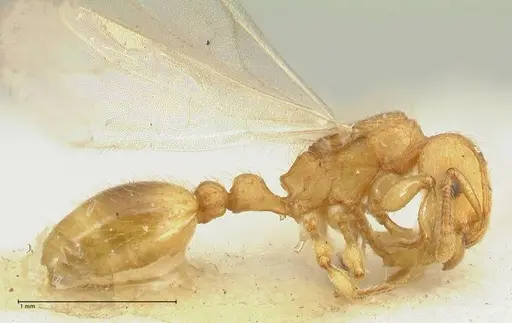
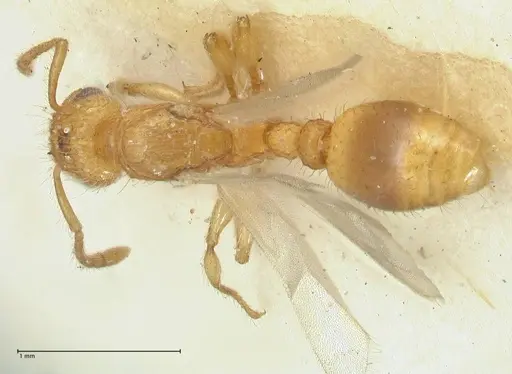
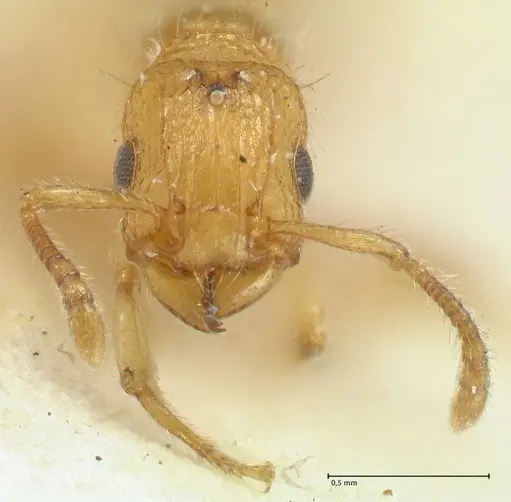
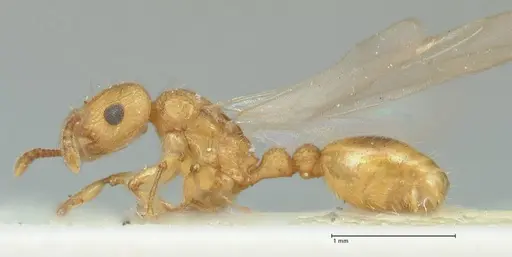
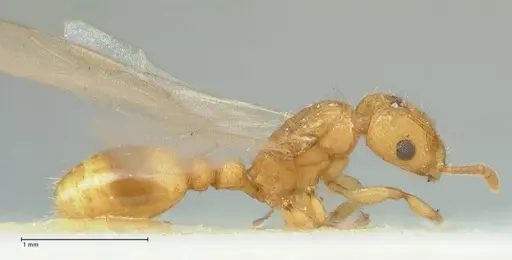
Tetramorium obtusidens is a tiny yellow ant. Workers are 2.4-2.7 mm in total length (the body is a pale yellow). It belongs to the bicarinatum species group, a complex of closely related Indo-Pacific species that includes the widespread penny ant (Tetramorium bicarinatum). This species is native to Southeast Asia, recorded from Singapore, Brunei, Borneo, Malaysia, Indonesia, the Philippines, southern China, and possibly New Guinea. In the wild, it lives in lowland dipterocarp forests and deciduous forests, where it is found on tree trunks in the canopy. Workers have been collected together with other ant species like Cataulacus praetextus and Technomyrmex albipes inside a rotten branch.
Quick Summary
- Difficulty: Medium
- Origin & Habitat: Native to Southeast Asia including Singapore, Brunei, Borneo, Malaysia, Indonesia, the Philippines, southern China, and possibly New Guinea. Lives in lowland dipterocarp forests and deciduous forests, typically on tree trunks or in rotten branches[4][5][3][6].
- Colony Type: Unconfirmed. There is no published data on the social structure of this species.
- Size & Growth:
- Antkeeping:
- Temperature: Tropical species, so keep warm around 24-28°C. The exact optimal range is unknown, but this is a reasonable starting point based on its habitat[4].
- Humidity: Keep the nest substrate consistently moist but not waterlogged. Use a water source in the outworld. Good ventilation is important to prevent mold. No exact humidity data is available.
- Diapause: Likely none. As a tropical species, it probably does not need a winter rest, though activity may slow if temperatures drop.
- Nesting: Use a Y-tong (AAC), plaster, or soil nest with very tight chambers scaled to the tiny 2-3 mm workers. Provide pieces of rotten wood or bark, as they naturally nest in rotten branches[6]. Escape prevention is critical.
- Behavior: Workers are very small and active. They forage in the canopy in nature and are likely generalist scavengers. Because of their tiny size, escape prevention is critical – they can squeeze through the smallest gaps. They are not aggressive toward keepers but may use a smear defense (smearing venom rather than stinging).
- Common Issues: escape risk is extreme due to 2-2.7 mm size – use the finest mesh and seal all gaps., high humidity needs can cause mold if ventilation is poor, balance moisture and airflow., wild-caught colonies may harbor parasites or pathogens, Quarantine new colonies., colony growth may be very slow because founding behavior and development timeline are unknown., canopy-dwelling lifestyle may lead to stress in ground-level formicaria, provide vertical climbing surfaces.
Housing and Nest Setup
Because workers are only 2.4-2.7 mm, you need a nest with very narrow chambers. Use Y-tong (AAC), plaster, or soil nests designed for small species. Avoid large open spaces – the ants will feel insecure. In the wild they were found inside a rotten branch[6], so adding pieces of soft wood or bark can make them more comfortable. Your outworld should have tight connections. Escape prevention is the top priority: use the finest mesh (e.g.,0.2 mm) on ventilation holes and seal every crack with silicone or tape. They can walk up smooth vertical surfaces, so cover the outworld walls with a barrier (e.g., fluon) if needed.
Temperature and Heating
Tetramorium obtusidens is a tropical species from lowland forests[4], so keep your colony warm. Aim for 24-28°C. Use a small heating cable on one side of the nest to create a temperature gradient – the ants will choose where they are comfortable. Prolonged chilling below 22°C may slow or stop brood development. Room temperature within this range is fine if your room stays warm year-round.
Feeding and Diet
No exact diet data exists for this species. Based on its habitat (rotten branches, canopy) and its membership in the bicarinatum group, it is likely a generalist scavenger. Offer small protein sources: fruit flies, tiny mealworm pieces, or springtails. For carbohydrates, use a drop of sugar water (1:4 sugar to water) or honey. Feed a few times per week in small amounts. Remove uneaten food to prevent mold. Ants were found together with other species[6], but that does not tell us about their diet.
Humidity and Water
Tropical forest species need moisture. Keep the nest substrate damp to the touch – like a squeezed sponge – but never waterlogged. A test tube with a cotton plug or a small drinking bottle connected to the nest provides drinking water and helps maintain humidity. Good air exchange is essential to stop mold from taking over. There is no published humidity range, so watch your ants: if they avoid a dry nest area, they need more moisture. [4]
Colony Development and Growth
Absolutely nothing is known about the founding behavior, development time, or colony size of this species. The first workers probably emerge several weeks after egg-laying, but we have no data to give you a timeline. Be patient and observe. Because the queen size is unknown, you cannot even guess at claustral or semi-claustral founding. Treat any ‘estimate’ in other sources as a guess.
Handling and Temperament
Workers are small and not aggressive. They do not sting in the usual sense, instead they have a modified stinger that smears venom. This defense is unlikely to bother you, but it can irritate – avoid getting it in your eyes. When maintaining the nest, use a soft brush and let the ants walk onto tools rather than picking them up. Their tiny size means they are easy to crush accidentally. Always work over a tub or tray to catch escapees.
Frequently Asked Questions
How long does it take for Tetramorium obtusidens to raise first workers?
We don't know. There is no published data on development time for this species. Estimates from related species should be treated as guesses.
What size nest do I need for Tetramorium obtusidens?
Use a Y-tong, plaster, or soil nest with chambers that are very small – as narrow as 2-3 mm – since workers are only 2.4-2.7 mm long. They feel more secure in tight spaces[1].
Do Tetramorium obtusidens ants sting?
They do not have a typical stinger. Instead they have a modified spatulate stinger that smears venom onto threats. This is unlikely to harm humans but can be irritating.
What do Tetramorium obtusidens eat?
Their natural diet is unknown. In captivity, offer tiny protein sources (fruit flies, springtails, small mealworm bits) and sugar water. They will likely accept a generalist diet.
Are Tetramorium obtusidens good for beginners?
No – this species is rated medium difficulty. The main challenges are extreme escape risk (due to 2 mm size) and the fact that almost nothing is known about its captive requirements. Experienced keepers willing to experiment may succeed.
Do Tetramorium obtusidens need hibernation?
No. As a tropical species, it likely doesn't need a diapause. Keep warm all year, though growth may slow if temperatures drop.
Why are my Tetramorium obtusidens escaping?
Workers are only 2.4-2.7 mm – smaller than a grain of rice. They can squeeze through any gap wider than 0.2 mm. Use the finest mesh, seal all lid connections with tape, and apply a barrier like fluon on smooth surfaces.
How big do Tetramorium obtusidens colonies get?
Unknown. There are no published colony size estimates for this species. Mature colonies may be small, but we have no data.
Can I keep multiple Tetramorium obtusidens queens together?
Colony social structure has not been studied. It is unclear whether they are monogyne or polygyne. Do not combine queens without documented evidence that they accept each other.
Where is Tetramorium obtusidens native to?
It is native to Southeast Asia: Singapore, Brunei, Borneo, Malaysia, Indonesia, the Philippines, southern China, and possibly New Guinea[4][5][3].
Report an Issue
The current care sheet is based fully on literature. See inconsistencies, or something that's incorrect? Please , it will be resolved after review from an admin. Contributing to the blogs tab also helps providing information, to make us be able to further improve the caresheets. Thank you for your support!
References

This caresheet is licensed under CC BY-SA 4.0 .
Community Blogs
Literature
Loading distribution map...Loading products...