
Tetramorium nama
- Sci. Name
- Tetramorium nama
- Tribe
- Crematogastrini
- Subfamily
- Myrmicinae
- Author
- Hawkes, 2020
- Distribution
- Found in 1 countries
Introduction
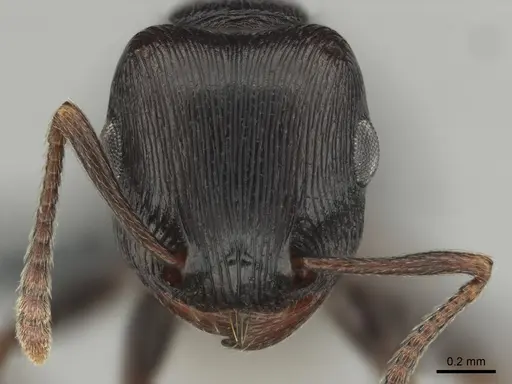
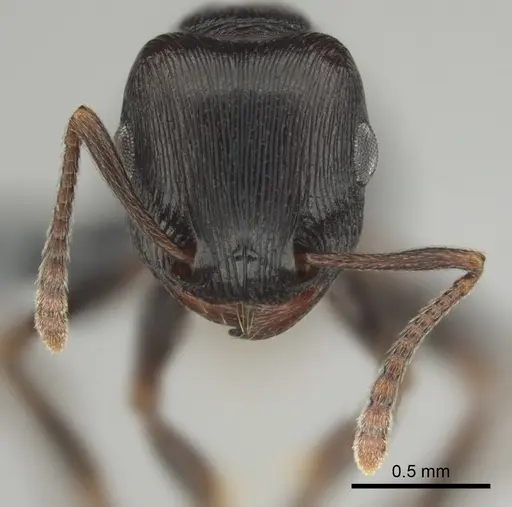
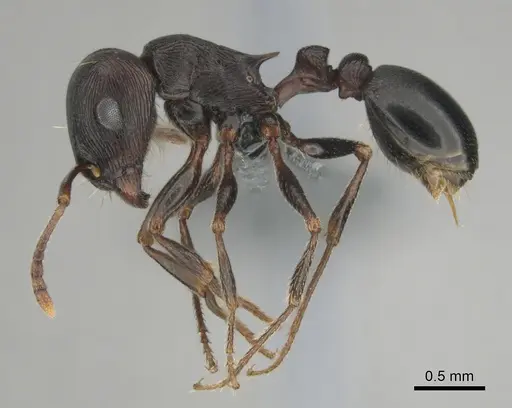
Tetramorium nama is a recently described ant species known only from a handful of workers collected in South Africa's Richtersveld National Park . Workers are dark blackish-brown with contrasting reddish-brown mandibles, and they have a well-developed psammophore - a fringe of curved hairs on the underside of the head used for carrying sand . This species belongs to the Tetramorium solidum group, which are typically seed-harvesting ants adapted to dry environments. The most striking thing about T. nama is how little we know about it - it was described in 2020 from just eight workers taken from a single pitfall trap, and no queens or males have ever been seen . It may be one of the rarest ant species in captivity, with its entire known wild population coming from one location near the Orange River.
Quick Summary
- Difficulty: Expert
- Origin & Habitat: Known only from the Richtersveld National Park in South Africa's Northern Cape province, near the Orange River at about 65 meters elevation [1]. The site is a transition zone between Lower Gariep Alluvial Vegetation and Noms Mountain Desert, with sparse vegetation dominated by Black Ebony (Euclea pseudebenus) and Wild Tamarisk (Tamarix usneoides) [1]. This is a hot, arid area with extreme summer temperatures and very low rainfall.
- Colony Type: Unknown. Only worker specimens exist, queens and males have never been described. Based on related species in the solidum group, they likely form single-queen colonies, but this is unconfirmed.
- Size & Growth:
- Queen: Unknown, queens have not been described.
- Worker: Total length not recorded. Based on measurements of the mesosoma (1.17-1.32 mm) and related species in the solidum group, workers are likely around 4 mm in total length [1].
- Colony: Unknown, only eight workers have ever been collected in the wild.
- Growth: Unknown
- Development: Unknown, no data exists for this species. Closely related Tetramorium species often take 6-10 weeks from egg to worker at warm temperatures, but this is only an estimate. (No captive breeding has been recorded, so all development data is inferred from related species.)
- Antkeeping:
- Temperature: Based on its hot, arid habitat, T. nama likely prefers warm conditions. Related solidum group species do well at 24-28°C, so aim for a warm area around 26°C with a slight gradient [1].
- Humidity: Low to moderate. The natural habitat is desert fringe near a river, so provide a dry nest chamber with a small moist patch. Avoid constantly wet substrate, let the top of the soil dry out between waterings.
- Diapause: Unlikely to need a deep winter diapause. Southern African ants often slow down during the cooler winter months (June-August), but there is no specific data. If you keep them, reduce temperature slightly (to about 18-20°C) and offer less food for 2-3 months, but watch the colony’s behavior rather than forcing a strict hibernation.
- Nesting: No specific nesting data exists. Related solidum group species often nest in soil under stones or in small cavities in the ground. A naturalistic setup with sandy soil, a digging area, and undertube hydration would work well. Good ventilation is essential to prevent mold in the dry climate.
- Behavior: No behavioral observations have been documented for this species. As a member of the solidum group, they are likely seed-harvesters that also scavenge for protein. Workers are small (around 4 mm), so standard escape prevention should be adequate. Temperament is unknown, but related species are typically non-aggressive and slow-moving.
- Common Issues: this species is almost certainly unavailable in the hobby, only eight wild workers have ever been collected, queen and male castes are completely unknown, so founding behavior and colony structure are a mystery, no captive care protocols exist, you would be breaking entirely new ground, the wild population is threatened by mining, grazing, and invasive species, and may be vulnerable or endangered [1], ethical sourcing is critical, related species are seed-harvesters, but T. nama’s specific diet is unconfirmed, you will need to experiment carefully
Species Discovery and Rarity
Tetramorium nama was described in 2020 by Peter G. Hawkes based on eight workers captured in a single pitfall trap during an environmental impact survey at the Oena Diamond Mine in the Richtersveld National Park [1]. This makes it one of the rarest ant species ever described. No queens, males, or colony nests have ever been found. The species is currently considered Data Deficient on the IUCN Red List, but preliminary assessments suggest it may be Vulnerable or Endangered under criterion B1ab(iii) [1]. The type locality is threatened by mining, overgrazing, and invasive tree species, so any captive population would be extremely valuable for conservation.
Identification and Morphology
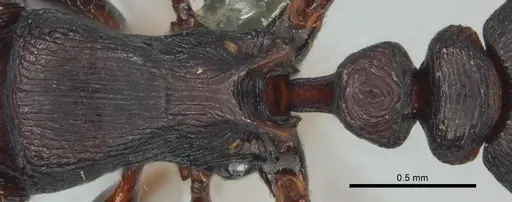
Workers are small but distinctive. They have dense longitudinal costulae (grooves) on the head and mesosoma, long propodeal spines (the spikes at the back of the thorax), and a well-developed psammophore, a comb of curved, J-shaped hairs under the head that helps carry sand [1]. The body is dark blackish-brown, but the mandibles are a contrasting reddish-brown that stands out [1]. The petiole waist segment has unique whorled or concentric sculpture that helps distinguish T. nama from similar species like Tetramorium grandinode and Tetramorium duncani [1]. The sting is present and weakly curved, with a small paddle-shaped appendage [1].
Natural Habitat and Climate
The only known site is about 65 meters above sea level near the Orange River (also called the Gariep) in the Richtersveld National Park, South Africa [1]. The habitat is an open riverine fringe with sparse vegetation, mostly Black Ebony (Euclea pseudebenus) and Wild Tamarisk (Tamarix usneoides) trees [1]. This area is extremely hot and dry in summer, with mild winters. The ants were collected in September (late winter/early spring in the Southern Hemisphere), suggesting they are active during the warmer months but may become less active during the cool winter (June-August) [1].
Diet and Feeding
As a member of the Tetramorium solidum group, T. nama is most likely a seed-harvester. In captivity, offer a mix of small seeds (grass seeds, millet, poppy seeds) as a staple, along with protein sources like small insects (fruit flies, pinhead crickets) or ant-safe protein foods. Sugar water or honey can be offered in small amounts, but seed-harvesters often rely mainly on seeds and protein. Because nothing is known about their specific preferences, keep careful notes on what the colony accepts, you may be the first person to document their feeding behavior. [1]
Housing and Nesting
No specific nesting data exists for T. nama, but related solidum group species typically nest in soil under stones or in small chambers dug into the ground. A naturalistic setup with a deep layer of sandy soil, a few flat stones on top, and an undertube hydration system would be appropriate. Keep the soil mostly dry with one slightly damp area, these are desert ants, not moisture-loving species. Good ventilation is crucial to prevent mold. Because queens are unknown, we cannot give advice on founding chambers, but if you ever acquire a queen, start her in a classic test tube setup with a small water reservoir and a dark cover. [1]
Temperature and Seasonal Care
Based on the hot, arid origin, T. nama likely prefers warm temperatures. Aim for 24-28°C during the active season, with a slight gradient so workers can choose their preferred spot. During the cooler winter months (June-August in the Southern Hemisphere), the colony may slow down. Rather than forcing a strict diapause, reduce the temperature slightly (to around 18-20°C) and offer less food for 2-3 months. Watch the colony, if they remain active, keep offering food. No data on hibernation exists for this species.
Conservation and Ethical Considerations
This is perhaps the most important section for anyone interested in Tetramorium nama. The entire known wild population consists of eight workers from a single location, and the species faces serious threats from diamond mining, livestock grazing, and invasive trees in the Richtersveld National Park [1]. It may be Vulnerable or Endangered under IUCN criteria. If this species ever becomes available in the hobby, ethical sourcing is essential, only acquire colonies from breeders who have successfully raised them in captivity, and never release any ants into non-native areas. Because the species is so rare, any captive colony should be treated as a conservation priority and documented thoroughly.
Frequently Asked Questions
Is Tetramorium nama available in the antkeeping hobby?
No, this species is virtually impossible to obtain. It was described in 2020 from just eight workers, and no queens or males have ever been found. It is extremely unlikely to appear in the hobby unless someone succeeds in locating and raising a colony from the wild, which may not be advisable given its threatened status.
How big do Tetramorium nama colonies get?
Unknown. The largest known collection is just eight workers from a single pitfall trap. Related species in the solidum group can have several hundred workers, but T. nama may naturally have small populations. No colony has ever been observed in the wild or captivity.
What do Tetramorium nama ants eat?
Based on their classification in the solidum group, they are likely seed-harvesters. Offer small seeds (grass, millet, poppy) as a staple, along with small insects for protein. Sugar water can be offered in tiny amounts. Since their specific diet is unconfirmed, observe what they accept and keep notes.
Do Tetramorium nama ants sting?
Yes, they have a functional sting. The original description notes a weakly curved sting with a small paddle-shaped appendage [1]. However, workers are small (around 4 mm total length), so any sting would be very mild and unlikely to be noticeable.
What temperature do Tetramorium nama ants need?
Based on their hot, arid origin, they likely prefer warm conditions. Aim for 24-28°C during the active season, with a slight temperature gradient. No specific studies exist, so adjust based on colony behavior.
Do Tetramorium nama ants need hibernation?
Unknown. They come from a region with mild winters (Southern Hemisphere winter is June-August), so they may slow down but likely do not need a deep cold diapause. If you keep them, reduce temperature slightly to 18-20°C and offer less food for 2-3 months, but watch the colony and only force dormancy if they naturally become inactive.
How do I identify Tetramorium nama workers?
Workers have dense longitudinal grooves on the head and mesosoma, long propodeal spines, and a dark blackish-brown body with reddish-brown mandibles. The petiole has distinctive whorled or concentric sculpture that is unique to this species [1]. Only eight workers exist in museum collections, so any specimen would need expert confirmation.
Can I keep multiple Tetramorium nama queens together?
Unknown. Neither queens nor colony founding behavior has been documented. The colony structure (single-queen vs multi-queen) is completely unconfirmed. Never attempt to combine unrelated queens until more is known.
How long does it take for Tetramorium nama to develop from egg to worker?
Unknown, no development data exists for this species. Closely related Tetramorium species typically take 6-10 weeks from egg to worker at warm temperatures, but this is only an estimate for T. nama.
Is Tetramorium nama a good species for beginners?
No. This is an expert-level species because it is virtually unknown in captivity, queens have never been described, and no care protocols exist. If you obtain this species, you may be the first person to keep it. Only experienced antkeepers with a strong interest in conservation should consider it, and ethical sourcing is absolutely critical.
Report an Issue
The current care sheet is based fully on literature. See inconsistencies, or something that's incorrect? Please , it will be resolved after review from an admin. Contributing to the blogs tab also helps providing information, to make us be able to further improve the caresheets. Thank you for your support!
References

This caresheet is licensed under CC BY-SA 4.0 .
Community Blogs
CASENT0818990
View on AntWeb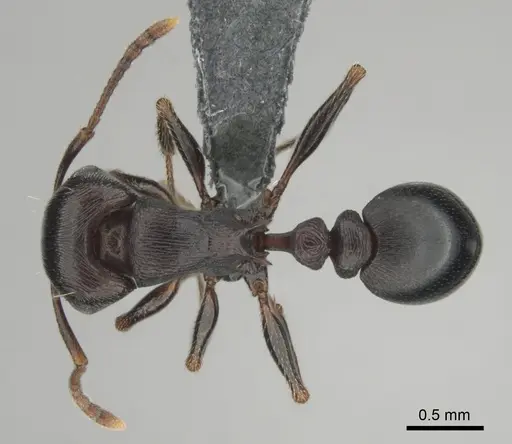
Literature
Loading distribution map...Loading products...