
Tetramorium minimum
- Sci. Name
- Tetramorium minimum
- Tribe
- Crematogastrini
- Subfamily
- Myrmicinae
- Author
- Bolton, 1976
- Distribution
- Found in 3 countries
Introduction
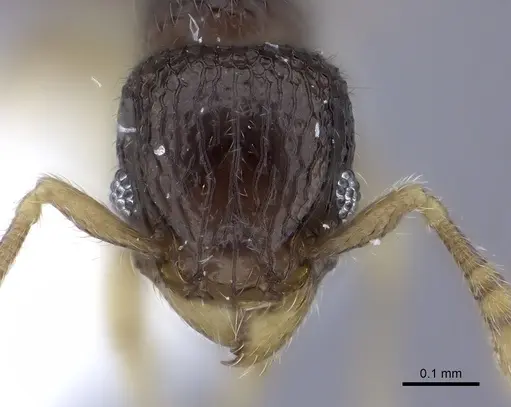
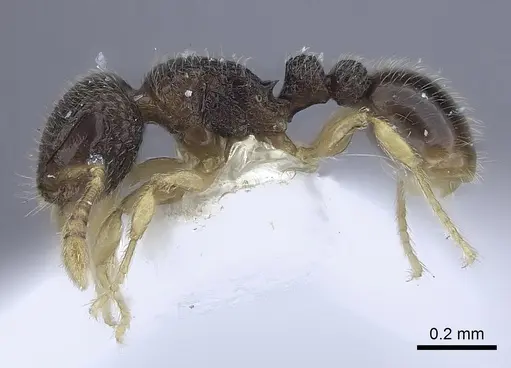
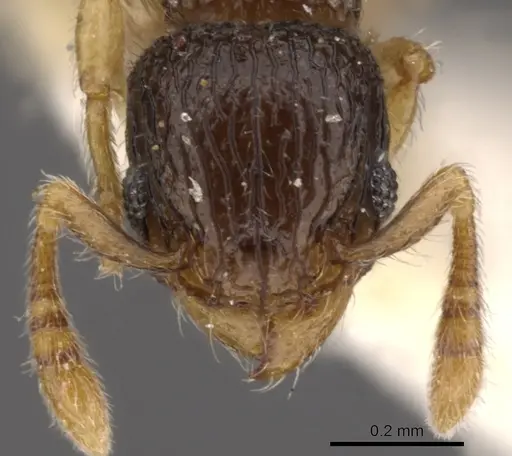
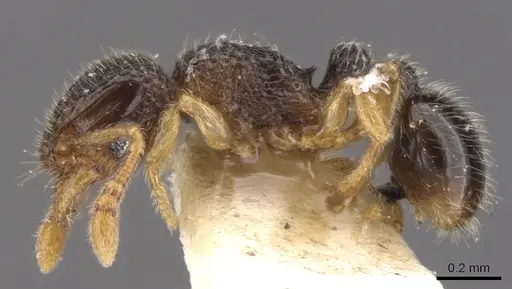
Tetramorium minimum is a tiny ant species native to West Africa. It was originally described as Triglyphothrix minima by Bolton in 1976 based on worker specimens from Ghana . The species was later transferred to the genus Tetramorium . Body color is typically dark brown to black, and the head and mesosoma have a matte surface with scattered standing hairs. They inhabit leaf litter in tropical forests and savannah margins across Ghana, Ivory Coast, and Nigeria . They have also been recorded in urban green spaces in Abidjan, Côte d'Ivoire, suggesting some tolerance for human-modified environments . Like other leaf-litter ants, they likely spend most of their time searching for small prey and tending to brood in tight soil chambers.
Quick Summary
- Difficulty: Medium
- Origin & Habitat: West Africa, Ghana, Ivory Coast, and Nigeria. Found in leaf litter of tropical forests and savannah margins [1]. Also documented in urban green spaces in Abidjan district, Côte d'Ivoire [2].
- Colony Type: Unknown, no direct data available on colony structure. Most Tetramorium species are monogyne (single queen), but this is not confirmed for T. minimum.
- Size & Growth:
- Queen: Size data unavailable, inferred from Tetramorium patterns, likely around 4-5 mm
- Worker: Size data unavailable, based on genus patterns, workers likely around 2-3 mm
- Colony: Unknown, no colony size estimate available
- Growth: Unknown, no growth rate data
- Development: Unknown, no developmental timeline data for this species. Estimated 6-8 weeks at 24-28°C based on related small Tetramorium species (All development estimates are inferred from genus patterns, direct observations are absent)
- Antkeeping:
- Temperature: As a tropical species, maintain at 24-28°C year-round. This is roughly room temperature in heated homes [1]. Avoid prolonged drops below 20°C.
- Humidity: Leaf litter habitat suggests moderate humidity. Provide a moisture gradient in the nest, one area kept damp but not waterlogged, and a drier area [1].
- Diapause: No, tropical species, no hibernation needed. Keep conditions stable year-round.
- Nesting: Y-tong (AAC) or plaster nests with small, tight chambers work well. Soil nests in a naturalistic setup also suit their leaf-litter preferences. Avoid large open spaces.
- Behavior: Due to their tiny size, escape prevention is critical. They belong to the subfamily Myrmicinae and tribe Crematogastrini, which uses a smear defense, they have a modified stinger that applies venom topically rather than stinging. Temperament is unknown, but most Tetramorium are non-aggressive. They are likely active diurnal foragers in the leaf litter.
- Common Issues: escape, their small size requires fine mesh (≤0.5mm) and tight seals on all openings, unknown founding behavior may lead to queen death if forced into incorrect setup, overfeeding and mold in small nests, remove uneaten food within 24 hours, humidity extremes, too dry kills brood, too wet causes mold, lack of species‑specific care data means trial and error is needed
Housing and Nest Setup
Because of their tiny size, Tetramorium minimum requires careful housing. Y-tong (AAC) nests with narrow, tight chambers match their natural leaf‑litter microhabitat [1]. Plaster nests with water reservoirs also work well and allow humidity control. Avoid large, open spaces in the outworld, these ants feel safest in compact foraging areas. Escape prevention is non‑negotiable: use fine mesh (≤0.5mm) on all ventilation holes and ensure lid seals are airtight. A small test tube setup works well for a founding colony, the queen can stay in the tube connected to a small outworld. Because founding details are unknown, monitor the queen closely and adjust if she seems stressed.
Feeding and Diet
Tetramorium minimum is likely omnivorous, like most Tetramorium species. Offer small protein sources, fruit flies, pinhead crickets, or tiny mealworm pieces, twice weekly. Provide sugary energy via sugar water, honey, or diluted maple syrup. In the wild they would forage for small insects and tend honeydew‑producing insects in the leaf litter. For a founding colony, a drop of sugar water every few days plus occasional small prey is sufficient. Remove uneaten prey within 24 hours to prevent mold. Since colony needs are unknown, adjust portions based on how much they consume. [1]
Temperature and Seasonal Care
As a tropical West African species, Tetramorium minimum does not hibernate. Keep temperatures in the range 24‑28°C year‑round, roughly room temperature in most heated homes [1]. If your room is cooler (below 22°C), a small heating cable on one side of the nest can create a gradient. Avoid sudden drops below 20°C, which can stress the colony and slow brood development. Stable, warm conditions mimic their native forest floor where daily temperature swings are small.
Colony Development and Growth
Little is known about colony development in T. minimum. Based on related small Tetramorium species, a single queen may produce first nanitic workers in about 6‑8 weeks at 24‑28°C. These first workers will be smaller than later generations, which is normal. Colony growth rate and maximum size are unknown, likely they remain small (a few hundred workers) but this is speculative. Patience and careful observation are essential, if development seems stalled, check temperature and food supply. [1]
Behavior and Temperament
These ants are probably peaceful and non‑aggressive, as most Tetramorium are. They do not sting in the usual sense, instead they have a modified stinger that smears venom onto the target (subfamily Myrmicinae, tribe Crematogastrini). Workers are active foragers, likely searching leaf litter for small prey. The main behavioral concern is their tiny size, making them excellent escape artists, escape prevention must be thorough. Chemical communication is typical, they will quickly exploit food sources you provide.
Frequently Asked Questions
How long does it take for Tetramorium minimum to raise their first workers?
There is no species‑specific data. Based on related small Tetramorium species, expect first workers (nanitics) in approximately 6‑8 weeks at 24‑28°C. This is an estimate, actual development may vary.
Can I keep Tetramorium minimum in a test tube setup?
Yes, test tubes work well. Use a small‑diameter tube (10‑15mm) with a water reservoir at one end, sealed with a cotton plug. The queen will likely settle in the dry end and raise her first brood there. Once workers emerge, connect the tube to a small outworld. Monitor closely because founding behavior is unconfirmed.
Do Tetramorium minimum ants sting?
No, they do not have a typical stinger. They belong to a group that uses a ‘smear’ defense, their modified stinger applies venom onto the skin rather than piercing it. Bites are harmless to humans.
How big do Tetramorium minimum colonies get?
The mature colony size is unknown. Based on similar small Tetramorium species, colonies might reach a few hundred workers, but this is speculation. No published data exists.
What do Tetramorium minimum eat?
They are probably omnivorous. Offer small protein sources like fruit flies, tiny crickets, or mealworm pieces twice weekly. Also provide sugar water, honey, or maple syrup as an energy source. Remove uneaten food promptly to prevent mold.
Do Tetramorium minimum need hibernation?
No, as a tropical species from West Africa, they do not require hibernation. Keep temperatures stable at 24‑28°C year‑round. Attempting hibernation could harm the colony.
Are Tetramorium minimum good for beginners?
They are moderate difficulty. Their small size demands good escape prevention, but tropical temperature requirements are easy to meet in most homes. The main challenge is the lack of species‑specific care data, requiring careful observation and flexibility.
Why are my Tetramorium minimum escaping?
Their tiny size allows them to squeeze through gaps that seem invisible. Check all ventilation holes, lid seams, and connection points. Use fine mesh (≤0.5mm) and ensure all seals are tight. Even the smallest opening is an escape route.
When should I move my colony to a formicarium?
Wait until the colony has at least 20‑30 workers before moving to a formicarium. The test tube works well for founding. Y‑tong or plaster nests provide better humidity control later. Because growth rate is unknown, monitor the colony size rather than relying on a timeline.
Can I keep multiple Tetramorium minimum queens together?
Not recommended without confirmation. Most Tetramorium species are monogyne (single queen). Combining unrelated queens typically leads to fighting. Keep one queen per colony.
Report an Issue
The current care sheet is based fully on literature. See inconsistencies, or something that's incorrect? Please , it will be resolved after review from an admin. Contributing to the blogs tab also helps providing information, to make us be able to further improve the caresheets. Thank you for your support!
References

This caresheet is licensed under CC BY-SA 4.0 .
Community Blogs
CASENT0217070
View on AntWeb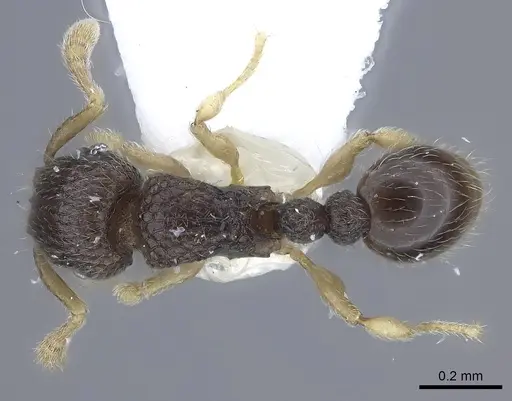
CASENT0901150
View on AntWeb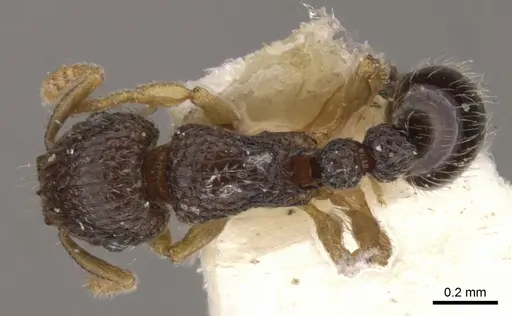
Literature
Loading distribution map...Loading products...