
Tetramorium marojejy
- Sci. Name
- Tetramorium marojejy
- Tribe
- Crematogastrini
- Subfamily
- Myrmicinae
- Author
- Hita Garcia & Fisher, 2012
- Distribution
- Found in 1 countries
Introduction
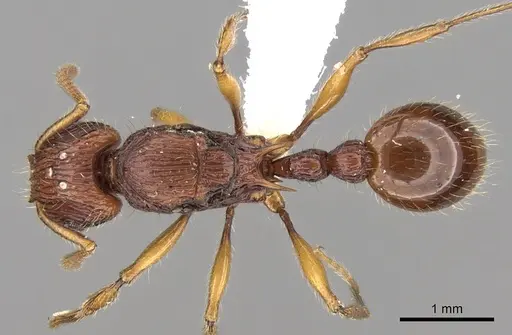
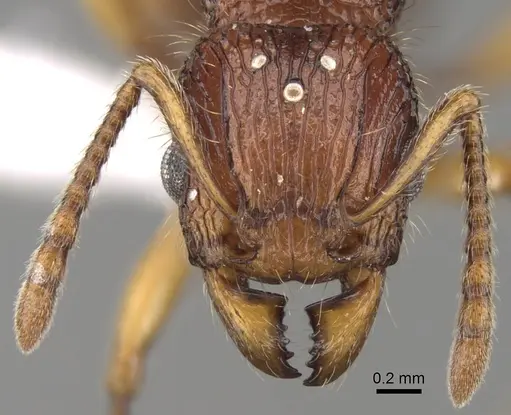
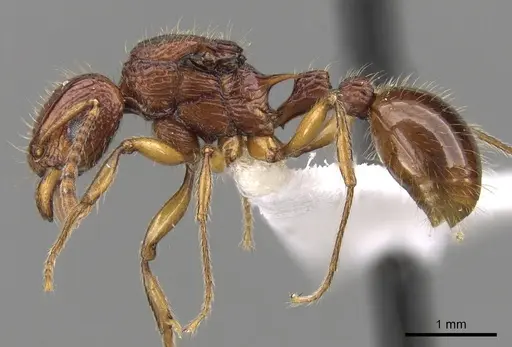
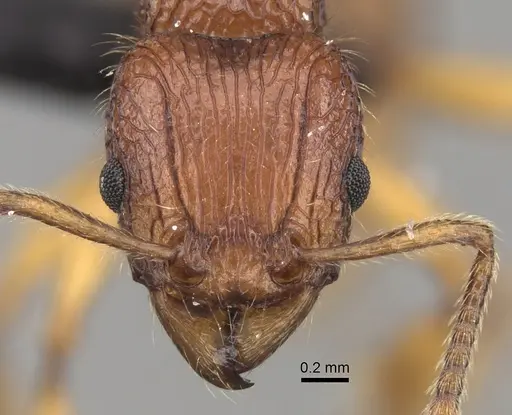
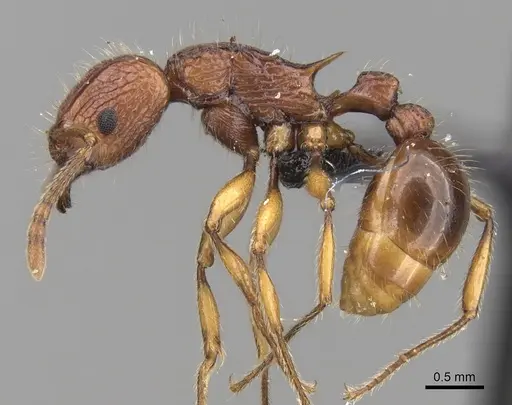
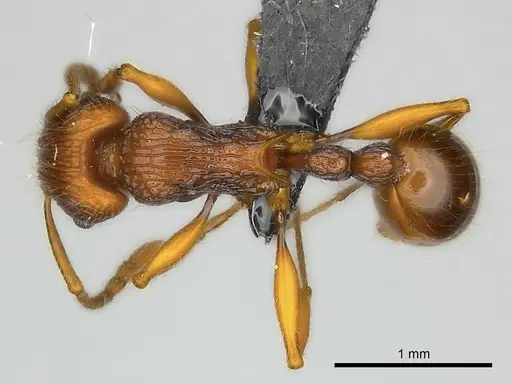
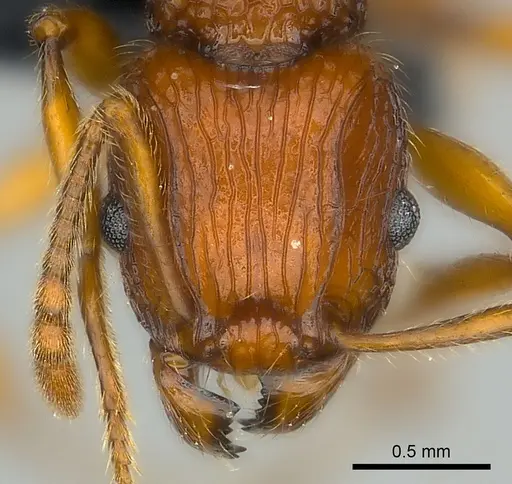
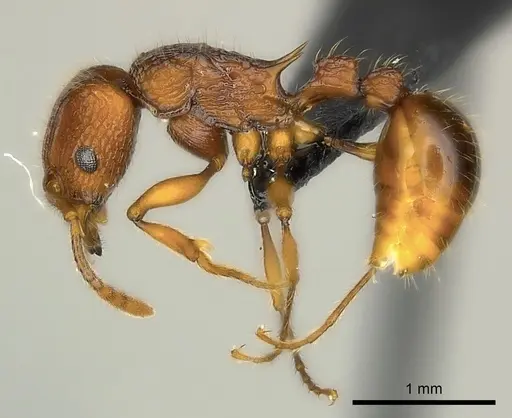
Tetramorium marojejy is a small ant known only from northeastern Madagascar, where it lives in montane rainforests at 1200-1325 m elevation. Workers are uniform orange to pale brown, which is unique in their species complex, most relatives are dark. They have long propodeal spines and lots of standing hairs on the first gastral segment . This species was only described in 2012,so most of its biology in captivity is not documented. Like other members of the Tetramorium tortuosum group, they forage in leaf litter and likely nest in soil or under debris.
Quick Summary
- Difficulty: Medium
- Origin & Habitat: Endemic to two locations in northeastern Madagascar: Marojejy National Park and Anjanaharibe-Sud. They live in montane rainforests at elevations of 1200-1325 m, where they are collected from leaf litter [1].
- Colony Type: Colony structure is unconfirmed. No data exists for this species. Related Tetramorium are usually monogyne (single queen), but this is not confirmed.
- Size & Growth:
- Queen: Unknown from literature, inferred from the Tetramorium genus (~5-7 mm).
- Worker: Unknown from literature, inferred from the Tetramorium genus (~2-3 mm).
- Colony: Not documented for this species. Related Tetramorium can reach several hundred workers, but this is an estimate.
- Growth: Moderate (estimated from genus patterns).
- Development: Estimated 6-8 weeks at optimal temperature, based on typical Tetramorium development. (No specific data for T. marojejy, timing may vary with temperature and humidity.)
- Antkeeping:
- Temperature: Keep around 22-26 °C. As a montane species from Madagascar, it prefers cooler conditions than lowland tropical ants. Avoid temperatures above 28 °C. Room temperature is often suitable.
- Humidity: Needs moderate to high humidity, think damp forest floor leaf litter. Keep the nest substrate consistently moist but not waterlogged. Provide a humidity gradient if possible, with one slightly drier area.
- Diapause: Unknown. Since Madagascar is tropical, true hibernation is unlikely, but you might see reduced activity during cooler months. No special cold treatment is needed.
- Nesting: In the wild they nest in leaf litter. In captivity, use a test tube setup for founding, then switch to a nest with moist substrate (dirt, plaster, or a naturalistic formicarium). Keep chambers small and humid.
- Behavior: Small, ground‑dwelling ants that forage in leaf litter. They are not aggressive and will flee from threats. Their tiny size makes escape prevention critical, they can slip through very small gaps. They belong to the tribe Crematogastrini, which uses a smear defense: they apply venom with a flattened stinger instead of stinging. If disturbed, they may smear venom on attackers. For keepers, this means they pose no real sting threat.
- Common Issues: escape prevention is critical, their small size means they can squeeze through standard barrier setups, humidity management is tricky, too wet causes mold, too dry causes desiccation, limited captive breeding information makes troubleshooting difficult, slow colony growth can lead to overfeeding and mold problems, wild‑caught colonies may carry parasites or be stressed from collection
Housing and Nest Setup
Since Tetramorium marojejy is a tiny leaf‑litter species, its nest needs to hold moisture well while keeping the ants securely inside. A test tube setup is ideal for a founding queen, use a small water reservoir and keep the tube humid but not flooded. For larger colonies, a naturalistic formicarium with dirt or plaster substrate works better than acrylic. The chambers should be small, because these ants feel secure in tight spaces. Most importantly, prevent escapes: use fluon on test tube rims and fine mesh on any ventilation holes. Their small size means they can get through gaps that would stop bigger ants [1].
Feeding and Diet
Like other Tetramorium, T. marojejy likely eats a mix of proteins and sugars. Offer sugar water, honey, or diluted syrup as a constant energy source. For protein, provide small live prey such as fruit flies, pinhead crickets, or small mealworms. They may also collect honeydew from aphids. Feed small amounts several times per week and remove uneaten prey after 24 hours to prevent mold. Because the workers are tiny, even very small portions are enough.
Temperature and Humidity Management
This species comes from montane rainforests, so it prefers cooler conditions than typical tropical ants. Aim for 22-26°C in the nest area, avoid anything above 28°C. Room temperature is often fine if your home stays in that range. For humidity, keep the substrate consistently moist, like damp forest floor leaf litter. Check regularly and rehydrate when the surface starts to dry out. Adding a layer of moss or leaf litter in the outworld helps maintain humidity and gives the ants natural cover [1].
Colony Founding and Growth
Queen founding behavior is not directly documented for this species. Most Tetramorium queens found claustrally, they seal themselves in a small chamber and raise the first workers using stored fat reserves. Expect the founding chamber to be small and humid. The first workers (nanitics) will be smaller than mature ones. Growth rate is likely moderate, colonies may take several months to reach 50 workers and a year or more to grow larger. Be patient and avoid disturbing the queen during founding. Once workers appear, start feeding consistently.
Handling and Behavior
These ants are not aggressive and prefer to flee rather than fight. They have a modified stinger used for smearing venom, not piercing, so they pose no real sting threat. If you need to move them, use gentle coaxing instead of grabbing. The main concern is escape prevention, their tiny size allows them to slip through gaps that seem too small. Check barriers regularly and use multiple safeguards (fluon, fine mesh, tight lids) if you see escape attempts. Workers actively search for food in the outworld and are interesting to observe. [1]
Frequently Asked Questions
How long does it take for Tetramorium marojejy to produce first workers?
Based on typical Tetramorium development, expect 6-8 weeks from egg to first worker at optimal temperature. This is an estimate since no specific data exists for this species. The queen will seal herself in during founding, do not disturb her.
What do Tetramorium marojejy ants eat?
They likely accept standard ant foods: sugars (honey water, sugar water) for energy and small protein sources (fruit flies, small insects, mealworms) for growth. Feed small amounts several times per week and remove uneaten food promptly.
Can I keep Tetramorium marojejy in a test tube?
Yes, a test tube setup works well for founding colonies. Use a small water reservoir and keep the tube humid but not flooded. Ensure excellent escape prevention, these tiny ants can slip through standard barriers. Use fluon on the rim and fine mesh over openings.
Do Tetramorium marojejy ants sting?
No, they do not sting in the usual sense. As members of the tribe Crematogastrini, they use a smear defense: they apply venom with a flattened stinger instead of piercing. This is not harmful to humans.
What temperature do Tetramorium marojejy ants need?
Keep them at 22-26°C. As a montane species from Madagascar, they prefer cooler conditions than typical tropical ants. Avoid temperatures above 28°C. Room temperature is often suitable [1].
Are Tetramorium marojejy good for beginners?
This species is rated medium difficulty. While not aggressive and fairly simple to house, the main challenges are their tiny size (escape prevention is critical), humidity management, and limited available information since this species was only described in 2012 and has no captive breeding history.
How big do Tetramorium marojejy colonies get?
Colony size is not documented for this species. Based on related Tetramorium, colonies likely reach several hundred workers over 1-2 years. Growth is moderate, be patient with founding colonies.
Do Tetramorium marojejy need hibernation?
True hibernation is unlikely, as a montane species from tropical Madagascar, they do not experience cold winters. However, you may notice reduced activity during cooler months. Monitor your colony and reduce feeding if they become less active, no special cooling treatment is required.
Why are my Tetramorium marojejy escaping?
Their tiny size lets them squeeze through gaps that would hold larger ants. Use multiple escape prevention methods: fluon on test tube rims, fine mesh on openings, and tight-fitting lids. Check barriers regularly, even small gaps can be escape routes.
Where is Tetramorium marojejy native to?
This species is native only to northeastern Madagascar. It is known from only two locations: Marojejy National Park and Anjanaharibe-Sud, both montane rainforests at 1200-1325 m elevation. It was described in 2012 [1].
Report an Issue
The current care sheet is based fully on literature. See inconsistencies, or something that's incorrect? Please , it will be resolved after review from an admin. Contributing to the blogs tab also helps providing information, to make us be able to further improve the caresheets. Thank you for your support!
References

This caresheet is licensed under CC BY-SA 4.0 .
Community Blogs
Literature
Loading distribution map...Loading products...