
Tetramorium manni
- Sci. Name
- Tetramorium manni
- Tribe
- Crematogastrini
- Subfamily
- Myrmicinae
- Author
- Bolton, 1985
- Distribution
- Found in 2 countries
Introduction
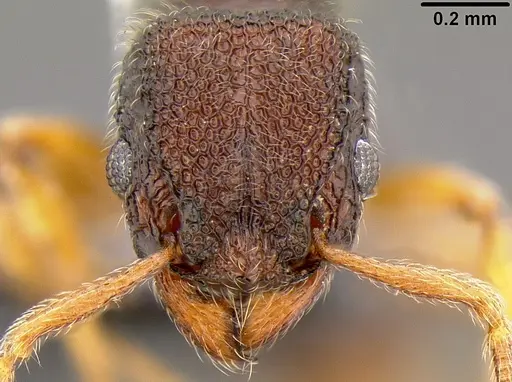
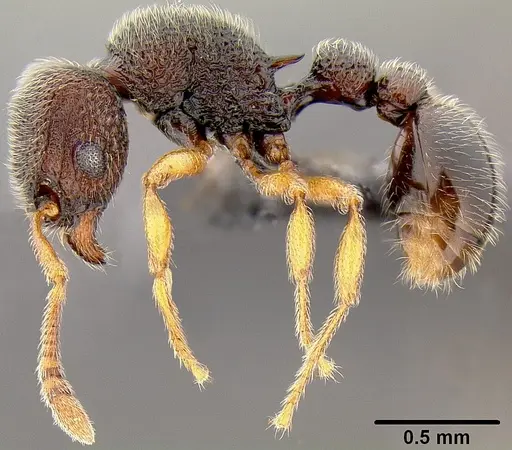
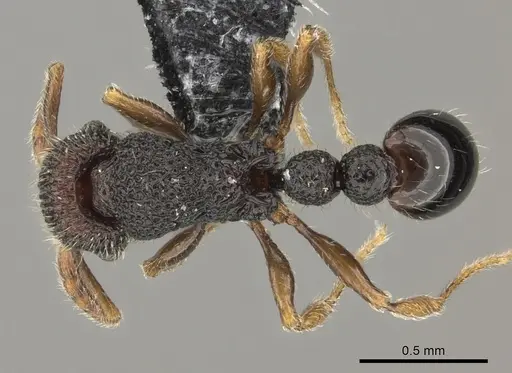
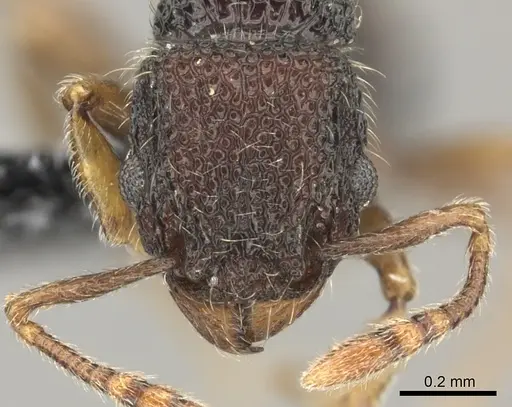
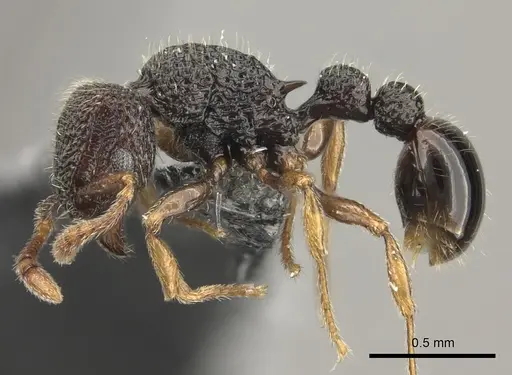
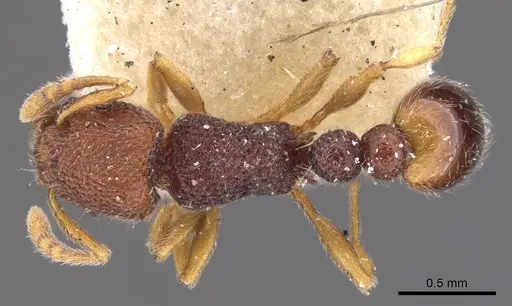
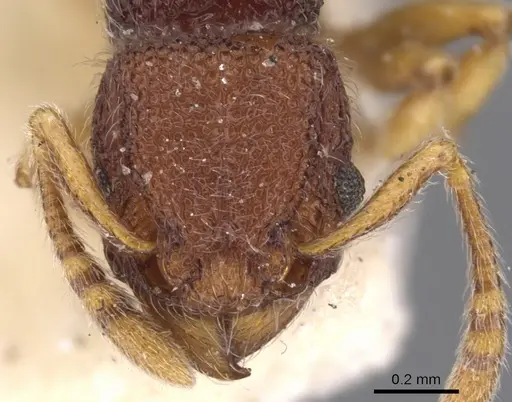
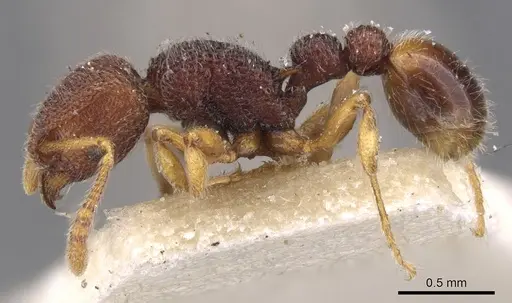
Tetramorium manni is a small, ground-dwelling ant species endemic to the Fiji Islands. Workers are tiny, roughly 2-3 mm, with the typical Tetramorium appearance: a rough, textured body and a distinct two-segmented petiole (the narrow waist between thorax and abdomen). The species was originally described as Triglyphothrix pacifica in 1921 before being renamed by Bolton in 1985 due to a naming conflict. It belongs to the subfamily Myrmicinae and tribe Crematogastrini, which includes many small litter-dwelling ants across the Indo-Pacific region . This is one of Fiji's few endemic ants, recorded only on Viti Levu and a few Yasawa islands . It lives in leaf litter and upper soil layers of forests, scrubland, and coconut plantations, but appears rarely in field samples - only about 3-4% of litter samples contain it . That makes it an uncommon species even in its native habitat, and captive colonies are almost unheard of in the hobby.
Quick Summary
- Difficulty: Medium
- Origin & Habitat: Endemic to Fiji, found on Viti Levu and a few Yasawa islands. Inhabits forest floor litter, scrubland, and coconut plantations at low frequencies [3][1].
- Colony Type: Unknown. Colony structure has not been documented. Most Tetramorium species are monogyne (single queen), but this has not been confirmed for Tetramorium manni.
- Size & Growth:
- Queen: Estimated 5-7 mm based on typical Tetramorium queens (inferred from genus) [4]
- Worker: Estimated 2-3 mm based on typical Tetramorium workers (inferred from genus) [4]
- Colony: Unknown, likely modest, similar to other litter-dwelling Tetramorium, but no species-specific data (estimated from genus patterns)
- Growth: Unknown, no development data available
- Development: Estimated 6-10 weeks at tropical temperatures (inferred from common Tetramorium development) (Timeline is an estimate, no species-specific measurements exist.)
- Antkeeping:
- Temperature: Keep warm year-round,24-28 °C. As a tropical species from Fiji, they cannot handle prolonged cold. Room temperature (20-24 °C) may work but is suboptimal. A heating cable on one side creates a gradient. Avoid drafts and sudden swings.
- Humidity: High humidity is essential, keep the nest substrate consistently damp (like a squeezed-out sponge) but not waterlogged. The foraging area can be drier. Good ventilation is needed to prevent mold.
- Diapause: No. As a tropical species from Fiji, they stay active all year. Maintain consistent warm conditions.
- Nesting: Use a naturalistic setup with moist soil/coco fiber substrate, or a Y-tong/plaster nest with a water reservoir. These ants naturally nest in leaf litter and loose soil, so they appreciate multiple small chambers and plenty of floor space. Avoid dry, airy nests.
- Behavior: Docile and non-aggressive, typical of small litter-dwellers. They forage individually in leaf litter, looking for small arthropods and sweet liquids. Their sting is weak and rarely used. Escape prevention is critical: workers are tiny and can slip through standard barriers. Use fine mesh and tight-fitting lids.
- Common Issues: small size makes escape prevention critical, use fine mesh and tight seals, high humidity requirements can cause mold if ventilation is poor, limited availability, almost never seen in the hobby, needs year-round heating, room temperature often too cool, low wild frequency suggests sensitivity to environmental changes
Natural History and Distribution
Tetramorium manni is endemic to Fiji, found nowhere else on Earth. It was originally described in 1921 by William M. Mann as Tetramorium pacificum, but that name was already taken, so Bolton renamed it in 1985 [1][2]. It has been recorded only from Viti Levu (the largest island) and a few Yasawa islands [1][2].
Field surveys show it is one of the less common Fijian ants. Researchers found it in only 3-4% of leaf litter samples, mostly in forest (5% frequency), less in scrub (2.5%), and rarely in coconut plantations (1.7%) [3]. This suggests it prefers shaded, humid spots with plenty of leaf litter. Early naturalists reported it from Fiji back in the 1920s, and modern surveys continue to find it at low densities, confirming its status as a genuine endemic.
Housing and Nest Setup
To keep Tetramorium manni, mimic its natural litter-dwelling environment. A naturalistic terrarium works best, use a shallow container filled with moist, loose substrate (soil mixed with coco fiber). The substrate should be deep enough for the ants to dig small chambers but not so deep it becomes anaerobic.
A Y-tong or plaster nest can also work if you add a water reservoir for humidity. However, these ants like to forage over a wider area than a small nest chamber, so a large foraging area with leaf litter, bark pieces, and other forest-floor debris is ideal. Keep the nest area humid (substrate damp but not wet) and the foraging area slightly drier. Good ventilation is important to prevent mold. Spot-clean uneaten food and replace substrate if mold appears. [4]
Feeding and Diet
Like most Tetramorium, Tetramorium manni is an omnivore. Offer sugar water (diluted 1:4 with water) constantly via a test tube or small feeder. Provide protein 2-3 times a week, fruit flies, small mealworms, pinhead crickets, or other tiny prey. Because the ants are tiny and docile, they prefer slow-moving or dead prey.
Some keepers also offer honeydew by placing potted plants with aphids in the outworld, but this is optional. Remove any leftover protein after 24-48 hours to stop mold. A balanced diet of sugar and protein will support colony growth. [4]
Temperature and Seasonal Care
As a tropical species from Fiji, Tetramorium manni needs warmth all year. Keep the nest at 24-28 °C. Below 22 °C, activity drops and the colony may become stressed. Avoid sustained heat above 32 °C. A small heating cable on one side creates a useful gradient.
Unlike temperate ants, this species does not require winter diapause, it stays active year-round. Plan for year-round heating if your room temperature falls below their preferred range. Keep the setup away from drafts, windows, and a/c vents. Stable warmth is key for this tropical native. [4]
Colony Founding and Growth
The founding method of Tetramorium manni has not been documented. Based on typical Tetramorium patterns, the queen may seal herself in a small chamber and raise her first workers on stored reserves (claustral founding), but this is speculation. Do not disturb the founding chamber, disturbance often kills the queen.
Colony growth is expected to be slow to moderate. From egg to first worker likely takes 6-10 weeks at 26 °C. The colony will stay small for a long time, reaching 50-100 workers could take a year or more. Full maturity with a few hundred workers may take 2-3 years under ideal conditions. Be patient and avoid overhandling. [4]
Frequently Asked Questions
How long does it take for Tetramorium manni to produce first workers?
Based on common Tetramorium development, expect 6-10 weeks from egg to first worker at around 26 °C. This is an estimate, no species-specific data exists.
Can I keep Tetramorium manni in a test tube setup?
A test tube works for a founding queen or a very small colony, but these ants prefer a naturalistic setup with more floor space. If you use a test tube, keep humidity high and move to a larger habitat once the colony reaches about 20-30 workers.
Do Tetramorium manni ants sting?
As a Myrmicinae ant, they have a stinger, but due to their tiny size and docile nature, stings are very rare and mild. The real risk is escape, not stings. Focus on secure barriers.
What temperature do Tetramorium manni ants need?
Keep them at 24-28 °C year-round. As a tropical species, they cannot tolerate cold. A heating cable on one side helps maintain the gradient.
How big do Tetramorium manni colonies get?
No species-specific data exists. Inferred from similar litter-dwelling Tetramorium, colonies likely reach a few hundred workers at most. Their low frequency in wild samples [3] suggests naturally small populations.
Do Tetramorium manni need hibernation or diapause?
No. As a tropical species, they stay active all year and do not require a winter rest period. Maintain warm, stable conditions year-round.
What do Tetramorium manni ants eat?
They are omnivores. Provide constant sugar water and protein 2-3 times per week (fruit flies, small mealworms, pinhead crickets). Remove leftovers after 24-48 hours.
Is Tetramorium manni good for beginners?
This species is rated medium difficulty. The need for high humidity, stable warmth, and very secure escape prevention makes it better for keepers with some experience. Also, it is almost unavailable in the hobby.
Why are my Tetramorium manni dying?
Common causes include: temperatures below 22 °C, substrate too dry, mold from over-wetting, insufficient protein, or escape. Check each factor and adjust.
Can I keep multiple queens together?
No data exists for this species. Most Tetramorium are monogyne, so combining unrelated queens is not recommended without evidence of pleometrosis.
Report an Issue
The current care sheet is based fully on literature. See inconsistencies, or something that's incorrect? Please , it will be resolved after review from an admin. Contributing to the blogs tab also helps providing information, to make us be able to further improve the caresheets. Thank you for your support!
References

This caresheet is licensed under CC BY-SA 4.0 .
Community Blogs
Literature
Loading distribution map...Loading products...