
Tetramorium kheperra
- Sci. Name
- Tetramorium kheperra
- Tribe
- Crematogastrini
- Subfamily
- Myrmicinae
- Author
- Bolton, 1976
- Distribution
- Found in 3 countries
Introduction
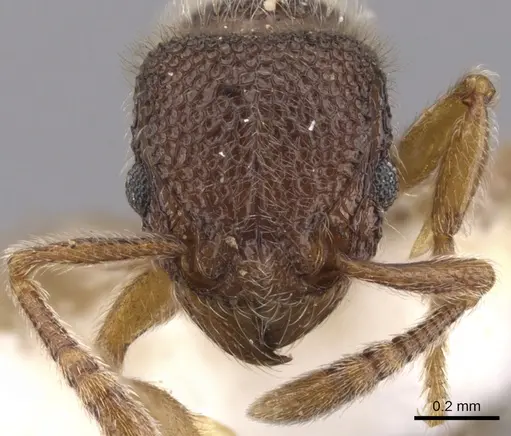
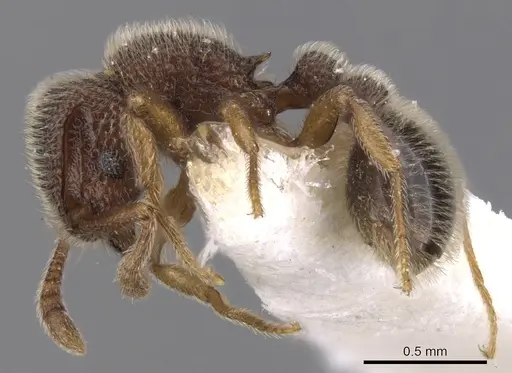
Tetramorium kheperra is a small ant in the Myrmicinae subfamily. Workers have a puncto-reticulate head, a deep antennal scrobe, and long propodeal spines that are longer than the propodeal lobes. The first gastral tergite is smooth and shiny, covered in dense, branched hairs that are uniquely trifid (split into three points), forming a felt-like layer . This species belongs to the walshi group . It is a widespread tramp species native to Southeast Asia, found from India and southern China to Indonesia and the Philippines . It thrives in disturbed habitats and likely nests underground in soil or root systems, as specimens were found among roots of imported plants in Kew Gardens, London . It has also been collected from leaf litter in lowland dipterocarp forests in Brunei .
Quick Summary
- Difficulty: Expert
- Origin & Habitat: Native to the Indomalaya region (Borneo, Brunei, Cambodia, India, Indonesia, Malaysia, Philippines, Singapore, Vietnam, southern China) [1][2][3]. Found in disturbed habitats, leaf litter, and likely nests underground in soil or root systems [1][2][4]. Classified as an exotic/tramp species in some areas [5].
- Colony Type: Polygynous (multiple queens per colony) [6][7]. Colonies propagate through independent founding (haplometrosis) and budding (splitting) [6][7].
- Size & Growth:
- Queen: Undescribed, no queen specimens available in studied material [1][2]
- Worker: Not directly measured, typical Tetramorium workers are around 3–5 mm (inferred from genus patterns)
- Colony: Not specifically documented, likely moderately large (up to several thousand workers) due to polygyny and tramp status [6][7]
- Growth: Moderate
- Development: Not documented in the literature, estimated 6–8 weeks based on typical tropical Tetramorium development (inferred) (Development time is unstudied, estimate assumes warm, stable temperatures (24–26°C).)
- Antkeeping:
- Temperature: Keep at 22–28°C – this tropical species needs warmth. A gentle gradient so workers can self-regulate is ideal (inferred from native tropical climate) [1][2].
- Humidity: Keep the nest substrate consistently moist but not waterlogged. Provide a humidity gradient with one area wetter. Specific percentages are not documented, aim for visibly moist soil.
- Diapause: Not required – as a tropical species, Tetramorium kheperra does not need hibernation. Maintain warm conditions year-round (inferred from native range).
- Nesting: Prefers soil-based or naturalistic setups. Evidence suggests underground nesting [1][2], so use a Y‑tong (AAC), plaster, or all‑soil nest with deep substrate for tunneling.
- Behavior: Tetramorium kheperra uses a modified spatulate stinger to smear venom onto enemies (defense mechanism typical of Crematogastrini). Workers are not aggressive to humans and are generally calm. They are active foragers in the soil and leaf litter and are classified as harvester ants [8]. Their small size means they can escape through tiny gaps, so escape prevention must be excellent.
- Common Issues: small size requires fine mesh barriers to prevent escape., tropical species cannot tolerate cold – keep above 20°C at all times., queen founding behavior is unstudied, so colony establishment may be uncertain., WARNING: This is an exotic/tramp species. Never release captive colonies into the environment, they can become invasive.
Distribution and Range
Tetramorium kheperra has an extensive native range across the Indomalaya region: Borneo, Brunei, Cambodia, India (Assam), Indonesia (Sulawesi, Bali, Java, Kalimantan, Sumatra, Mentawai, Sumba, Prinsen Islands), Malaysia (Sabah, Sarawak, Malay Peninsula), Myanmar (Yangon), Philippines (Palawan), Singapore, Thailand, and Vietnam [1][2]. It has also been recorded in southern China and was recently found on Hainan Island [3]. As a tramp species, it has been moved by human activity – for example, it appeared in Kew Gardens, London, in 1974 among roots of a plant imported from Assam [1][2]. In Xishuangbanna, China, it is considered an exotic species and was found in forest habitats but not in rubber plantations [5].
Natural History and Nesting
In the wild, Tetramorium kheperra appears to nest underground or in root systems. This inference is based on specimens found among plant roots in Kew Gardens [1][2]. It has also been collected from leaf litter in a lowland dipterocarp forest in Brunei using extraction methods, indicating it forages on the forest floor [4]. The species is common in disturbed habitats, botanical gardens, and agricultural areas [9][8]. In West Sumatra, it was found in wheat plantations and classified as a harvester ant [8].
Colony Structure
Tetramorium kheperra is polygynous – multiple egg‑laying queens coexist in the same nest [6][7]. This social structure helps the species spread quickly and sustain large populations. Colony propagation occurs through both independent founding (a lone queen starting a colony) and budding (a queen leaves with some workers to found a new nest) [6][7]. Like many ants, this species is infected with A‑group Wolbachia bacteria, which can influence reproduction [6][7].
Housing and Nest Setup
Because Tetramorium kheperra likely nests underground [9812
Report an Issue
The current care sheet is based fully on literature. See inconsistencies, or something that's incorrect? Please , it will be resolved after review from an admin. Contributing to the blogs tab also helps providing information, to make us be able to further improve the caresheets. Thank you for your support!
References

This caresheet is licensed under CC BY-SA 4.0 .
Community Blogs
CASENT0276744
View on AntWeb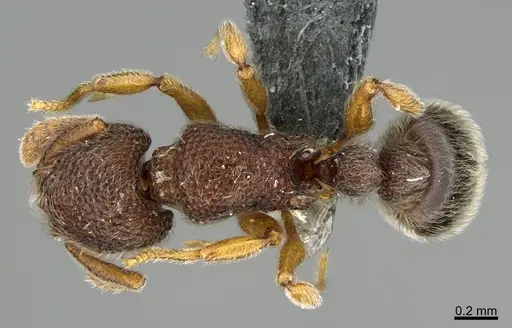
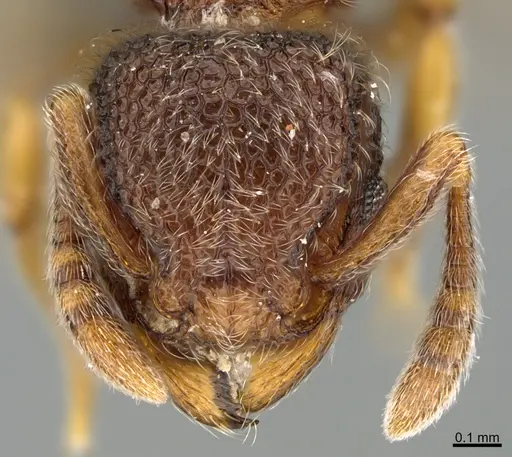
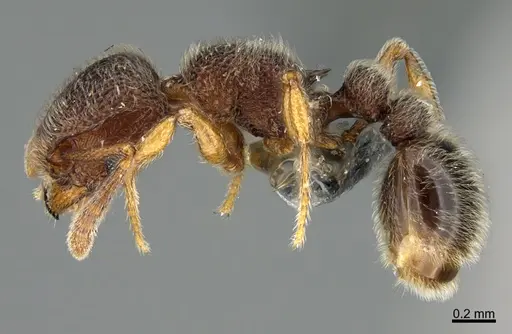
CASENT0901062
View on AntWeb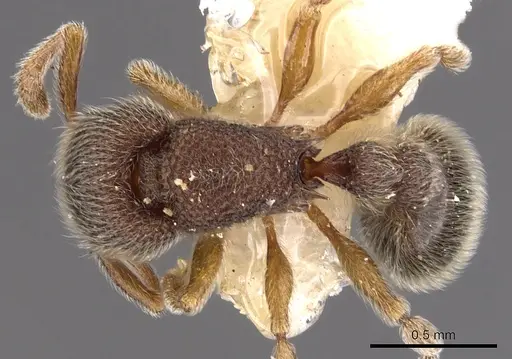
Literature
Loading distribution map...Loading products...