
Tetramorium intextum
- Sci. Name
- Tetramorium intextum
- Tribe
- Crematogastrini
- Subfamily
- Myrmicinae
- Author
- Santschi, 1914
- Distribution
- Found in 2 countries
Introduction
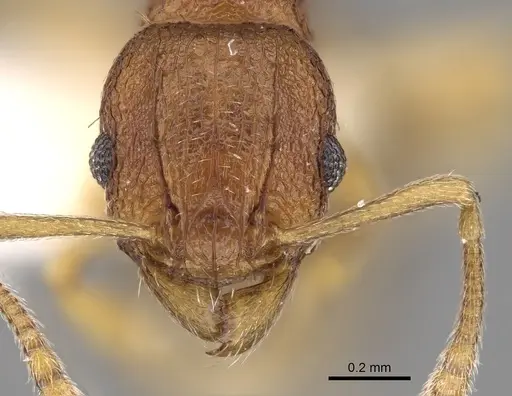
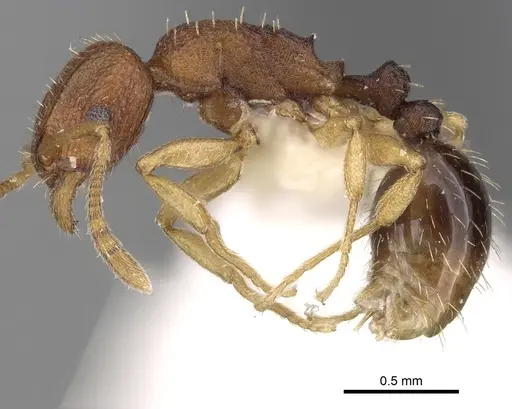
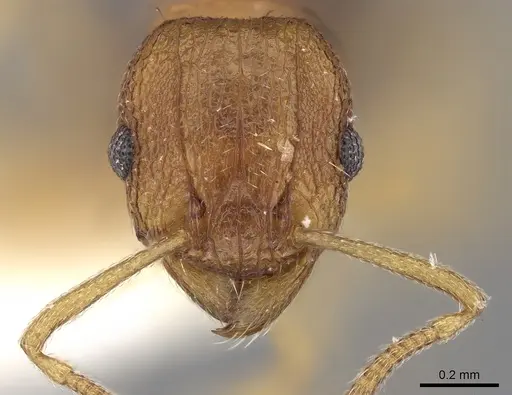
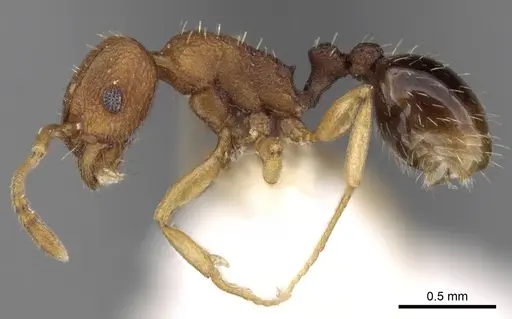
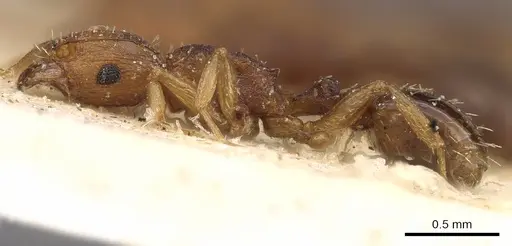
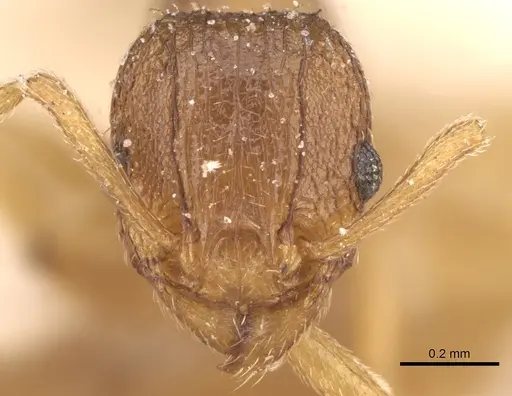
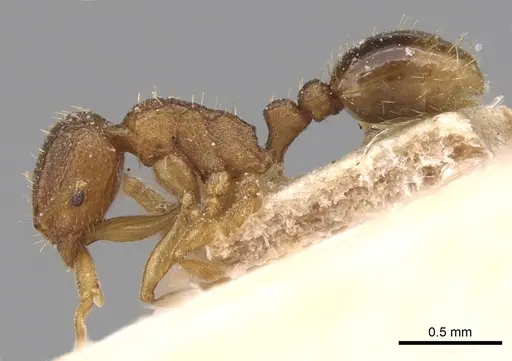
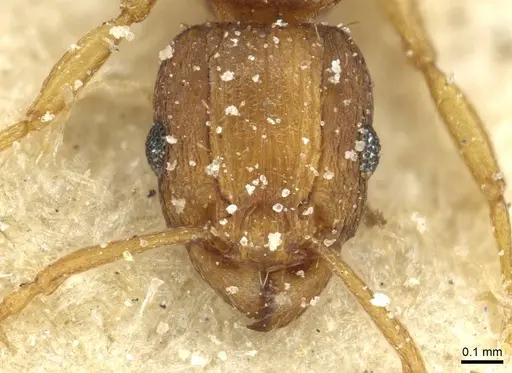
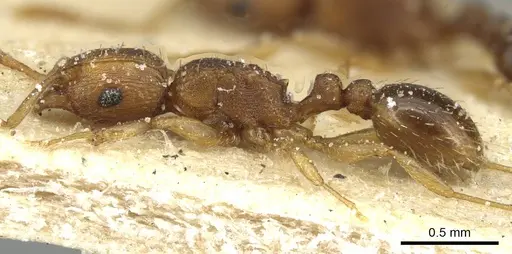
Tetramorium intextum is a tiny ant with workers measuring 2.2mm in length and a reddish-brown color . It was first collected at the Blue Post Hotel area in Kikuyu, Kenya, at about 1520m elevation . The genus Tetramorium is known for ground-nesting habits, and this species fits that pattern as a small, reddish ant native to East African highlands. Because it belongs to the tribe Crematogastrini, its stinger is modified into a spatula shape for smearing venom rather than piercing.
Quick Summary
- Difficulty: Medium
- Origin & Habitat: Known only from the Blue Post Hotel area in Kikuyu, Kenya, at approximately 1520m elevation [1]. This suggests a cool, highland tropical environment.
- Colony Type: Unknown. Based on typical Tetramorium patterns, likely single-queen (monogyne) colonies, but this has not been confirmed.
- Size & Growth:
- Queen: No data available. By genus inference, Tetramorium queens are usually 5-7mm, but this estimate is uncertain.
- Worker: 2.2mm [1]
- Colony: Unknown. Many small Tetramorium species can reach a few hundred workers, but no colony size data exists for this species.
- Growth: Moderate, inferred from related Tetramorium species.
- Development: Estimated 6-10 weeks at 22-24°C, based on known Tetramorium development. (No species-specific development data exists, this timeline is an estimate.)
- Antkeeping:
- Temperature: 20-24°C, based on the elevation (1520m) of its natural habitat. Avoid exceeding 28°C. A simple room-temperature setup often works.
- Humidity: Moderate, keep nest substrate slightly moist but not waterlogged. Allow some ventilation to prevent mold.
- Diapause: Unlikely to require a true diapause given the equatorial highland origin. If you observe a winter slowdown, a mild cooling to 15-18°C for a few weeks could be tried, but this is untested.
- Nesting: Small chambers suited to tiny ants. Y-tong (AAC), plaster, or test tube setups work well. Avoid large open spaces, provide narrow passages and tight-fitting chambers.
- Behavior: Generally peaceful. Their stinger is modified for smearing venom rather than stinging, so they pose no danger to keepers. Tiny size makes escape prevention critical, they can slip through gaps smaller than 1mm. Foraging is typically in small groups.
- Common Issues: escape prevention is the biggest challenge, use fluon barriers and fine mesh (0.5mm or smaller) on all openings., workers are tiny and can only handle very small prey, offer fruit flies, pinhead crickets, or tiny mealworms., colony growth may be slow initially, requiring patience., very little is known about this species in captivity, be prepared to experiment and share findings.
Housing and Escape Prevention
Tetramorium intextum workers are only 2.2mm long [1], so escape prevention is your top concern. Use test tubes with tightly packed cotton plugs, or switch to Y-tong (AAC) nests with narrow passages. Seal all connections with fluon or a similar barrier. For ventilation, use fine mesh with holes no larger than 0.5mm. A thin fluon ring around the rim of the outworld adds extra security. Check regularly for gaps, these ants can squeeze through spaces you'd think impossible.
Feeding and Diet
Like most Tetramorium, these ants are omnivorous. Offer small live prey suited to their size: fruit flies, pinhead crickets, tiny mealworms, or chopped bloodworms. They also accept sugar water (diluted honey or syrup) from a small test tube with a cotton wick. Avoid prey larger than the workers, a 2.2mm ant cannot handle a full-sized cricket. Feed protein every 2-3 days and remove leftovers to prevent mold. Keep a constant source of sugar water.
Temperature and Seasonal Care
Based on the 1520m elevation of their type locality [1], keep them at 20-24°C year-round. They can tolerate brief drops to 15°C but avoid prolonged heat above 28°C. Since they come from an equatorial highland, seasonal variation is minimal, a winter rest is probably unnecessary. Monitor colony activity, if workers become sluggish, the temperature might be too low, if they avoid the nest area, it may be too warm.
Nesting Preferences
In the wild, Tetramorium species nest in soil or under stones. For captivity, provide chambers scaled to the ants' tiny size, passages 3-5mm wide work well. Y-tong (AAC) nests, plaster nests, or even a simple test tube with a connected dirt chamber are all good options. Keep the substrate slightly moist but well-drained, and avoid waterlogging. These ants feel safest in tight, dark spaces, so give them chambers they can fully occupy.
Colony Establishment
When you get a queen, place her in a test tube setup with a water reservoir and keep it dark and undisturbed. She is likely claustral, meaning she will seal herself in and raise the first workers on her stored fat reserves. Do not check daily, stress can cause her to eat eggs. First nanitic workers should appear in 6-10 weeks (estimated from related Tetramorium). These tiny workers need appropriately small food. The colony will grow slowly at first, so be patient. Once workers number a few dozen, you can consider moving them to a small formicarium.
Frequently Asked Questions
How long does it take for Tetramorium intextum to produce first workers?
Estimated 6-10 weeks at 22-24°C, based on related Tetramorium species. No specific data exists for this species.
Can I keep Tetramorium intextum in a test tube?
Yes, a test tube works for founding colonies. Ensure the cotton plug is tight, these tiny ants can escape through very small gaps. Once the colony has 20-30 workers, you can move them to a small Y-tong or plaster nest.
What do Tetramorium intextum ants eat?
They eat small live prey like fruit flies, pinhead crickets, and tiny mealworms. They also take sugar water. Avoid prey much larger than themselves.
Do Tetramorium intextum ants sting?
They have a modified stinger used for smearing venom, not for stinging. They are harmless to humans and rarely bite.
How big do Tetramorium intextum colonies get?
Unknown. Based on similar small Tetramorium, colonies may reach a few hundred workers, but this has not been confirmed.
Do Tetramorium intextum need hibernation?
Probably not. Their equatorial highland home has little seasonal temperature change, so a winter rest is likely unnecessary.
Are Tetramorium intextum good for beginners?
They are moderate difficulty. The main challenge is escape prevention due to their tiny size. If you are careful with sealing and can provide appropriately small food, they are manageable. Slow growth requires patience.
Why are my Tetramorium intextum escaping?
Workers are only 2.2mm [1] and can squeeze through very tiny gaps. Check lid seams, ventilation holes, and connection points. Apply fluon barriers and use fine mesh (0.5mm or finer) on vents.
What temperature is best for Tetramorium intextum?
Keep them at 20-24°C. Their elevation (1520m) suggests they prefer cool conditions. Avoid temperatures above 28°C.
When should I move my colony to a formicarium?
Move once the colony reaches about 20-30 workers and the test tube seems crowded. Use a small Y-tong or plaster nest with narrow chambers, large open spaces stress them.
Report an Issue
The current care sheet is based fully on literature. See inconsistencies, or something that's incorrect? Please , it will be resolved after review from an admin. Contributing to the blogs tab also helps providing information, to make us be able to further improve the caresheets. Thank you for your support!
References

This caresheet is licensed under CC BY-SA 4.0 .
Community Blogs
CASENT0280857
View on AntWeb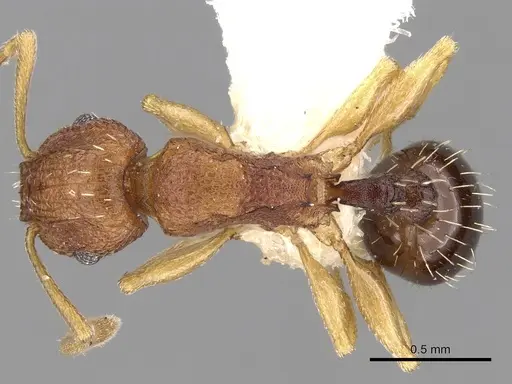
CASENT0280918
View on AntWeb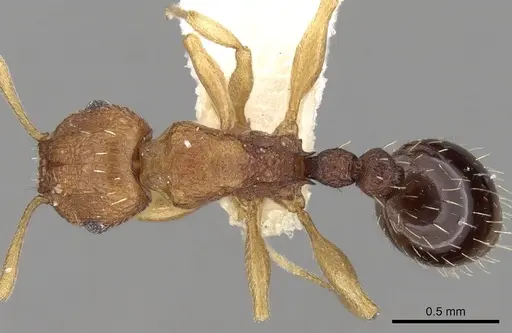
CASENT0901218
View on AntWeb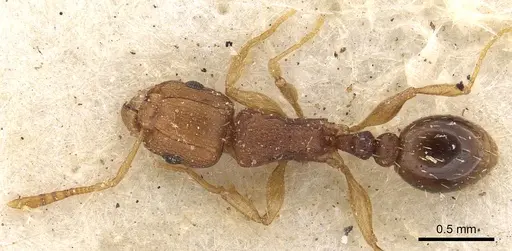
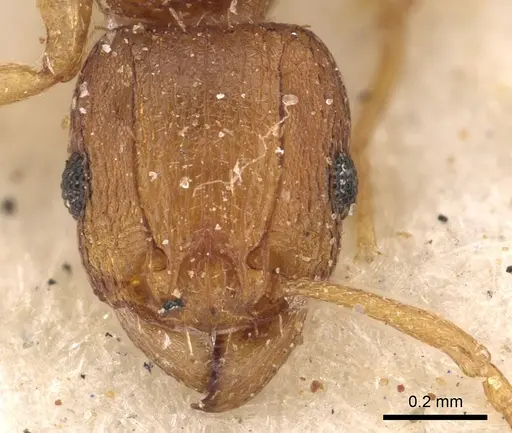
CASENT0906136
View on AntWeb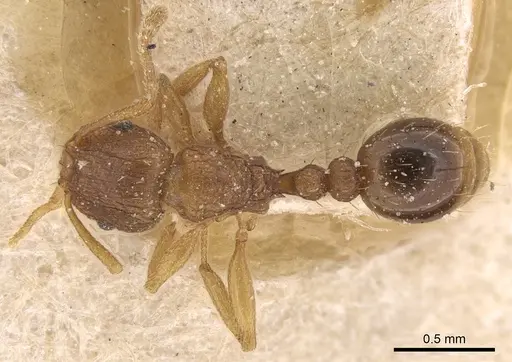
CASENT0915003
View on AntWeb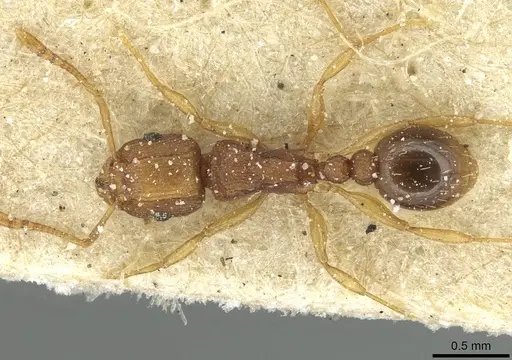
Literature
Loading distribution map...Loading products...