
Tetramorium flagellatum
- Sci. Name
- Tetramorium flagellatum
- Tribe
- Crematogastrini
- Subfamily
- Myrmicinae
- Author
- Bolton, 1977
- Distribution
- Found in 1 countries
Introduction
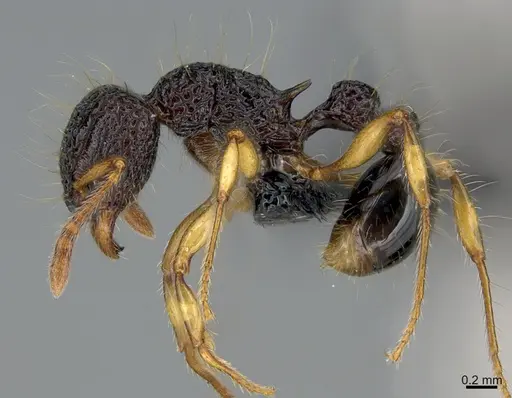
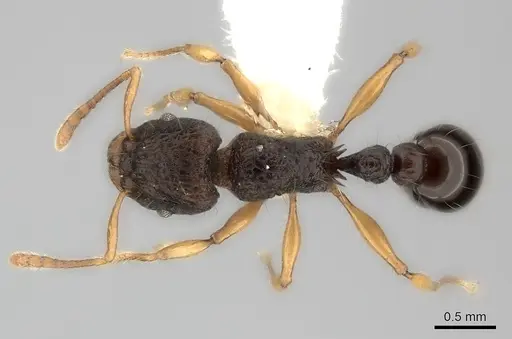
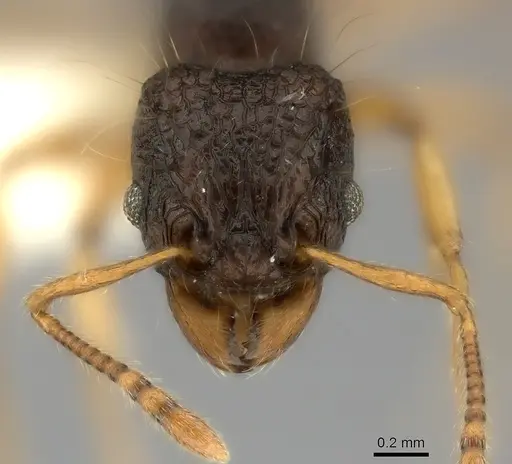
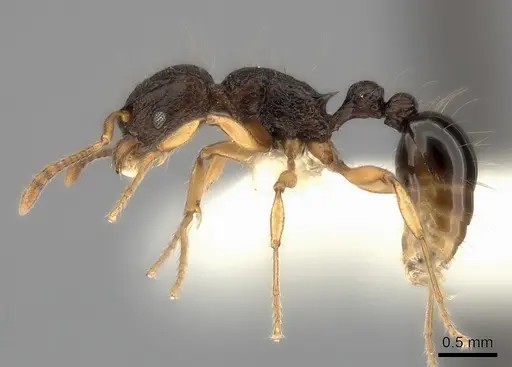
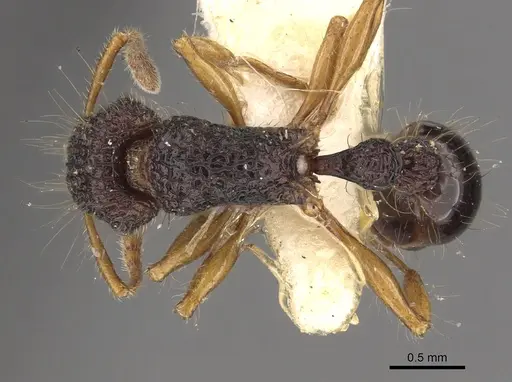
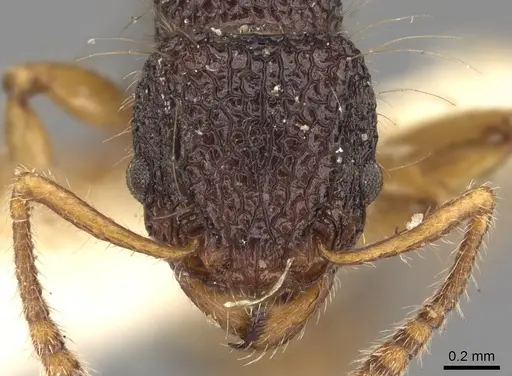
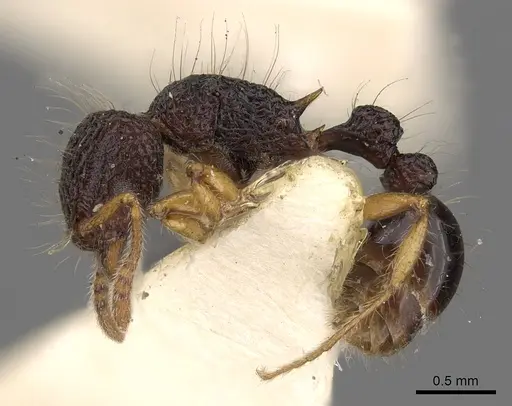
Tetramorium flagellatum is a small ant species native to Borneo, found in montane forests of Sarawak and Sabah at elevations between 1270-1900 meters . Workers measure 3.34-3.80mm in total length (some up to 4.2mm), making them one of the smaller Tetramorium species . The species is unmistakable due to its extraordinarily long, curved hairs covering the head, body, and hind legs - the longest hairs reach 0.45-0.50mm, well over half the length of the antenna scape . Body color is uniform dark brown with yellowish appendages. The species name 'flagellatum' refers to these whiplike hairs. They belong to the ciliatum-group and are very similar to Tetramorium lucyae, requiring careful measurement of hair length and total length to distinguish them . In the wild, they nest in rotting logs and leaf litter .
Quick Summary
- Difficulty: Hard
- Origin & Habitat: Borneo (Sarawak and Sabah), montane forests at 1270-1900m elevation [1]. Type locality: Kiduk Arok, Trus Madi Massif at 1500m. Also collected from Gunung Mulu NP, Crocker Range NP, and Mt. Kinabalu [1].
- Colony Type: Unknown, no colony structure data available. Based on genus patterns, likely single-queen colonies, but this is unconfirmed.
- Size & Growth:
- Queen: Unknown, queens not described in available literature. Inferred from Tetramorium genus patterns, approximately 5-7mm total length.
- Worker: 3.34-3.80mm total length (up to 4.2mm in some specimens) [1][2]
- Colony: Unknown, no data available. Inferred moderate size (up to a few hundred workers) based on Tetramorium genus patterns.
- Growth: Unknown, no data available. Moderate inferred from tropical Tetramorium species.
- Development: Unconfirmed, no direct data. Estimated 6-10 weeks based on related Tetramorium species at optimal temperature. (Direct development data unavailable for this species. Estimates based on genus-level patterns.)
- Antkeeping:
- Temperature: Cool conditions inferred from montane origin (1270-1900m) [1]. Aim for 20-24°C, avoid temperatures above 28°C. A daytime warm spot around 24°C with cooler night drops (18-20°C) may be beneficial.
- Humidity: High humidity required, montane forest habitat suggests consistently damp conditions. Keep the nest substrate moist but not waterlogged. A water reservoir in the nest helps maintain humidity.
- Diapause: Unlikely required, as a tropical species from consistent climate on Borneo, true diapause is probably not needed. A slight temperature reduction (to 18-20°C) during winter months may be helpful but is not necessary.
- Nesting: Natural nesting in rotting logs and leaf litter suggests preference for humid, naturalistic setups [2]. Y-tong (AAC) or plaster nests with good moisture retention work well. Provide an outworld with fine mesh for ventilation and escape prevention.
- Behavior: Small (under 4mm) and active foragers. Defense mechanism is 'smearing', they use a modified flattened stinger to wipe venom onto enemies (typical for Crematogastrini tribe). Based on genus behavior, they likely forage in trails and are omnivorous. Temperament is generally non-aggressive but workers will defend the nest. Escape risk is high due to tiny size, requires fine mesh barriers and tight-fitting connections.
- Common Issues: small size means escapes are likely without fine mesh barriers and tight-fitting lids, high humidity can cause poor ventilation and mold growth, temperature sensitivity, montane origin means they may not tolerate heat above 28°C, identification difficulties, can be confused with Tetramorium lucyae without careful measurement, limited availability and lack of captive care data make this a species for experienced keepers
Housing and Nest Setup
To keep Tetramorium flagellatum, you'll want to mimic their natural montane forest habitat. They nest in rotting logs and leaf litter in the wild [2], so a naturalistic setup with moist substrate works well. A Y-tong (AAC) or plaster nest with good humidity retention is ideal. Because they are small (under 4mm), start colonies in a test tube setup with a water reservoir that keeps the cotton moist. Once the colony is established and you see consistent foraging, you can transition to a small formicarium. Always connect an outworld for foraging. Escape prevention is critical, these tiny ants can squeeze through standard gaps, so use fine mesh on ventilation holes and apply fluon or similar barriers to all connections [1]. Avoid acrylic nests as they dry out too quickly for this moisture-loving species.
Feeding and Diet
Like most Tetramorium species, T. flagellatum is omnivorous. In captivity, they accept small protein sources like fruit flies, pinhead crickets, and small mealworms. Offer protein 2-3 times per week, adjusting based on colony size. They also accept sugar water, honey, or honeydew, provide a constant sugar source in the outworld. Since they are small, prey items should be appropriately sized. Remove uneaten prey after 24-48 hours to prevent mold. Fresh water should always be available in the outworld.
Temperature and Humidity
This is where T. flagellatum differs from many common pet ant species. They come from montane forests at 1270-1900m elevation in Borneo, which means they prefer cooler temperatures than typical tropical ants [1]. Keep the nest area at 20-24°C and avoid letting temperatures rise above 28°C. A slight temperature gradient allows workers to choose their preferred zone. For humidity, aim for consistently damp conditions, the montane forest environment is constantly moist. Keep the nest substrate moist but not waterlogged. A water reservoir connected to the nest helps maintain humidity. Avoid both stagnant air (causes mold) and excessive airflow (causes drying).
Colony Development
Queen founding behavior is unconfirmed for this species, but Tetramorium queens are typically claustral, the queen seals herself in a chamber and raises the first brood alone using stored reserves. Expect the first workers (nanitics) to emerge in an estimated 6-10 weeks under optimal conditions, based on related species. The initial batch of workers will be smaller than mature workers. Growth rate is unknown but likely moderate, a well-fed colony might grow steadily. Be patient with development, as small ant colonies can be slow. There is no data on wild colony sizes, but based on typical Tetramorium patterns, they likely reach a few hundred workers at maturity.
Seasonal Care
As a tropical montane species from Borneo, T. flagellatum does not require true hibernation. However, slight seasonal adjustments may benefit the colony. During winter months in temperate regions, you can reduce temperatures to around 18-20°C, mimicking the cooler high-elevation conditions they might experience seasonally. Do not cool them dramatically, they are not cold-hardy. Maintain humidity even in winter, as the montane environment stays damp year-round. Avoid keeping them near air conditioning vents or drafty areas that cause temperature fluctuations. Stable, cool conditions year-round are ideal.
Frequently Asked Questions
How long does it take for Tetramorium flagellatum to produce first workers?
The egg-to-worker timeline is unconfirmed for this species. Based on related Tetramorium species, expect 6-10 weeks under optimal conditions (20-24°C). Be patient, these are small ants with moderate growth rates.
Can I keep multiple Tetramorium flagellatum queens together?
This is not recommended because colony structure is unknown. If the species is monogyne (single queen), multiple queens will fight. Unless you have confirmed information from a reliable source, keep one queen per colony.
What temperature do Tetramorium flagellatum ants need?
Keep them cooler than most tropical ants, 20-24°C is ideal. They come from montane Borneo (1270-1900m elevation) where temperatures are cooler year-round [1]. Avoid temperatures above 28°C.
Are Tetramorium flagellatum ants good for beginners?
This species is rated as Hard difficulty. Their specific temperature and humidity requirements (cool, humid conditions) and lack of documented care data make them better suited for experienced keepers. Their small size also requires careful escape prevention.
Do Tetramorium flagellatum ants sting?
They belong to the subfamily Myrmicinae (tribe Crematogastrini) and have a modified stinger used to smear venom rather than pierce, this is a defense mechanism called 'smearing'. Due to their small size, this is not a medical concern for healthy humans. They only use it if directly threatened.
How big do Tetramorium flagellatum colonies get?
Colony size is unknown for this species. Based on typical Tetramorium patterns, expect up to several hundred workers at maturity. Workers are small (3.34-3.80mm total length), so colonies won't become massive [1].
What do Tetramorium flagellatum ants eat?
They are omnivorous like most Tetramorium. Offer small live prey (fruit flies, small crickets, springtails) for protein 2-3 times weekly, and provide constant access to sugar sources (honey water, sugar water, or honeydew).
When should I move Tetramorium flagellatum to a formicarium?
Start them in a test tube setup for founding. Once the colony has around 20-30 workers and shows consistent foraging, you can move them to a small formicarium or naturalistic setup. Ensure the new setup maintains the high humidity they need.
Do Tetramorium flagellatum need hibernation?
No, they do not require true hibernation. As tropical ants from a consistent climate on Borneo, they prefer stable conditions year-round. A slight temperature reduction (to 18-20°C) during winter months may be beneficial but is not required.
Why are my Tetramorium flagellatum dying?
Common causes include: temperatures too high (above 28°C), low humidity leading to desiccation, poor escape prevention allowing escapes, or stress from wild-caught origins. Check your temperature and humidity first. Ensure they are not being overfed, which can cause mold problems in humid setups.
Report an Issue
The current care sheet is based fully on literature. See inconsistencies, or something that's incorrect? Please , it will be resolved after review from an admin. Contributing to the blogs tab also helps providing information, to make us be able to further improve the caresheets. Thank you for your support!
References

This caresheet is licensed under CC BY-SA 4.0 .
Community Blogs
Literature
Loading distribution map...Loading products...