
Tetramorium dolichosum
- Sci. Name
- Tetramorium dolichosum
- Tribe
- Crematogastrini
- Subfamily
- Myrmicinae
- Author
- Bolton, 1980
- Distribution
- Found in 1 countries
Introduction
Tetramorium dolichosum is a small, slender ant species native to the Democratic Republic of Congo, specifically found in the Lualaba region around Mutshatsha at approximately 1200m elevation . Workers measure 4.3-4.7mm in total length and are characterized by their remarkably long antennal scapes and narrow heads, features that distinguish them within the genus . The species is uniformly dark brown in color and belongs to the setigerum-group of Tetramorium, closely related to Tetramorium perlongum . This species is one of the least studied ants in captivity, with absolutely no documented information about its biology, behavior, or captive care requirements. All recommendations below are based on general Tetramorium genus patterns and must be treated as educated estimates rather than established protocols. This makes it an expert-level species suitable only for experienced antkeepers comfortable with experimental care.
Quick Summary
- Difficulty: Expert
- Origin & Habitat: Democratic Republic of Congo (Lualaba region, Mutshatsha area) at 1200m elevation in Afrotropical forest habitat [1][2]
- Colony Type: Unconfirmed, colony structure has not been documented in scientific literature
- Size & Growth:
- Queen: Undescribed, no queen measurements available
- Worker: 4.3-4.7mm [2]
- Colony: Unknown, no colony size data exists
- Growth: Unknown, no development data available
- Development: Estimated 6-10 weeks based on typical Tetramorium patterns at 22-26°C (No species-specific data exists, estimate based on genus-level patterns for tropical Tetramorium species)
- Antkeeping:
- Temperature: Estimated 22-26°C based on DRC mid-altitude tropical climate, observe colony response and adjust
- Humidity: Estimated 60-80%, aim for consistently moist but not waterlogged substrate
- Diapause: Unknown, no data on seasonal requirements. DRC has mild climate with wet/dry seasons rather than cold winters.
- Nesting: Unknown natural nesting behavior, likely soil-nesting based on genus patterns. Use standard test tube setup initially, consider naturalistic or Y-tong nests once colony establishes.
- Behavior: Undocumented, no behavioral observations exist in scientific literature. Based on genus patterns, expect typical Tetramorium behavior: moderate foraging activity, likely omnivorous with preference for protein sources, and moderate colony aggression. As a member of Crematogastrini, this species likely uses a smearing venom defense, a flattened stinger to apply venom topically rather than injecting it. Escape prevention is important for 4.3-4.7mm workers, use standard barriers.
- Common Issues: No biological data exists, all care is speculative and experimental, Colony may fail to establish without proper conditions that remain unknown, Temperature and humidity requirements are estimates, may need significant adjustment, Wild-caught colonies may carry unknown parasites or diseases, Slow growth potential due to lack of species-specific knowledge
Species Overview and Identification
Tetramorium dolichosum was described by Bolton in 1980 from specimens collected in what was then Zaire (now Democratic Republic of Congo) [2]. The species is endemic to the Lualaba region, specifically recorded from around Mutshatsha in the southern part of the country at approximately 1200 meters elevation [1]. This makes it a high-altitude tropical species from central Africa.
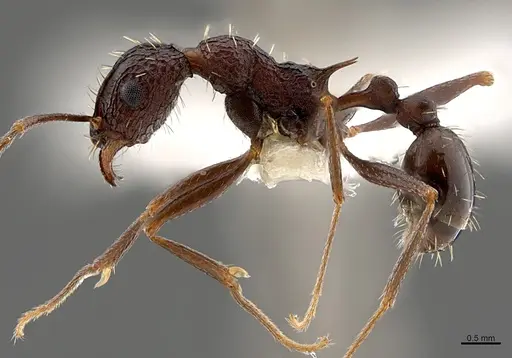
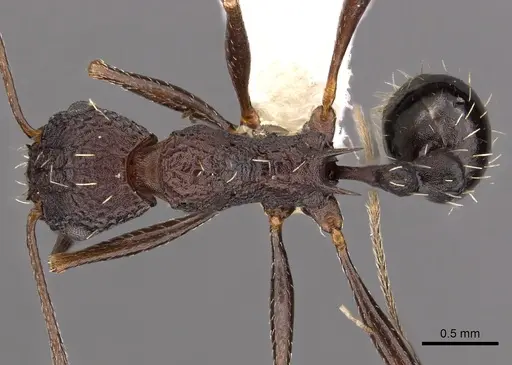
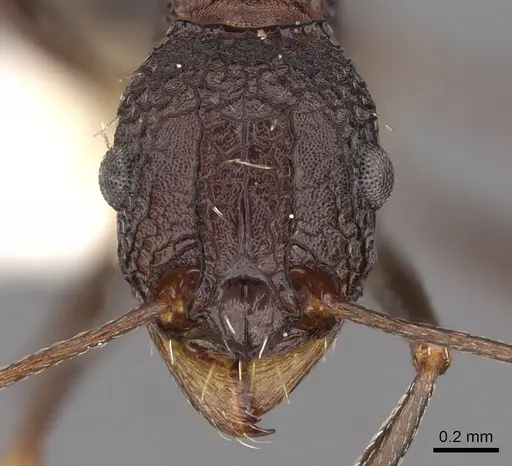
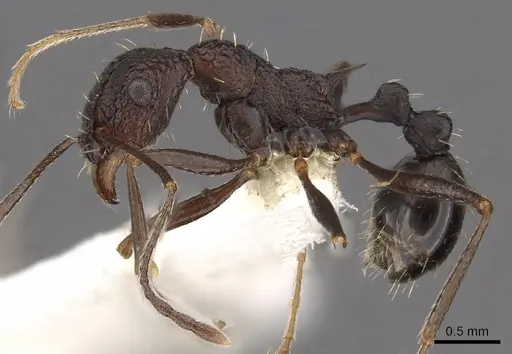
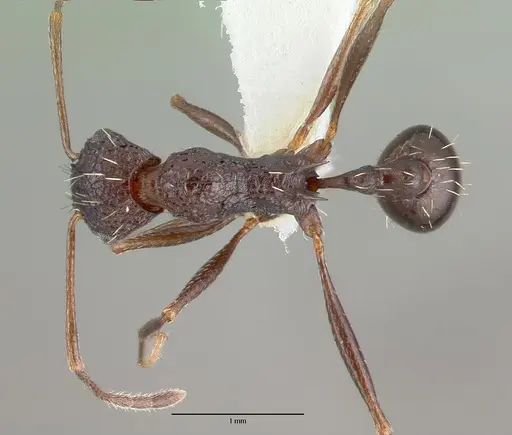
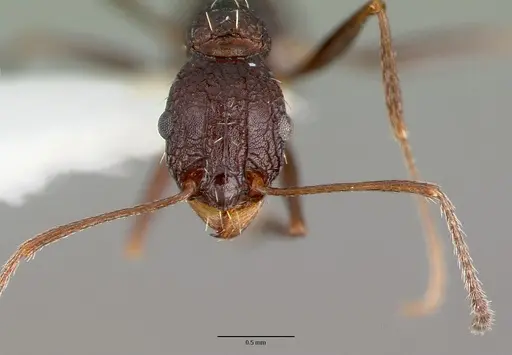
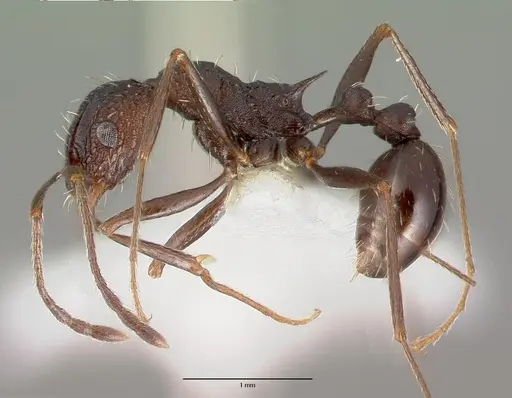
Workers are distinctive within the genus due to their extremely long antennal scapes and unusually narrow heads [2]. They measure 4.3-4.7mm in total length and have a uniform dark brown coloration. The species belongs to the setigerum-group and is closely related to Tetramorium perlongum, sharing the group's characteristic narrow heads, long scapes, short frontal carinae, and low rounded metapleural lobes [2].
The most significant challenge with this species is the complete absence of documented biological information. AntWiki explicitly states 'Nothing is known about the biology of this species' [2]. This means all captive care recommendations are speculative and based on general Tetramorium genus patterns rather than species-specific research.
Housing and Nest Setup
Since no species-specific nesting data exists, start with a standard test tube setup, this provides the controlled humidity that most Myrmicinae species require and allows you to observe founding behavior. Use a test tube with a water reservoir at one end, plugged with cotton, giving the queen a dark chamber to seal herself into if she chooses to claustrally found.
For established colonies, a Y-tong (AAC) nest or plaster/naturalistic setup would work based on typical Tetramorium preferences. The key is providing chambers scaled to their 4-5mm worker size, not too large, which can stress small colonies, but spacious enough for normal activity.
Given the complete lack of data, consider starting with conservative conditions: moderate humidity (around 70%), stable temperature (around 24°C), and minimal disturbance during the founding phase. Only move to a larger formicarium once the colony reaches 20-30 workers and appears stable.
Feeding and Diet
No species-specific dietary information exists. Based on typical Tetramorium behavior, these ants are likely omnivorous, accepting both protein sources (small insects, mealworms, fruit flies) and carbohydrate sources (sugar water, honey). Start with the standard antkeeping approach: offer protein-rich foods 2-3 times per week and keep a constant sugar water source available.
Given their small worker size (4.3-4.7mm), prey items should be appropriately sized, small fruit flies, pinhead crickets, or small mealworm pieces work well. Observe whether the colony shows interest in different food types and adjust accordingly.
The DRC habitat suggests they may have adapted to seasonal food availability, but without specific data, maintain a consistent feeding schedule rather than attempting to simulate seasonal patterns. Remove uneaten food after 24-48 hours to prevent mold issues.
Temperature and Seasonal Care
The species was collected at 1200m elevation in the DRC [1], suggesting a preference for moderate temperatures rather than extreme heat. Based on the tropical mid-altitude climate of their range, estimate an optimal temperature range of 22-26°C.
No information exists regarding diapause requirements. The DRC experiences mild temperatures year-round with wet and dry seasons rather than cold winters. It appears this species may not require a true hibernation period, but this remains unconfirmed. If the colony shows reduced activity during cooler months, maintain room temperature (around 20-22°C) rather than allowing cold exposure.
Use a heating cable on one side of the nest if room temperature falls below 22°C, but avoid overheating. Monitor colony behavior, if workers consistently avoid the heated area, reduce temperature. The lack of specific thermal tolerance data means careful observation is essential.
Colony Establishment and Growth
No data exists on founding behavior, colony size, or development timeline for this species. Based on typical Tetramorium patterns, expect claustral founding where the queen seals herself in and raises the first brood alone on stored fat reserves. The first workers (nanitics) will typically be smaller than normal workers.
Estimate an egg-to-worker timeline of 6-10 weeks at optimal temperature (around 24-26°C), based on general Tetramorium genus development patterns. Colony growth will likely be moderate, faster than some slow-growing Camponotus species but slower than tropical pioneers.
Maximum colony size is unknown. Related Tetramorium species typically reach several hundred to a few thousand workers. Be patient with this species, slow growth is expected, and the lack of data means you may need to experiment with conditions to find what works.
Behavior and Temperament
No behavioral observations have been documented for this species in scientific literature. Based on genus-level patterns, expect typical Tetramorium behavior: active foraging workers, moderate colony defensiveness, and organized brood care.
Workers are small (4.3-4.7mm) so escape prevention should be taken seriously, use appropriate barriers and ensure any formicarium has secure escape prevention. Their small size means they can slip through gaps that larger ants might not.
As a member of the tribe Crematogastrini, this species likely uses a smearing venom defense, a flattened stinger to apply venom topically rather than inject it. Tetramorium species are not typically considered dangerous to humans, treat them with respect but without excessive concern.
Frequently Asked Questions
How do I care for Tetramorium dolichosum ants?
No documented care guide exists for this species, it is one of the least studied ants in the hobby. All recommendations are speculative and based on general Tetramorium genus patterns. Start with test tube housing,22-26°C temperature,60-80% humidity, and standard ant feeding (protein 2-3x weekly, constant sugar water). This is an expert-level species requiring experience with experimental care.
What do Tetramorium dolichosum ants eat?
No species-specific dietary data exists. Based on typical Tetramorium behavior, offer small protein sources (fruit flies, small mealworms) 2-3 times weekly and maintain a constant sugar water/honey supply. Adjust based on colony acceptance.
How long does it take for Tetramorium dolichosum to develop from egg to worker?
No species-specific development data exists. Based on typical Tetramorium genus patterns at 24-26°C, estimate 6-10 weeks from egg to first worker. This is a rough estimate, actual timing may vary significantly.
What temperature do Tetramorium dolichosum ants need?
Estimated 22-26°C based on their DRC mid-altitude tropical habitat [1]. No specific thermal data exists. Start in the middle of this range and adjust based on observed colony behavior. Avoid temperatures below 20°C or above 30°C without data.
How big do Tetramorium dolichosum colonies get?
Unknown, no colony size data has been documented. Related Tetramorium species typically reach several hundred to a few thousand workers. Expect moderate growth over many months to years.
Do Tetramorium dolichosum ants sting?
As a Myrmicinae species, they have a functional stinger. However, as a member of Crematogastrini, they likely use a smearing venom defense, applying venom topically with a flattened stinger rather than injecting it. Their small size (4.3-4.7mm workers) makes them not dangerous to humans.
Is Tetramorium dolichosum good for beginners?
No, this species is not recommended for beginners. It has no documented biology or captive care information, making all care experimental. Only experienced antkeepers comfortable with uncertainty should attempt this species.
Where is Tetramorium dolichosum found?
This species is endemic to the Democratic Republic of Congo, specifically the Lualaba region around Mutshatsha at approximately 1200m elevation [1][2]. It is part of the Afrotropical ant fauna.
Does Tetramorium dolichosum need hibernation?
Unknown, no data on seasonal requirements exists. The DRC has mild temperatures year-round with wet/dry seasons rather than cold winters. The species likely does not require true hibernation, but this remains unconfirmed.
Can I keep multiple Tetramorium dolichosum queens together?
Unknown, colony structure has not been documented for this species. Do not attempt combining unrelated queens without data. Most Tetramorium species are monogyne (single queen) but some can be polygynous. Without specific information, assume single-queen colonies and house founding queens separately.
What is the worker size of Tetramorium dolichosum?
Workers measure 4.3-4.7mm in total length, with particularly long antennal scapes and narrow heads that distinguish this species [2].
Why is so little known about Tetramorium dolichosum?
The species has only been recorded from a limited region in the DRC and has not been the subject of detailed biological study. AntWiki explicitly states 'Nothing is known about the biology of this species' [2]. It remains one of the least studied ant species in captivity.
Report an Issue
The current care sheet is based fully on literature. See inconsistencies, or something that's incorrect? Please , it will be resolved after review from an admin. Contributing to the blogs tab also helps providing information, to make us be able to further improve the caresheets. Thank you for your support!
References

This caresheet is licensed under CC BY-SA 4.0 .
Community Blogs
Literature
Loading distribution map...Loading products...