
Tetramorium camelliae
- Sci. Name
- Tetramorium camelliae
- Tribe
- Crematogastrini
- Subfamily
- Myrmicinae
- Author
- Hita Garcia & Fisher, 2014
- Distribution
- Found in 1 countries
Introduction
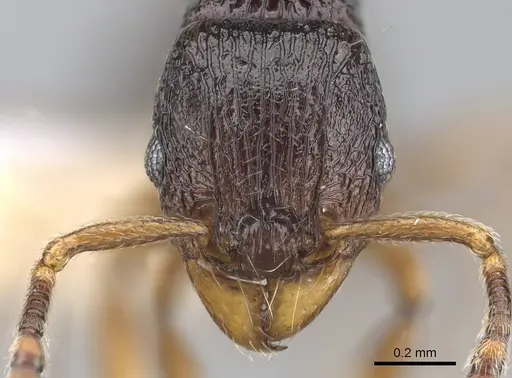
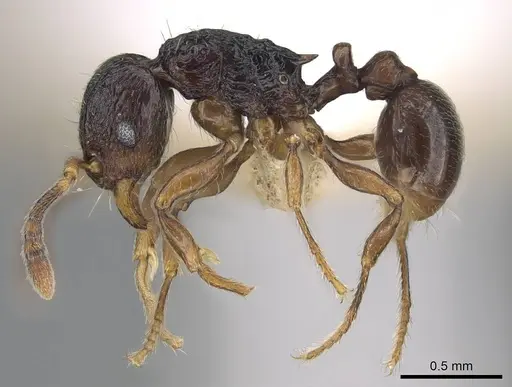
Tetramorium camelliae is a tiny, rare ant species native only to Ranomafana National Park in Madagascar, where it lives in montane rainforest leaf litter at elevations around 1100-1173 m . Workers are very small; only head measurements are available from the type series (head width 0.50-0.57 mm, head length 0.56-0.63 mm) . Their total body length is not recorded in the literature. The species is easily identified by its strongly squamiform (shield‑like) petiolar node, which sets it apart from all other members of the *Tetramorium cognatum* species complex . They are uniform brown to dark brown with yellowish‑brown legs and antennae . *Tetramorium camelliae* belongs to the *Tetramorium schaufussii* species group and was only described in 2014,making it one of the more recently discovered ants from Madagascar .
Quick Summary
- Difficulty: Unknown, insufficient data for a reliable difficulty rating
- Origin & Habitat: Endemic to Ranomafana National Park, Madagascar, found only in montane rainforest leaf litter at 1100-1173 m elevation [1][2]
- Colony Type: Colony structure unconfirmed, only the worker caste has been described, the queen caste is unknown
- Size & Growth:
- Queen: Unknown, queen caste not described
- Worker: Data unavailable, only partial measurements (head and mesosoma) exist in the literature
- Colony: Unknown, only seven worker specimens have ever been collected
- Growth: Unknown
- Development: Unknown, no direct development data exists. Based on typical *Tetramorium* patterns, an estimate of 6-10 weeks at optimal temperature is possible, but this is speculative. (No observed development data, evaluate colony response and adjust expectations.)
- Antkeeping:
- Temperature: Inferred from montane rainforest habitat: aim for cool to moderate temperatures around 20-24°C. Avoid prolonged temperatures above 28°C. Start at room temperature (20-22°C) and monitor activity .
- Humidity: Inferred from leaf‑litter habitat: keep substrate consistently moist but not waterlogged. Provide a humidity gradient with one damp area and good ventilation. Montane rainforest conditions suggest 60-80% relative humidity [2].
- Diapause: Unknown, no data on seasonal requirements. Madagascar’s cool dry season (May-October) might reduce activity, but true diapause is unconfirmed .
- Nesting: Based on leaf‑litter habitat: prefers naturalistic setups with moist substrate, small chambers, and plenty of hiding spots. Y‑tong or plaster nests with tight chambers scaled to their tiny size work well. Avoid dry or open conditions [2].
- Behavior: Temperament and behavior patterns are unconfirmed. Based on the leaf‑litter lifestyle and typical *Tetramorium* behavior, they are likely moderately active foragers that search for small prey and honeydew. Their tiny size means escape prevention is critical, they can squeeze through standard test tube barriers. Use fine mesh and tight‑fitting lids.
- Common Issues: escape prevention is critical due to their very small size, standard barriers may not contain them, lack of available care information makes proper husbandry challenging, wild‑caught colonies may carry parasites or diseases with no documented treatment, temperature sensitivity is unknown, start with room temperature and monitor colony response, feeding acceptance is unconfirmed, may require experimentation with small live prey
Species Discovery and Naming
Tetramorium camelliae was described in 2014 by Hita Garcia and Fisher as part of a major revision of Malagasy Tetramorium species . The specific epithet ‘camelliae’ honors Tracy Lynn Camellia Audisio, the first author’s life partner, a rare dedication in ant taxonomy . The species is known from only seven worker specimens collected in Ranomafana National Park [1]. Its most distinctive feature is the strongly squamiform (shield‑shaped) petiolar node, which separates it from all other species in the Tetramorium cognatum complex .
Natural Habitat and Distribution
This species is endemic to Ranomafana National Park in southeastern Madagascar, making it one of the most restricted ant species known . It inhabits montane rainforest at elevations of 1100-1173 m, a relatively cool, moist environment compared to Madagascar’s lowlands [1]. All specimens were collected from leaf litter, confirming a ground‑dwelling, litter‑nesting lifestyle [2]. Because of its extremely limited distribution, any captive colonies should be managed with care to avoid escape or introduction to non‑native areas.
Housing and Nest Setup
Based on their leaf‑litter habitat, a naturalistic setup with moist substrate is recommended. Use a small formicarium or test tube setup with chambers scaled to the tiny worker size. The substrate should remain consistently damp but never waterlogged, think forest floor conditions. Provide a water reservoir connected to the nest to maintain humidity without frequent disturbance. Because of the ants’ extremely small size, escape prevention is critical. Standard test tube stoppers may not contain them, use fine mesh barriers and check for gaps regularly. A small outworld area allows for feeding observation [2].
Feeding and Diet
Feeding requirements are unconfirmed for this species because no dietary data exist in the literature . Based on typical Tetramorium behavior and their tiny size, they likely accept small live prey such as springtails, fruit flies, and other micro‑arthropods. They may also collect honeydew or accept sugar water. Start by offering small live prey and observe acceptance, remove uneaten prey after 24-48 hours to prevent mold. Prey items should be appropriately sized, anything significantly larger than the worker’s head may be ignored. Sugar sources can be offered occasionally but should not form the primary diet until acceptance is confirmed.
Temperature and Seasonal Care
Temperature requirements have not been directly studied, but their montane rainforest origin suggests they prefer cooler conditions than typical tropical ants. Aim for an ambient range of 20-24°C and monitor colony activity. Avoid temperatures above 28°C. Room temperature (~20-22°C) is likely suitable as a starting point. Temperature stability is important, avoid placing the nest near heating elements or in direct sunlight. Seasonal care is unconfirmed, Madagascar experiences a cool dry season from May to October when activity may naturally decrease. Observe your colony and adjust care based on behavior rather than a fixed schedule .
Challenges and Limitations
This is one of the least‑studied ant species available, meaning significant uncertainty surrounds its proper care. The queen caste has never been described, so founding behavior and colony structure are unknown . Only seven worker specimens have ever been collected, giving almost no data on natural colony size or behavior . For keepers: expect to experiment with care conditions and be prepared to adjust based on colony response. Document your observations carefully, captive breeding of this species could contribute valuable knowledge to the ant‑keeping community. Consider this an expert‑level species where success depends on careful observation and record‑keeping.
Frequently Asked Questions
How do I care for Tetramorium camelliae ants?
Care is largely unconfirmed due to limited research. Based on the montane rainforest leaf‑litter habitat, provide a naturalistic setup with consistently moist substrate at 20-24°C. Their tiny size requires excellent escape prevention with fine mesh barriers. Start with small live prey and sugar water, adjusting based on acceptance [2].
What do Tetramorium camelliae eat?
Diet is unconfirmed, no feeding data exist in the literature . Likely small live prey (springtails, fruit flies) and honeydew, but this is inference. Offer small prey and sugar water, remove uneaten food within 48 hours to prevent mold.
How big do Tetramorium camelliae colonies get?
Colony size is unknown, only seven workers have ever been collected in the wild . Based on related Tetramorium species, colonies likely reach dozens to a few hundred workers at most, but this is an estimate.
Do Tetramorium camelliae ants sting?
This species belongs to the Crematogastrini tribe, which have a modified, spatulate stinger used to smear venom rather than pierce. They are unlikely to sting in the traditional sense. Given their small size, any defensive reaction would be harmless to humans.
Are Tetramorium camelliae good for beginners?
No, this species is not recommended for beginners. It is extremely rare, with almost no available care information, the queen caste has never been described, and proper husbandry protocols are unknown. Consider this an expert‑level species for experienced antkeepers willing to experiment and document their findings.
What temperature do Tetramorium camelliae need?
Temperature is not directly studied. Based on montane rainforest origin (1100-1173 m elevation), aim for 20-24°C and avoid temperatures above 28°C. Room temperature is likely appropriate, monitor colony activity to find the ideal range.
Where is Tetramorium camelliae found?
This species is endemic to Ranomafana National Park in Madagascar, found only in montane rainforest leaf litter at 1100-1173 m elevation [1]. It is one of the rarest ant species known.
How long does it take for Tetramorium camelliae to develop from egg to worker?
Development time is unknown, no data exist . Based on typical Tetramorium patterns, expect approximately 6-10 weeks from egg to first worker at optimal temperature, but this is a rough estimate.
Can I keep multiple Tetramorium camelliae queens together?
Queen behavior is unknown, the queen caste has never been described . Combining unrelated queens is not recommended without understanding their natural colony structure. Do not attempt pleometrosis without research data.
Why is Tetramorium camelliae so rare?
This species is known only from seven worker specimens collected in Ranomafana National Park . It has an extremely restricted distribution in montane rainforest leaf litter, making it naturally uncommon. Its discovery in 2014 also means it is a relatively newly described species .
Report an Issue
The current care sheet is based fully on literature. See inconsistencies, or something that's incorrect? Please , it will be resolved after review from an admin. Contributing to the blogs tab also helps providing information, to make us be able to further improve the caresheets. Thank you for your support!
References

This caresheet is licensed under CC BY-SA 4.0 .
Community Blogs
CASENT0247496
View on AntWeb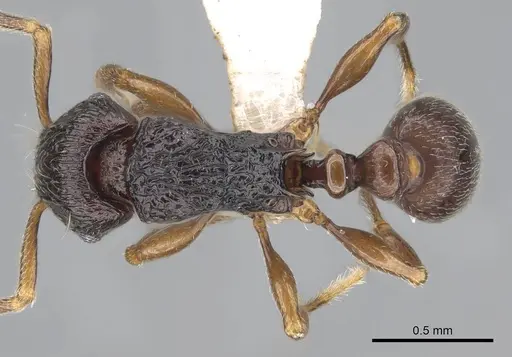
Literature
Loading distribution map...Loading products...