
Tetramorium browni
- Sci. Name
- Tetramorium browni
- Tribe
- Crematogastrini
- Subfamily
- Myrmicinae
- Author
- Bolton, 1980
- Distribution
- Found in 2 countries
Introduction
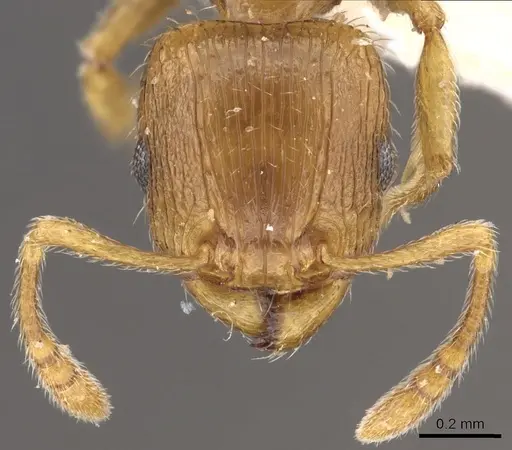
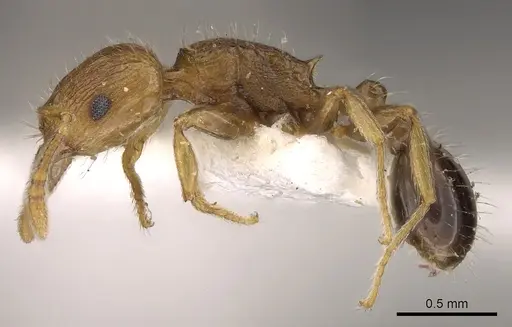
Tetramorium browni is a small, yellowish ant belonging to the Tetramorium camerunense species group. Workers are 2.6-2.9 mm and have a glossy yellow body with a brown gaster (abdomen). The most distinctive feature is the long, fine, acute hairs on the dorsal alitrunk (middle body section) that are longer than the eye diameter. This species is arboreal and lives in rainforest and other forest habitats in Ghana, Afrotropical region, where it nests in rotting wood . It was described by Bolton in 1980 from a rotten log at Tafo, Ghana . Note: There is a separate species formerly called Tetramorium browni from India, but it is a junior primary homonym now renamed Tetramorium meghalayense . This caresheet is for the true Tetramorium browni from Ghana.
Quick Summary
- Difficulty: Hard
- Origin & Habitat: Ghana in the Afrotropical region. Lives in rainforest and other forest habitats. Arboreal, nests in rotten wood in trees [1].
- Colony Type: Colony structure is unconfirmed. Based on typical Tetramorium patterns, it is likely monogyne (single queen), but this has not been directly documented.
- Size & Growth:
- Queen: Unknown, queen measurements are not documented in primary literature.
- Worker: 2.6-2.9 mm [1]
- Colony: Unknown, no colony size data available.
- Growth: Unknown, no development data exists for this species.
- Development: Estimated 6-8 weeks based on typical Tetramorium genus patterns at room temperature (20-26°C). No direct data exists. (Timing is an inference from related species. Keepers should expect variation and be patient.)
- Antkeeping:
- Temperature: Room temperature (20-26°C) is suitable. As a tropical species, stable warmth is preferred. Avoid sudden drops. A gentle temperature gradient is beneficial but not required.
- Humidity: Moderate to high. As a rainforest arboreal species, keep the nest substrate consistently moist but not waterlogged. Provide a humidity gradient: one area moist, another drier. Mist the outworld occasionally in dry climates.
- Diapause: Unknown, likely not required, as the species comes from tropical Ghana (no seasonal cold). Keep at room temperature year-round.
- Nesting: Arboreal, requires vertical climbing space. Use cork bark pieces, Y-tong (AAC) blocks with vertical chambers, or 3D-printed nests with vertical orientation. Horizontal test tubes can work for founding but add a twig or bark for climbing. Avoid acrylic nests. Provide branches or artificial plants in the outworld [1].
- Behavior: Workers are small (under 3 mm), peaceful, and active climbers. They use a smear defense (modified stinger that wipes venom), not dangerous to humans. Due to their tiny size, escape prevention is critical. They are not aggressive, but they will explore every gap. Provide vertical surfaces for natural climbing behavior.
- Common Issues: escape prevention is critical, their small size lets them squeeze through gaps smaller than 0.5 mm, use fine mesh on all ventilation and seal seams., no documented care requirements, keepers must adapt from related Tetramorium species and observe carefully., humidity balance is tricky, too dry kills brood, too wet causes mold and mite outbreaks., arboreal nature means horizontal-only nests are unsuitable, vertical space and climbing structures are mandatory., very slow colony growth is typical, small queens produce few nanitics, months of patience are needed.
Housing and Nest Setup
Tetramorium browni needs arboreal housing. In the wild they nest in rotting wood in trees [1], so your setup should mimic that. Use vertical nests: cork bark slabs with grooves, Y-tong (AAC) blocks with vertical chambers, or 3D-printed nests with climbing surfaces. Avoid acrylic nests. The outworld (foraging area) should include branches, twigs, or cork bark pieces leaning against walls. A test tube can work for founding, but add a small piece of bark or a twig for climbing. Escape prevention is vital, these ants (under 3 mm) can slip through tiny gaps. Use fine mesh (0.3 mm openings) on ventilation holes and seal all lid seams with fluon or petroleum jelly. Check regularly for gaps.
Feeding and Diet
Like most Tetramorium, T. browni is omnivorous. Offer small protein sources: fruit flies, pinhead crickets, or small mealworm pieces. For carbohydrates, provide sugar water (1:3 sugar to water) or honey water. In nature, arboreal ants tend aphids for honeydew, so sweet liquids are readily taken. Feed small amounts every 2-3 days and remove leftovers to prevent mold. Since no captive diet data exists, start with standard ant foods and observe what they prefer. Always provide fresh water in a test tube or small dish with a cotton wick.
Temperature and Humidity
Room temperature (20-26°C) is fine for this tropical species [1]. No special heating needed unless your home stays below 18°C. Humidity is more important, aim for 60-80% relative humidity in the nest. Keep the substrate (e.g., coco fiber or soil) moist but not waterlogged. In a test tube setup, the water reservoir naturally provides humidity. For larger nests, you may need to moisten the substrate weekly. Avoid direct heat sources that dry out the nest. Mist the outworld occasionally to maintain humidity.
Colony Founding and Growth
Queen founding behavior is undocumented. Based on typical Tetramorium patterns, founding is likely claustral (queen seals herself in a chamber and relies on stored fat reserves). Workers measure 2.6-2.9 mm [1] and are born as nanitics (smaller than mature workers). Development from egg to worker likely takes 6-8 weeks at room temperature, but this is an estimate from related species, no direct data exists. Colony growth is expected to be slow: small species often produce only a few nanitics initially. Maximum colony size is unknown, but given their small size, it may reach several hundred workers at most. Patience is essential.
Behavior and Temperament
Tetramorium browni workers are small, active, and generally peaceful. Their defense is a smear mechanism: a modified, flattened stinger that wipes venom onto enemies rather than piercing (common in Crematogastrini). This venom is not dangerous to humans. They are not aggressive but will bite if handled. Being arboreal, they are excellent climbers and prefer vertical surfaces. They forage actively but are not hyperactive. Because of their small size, they are easily overlooked and can escape if barriers are not secure. They are not fast-moving, but they can fit through tiny gaps.
Frequently Asked Questions
How long does it take for Tetramorium browni to have first workers?
Exact timing is unknown since the species hasn't been studied in captivity. Based on related Tetramorium species, expect 6-10 weeks from egg to first worker at room temperature (22-25°C). This is a rough estimate, actual timing may differ.
What size colony does Tetramorium browni reach?
Maximum colony size is unknown. Based on worker size (2.6-2.9 mm) and typical Tetramorium patterns, colonies likely reach several hundred workers at most. No documented records exist [1].
Can I keep Tetramorium browni in a test tube?
Yes, test tubes work for founding and small colonies. However, because they are arboreal, add a small piece of cork bark or a twig inside the tube for climbing. When the colony outgrows the tube, move to a vertical nest setup like cork bark or Y-tong.
Do Tetramorium browni ants sting?
They have a stinger, but it is modified for smearing venom (smear defense) rather than piercing. Their venom is not medically significant to humans. They are not aggressive and rarely attempt to sting when handled.
What do Tetramorium browni eat?
They are omnivorous. Offer small insects (fruit flies, pinhead crickets) for protein, and sugar water or honey water for carbohydrates. They likely accept many sweet liquids. Feed small amounts every 2-3 days and remove uneaten food promptly.
Are Tetramorium browni good for beginners?
No, this species is rated as hard because very little is known about its captive care. Beginners should start with better-documented species like Tetramorium caespitum or Lasius niger. The tiny workers also make escape prevention a challenge.
Do Tetramorium browni need hibernation?
Hibernation requirements are unknown. Since they come from tropical Ghana (no winter cold), they likely do not need a diapause period. Keep at room temperature year-round. If the colony slows down in winter, that may be natural, but no cooling is required.
Why are my Tetramorium browni escaping?
Their small size (under 3 mm) allows them to fit through gaps that would stop larger ants. Check all closure points, use fine mesh (0.3 mm openings) on ventilation, seal gaps with tape or silicone, and apply fluon or petroleum jelly barriers around the top of the outworld.
When should I move Tetramorium browni to a formicarium?
Move to a larger nest when the colony has 30-50 workers or when the test tube becomes crowded. For arboreal species, ensure the new nest provides vertical space and climbing surfaces. A cork bark or Y-tong vertical setup is ideal.
Can I keep multiple Tetramorium browni queens together?
Colony structure is unconfirmed. Since it is likely monogyne (single queen), combining queens is not recommended and could lead to fighting. Start with a single queen colony.
Report an Issue
The current care sheet is based fully on literature. See inconsistencies, or something that's incorrect? Please , it will be resolved after review from an admin. Contributing to the blogs tab also helps providing information, to make us be able to further improve the caresheets. Thank you for your support!
References

This caresheet is licensed under CC BY-SA 4.0 .
Community Blogs
CASENT0901208
View on AntWeb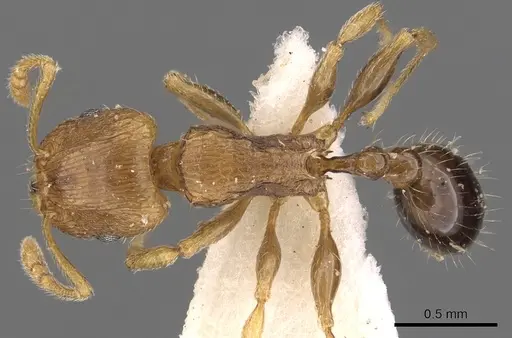
Literature
Loading distribution map...Loading products...