
Tetramorium bonibony
- Sci. Name
- Tetramorium bonibony
- Tribe
- Crematogastrini
- Subfamily
- Myrmicinae
- Author
- Hita Garcia & Fisher, 2012
- Distribution
- Found in 1 countries
Introduction
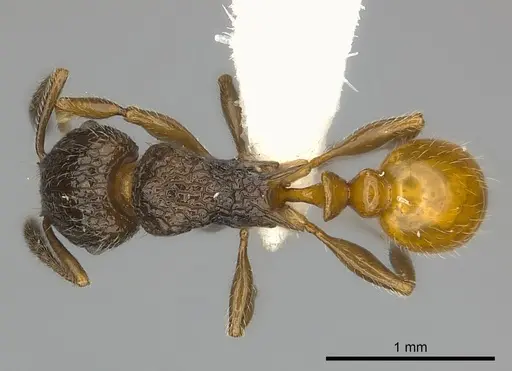
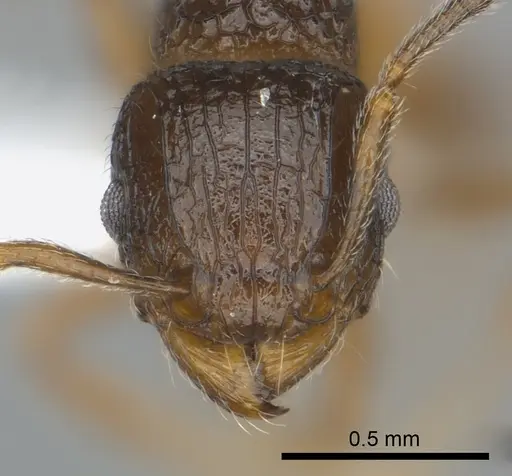
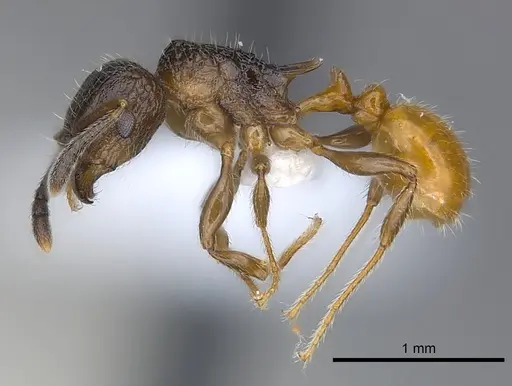
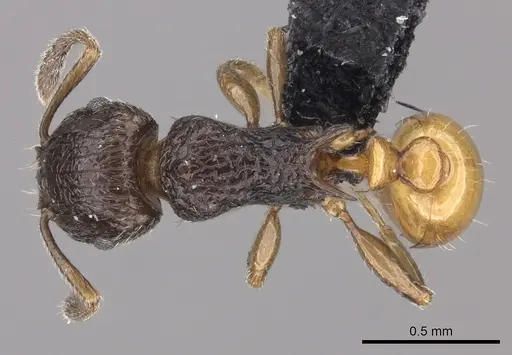
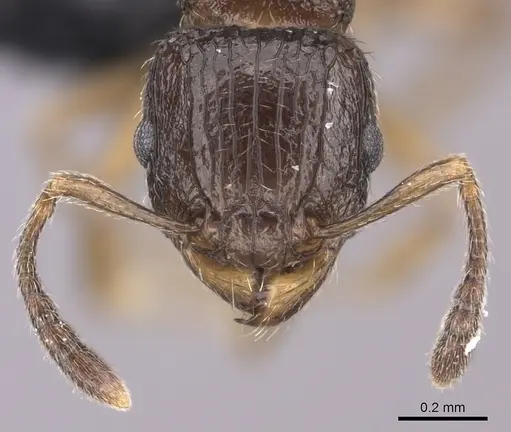
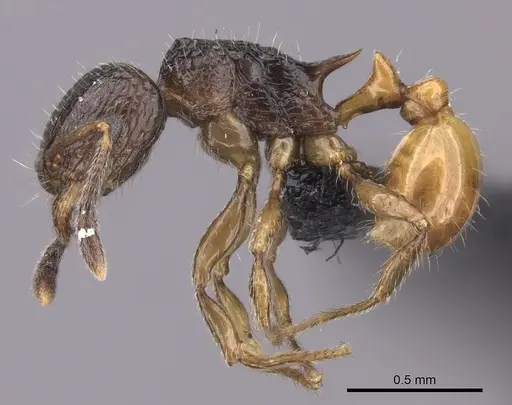
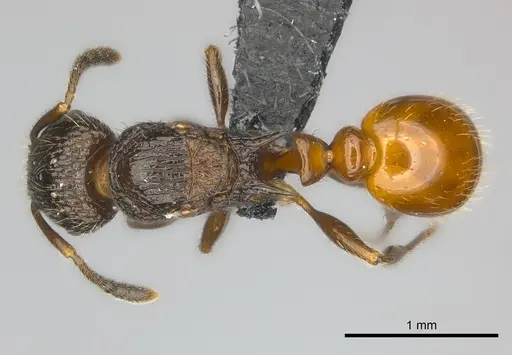
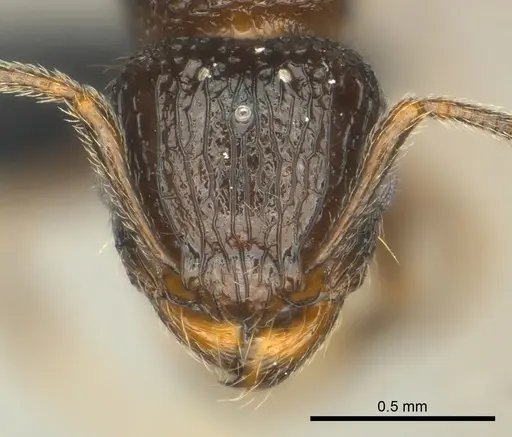
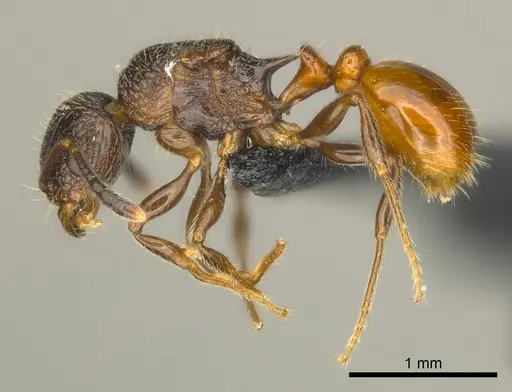
Tetramorium bonibony is a small, bicolored ant from western Madagascar. The head and mesosoma are brown to dark brown, while the waist segments and gaster are bright yellow . Workers have a distinctive bump on the pronotum, 'bonibony' means 'bump' in Malagasy. This species lives in tropical dry forests and gallery forests at low elevations (20-140 m), mostly in leaf litter . It belongs to the subfamily Myrmicinae and tribe Crematogastrini, and like other members of that group it uses a modified, flattened stinger to smear venom onto enemies rather than piercing them. Because it was only described in 2012,almost nothing is known about its captive care, so keepers will need to rely on general Tetramorium husbandry and careful observation.
Quick Summary
- Difficulty: Medium
- Origin & Habitat: Western Madagascar, from Kirindy north to Anabohazo along the coast, plus the Makay Mountains. Found in tropical dry forests and gallery forests at 20-140 m (up to 525 m in Makay) [1].
- Colony Type: Unconfirmed. Most Tetramorium are monogyne (single queen), but this has not been documented for T. bonibony.
- Size & Growth:
- Queen: Unknown, the queen has not been described in the literature.
- Worker: Head length 0.66-0.72 mm [1], total length is not recorded but indicates a small ant under approximately 4 mm.
- Colony: Unknown, no data available.
- Growth: Unknown, no captive breeding data.
- Development: Unknown, no data exists for this species. (All development times are unconfirmed. Related Tetramorium typically take 6-10 weeks at warm temperatures, but this is speculative.)
- Antkeeping:
- Temperature: Not directly studied. Based on their tropical dry forest habitat, aim for 24-28°C with a gentle gradient using a heat mat on one side [1].
- Humidity: Moderate. Mimic a dry forest floor: keep the nest substrate slightly moist but allow it to dry partially between waterings. Avoid constant saturation [1].
- Diapause: Unknown. Madagascar has mild winters, a short cooling period (2-3 months at 15-18°C) may be optional but is not required.
- Nesting: In the wild they inhabit leaf litter and soil. Y-tong (AAC), plaster, or soil nests work well in captivity. Provide a dry nest with a small moist area for humidity control.
- Behavior: Small, ground-dwelling foragers. They use a spatulate stinger to smear venom (typical for Crematogastrini), but are not aggressive to humans. Escape risk is high due to their tiny size, use fine mesh or fluon barriers on all openings.
- Common Issues: escape risk is critical, workers under 4 mm can squeeze through standard barriers, so use fine mesh and fluon., no captive breeding data exists, husbandry must be developed through trial and error., humidity management is tricky, too dry or too wet can kill, aim for a moisture gradient that allows the nest to dry out., mold can become a problem in nests that stay too moist, ensure good ventilation and periodic drying., wild-caught colonies may carry parasites or pathogens from their native habitat.
Housing and Setup
For founding, use a standard test tube setup: fill one‑third with water, plug with cotton, and place the queen inside. The founding type is unconfirmed, but if claustral the queen will seal herself in. For larger colonies, use a Y‑tong (AAC), plaster, or soil nest. These allow the dry conditions this species prefers while giving you control over humidity via a small water chamber. The outworld should have a textured surface for grip. Because workers are under 4 mm, seal all openings with fine mesh or apply a fluon barrier [1].
Feeding and Diet
Like most Tetramorium, T. bonibony is probably omnivorous. Offer protein (fruit flies, pinhead crickets, small mealworms) and a constant supply of sugar water or honey. In the wild they forage in leaf litter for small arthropods and likely tend aphids for honeydew. Feed protein 2-3 times a week for established colonies, remove uneaten prey after 24-48 hours to prevent mold. Foundress queens may not eat during a claustral founding period, but this is unconfirmed for this species.
Temperature and Seasonal Care
No precise temperature data exists. Based on their tropical dry forest habitat, keep the nest at 24-28°C [1]. Use a heating cable on one side to create a gradient. A brief cooling period (2-3 months at 15-18°C) may be beneficial but is likely optional. Avoid prolonged temperatures below 18°C.
Humidity Management
Humidity is the trickiest factor. These ants come from dry forests, so they need conditions that are moist but not wet. Keep the nest substrate slightly damp and allow it to dry partially between waterings. In a test tube, let the water reservoir shrink before refilling. In a Y‑tong or plaster nest, only moisten the water chamber, avoid saturating the whole nest. Too much humidity leads to mold and colony decline. Provide a dry retreat in the outworld. [1]
Colony Development
No captive development data exists for this species. Based on typical Tetramorium patterns, the first workers (nanitics) might appear 6-10 weeks after founding at warm temperatures, but this is speculative. Nanitics will be smaller and paler than mature workers. Colony growth is likely slow at first. Do not disturb the queen during founding. Once workers emerge, start feeding small prey. Growth will accelerate as the worker force increases. Patience is essential, this species has not been bred in captivity.
Escape Prevention
Because workers are under 4 mm, escape prevention is critical [1]. Standard test tube cotton plugs may not be enough, secure them with tape or a second barrier. Apply fluon to all container rims. Use fine mesh (0.5 mm or finer) on ventilation holes. Check all connections between nest and outworld for gaps. A thin layer of petroleum jelly on the upper rim of the outworld adds an extra barrier. Inspect daily, especially in the first few weeks.
Frequently Asked Questions
How long does it take for Tetramorium bonibony to raise first workers?
Unknown, no captive data exists. Related Tetramorium in warm climates take 6-10 weeks, but this cannot be confirmed for T. bonibony.
Can I keep multiple queens together?
Not recommended. The colony structure is unconfirmed, but most Tetramorium are monogyne. Combining foundresses risks fatal aggression. House them separately.
What do Tetramorium bonibony ants eat?
They are likely omnivorous. Offer small insects (fruit flies, pinhead crickets, small mealworms) and constant sugar water or honey. Remove uneaten prey after 24-48 hours.
Do Tetramorium bonibony ants sting?
As Myrmicinae, they have a stinger, but it is modified for smearing venom rather than piercing. Given their tiny size (under 4 mm), any sting would be negligible to humans. They are not aggressive.
Are Tetramorium bonibony good for beginners?
Rated Medium difficulty. The lack of captive data and high escape risk make this a challenging species for novices. Beginners may want to start with better‑documented ants.
What temperature do they need?
Aim for 24-28°C based on their tropical dry forest habitat. Use a heat mat on one side to create a gradient.
Do they need hibernation?
Likely no significant hibernation is required. Madagascar has mild winters. A short cooling period (2-3 months at 15-18°C) is optional. Avoid prolonged cold.
How big do colonies get?
Unknown, no data exists. Based on worker size, colonies probably stay in the hundreds at most, possibly fewer.
Why are my ants escaping?
Their tiny size (under 4 mm) lets them squeeze through tiny gaps. Use fine mesh, fluon barriers, and check all connections daily. Even small openings are potential escape routes.
Report an Issue
The current care sheet is based fully on literature. See inconsistencies, or something that's incorrect? Please , it will be resolved after review from an admin. Contributing to the blogs tab also helps providing information, to make us be able to further improve the caresheets. Thank you for your support!
References

This caresheet is licensed under CC BY-SA 4.0 .
Community Blogs
Literature
Loading distribution map...Loading products...