
Tetramorium azcatltontlium
- Sci. Name
- Tetramorium azcatltontlium
- Tribe
- Crematogastrini
- Subfamily
- Myrmicinae
- Author
- Marques <i>et al.</i>, 2011
- Distribution
- Found in 1 countries
Introduction
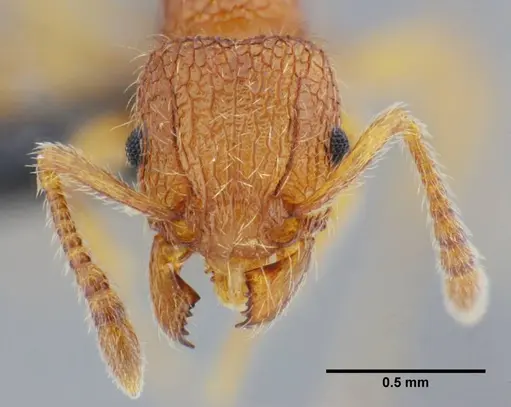
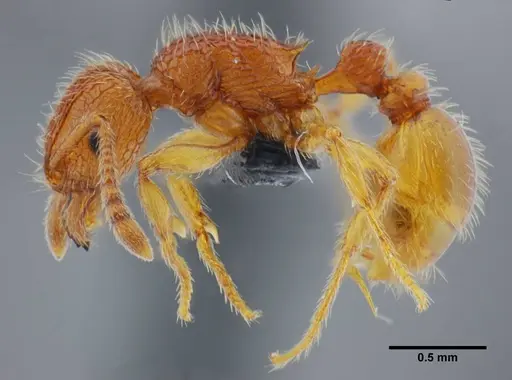
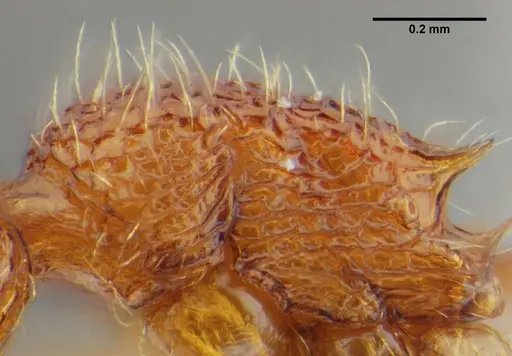
Tetramorium azcatltontlium is a tiny ant species from the tropical dry forests of Jalisco, Mexico. Workers measure just 2.4-2.8 mm, making them the smallest known member of the Tetramorium tortuosum group in the Americas . They are uniform reddish-brown with short triangular propodeal spines and sparse standing hairs on the body . This species was first described in 2011 from a tropical dry forest remnant at Cuixmala farm on Mexico's Pacific coast . What sets this ant apart is its extremely small size combined with its unusual habitat - it's the first tortuosum group species found in tropical dry forest, not rainforest or high-altitude forest . Its name comes from Nahuatl, the Aztec language, and means 'small ant.' Only workers have been collected so far - the queen and male castes remain unknown, and no wild colonies have ever been studied.
Quick Summary
- Difficulty: Hard
- Origin & Habitat: Tropical dry forest in Jalisco, Mexico, at 180 m elevation on the Pacific coast near Chamela. The landscape has low hills with steep slopes and a highly seasonal climate with a long dry season [1].
- Colony Type: Unknown, only workers have been collected. The queen caste has not been described, so colony structure (single-queen vs multi-queen) is unconfirmed.
- Size & Growth:
- Queen: Unknown, queen caste has not been described [1]
- Worker: 2.4-2.8 mm (total length) [1]
- Colony: Unknown, no wild colonies have been studied
- Growth: Unknown, estimated as moderate based on genus patterns
- Development: Estimated 6-8 weeks based on typical Tetramorium development at warm temperatures (Development time is inferred from related Tetramorium species, no direct observations exist for this species)
- Antkeeping:
- Temperature: Keep at 22-26°C. Since they come from tropical dry forest, they prefer warm conditions. Use a low-output heating cable on one side of the nest to create a gentle gradient if your room is cooler.
- Humidity: Keep the nest substrate slightly moist but allow it to dry out between waterings. Their natural habitat has a pronounced dry season, so they can handle dry periods. A gradient with one damp area and the rest dry works well.
- Diapause: Unconfirmed, being from a tropical dry forest, they likely do not need true hibernation. A slight cool period in winter (around 18-20°C) may be beneficial but is not required.
- Nesting: Use nests with small chambers suited to their tiny size. Y-tong (AAC) nests or plaster nests work well. Because workers are under 3 mm, standard test-tube setups may let them escape, use fine mesh or very tight cotton plugs.
- Behavior: These are small, generally peaceful ants. They have a modified spatulate stinger used to smear venom onto enemies instead of piercing skin, a defense typical of Crematogastrini. They are not aggressive to humans but may use chemical defense if provoked. Their tiny size makes them excellent escape artists, so escape-proofing is critical. They likely forage individually for small prey and honeydew, as typical for Tetramorium.
- Common Issues: tiny size means escapes are likely without fine mesh barriers and tight-fitting lids, only workers are known, no queen has ever been found, so captive breeding may be impossible, no established captive lines exist since the species was only described in 2011, humidity control is tricky, too wet can cause mold, too dry can kill brood, almost nothing is known about this species' biology, so most care advice is guessed from related Tetramorium
Housing and Nest Setup
Because workers are under 3 mm, standard test-tube setups may allow escapes. Use Y-tong (AAC) nests with narrow chambers or plaster nests with small tunnels. The nest material should hold some moisture but drain well, these ants come from a tropical dry forest that has both wet and dry seasons. A small water reservoir connected to the nest helps control humidity. Seal all joints and edges tightly, these ants can squeeze through gaps that seem impossibly small. A foraging area of about 10×10 cm is enough for a starting colony. [1]
Feeding and Diet
Based on typical Tetramorium behavior, these ants are omnivorous. They likely accept small live prey (fruit flies, pinhead crickets, tiny mealworms), honey water or sugar water, and protein-based foods. In their natural habitat (tropical dry forest) they would hunt small insects and probably tend aphids for honeydew. Offer sugar water constantly and protein two to three times per week. Remove uneaten food within 24-48 hours to prevent mold.
Temperature and Seasonal Care
Keep temperatures between 22°C and 26°C. Being from a tropical dry forest on the coast of Jalisco, they prefer warm conditions year-round. A slight winter drop to 18-20°C may mimic their natural seasonal cycle, but true hibernation is likely not needed. Use a low-output heating cable under or beside one area of the nest if your room is cool. Watch colony activity, if workers become sluggish and cluster together, they may be too cold. Avoid temperature swings of more than 5°C between day and night. [1]
Handling and Temperament
These are small, non-aggressive ants. But they do have a modified stinger, part of the Crematogastrini tribe, that smears venom onto enemies instead of injecting it. They may bite if handled roughly, but they pose no real danger to people. Their main defense is to flee when disturbed. The biggest challenge is their tiny size, which makes containment difficult. Always use excellent escape prevention and avoid working with them in open spaces where they could vanish unnoticed.
Colony Development and Growth
Since only workers have been described and no wild colonies have been studied, exact growth rates are unknown. Based on related Tetramorium species, expect a slow founding phase (several months to first workers) if you ever get a claustral queen. Once the first nanitic workers appear, growth should speed up. Maximum colony size is also unknown, some similar tortuosum-group species reach a few hundred workers. The biggest problem for keepers is that the queen has never been found, so obtaining a colony in the first place may be impossible unless wild nests are discovered and collected. [1]
Frequently Asked Questions
Can I keep Tetramorium azcatltontlium in a test tube?
Standard test tubes may work, but their tiny size (under 3 mm) makes escapes likely unless the cotton plug is extremely tight. Better to use a Y-tong or plaster nest with narrow chambers. Check all seals and connections regularly.
How long does it take for Tetramorium azcatltontlium to develop from egg to worker?
Exact development time is unknown because no species-specific studies exist. Based on typical Tetramorium development, estimate 6-8 weeks from egg to first worker at warm temperatures (24-26°C).
Do Tetramorium azcatltontlium ants sting?
Yes, but not like a typical stinging ant. They have a modified spatulate stinger that smears venom onto enemies rather than injecting it. This is a defense style typical of the Crematogastrini tribe. They are not dangerous to humans.
Are Tetramorium azcatltontlium good for beginners?
No. This is a newly described species (2011) with very limited data, and the queen has never been described, making it nearly impossible to obtain a founding colony. The tiny size also requires extra attention to escape prevention.
What do Tetramorium azcatltontlium eat?
Based on typical Tetramorium diet, they likely accept small live prey (fruit flies, tiny crickets), honey water or sugar water, and small protein sources. Feed prey items that are smaller than the workers themselves.
How big do Tetramorium azcatltontlium colonies get?
Colony size is unknown, no wild colonies have been studied. Based on related species in the tortuosum group, maximum size may be in the low hundreds of workers, but this is purely an estimate.
Do Tetramorium azcatltontlium need hibernation?
Probably not. Being from a tropical dry forest in Mexico, they likely do not require true hibernation. A slight cool period in winter (around 18-20°C) may be beneficial but is not mandatory.
Where can I get a Tetramorium azcatltontlium queen?
This is likely very difficult or impossible. The species was only described in 2011,and the queen caste has never been documented. No captive breeding lines are known to exist. This species is not currently available in the antkeeping hobby.
What temperature do Tetramorium azcatltontlium need?
Keep them warm at 22-26°C. Use a heating cable on one side of the nest to create a gentle gradient if needed. Coming from tropical dry forest, they prefer consistently warm conditions.
Why are my Tetramorium azcatltontlium escaping?
Their tiny size (under 3 mm) makes them excellent escape artists. Use fine mesh barriers, check all seals and connections frequently, and consider switching to a nest designed for small species with tight-fitting components.
Report an Issue
The current care sheet is based fully on literature. See inconsistencies, or something that's incorrect? Please , it will be resolved after review from an admin. Contributing to the blogs tab also helps providing information, to make us be able to further improve the caresheets. Thank you for your support!
References

This caresheet is licensed under CC BY-SA 4.0 .
Community Blogs
UFV-LABECOL-001266
View on AntWeb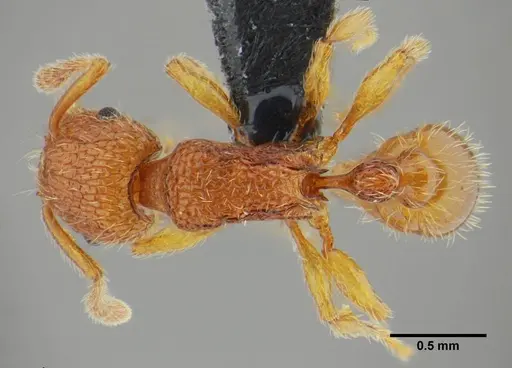
Literature
Loading distribution map...Loading products...