
Tetramorium ataxium
- Sci. Name
- Tetramorium ataxium
- Tribe
- Crematogastrini
- Subfamily
- Myrmicinae
- Author
- Bolton, 1980
- Distribution
- Found in 11 countries
Introduction
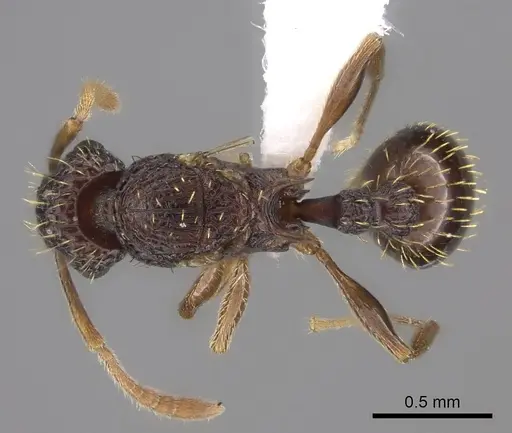
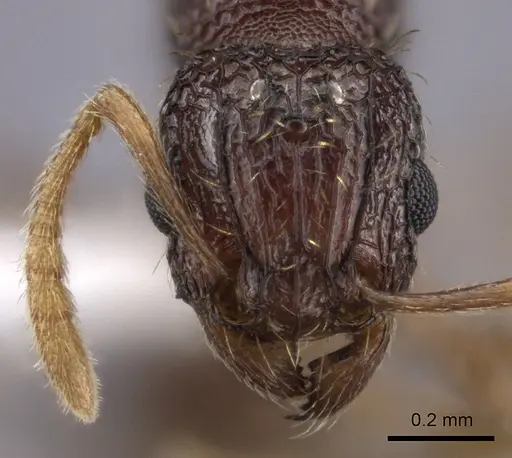
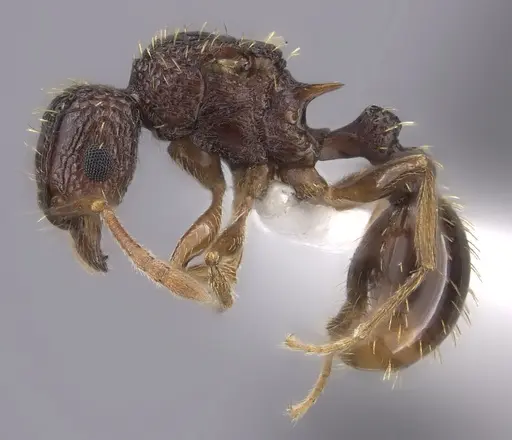
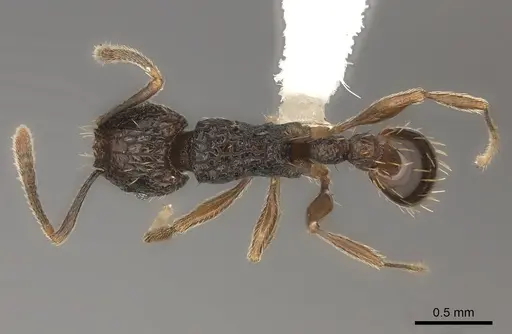
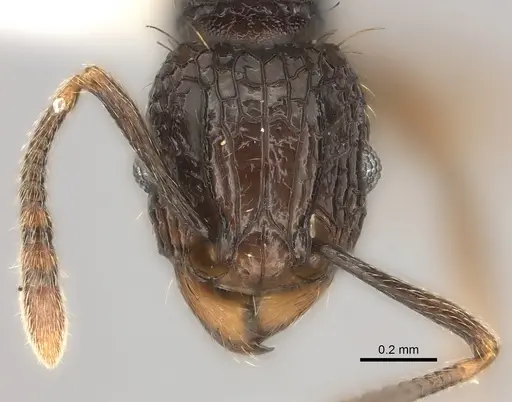
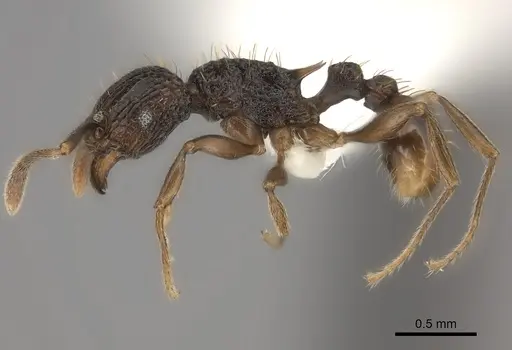
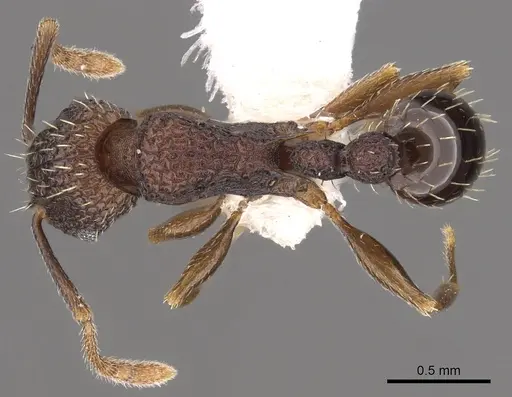
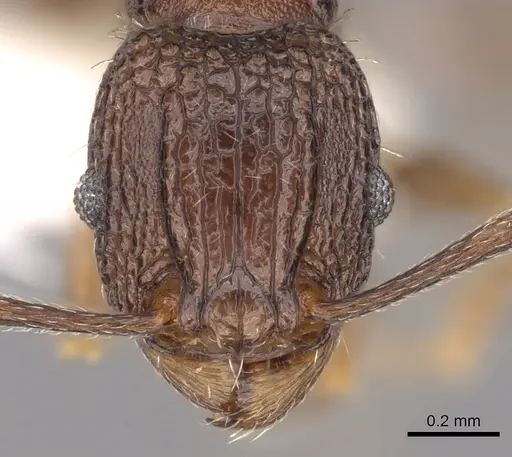
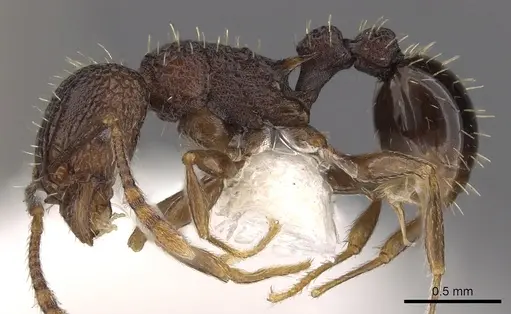
Tetramorium ataxium is a small, dark brown to blackish ant native to West Africa. Workers measure 3.0-3.5 mm in total length . They belong to the *flabellum*-complex, a group known for long antennae (scapes), coarse body sculpture, and a rectangular petiole . This species is the most common and widespread member of its complex in the Afrotropical region . It lives in rainforest leaf litter, other forest habitats, and savannah, with nests found under stones or in decaying organic matter . Workers have coarse, blunted hairs covering their back and a rough, net-like texture on the thorax and waist segments .
Quick Summary
- Difficulty: Medium
- Origin & Habitat: West Africa: Nigeria, Ghana, Ivory Coast, Cameroon, Central African Republic, Congo, Democratic Republic of Congo, Gabon, Guinea, Senegal [1][2]. Found in rainforest leaf litter, other forests, and savannah, often under stones or in decaying organic matter [1].
- Colony Type: Colony structure is not documented in scientific literature. Most Tetramorium species have a single queen, but this is not confirmed for T. ataxium.
- Size & Growth:
- Queen: Not described in available literature, queen size unknown [1]
- Worker: 3.0-3.5 mm total length [1]
- Colony: Unknown, no colony size data available [1]
- Growth: Unknown, typical Tetramorium development is moderate, but not confirmed for this species
- Development: Unknown, species-specific timing has not been documented (Development time inferred from related Tetramorium species at warm temperatures, but not confirmed)
- Antkeeping:
- Temperature: Keep at 24-28°C year-round. These tropical forest ants need stable warmth [1]. Avoid drops below 22°C, use a gentle heating gradient if needed.
- Humidity: High humidity, keep nest substrate consistently moist but not waterlogged. They live in rainforest leaf litter where conditions are always damp [1].
- Diapause: No, as a tropical species from West Africa, they do not need hibernation. Maintain warm conditions year-round [1].
- Nesting: Use a moist soil or plaster nest that holds humidity well. They naturally nest under stones or in leaf litter, so provide small chambers and tight passages suited to their 3 mm size. Y-tong nests also work.
- Behavior: Workers are active, day-active foragers that search for small prey and honeydew. They are not very aggressive, they usually flee but may bite if the nest is threatened. Because they are only 3 mm long, they need extremely fine mesh barriers and tight lids to prevent escapes.
- Common Issues: escape prevention is critical due to their tiny size, they slip through standard barriers, high humidity can cause mold if ventilation is poor, tropical species may decline if temperatures drop below 22°C, wild-caught colonies might bring in parasites from the leaf litter, colony growth rate is unknown, do not expect fast development
Housing and Nest Setup
Set up a naturalistic nest that mimics rainforest leaf litter. Use a moist soil or plaster nest with a water reservoir to keep humidity high. Chambers should be small and tight, these ants are only 3 mm and feel secure in narrow spaces. Keep the nest at 24-28°C, away from direct sun. In the outworld, provide a shallow water dish and feeding area. Since workers are tiny, use fine mesh (under 0.5 mm) on all openings and ensure lids seal tightly [1].
Feeding and Diet
These ants are generalist foragers. In the wild they eat small insects and honeydew. In captivity, offer tiny prey like fruit flies, pinhead crickets, or crushed mealworms. Sugar water or honey can be given as energy. Feed small amounts 2-3 times a week and remove leftovers within 24 hours to prevent mold. Because they are small, chop prey into manageable pieces [1].
Temperature and Seasonal Care
Keep the colony at 24-28°C all year. These tropical ants cannot handle cold and do not need a winter diapause. Avoid drafts from air conditioners or cold windows. If your room is below 22°C, use a gentle heat mat on one side of the nest. If colony activity drops, check temperatures. No winter rest is required [1].
Colony Development
Development time is not known for this species. Based on related Tetramorium, first workers might appear after about 6-8 weeks at 24-28°C, but this is speculative. Colony growth rate is also unknown, some Tetramorium grow moderately, but T. ataxium has not been studied. Start with a test tube setup and move to a larger formicarium only when the colony outgrows it. [1]
Behavior and Temperament
Workers are active foragers that patrol the leaf litter looking for small prey and sugary food. They are not aggressive, they try to escape rather than fight, but they may bite if the nest is disturbed. They use a sting but it is very mild to humans. Because they are tiny, secure the enclosure well to prevent escapes. Provide varied terrain like leaves, bark, or twigs to keep them busy. [1]
Frequently Asked Questions
How long does it take for Tetramorium ataxium to produce first workers?
This hasn't been studied. Based on related Tetramorium species, first workers could emerge after 6-8 weeks at 24-28°C, but don't rely on that timeline. Observe your colony and provide steady warmth and humidity.
What temperature do Tetramorium ataxium ants need?
Keep them at 24-28°C year-round. They cannot handle cold and do not hibernate. If your room drops below 22°C, use a gentle heat mat on one side of the nest [1].
Do Tetramorium ataxium ants need hibernation?
No, they are tropical and need warmth all year. There is no diapause requirement [1].
How big do Tetramorium ataxium colonies get?
Colony size has not been documented. Related Tetramorium can reach several hundred workers, but for this species we simply don't know.
What do Tetramorium ataxium ants eat?
They are generalist foragers. Offer small insects like fruit flies, pinhead crickets, or crushed mealworms, plus sugar water or honey. Feed 2-3 times a week.
Can I keep Tetramorium ataxium in a test tube setup?
Yes, test tube setup works well for founding. Make sure the water reservoir keeps humidity high without flooding. Move to a larger nest only when the colony grows beyond the tube.
Are Tetramorium ataxium ants aggressive?
No, they are not aggressive. Workers usually flee from threats and will only bite if the nest is directly disturbed.
Do Tetramorium ataxium ants sting?
Yes, like other Myrmicinae they have a stinger, but it is very mild. Their defense is a smearing venom rather than a piercing sting. Stings are rare and barely noticeable to humans.
Why are my Tetramorium ataxium ants escaping?
Their tiny 3 mm size lets them slip through standard gaps. Use fine mesh (0.5 mm or smaller), seal all seams, and apply fluon or PTFE barrier to the outworld walls.
Is Tetramorium ataxium good for beginners?
This species is rated Medium. It's not the easiest because it needs consistent warm, humid conditions and escape-proof housing. If you can manage those, it's manageable for an intermediate keeper.
What humidity level do Tetramorium ataxium ants need?
They need high humidity, keep the nest substrate constantly damp but not waterlogged. Think rainforest leaf litter conditions. Use a water reservoir in the nest.
Report an Issue
The current care sheet is based fully on literature. See inconsistencies, or something that's incorrect? Please , it will be resolved after review from an admin. Contributing to the blogs tab also helps providing information, to make us be able to further improve the caresheets. Thank you for your support!
References

This caresheet is licensed under CC BY-SA 4.0 .
Community Blogs
Literature
Loading distribution map...Loading products...