
Tetramorium ankarana
- Sci. Name
- Tetramorium ankarana
- Tribe
- Crematogastrini
- Subfamily
- Myrmicinae
- Author
- Hita Garcia & Fisher, 2012
- Distribution
- Found in 1 countries
Introduction
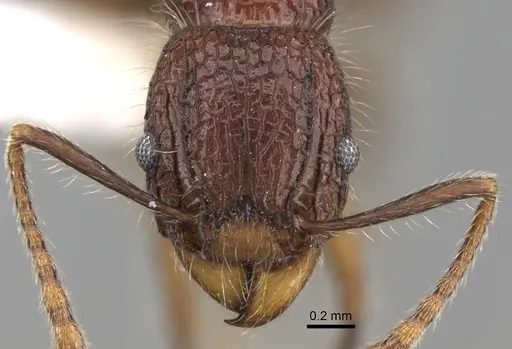
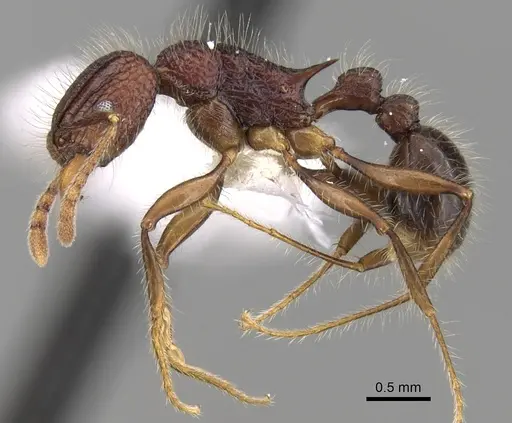
Tetramorium ankarana is a small, dark reddish-brown ant species endemic to the Ankarana Reserve in northern Madagascar . It belongs to the Tetramorium kelleri species group and is known only from a few specimens collected in tropical dry forest and rainforest at 80-150 m elevation . Workers are very small - head width under 0.9 mm - and have notably small eyes, long antennal scapes, and moderately long propodeal spines. The head and body have a rough, wrinkled sculpture, while the first gastral segment is smooth and shiny . This species was only described in 2012 and remains one of the rarest ants in the antkeeping hobby, with no captive care data available yet.
Quick Summary
- Difficulty: Medium
- Origin & Habitat: Endemic to the Réserve Spéciale de l'Ankarana in northern Madagascar (12°54' S,49°07' E). It inhabits tropical dry forest and rainforest at elevations of 80-150 m [1][2]. The area has a prominent dry season (April-October) and wet season (November-March), which likely influences colony activity.
- Colony Type: Colony structure is unconfirmed. Based on typical Tetramorium patterns, likely single-queen colonies, but no direct observations exist for this species.
- Size & Growth:
- Queen: Queen not yet described, measurements unavailable [1]
- Worker: Worker total length not recorded in the literature. Head width 0.85-0.89 mm, mesosoma length 1.21-1.31 mm [1]
- Colony: Unknown, only known from a handful of collected specimens [1]
- Growth: Unknown, no colony development data exists for this species
- Development: Unconfirmed, no direct data. Based on related Tetramorium species, roughly 6-10 weeks at warm temperature (around 24°C), but this is a rough inference. (Development timeline is not documented. Observing your colony will be essential to determine actual timing.)
- Antkeeping:
- Temperature: Aim for 22-26°C as a starting range. This tropical species prefers warmth, provide a slight gradient so workers can self-regulate. Adjust based on behavior, if they cluster near heat, increase slightly, if they avoid it, lower temperature.
- Humidity: Keep the nest substrate consistently moist but never waterlogged. This species was collected in both rainforest and dry forest, so it likely tolerates some fluctuation, but avoid letting the nest dry out completely.
- Diapause: Unknown, as a tropical species from Madagascar, it probably does not require true hibernation. A slight temperature drop during winter months (simulating the dry season) may be beneficial, but is not necessary.
- Nesting: Standard test tube setups are fine for founding. For established colonies, use Y-tong (AAC), plaster, or soil nests that can hold moisture. Provide a nest chamber with moist substrate and a dry outworld. Avoid acrylic nests.
- Behavior: Temperament is likely moderate, Tetramorium species are not typically aggressive but will defend their nest. Workers are very small (head width under 0.9 mm), so escape prevention is critical: use fine mesh barriers and tight-fitting lids. As a member of Myrmicinae, this ant has a modified stinger used to smear venom onto enemies (smear defense) rather than piercing. Bites or stings are not considered dangerous to humans.
- Common Issues: tiny size means escapes are likely without fine mesh barriers, no colony development data, keepers must experiment with conditions, very limited availability in the antkeeping hobby, humidity control is important, too dry and colonies may fail, too wet and mold becomes an issue, lack of documented care requirements means keepers should start conservatively and adjust based on colony responses
Origin and Distribution
Tetramorium ankarana is endemic to the Réserve Spéciale de l'Ankarana in northern Madagascar, making it one of the rarest ant species known. It was formally described in 2012 by Hita Garcia and Fisher and is known from just a few specimens collected at 80-150 m elevation [1]. The reserve is famous for its limestone tsingy formations and unique biodiversity. Workers were found foraging on the ground in both tropical dry forest and rainforest, suggesting the species can adapt to different moisture levels [1]. The type locality is 7 km southeast of Matsaborimanga.
Identification and Appearance
Workers of Tetramorium ankarana are small but distinctive within their species group. They have a dark reddish-brown color that sets them apart from their close relative Tetramorium kelleri, which is typically much lighter (whitish-yellow to brown). The head is longer than wide, the eyes are notably small, and the antennal scapes are long enough to reach the back of the head. Propodeal spines are moderately long. The body surface is heavily sculptured with a rough, wrinkled pattern on the head and upper body, while the first segment of the gaster is smooth and shiny. Numerous long standing hairs cover the whole body [1].
Housing and Nest Setup
Because workers are very small (head width under 0.9 mm [1]), excellent escape prevention is essential. Use test tubes for founding colonies, with a water reservoir that maintains humidity without flooding. The tube should have a tight-fitting cotton plug. Once the colony establishes, transfer to a formicarium. Suitable options include Y-tong (AAC) nests, plaster nests, or naturalistic setups with moist soil chambers. Provide an outworld with barriers such as fluon on the edges. Even tiny gaps in tubing or lids can allow escapes, so check all connections carefully.
Feeding and Diet
Based on typical Tetramorium feeding behavior, this species likely accepts a standard ant diet. Offer protein sources such as small insects (fruit flies, small mealworms, crickets) and provide sugar water, honey, or diluted syrup as a carbohydrate source. In the wild, they are ground foragers [1], so they will search for food across the outworld. Start with small portions and remove uneaten food to prevent mold. Since the species has never been kept in captivity, you may need to test different foods to see what your colony prefers.
Temperature and Humidity
As a tropical species from Madagascar, Tetramorium ankarana prefers warm conditions. Aim for 22-26°C. Provide a slight gradient (e.g., a heating cable on one side) so ants can choose their preferred temperature. For humidity, keep the nest substrate consistently moist but never waterlogged. This species was collected from both dry forest and rainforest, so it likely tolerates some variation, but avoid letting the nest dry out completely. Watch for mold (too wet) or workers clustering around the water source (too dry).
Behavior and Defense
Tetramorium ankarana is a member of the Myrmicinae subfamily. Like other Myrmicinae, it has a functional stinger. However, its tribe (Crematogastrini) uses a unique 'smear' defense: the stinger is flattened and spatulate, used to wipe venom onto enemies rather than piercing. This venom is likely mild to humans. Workers are not particularly aggressive but will defend the nest if disturbed. Because they are very small, they can easily escape through tiny gaps, so secure housing is critical. In the wild, they are ground foragers [1] and will search actively for food.
Colony Development Expectations
Since this species has never been documented in the antkeeping hobby, all expectations are estimates based on related Tetramorium species. Queens have not been described scientifically, so founding behavior (claustral vs. semi-claustral) is unconfirmed. Based on typical Myrmicinae patterns, expect claustral founding where the queen seals herself in and raises the first brood alone. Development from egg to first worker likely takes 6-10 weeks at optimal temperature (~24°C), but this is a rough estimate. The first workers (nanitics) will be smaller than mature workers. Colony growth will probably be moderate, Tetramorium colonies don't typically grow as large as some other genera, but well-fed colonies can reach several hundred workers over time.
Frequently Asked Questions
How long does it take for Tetramorium ankarana to produce first workers?
The development timeline is unconfirmed for this species. Based on typical Tetramorium genus patterns, expect approximately 6-10 weeks from egg to first worker at optimal temperature (around 24°C). However, this is an estimate since no specific data exists for Tetramorium ankarana.
What do Tetramorium ankarana ants eat?
Based on typical Tetramorium feeding behavior, they likely accept small protein sources (fruit flies, small insects) and sugar water or honey. This species has not been kept in captivity before, so specific food acceptance is unknown, you may need to experiment with what your colony prefers.
Are Tetramorium ankarana ants aggressive?
Tetramorium species are not typically highly aggressive but will defend their nest if threatened. They may use their sting (smear venom) or bite if handled. They are small ground-foraging ants that focus on gathering food rather than attacking.
Do Tetramorium ankarana ants sting?
Yes, as a Myrmicinae ant, it possesses a functional stinger. However, the sting is modified for smearing venom (smear defense) and is not considered dangerous to humans. It may cause mild irritation if contact occurs.
What temperature should I keep Tetramorium ankarana at?
Keep them at 22-26°C as a starting range. This tropical Madagascar species prefers warmth. Provide a slight temperature gradient so the colony can self-regulate. Adjust based on colony behavior, if they cluster near heat, increase slightly, if they avoid heated areas, reduce temperature.
How big do Tetramorium ankarana colonies get?
Colony size is unknown as this species has only been collected a few times in the wild. Based on typical Tetramorium patterns, colonies likely reach several hundred workers over time. Well-established colonies may potentially reach 500+ workers, but this is an estimate.
Can I keep multiple Tetramorium ankarana queens together?
The colony structure of this species is unconfirmed. No data exists on whether they are single-queen (monogyne) or multi-queen (polygyne) in nature. Until more information is available, it is not recommended to combine unrelated queens, as fighting may occur.
What humidity level do Tetramorium ankarana ants need?
Maintain the nest substrate consistently moist but never waterlogged. This species was collected in both rainforest and dry forest in Madagascar, suggesting some flexibility, but they prefer conditions that don't fully dry out. Avoid percentage targets, use the feel of the substrate as a guide.
Are Tetramorium ankarana good for beginners?
This species is not recommended for beginners due to several factors: it is extremely rare in the hobby, no established care protocols exist, escape prevention is critical due to their tiny size, and there is no data on colony development expectations. Experienced antkeepers interested in rare species may have better success.
When do Tetramorium ankarana nuptial flights occur?
Nuptial flight timing is unconfirmed for this species. As a tropical species from Madagascar, they likely don't have a strict seasonal pattern like temperate ants. The Ankarana region has distinct wet (November-March) and dry (April-October) seasons, which may influence reproductive behavior.
Do Tetramorium ankarana need hibernation?
As a tropical species from Madagascar, they likely do not require true hibernation. However, a slight temperature reduction during winter months (simulating the dry season) may be beneficial. Avoid temperatures below 18°C unless you observe clear dormancy behavior.
Why is Tetramorium ankarana so rare in the antkeeping hobby?
This species was only described in 2012 and is endemic to a single protected reserve in Madagascar. It has never been documented as a common species in the wild, and no established export or breeding programs exist. It remains one of the rarest ants available to hobbyists [1].
Report an Issue
The current care sheet is based fully on literature. See inconsistencies, or something that's incorrect? Please , it will be resolved after review from an admin. Contributing to the blogs tab also helps providing information, to make us be able to further improve the caresheets. Thank you for your support!
References

This caresheet is licensed under CC BY-SA 4.0 .
Community Blogs
CASENT0247543
View on AntWeb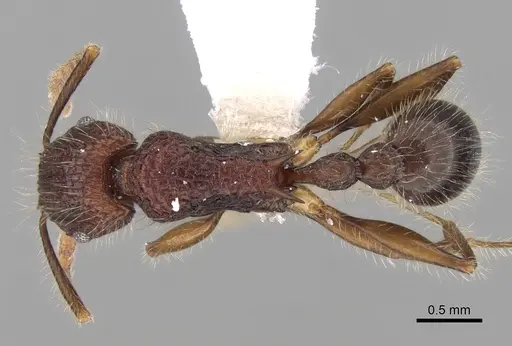
Literature
Loading distribution map...Loading products...